Kirjojen hintavertailu. Mukana 11 627 067 kirjaa ja 12 kauppaa.

Kirjahaku

Etsi kirjoja tekijän nimen, kirjan nimen tai ISBN:n perusteella.

12 kirjaa tekijältä Barry Allen

Empiricisms

Empiricisms

Barry Allen

Oxford University Press Inc
2021
sidottu
In this sweeping volume of comparative philosophy and intellectual history, Barry Allen reassesses the values of experience and experiment in European and world traditions. His work traces the history of empirical philosophy from its birth in Greek medicine to its emergence as a philosophy of modern science. He surveys medical empiricism, Aristotlean and Epicurean empiricism, the empiricism of Gassendi and Locke, logical empiricism, radical empiricism, transcendental empiricism, and varieties of anti-empiricism from Parmenides to Wilfrid Sellars. Throughout this extensive intellectual history, Allen builds an argument in three parts. A richly detailed account of history's empiricisms in Part One establishes a context in Part Two for reconsidering the work of the radical empiricists--William James, Henri Bergson, John Dewey, and Gilles Deleuze, each treated in a dedicated chapter. What is "radical" about them is their effort to return empiricism from epistemology to the ontology and natural philosophy where it began. In Part Three, Allen sets empirical philosophy in conversation with Chinese tradition, considering technological, scientific, medical, and alchemical sources, as well as selected Confucian, Daoist, and Mohist classics. The work shows how philosophical reflection on experience and a profound experimental practice coexist in traditional China with no interaction or even awareness of each other, slipping over each other instead of intertwining as they did in European history, a difference Allen attributes to a different understanding of the value of knowledge. Allen's book recovers empiricism's neglected, multi-textured contexts, and elucidates the enduring value of experience, to arrive at an idea of what is living and dead in philosophical empiricism.
Living in Time

Living in Time

Barry Allen

OXFORD UNIVERSITY PRESS INC
2023
sidottu
Henri Bergson (1859-1941) was once the most famous philosopher in the world, but his reputation waned in the latter half of the 20th century. Barry Allen here makes the case for Bergson as a great philosopher, one whose thought has much to contribute to contemporary philosophical questions. Living in Time presents chapters on each of Bergson's four major works, explaining his theories of time, perception, memory, and panpsychic consciousness, his innovative concept of virtual existence, his objection to Darwin, his controversy with Einstein, his philosophy of creative evolution, and his social philosophy of closed and open society. In particular Allen focusses on Bergson's powerful ideas on time. Classical arguments for determinism fallaciously apply spatial concepts to consciousness; once we take time seriously, which means acknowledging its reality as duration and its difference from space, Bergson showed that the arguments for determinism become insupportable. Bergson's ideas on time and evolution offer a comparison with Nietzsche, which Allen develops, exposing both philosophical concurrence and systematic difference. The book's conclusion discusses the question of Bergson and naturalism and summarizes the ontology of the virtual that emerges as a core part of Bergson's thought.
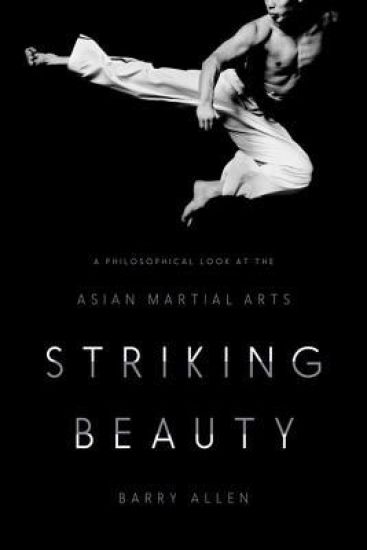
Striking Beauty

Striking Beauty

Barry Allen

Columbia University Press
2015
sidottu
The first book to focus on the intersection of Western philosophy and the Asian martial arts, Striking Beauty comparatively studies the historical and philosophical traditions of martial arts practice and their ethical value in the modern world. Expanding Western philosophy's global outlook, the book forces a theoretical reckoning with the concerns of Chinese philosophy and the aesthetic and technical dimensions of martial arts practice. Striking Beauty explains the relationship between Asian martial arts and the Chinese philosophical traditions of Confucianism, Buddhism, and Daoism, in addition to Sunzi's Art of War. It connects martial arts practice to the Western concepts of mind-body dualism and materialism, sports aesthetics, and the ethics of violence. The work ameliorates Western philosophy's hostility toward the body, emphasizing the pleasure of watching and engaging in martial arts, along with their beauty and the ethical problem of their violence.
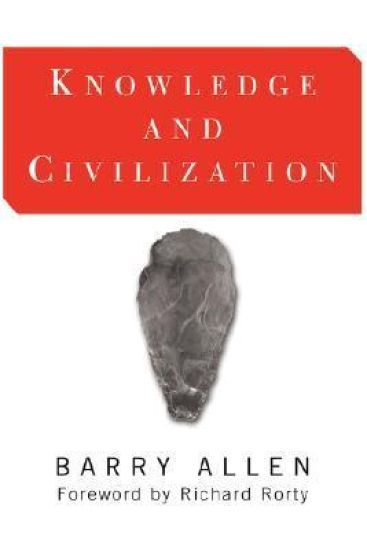
Knowledge And Civilization

Knowledge And Civilization

Barry Allen

Routledge
2019
sidottu
Knowledge and Civilization advances detailed criticism of philosophy's usual approach to knowledge and describes a redirection, away from textbook problems of epistemology, toward an ecological philosophy of technology and civilization. Rejecting theories that confine knowledge to language or discourse, Allen situates knowledge in the greater field
Vanishing into Things

Vanishing into Things

Barry Allen

Harvard University Press
2015
sidottu
Vanishing into Things explores the concept of knowledge in Chinese thought over two millennia, from Confucius to Wang Yangming (ca. 1500 CE), and compares the different philosophical imperatives that have driven Chinese and Western thought. Challenging the hyperspecialized epistemology of modern philosophy in the West, Barry Allen urges his readers toward an ethical appreciation of why knowledge is worth pursuing.Western philosophers have long maintained that true knowledge is the best knowledge. Chinese thinkers, by contrast, have emphasized not the essence of knowing but the purpose. Ideas of truth play no part in their understanding of what the best knowledge is: knowledge is not deduced from principles or reducible to a theory. Rather, in Chinese tradition knowledge is expressed through wu wei, literally “not doing”—a response to circumstances that is at once effortless and effective. This type of knowledge perceives the evolution of circumstances from an early point, when its course can still be changed, provided one has the wisdom to grasp the opportunity.Allen guides readers through the major Confucian and Daoist thinkers including Kongzi, Mengzi, Xunzi, Laozi, and Zhuangzi, examining their influence on medieval Neoconfucianism and Chan (Zen) Buddhism, as well as the theme of knowledge in China’s art of war literature. The sophisticated and consistent concept of knowledge elucidated here will be of relevance to contemporary Western and Eastern philosophers alike.
Truth in Philosophy

Truth in Philosophy

Barry Allen

Harvard University Press
1995
nidottu
The goal of philosophers is truth, but for a century or more they have been bothered by Nietzsche’s question, “What is the good of truth?” Barry Allen shows what truth has come to mean in the philosophical tradition, what is wrong with many of the ways of conceiving truth, and why philosophers refuse to confront squarely the question of the value of truth—why it is always taken to be an unquestioned concept. What is distinctive about Allen’s book is his historical approach. Surveying Western thought from the pre-Socratics to the present day, Allen identifies and criticizes two core assumptions: that truth implies a realist metaphysics, and that truth is a good thing.
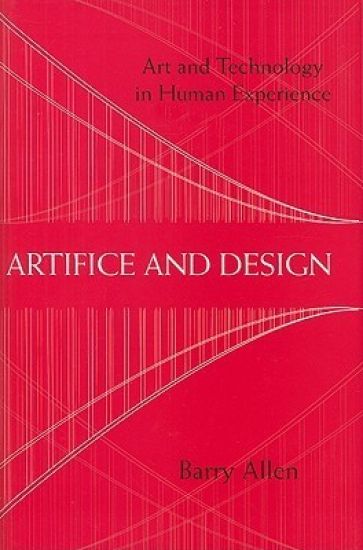
Artifice and Design

Artifice and Design

Barry Allen

Cornell University Press
2008
sidottu
"As familiar and widely appreciated works of modern technology, bridges are a good place to study the relationship between the aesthetic and the technical. Fully engaged technical design is at once aesthetic and structural. In the best work (the best design, the most well made), the look and feel of a device (its aesthetic, perceptual interface) is as important a part of the design problem as its mechanism (the interface of parts and systems). We have no idea how to make something that is merely efficient, a rational instrument blindly indifferent to how it appears. No engineer can design such a thing and none has ever been built."—from Artifice and Design In an intriguing book about the aesthetics of technological objects and the relationship between technical and artistic accomplishment, Barry Allen develops the philosophical implications of a series of interrelated concepts—knowledge, artifact, design, tool, art, and technology—and uses them to explore parallel questions about artistry in technology and technics in art. This may be seen at the heart of Artifice and Design in Allen's discussion of seven bridges: he focuses at length on two New York bridges—the Hell Gate Bridge and the Bayonne Bridge—and makes use of original sources for insight into the designers' ideas about the aesthetic dimensions of their work. Allen starts from the conviction that art and technology must be treated together, as two aspects of a common, technical human nature. The topics covered in Artifice and Design are wide-ranging and interdisciplinary, drawing from evolutionary biology, cognitive psychology, and the history and anthropology of art and technology. The book concludes that it is a mistake to think of art as something subjective, or as an arbitrary social representation, and of Technology as an instrumental form of purposive rationality. "By segregating art and technology," Allen writes, "we divide ourselves against ourselves, casting up self-made obstacles to the ingenuity of art and technology."
Knowledge And Civilization

Knowledge And Civilization

Barry Allen

Westview Press Inc
2003
nidottu
Knowledge and Civilization advances detailed criticism of philosophy's usual approach to knowledge and describes a redirection, away from textbook problems of epistemology, toward an ecological philosophy of technology and civilization. Rejecting theories that confine knowledge to language or discourse, Allen situates knowledge in the greater field of artifacts, technical performance, and human evolution. His wide ranging considerations draw on ideas from evolutionary biology, archaeology, anthropology, and the history of cities, art, and technology.
Just the ticket

Just the ticket

Barry Allen

Silver Link Books
2019
sidottu
Written by a booking clerk, an occupation most people might think dull and uninteresting, Just the Ticket reflects on Barry Allen's career in this profession. Barry's own exploits in this job could hardly be described as dull! Humour forms the basis of his story, without which life would be much the poorer. .