Kirjojen hintavertailu. Mukana 11 244 527 kirjaa ja 12 kauppaa.

Kirjahaku

Etsi kirjoja tekijän nimen, kirjan nimen tai ISBN:n perusteella.

14 kirjaa tekijältä Barry Buzan

From International to World Society?

From International to World Society?

Barry Buzan

Cambridge University Press
2004
pokkari
Barry Buzan offers an extensive and long overdue critique and reappraisal of the English school approach to International Relations. Starting on the neglected concept of world society and bringing together the international society tradition and the Wendtian mode of constructivism, Buzan offers a new theoretical framework that can be used to address globalisation as a complex political interplay among state and non-state actors. This approach forces English school theory to confront neglected questions about both its basic concepts and assumptions, and about the constitution of society in terms of what values are shared, how and why they are shared, and by whom. Buzan highlights the idea of primary institutions as the central contribution of English school theory and shows how this both differentiates English school theory from realism and neoliberal institutionalism, and how it can be used to generate distinctive comparative and historical accounts of international society.
From International to World Society?

From International to World Society?

Barry Buzan

Cambridge University Press
2004
sidottu
In this 2004 book, Barry Buzan offers an extensive critique and reappraisal of the English school approach to International Relations. Starting on the neglected concept of world society and bringing together the international society tradition and the Wendtian mode of constructivism, Buzan offers a new theoretical framework that can be used to address globalisation as a complex political interplay among state and non-state actors. This approach forces English school theory to confront neglected questions about both its basic concepts and assumptions, and about the constitution of society in terms of what values are shared, how and why they are shared, and by whom. Buzan highlights the idea of primary institutions as the central contribution of English school theory and shows how this both differentiates English school theory from realism and neoliberal institutionalism, and how it can be used to generate distinctive comparative and historical accounts of international society.
The United States and the Great Powers
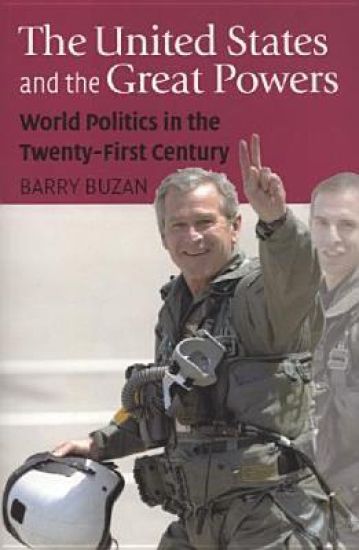
The idea that world politics can be understood in terms of a US dominated unipolarity became generally accepted during the 1990s. Following the September 11 attacks, however, US foreign policy took an imperial turn and many began to question the form, style and substance of US leadership at the start of the 21st Century. But why is the US behaving as if it lived in a world of enemies? What can other great powers do to change the behaviour of the US, and what will be the consequences if they fail? Could the EU and China become superpowers alongside the US? And what would happen if the US stepped down from its superpowers role creating a world with only great powers and no superpowers? In this important new book, Barry Buzan seeks to provide answers to these pressing questions. He begins by introducing the core concepts of polarity and identity in world politics, which he uses to develop three possible scenarios for the future development of the international political system. Buzan contends that we are not living in a strictly unipolar world, where the great powers are helpless in the face of the US. Instead he argues that the existence of great powers alongside an American superpower plays a crucial role in creating both opportunities and responsibilities which will shape the way in which world politics unfolds in the coming decades. What the great powers do or don't do will be crucial to how long US dominance lasts. It will also help determine whether the period of American hegemony will develop or destroy the unique multilateral international society built up by US foreign policy over the last half century.
The United States and the Great Powers
The idea that world politics can be understood in terms of a US dominated unipolarity became generally accepted during the 1990s. Following the September 11 attacks, however, US foreign policy took an imperial turn and many began to question the form, style and substance of US leadership at the start of the 21st Century. But why is the US behaving as if it lived in a world of enemies? What can other great powers do to change the behaviour of the US, and what will be the consequences if they fail? Could the EU and China become superpowers alongside the US? And what would happen if the US stepped down from its superpowers role creating a world with only great powers and no superpowers? In this important new book, Barry Buzan seeks to provide answers to these pressing questions. He begins by introducing the core concepts of polarity and identity in world politics, which he uses to develop three possible scenarios for the future development of the international political system. Buzan contends that we are not living in a strictly unipolar world, where the great powers are helpless in the face of the US. Instead he argues that the existence of great powers alongside an American superpower plays a crucial role in creating both opportunities and responsibilities which will shape the way in which world politics unfolds in the coming decades. What the great powers do or don't do will be crucial to how long US dominance lasts. It will also help determine whether the period of American hegemony will develop or destroy the unique multilateral international society built up by US foreign policy over the last half century.
An Introduction to the English School of International Relations
This outstanding book is the first comprehensive introduction to the English School of International Relations. Written by leading ES scholar Barry Buzan, it expertly guides readers through the English School’s formative ideas, intellectual and historical roots, current controversies and future avenues of development. Part One sets out the English School’s origins and development, explaining its central concepts and methodological tools, and placing it within the broader canon of IR theory. Part Two offers a detailed account of the historical, regional and social structural strands of the English School, explaining the important link between the school’s historical projects and its interest in a societal approach to international relations. Part Three explores the School’s responses to the enduring problems of order and justice, and highlights the changing balance between pluralist and solidarist institutions in the evolution of international society over the past five centuries. The book concludes with a discussion of the English School’s ongoing controversies and debates, and identifies opportunities for further research. For students new to the topic this book will provide an accessible and balanced overview, whilst those already familiar with the ES will be prompted to look afresh at their own understanding of its significance and potentiality.
An Introduction to the English School of International Relations
This outstanding book is the first comprehensive introduction to the English School of International Relations. Written by leading ES scholar Barry Buzan, it expertly guides readers through the English School’s formative ideas, intellectual and historical roots, current controversies and future avenues of development. Part One sets out the English School’s origins and development, explaining its central concepts and methodological tools, and placing it within the broader canon of IR theory. Part Two offers a detailed account of the historical, regional and social structural strands of the English School, explaining the important link between the school’s historical projects and its interest in a societal approach to international relations. Part Three explores the School’s responses to the enduring problems of order and justice, and highlights the changing balance between pluralist and solidarist institutions in the evolution of international society over the past five centuries. The book concludes with a discussion of the English School’s ongoing controversies and debates, and identifies opportunities for further research. For students new to the topic this book will provide an accessible and balanced overview, whilst those already familiar with the ES will be prompted to look afresh at their own understanding of its significance and potentiality.
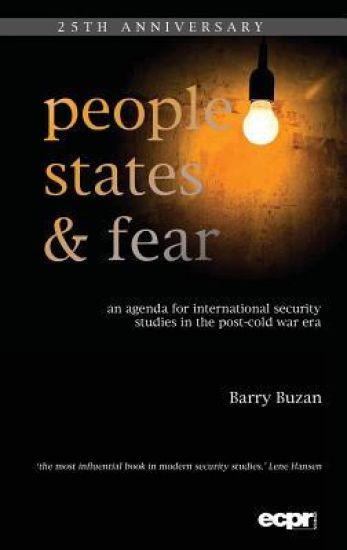
People, States and Fear

People, States and Fear

Barry Buzan

ECPR Press
2007
nidottu
This widely acclaimed book examines how states and societies pursue freedom from threat in an environment in which competitive relations are inescapable across the political, economic, military, societal and environmental landscapes. Throughout, attention is placed on the interplay of threats and vulnerabilities, the policy consequences of overemphasising one or the other, and the existence of contradictions within and between ideas about security. Barry Buzan argues that the concept of security is a versatile, penetrating and useful way to approach the study of international relations. Security provides an analytical framework between the extremes of power and peace, incorporates most of their insights - and adds more of its own. People, States & Fearis essential reading for all students and researchers of international politics and security studies. 25th Anniversary Edition: A new introduction, placing this classic text in a current context, was added to this book by the author in 2007.
Making Global Society

Making Global Society

Barry Buzan

Cambridge University Press
2023
pokkari
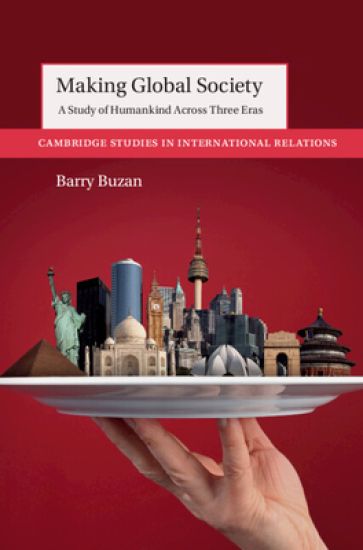
Barry Buzan proposes a new approach to making International Relations a truly global discipline that transcends both Eurocentrism and comparative civilisations. He narrates the story of humankind as a whole across three eras, using its material conditions and social structures to show how global society has evolved. Deploying the English School's idea of primary institutions and setting their story across three domains - interpolity, transnational and interhuman - this book conveys a living historical sense of the human story whilst avoiding the overabstraction of many social science grand theories. Buzan sharpens the familiar story of three main eras in human history with the novel idea that these eras are separated by turbulent periods of transition. This device enables a radical retelling of how modernity emerged from the late 18th century. He shows how the concept of 'global society' can build bridges connecting International Relations, Global Historical Sociology and Global/World History.
Making Global Society

Making Global Society

Barry Buzan

Cambridge University Press
2023
sidottu
Barry Buzan proposes a new approach to making International Relations a truly global discipline that transcends both Eurocentrism and comparative civilisations. He narrates the story of humankind as a whole across three eras, using its material conditions and social structures to show how global society has evolved. Deploying the English School's idea of primary institutions and setting their story across three domains - interpolity, transnational and interhuman - this book conveys a living historical sense of the human story whilst avoiding the overabstraction of many social science grand theories. Buzan sharpens the familiar story of three main eras in human history with the novel idea that these eras are separated by turbulent periods of transition. This device enables a radical retelling of how modernity emerged from the late 18th century. He shows how the concept of 'global society' can build bridges connecting International Relations, Global Historical Sociology and Global/World History.
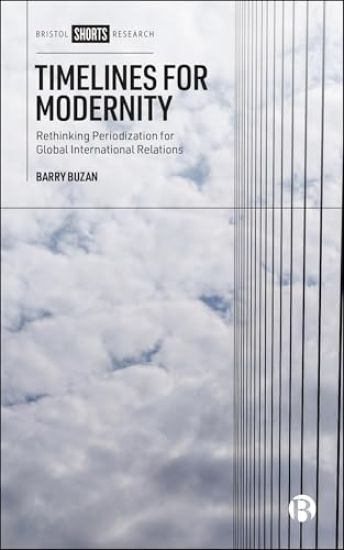
Timelines for Modernity

Timelines for Modernity

Barry Buzan

Bristol University Press
2025
sidottu
This groundbreaking book develops a new periodization for understanding contemporary international history. It challenges West-centric approaches by setting up timelines appropriate for a global approach to International Relations. Shifting the focus beyond great power wars, it incorporates economic, societal and environmental changes to redefine what constitutes significant historical moments for both the Global North and South. It uncovers pivotal turning points in the 1840s, 1970s and now, that highlight the formation, dominance, unravelling and replacement of the Western world order. It offers new foundations for understanding both how we arrived at where we stand today and what might lie ahead.
People, States and Fear

People, States and Fear

Barry Buzan

ECPR Press
2016
sidottu
This widely acclaimed book examines how states and societies pursue freedom from threat in an environment in which competitive relations are inescapable across the political, economic, military, societal and environmental landscapes. Throughout, attention is placed on the interplay of threats and vulnerabilities, the policy consequences of overemphasising one or the other, and the existence of contradictions within and between ideas about security. Barry Buzan argues that the concept of security is a versatile, penetrating and useful way to approach the study of international relations. Security provides an analytical framework between the extremes of power and peace, incorporates most of their insights - and adds more of its own. People, States & Fearis essential reading for all students and researchers of international politics and security studies. 25th Anniversary Edition: A new introduction, placing this classic text in a current context, was added to this book by the author in 2007.