Kirjojen hintavertailu. Mukana 11 717 486 kirjaa ja 12 kauppaa.

Kirjahaku

Etsi kirjoja tekijän nimen, kirjan nimen tai ISBN:n perusteella.

6 kirjaa tekijältä Barry C. Feld

Bad Kids

Bad Kids

Barry C. Feld

Oxford University Press Inc
1999
sidottu
Written by a leading scholar of juvenile justice, this book examines the social and legal changes that have transformed the juvenile court in the last three decades from a nominally rehabilitative welfare agency into a scaled-down criminal court for young offenders. It explores the complex relationship between race and youth crime to explain both the Supreme Court decisions to provide delinquents with procedural justice and the more recent political impetus to "get tough" on young offenders. This provocative book will be necessary reading for criminal and juvenile justice scholars, sociologists, legislators, and juvenile justice personnel.
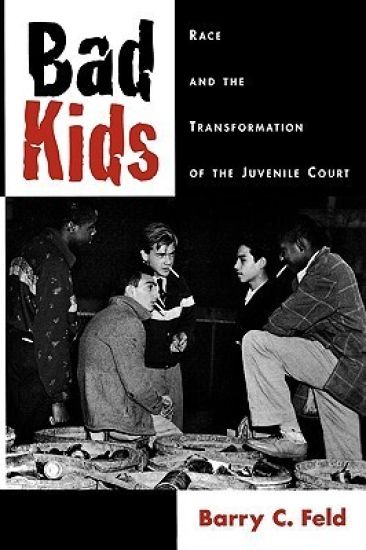
Bad Kids

Bad Kids

Barry C. Feld

Oxford University Press Inc
1999
nidottu
Within the past three decades, social and legal changes have transformed the juvenile court from a nominally rehabilitative welfare agency into a second-class criminal court for young offenders. Recent efforts to "toughen" juvenile justice policies have resulted in increasingly harsh sanctions that fall disproportionately on minority youths. In this provocative new book, Barry Feld examines what went wrong with the juvenile court and proposes an alternative model for youth crime control and child welfare. The Progressive reformers who created the juvenile court a century ago saw children as relatively blameless and innocent. But recent decades of rising crime rates associated with urban decay have strained this tolerant view of young offenders. Feld relates the 1967 Supreme Court decision In re Gault to the broader social and legal changes associated with the civil rights movement and the Warren Court's "Due Process Revolution." Although gault mandated more elaborate procedural safeguards in delinquency hearings, ironically, those protections legitimated the imposition of more punitive sanctions. Since Gault, Feld argues, three decades of judicial, legislative, and administrative reforms have conducted a form of "criminological triage." At the "soft end," reforms have shifted noncriminal status offenders, primarily female and white, out of the juvenile justice system into a "hidden system" made up of private sector mental health and chemical dependency facilities. At the "hard end," states transfer increasing numbers of young offenders, disproportionately minorities, to criminal court for prosecution as adults. Meanwhile, juvenile courts punish more severely those delinquents-again disproportionately minorities-who remain within the increasingly criminalized juvenile justice system. Feld attributes the current state of affairs to a conceptual flaw inherent in the juvenile court. The juvenile justice system attempts to combine social welfare and social control functions in one organization, but inevitably fulfills both missions badly because of the inherent and irreconcilable contradictions between them. Progressive reformers situated the juvenile court on a number of cultural, legal, and criminological fault lines, where the ideas of child and adult, determinism and free will, immature and responsible, treatment and punishment collide. The past three decades have witnessed a shift from the former to the latter of these binary pairs in response to the racial transformation of cities, the increase in serious youth crime, and the erosion of the rehabilitative assumptions of the juvenile court. The solution, Feld argues, is to uncouple social welfare from criminal social control. States could try all offenders in one integrated criminal justice system with appropriate modifications to accommodate the youthfulness of younger defendants: a graduated, age-culpability sentencing system, separate youth correctional facilities, and the like. Formally recognizing youthfulness as a mitigating factor would provide youths with greater protections and justice than they currently receive in either the juvenile or criminal justice systems. At the same time such a strategy would enable public policies to address directly the social welfare needs of all young people.
Kids, Cops, and Confessions

Kids, Cops, and Confessions

Barry C. Feld

New York University Press
2012
sidottu
Juveniles possess less maturity, intelligence, and competence than adults, heightening their vulnerability in the justice system. For this reason, states try juveniles in separate courts and use different sentencing standards than for adults. Yet, when police bring kids in for questioning, they use the same interrogation tactics they use for adults, including trickery, deception, and lying to elicit confessions or to produce incriminating evidence against the defendants. In Kids, Cops, and Confessions, Barry Feld offers the first report of what actually happens when police question juveniles. Drawing on remarkable data, Feld analyzes interrogation tapes and transcripts, police reports, juvenile court filings and sentences, and probation and sentencing reports, describing in rich detail what actually happens in the interrogation room. Contrasting routine interrogation and false confessions enables police, lawyers, and judges to identify interrogations that require enhanced scrutiny, to adopt policies to protect citizens, and to assure reliability and integrity of the justice system. Feld has produced an invaluable look at how the justice system really works.
Kids, Cops, and Confessions

Kids, Cops, and Confessions

Barry C. Feld

New York University Press
2014
pokkari
Juveniles possess less maturity, intelligence, and competence than adults, heightening their vulnerability in the justice system. For this reason, states try juveniles in separate courts and use different sentencing standards than for adults. Yet, when police bring kids in for questioning, they use the same interrogation tactics they use for adults, including trickery, deception, and lying to elicit confessions or to produce incriminating evidence against the defendants. In Kids, Cops, and Confessions, Barry Feld offers the first report of what actually happens when police question juveniles. Drawing on remarkable data, Feld analyzes interrogation tapes and transcripts, police reports, juvenile court filings and sentences, and probation and sentencing reports, describing in rich detail what actually happens in the interrogation room. Contrasting routine interrogation and false confessions enables police, lawyers, and judges to identify interrogations that require enhanced scrutiny, to adopt policies to protect citizens, and to assure reliability and integrity of the justice system. Feld has produced an invaluable look at how the justice system really works.
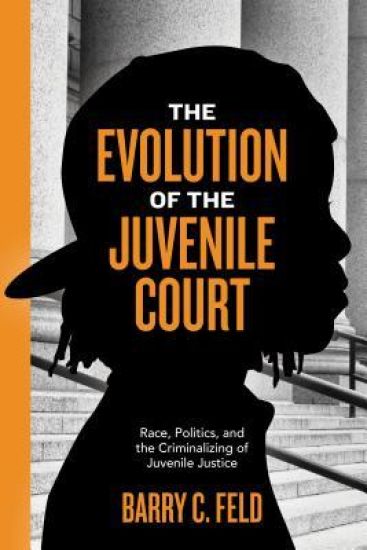
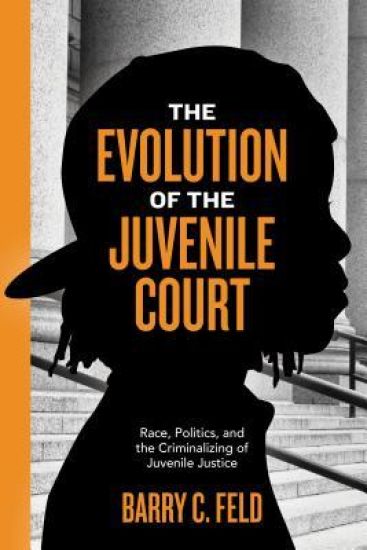
The Evolution of the Juvenile Court

The Evolution of the Juvenile Court

Barry C. Feld

New York University Press
2019
pokkari
Winner, 2020 ACJS Outstanding Book Award, given by the Academy of Criminal Justice Sciences A major statement on the juvenile justice system by one of America’s leading experts The juvenile court lies at the intersection of youth policy and crime policy. Its institutional practices reflect our changing ideas about children and crime control. The Evolution of the Juvenile Court provides a sweeping overview of the American juvenile justice system’s development and change over the past century. Noted law professor and criminologist Barry C. Feld places special emphasis on changes over the last 25 years—the ascendance of get tough crime policies and the more recent Supreme Court recognition that “children are different.” Feld’s comprehensive historical analyses trace juvenile courts’ evolution though four periods—the original Progressive Era, the Due Process Revolution in the 1960s, the Get Tough Era of the 1980s and 1990s, and today’s Kids Are Different era. In each period, changes in the economy, cities, families, race and ethnicity, and politics have shaped juvenile courts’ policies and practices. Changes in juvenile courts’ ends and means—substance and procedure—reflect shifting notions of children’s culpability and competence. The Evolution of the Juvenile Court examines how conservative politicians used coded racial appeals to advocate get tough policies that equated children with adults and more recent Supreme Court decisions that draw on developmental psychology and neuroscience research to bolster its conclusions about youths’ reduced criminal responsibility and diminished competence. Feld draws on lessons from the past to envision a new, developmentally appropriate justice system for children. Ultimately, providing justice for children requires structural changes to reduce social and economic inequality—concentrated poverty in segregated urban areas—that disproportionately expose children of color to juvenile courts’ punitive policies. Historical, prescriptive, and analytical, The Evolution of the Juvenile Court evaluates the author’s past recommendations to abolish juvenile courts in light of this new evidence, and concludes that separate, but reformed, juvenile courts are necessary to protect children who commit crimes and facilitate their successful transition to adulthood.
The Evolution of the Juvenile Court

The Evolution of the Juvenile Court

Barry C. Feld

New York University Press
2017
sidottu
Winner, 2020 ACJS Outstanding Book Award, given by the Academy of Criminal Justice Sciences A major statement on the juvenile justice system by one of America's leading experts The juvenile court lies at the intersection of youth policy and crime policy. Its institutional practices reflect our changing ideas about children and crime control. The Evolution of the Juvenile Court provides a sweeping overview of the American juvenile justice system's development and change over the past century. Noted law professor and criminologist Barry C. Feld places special emphasis on changes over the last 25 years—the ascendance of get tough crime policies and the more recent Supreme Court recognition that "children are different." Feld's comprehensive historical analyses trace juvenile courts' evolution though four periods—the original Progressive Era, the Due Process Revolution in the 1960s, the Get Tough Era of the 1980s and 1990s, and today's Kids Are Different era. In each period, changes in the economy, cities, families, race and ethnicity, and politics have shaped juvenile courts' policies and practices. Changes in juvenile courts' ends and means—substance and procedure—reflect shifting notions of children's culpability and competence. The Evolution of the Juvenile Court examines how conservative politicians used coded racial appeals to advocate get tough policies that equated children with adults and more recent Supreme Court decisions that draw on developmental psychology and neuroscience research to bolster its conclusions about youths' reduced criminal responsibility and diminished competence. Feld draws on lessons from the past to envision a new, developmentally appropriate justice system for children. Ultimately, providing justice for children requires structural changes to reduce social and economic inequality—concentrated poverty in segregated urban areas—that disproportionately expose children of color to juvenile courts' punitive policies. Historical, prescriptive, and analytical, The Evolution of the Juvenile Court evaluates the author's past recommendations to abolish juvenile courts in light of this new evidence, and concludes that separate, but reformed, juvenile courts are necessary to protect children who commit crimes and facilitate their successful transition to adulthood.