Kirjojen hintavertailu. Mukana 11 244 527 kirjaa ja 12 kauppaa.

Kirjahaku

Etsi kirjoja tekijän nimen, kirjan nimen tai ISBN:n perusteella.

23 kirjaa tekijältä Barry Cooper

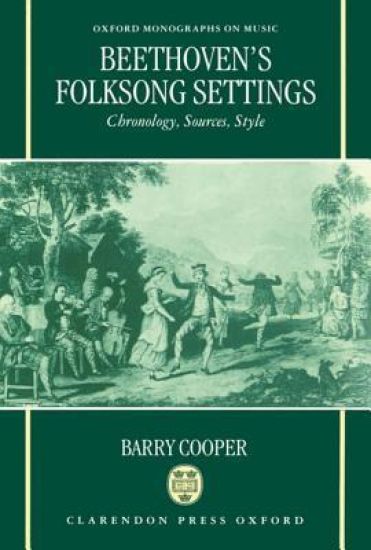
Beethoven's Folksong Settings

Beethoven's Folksong Settings

Barry Cooper

Clarendon Press
1994
sidottu
Beethoven composed far more folksong settings than any other type of composition. Most are British songs, including Auld Lang Syne and the The Miller of Dee, with text by such authors as Burns, Byron and Scott. Yet Beethoven's settings, commissioned by George Thomson of Edinburgh, have been neglected by performers and scholars alike, and nearly all accounts of them are both superficial and startlingly inaccurate. This book is based on a very elablorate study of a wide range of sources, and dispels the many myths that have been circulating about this music. Every one of the 179 settings is dated to within a few weeks and an account is given of the souces of the melodies and texts, the difficulties of sending the music across Europe during the Napoleonic Wars (smugglers were even called upon to assist!), the fees Beethoven received, and when and how the texts were added. By comparing Beethoven's settings with those of his predecessors Pleyel, Haydhn and Kozeluch, the author demonstrates that Beethoven comprehensively transcended the bounds of convention, producing settings of extra-ordinary quality and originality. Suggestions are also made for overcoming the problems of presenting these songs in performance.
Paleolithic Politics

Paleolithic Politics

Barry Cooper

University of Notre Dame Press
2020
sidottu
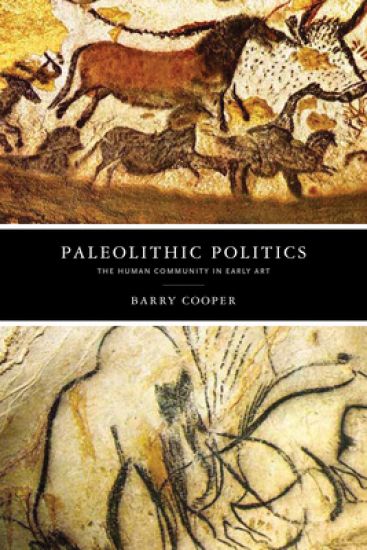
Using his background in political theory and philosophical anthropology, Barry Cooper is the first political scientist to propose new interpretations of some of the most famous extant Paleolithic art and artifacts in Paleolithic Politics. This book is inspired by Eric Voegelin, one of the major political scientists of the last century, who developed an interest in the very early symbolism associated with the caves and rock shelters of the Upper Paleolithic, but never finished his analysis. Cooper, who has written extensively on Voegelin's theories, takes up the enterprise of applying Voegelin's approach to an analysis of portable and cave art. He specifically applies Voegelin's philosophy of consciousness, his concept of the compactness and differentiation of consciousness, his argument regarding the experience and symbolizations of reality, and his notion of the primary experience of the cosmos to images previously regarded as pedestrian. Cooper demonstrates the political significance of the earliest expressions of human existence and is among the first to argue that political life began not with the Greeks, but 25,000 years before them. Archaeologists, prehistorians, and political scientists will all benefit from this original and provocative work.
Paleolithic Politics

Paleolithic Politics

Barry Cooper

University of Notre Dame Press
2020
nidottu
Using his background in political theory and philosophical anthropology, Barry Cooper is the first political scientist to propose new interpretations of some of the most famous extant Paleolithic art and artifacts in Paleolithic Politics. This book is inspired by Eric Voegelin, one of the major political scientists of the last century, who developed an interest in the very early symbolism associated with the caves and rock shelters of the Upper Paleolithic, but never finished his analysis. Cooper, who has written extensively on Voegelin's theories, takes up the enterprise of applying Voegelin's approach to an analysis of portable and cave art. He specifically applies Voegelin's philosophy of consciousness, his concept of the compactness and differentiation of consciousness, his argument regarding the experience and symbolizations of reality, and his notion of the primary experience of the cosmos to images previously regarded as pedestrian. Cooper demonstrates the political significance of the earliest expressions of human existence and is among the first to argue that political life began not with the Greeks, but 25,000 years before them. Archaeologists, prehistorians, and political scientists will all benefit from this original and provocative work.
Child Composers and Their Works

Child Composers and Their Works

Barry Cooper

Scarecrow Press
2009
sidottu
In Child Composers and Their Works: A Historical Survey, Barry Cooper examines over 100 composers born before 1900 who wrote substantial musical works before age 16. The book provides a general overview of the subject, examining the ways and identifying possible reasons these works have been marginalized in the general literature. The book also contains an annotated checklist of over 100 notable child composers, presenting a valuable and handy reference of these creators and their early works. The annotated checklist presents a chronological listing of child composers born before 1900 and features a descriptive list of what they wrote, often including analytical commentary and offering occasional music examples for illustration. The list also includes a select catalog of works, suggestions for further reading, and recordings when available. Complete with a bibliography and an index of composers, this resource is invaluable to scholars and historians.
Eric Voegelin and the Foundations of Modern Political Science

Eric Voegelin and the Foundations of Modern Political Science

Barry Cooper

University of Missouri Press
1999
sidottu
This important new work is a major analysis of the foundation of Eric Voegelin's political science. Barry Cooper maintains that the writings Voegelin undertook in the 1940s provide the groundwork for the brilliant book that is one of his best known, The New Science of Politics. At the time of that book's publication, however, few were aware of the enormous knowledge and accomplished scholarship that lay behind its illuminating, although sometimes baffling, formulations.By focusing on several of the key chapters in Voegelin's eight- volume History of Political Ideas, especially the studies of Bodin, Vico, and Schelling, Cooper shows how those studies provide the basis for Voegelin's thought. Investigating Voegelin's study of Oriental influences on Western political "ideas," especially Mongol constitutional law, and his study of Toynbee, Cooper seeks to demonstrate the vast range of materials Voegelin used.Cooper contends that, as with other great thinkers, political crisis, specifically the world war of 1939-1945, stimulated Voegelin's intellectual and spiritual achievement. He provides an analysis of Voegelin's immediate concern with the course of World War II, his ability to understand those dramatic events in a large context, and his ability to provide an insightful account of the causes, the significance, and the consequences of the spiritual and political disorder that was evident all around him.In Eric Voegelin and the Foundations of Modern Political Science, Cooper makes the connection between Voegelin's political writings of the 1940s and the meditative interpretations that began to appear with the publication of Anamnesis and with the later volumes of Order and History much more intelligible than does any existing discussion of Voegelin. Scholars in intellectual history and political science will benefit enormously from this valuable new addition to Voegelin studies.
New Political Religions, or an Analysis of Modern Terrorism

New Political Religions, or an Analysis of Modern Terrorism

Barry Cooper

University of Missouri Press
2005
nidottu
In ""New Political Religions, or an Analysis of Modern Terrorism"", Barry Cooper applies the insights of Eric Voegelin to the phenomenon of modern terrorism. Cooper points out that the chief omission from most contemporary studies of terrorism is an analysis of the ""spiritual motivation"" that is central to the actions of terrorists today. When spiritual elements are discussed in conventional literature, they are grouped under the opaque term religion. A more conceptually adequate approach is provided by Voegelin's political science and, in particular, by his Schellingian term pneumopathology - a disease of the spirit. Cooper concludes with a chapter on the uniqueness of terrorist networks, their limitations, and the means by which they can be dealt with. In the ongoing conversations among specialists in terrorist studies, as well as the ordinary discourse of citizens in western democracies wishing to understand the world around them, this book adds a distinctive voice.
Alexander Kennedy Isbister

Alexander Kennedy Isbister

Barry Cooper

Carleton University Press,Canada
1988
nidottu
Born of mixed Scottish/Native Indian blood in what is now Saskatchewan, Isbister emigrated to Britain after he found his ambitions thwarted by Hudson's Bay Company policies regarding native-born employees. There he became a respected educator, but more important to this study, he also became the most persistent critic of the Company, and of British and Canadian policies dealing with the inhabitants of Rupert's Land and the Northwest Territories.
Merleau-Ponty and Marxism

Merleau-Ponty and Marxism

Barry Cooper

UNIVERSITY OF TORONTO PRESS
1979
pokkari
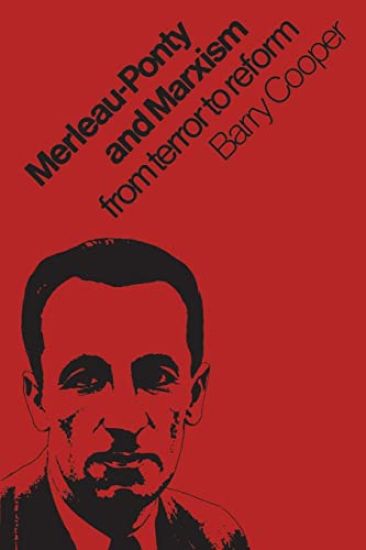
Influenced by Kojève's interpretation of Hegel as well as his direct political experience of the second world war, Maurice Merleau-Ponty abandoned the religious and philosophical position he had assumed in the 1930s and turned to Marxism. This is the first critical study of the French philosopher's political ideas and the context in which they evolved. In its origin and its development, Merleau-Ponty's political thought expressed a subtle dialectic between ongoing political events and the apparent truths of Marx's analysis. With the onset of the cold war, the discovery of the Soviet concentration camps, the repression of Eastern Europe, the Algerian crisis, and the founding of the Fifth Republic, Merleau-Ponty began to take a critical look at Marx's ideas of the genesis of humanism in the light of these disturbing political realities. His reconsideration of the basis of Marxism and his conclusion that it had lost contact with history led to a fundamental reorientation of his attitudes. No longer sympathetic to the use of violence to end violence, he criticized Sartre's external justification of communist violence as 'magical' and advocated instead a new liberalism combining parliamentary democracy with an awareness of the social problems of industrial capitalism. Barry Cooper's study of this important contemporary thinker gives context for an understanding of Merleau- Ponty's politics and, in so doing, brings together the complex issues and ideas that have shaped modern European political and philosophical thought.
The End of History

The End of History

Barry Cooper

University of Toronto Press
1984
pokkari
History ended, according to Hegel according to Kojève, with the establishment and proliferation in Europe of states organized along Napoleonic lines: rational, bureaucratic, homogenous, atheist. This state lives in some tension with the popular slogan that helped give it birth: Liberty, Equality, Fraternity. But there is now also totalitarianism – the only new kind of regime, according to Arendt, created since the national state. Man is now in charge of nature, technology, and society; much of political life has become a gavotte elaborating the meaning of the Napoleonic model. This interpretation, however opposed it seems to common sense, has been influential, particularly in France where the course of existentialism is unintelligible without taking it into account. Professor Cooper argues that it is inherently plausible and examines the arguments of Hegel and Kojève to reveal its consistency and explanatory power. And he applies it to more contemporary events – the experience of the atomic bomb, the Gulag system of extermination, and the growth of multinational corporations. The work concludes by pulling together the presuppositions and theories of the totalitarian system, the Hegelian version of the Napoleonic state, and our contemporary technological society. Overall, the reader will find here a complete and challenging presentation of how the modern world understands its collective life.
The Creation of Beethoven's 35 Piano Sonatas
Beethoven’s piano sonatas are a cornerstone of the piano repertoire and favourites of both the concert hall and recording studio. The sonatas have been the subject of much scholarship, but no single study gives an adequate account of the processes by which these sonatas were composed and published. With source materials such as sketches and correspondence increasingly available, the time is ripe for a close study of the history of these works. Barry Cooper, who in 2007 produced a new edition of all 35 sonatas, including three that are often overlooked, examines each sonata in turn, addressing questions such as: Why were they written? Why did they turn out as they did? How did they come into being and how did they reach their final form? Drawing on the composer’s sketches, autograph scores and early printed editions, as well as contextual material such as correspondence, Cooper explores the links between the notes and symbols found in the musical texts of the sonatas, and the environment that brought them about. The result is a biography not of the composer, but of the works themselves.
The Creation of Beethoven's 35 Piano Sonatas
Beethoven’s piano sonatas are a cornerstone of the piano repertoire and favourites of both the concert hall and recording studio. The sonatas have been the subject of much scholarship, but no single study gives an adequate account of the processes by which these sonatas were composed and published. With source materials such as sketches and correspondence increasingly available, the time is ripe for a close study of the history of these works. Barry Cooper, who in 2007 produced a new edition of all 35 sonatas, including three that are often overlooked, examines each sonata in turn, addressing questions such as: Why were they written? Why did they turn out as they did? How did they come into being and how did they reach their final form? Drawing on the composer’s sketches, autograph scores and early printed editions, as well as contextual material such as correspondence, Cooper explores the links between the notes and symbols found in the musical texts of the sonatas, and the environment that brought them about. The result is a biography not of the composer, but of the works themselves.
Consciousness and Politics – From Analysis to Meditation in the Late Work of Eric Voegelin
Consciousness and Politics deals with some of the same texts discussed in two earlier books on Voegelin, Eric Voegelin and the Foundations of Modern Political Science (1999) and Beginning the Quest: Law and Politics in the Early Work of Eric Voegelin (2009). Given the appearance of so many useful discussions, especially by scholars who wrote the introductions to the several volumes of the Collected Works of Eric Voegelin that have appeared over the past decade or so, certain revisions in detail should come as no surprise. That is how science, even political science, improves. Consciousness and Politics begins with an analysis of the problem of the historicity of truth as it was formulated shortly before Voegelin abandoned his eight-volume History of Political Ideas. The analysis then follows a more or less chronological path, discussing the arguments developed in The New Science of Politics, Voegelin's most famous book, the differentiation of consciousness and the problems of myth and nature as presented in the early volumes of Order and History. Starting in the 1960s, Voegelin began a lengthy argument in several volumes that resumed his concern with the philosophy of consciousness, which he had outlined in his early writings, and its connection to what we conventionally call philosophy of history. Voegelin's late and often difficult essays, lectures, and the final volume of Order and History, many scholars have noticed, emphasize the meditative origins of his political science and, more broadly, of philosophy. The concluding chapters analyze this subject-matter and a perennial question that so many of Voegelin's readers have raised: what is the relation of his political science or philosophy to Christianity?
Discipleship Explored Handbook

Discipleship Explored Handbook

Barry Cooper

The Good Book Company
2018
nidottu
What's the best love you've ever known? Discipleship Explored is for anyone who wants to make the most of their Christian lives, but especially for people who have recently completed an evangelistic course and decided to follow Christ. The Handbook contains everything a guest needs to take part in this eight-session course. Each session starts with film (from the brand new accompanying DVD), after which there is a group Bible study in Philippians. Follow up material is included to help course participants follow up each theme during the week.
Discipleship Explored Leader's Handbook

Discipleship Explored Leader's Handbook

Barry Cooper

The Good Book Company
2018
pokkari
What's the best love you've ever known? Discipleship Explored is for anyone who wants to make the most of their Christian lives, but especially for people who have recently completed an evangelistic course and decided to follow Christ. The Discipleship Explored Leader's Handbook contains everything you need to lead this eight-session course. It includes comprehensive training material and advice, and answers to all the questions from the course. Each session starts with a film from the brand new, accompanying DVD, after which there is a group Bible study in Philippians. Follow Up material is included to help course participants follow up each theme during the week.
Discipleship Explored Leader's Kit

Discipleship Explored Leader's Kit

Barry Cooper

The Good Book Company
2018
tuotepaketti
What's the best love you've ever known? Discipleship Explored is an 8-week journey through Philippians where participants will discover how good it is to be a follower of Christ and how he calls his disciples to live for him today. This fully revised and updated edition has a stunning new look as well as brand new documentary-style films shot around the world with testimonies. There are also new follow-up Bible studies. It is now more flexible to use as the Leader's Kit contains a comprehensive Leader's Handbook, Member's Handbook, and DVD and a code to download digital copies of the video sessions.
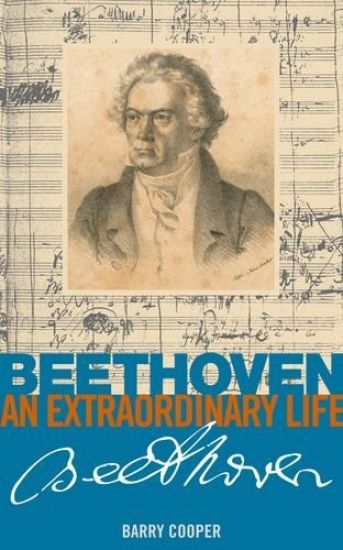
Beethoven: An Extraordinary Life

Beethoven: An Extraordinary Life

Barry Cooper

Associated Board of the Royal Schools of Music
2013
muu
In this, the fifth biography in our 'Extraordinary Lives' series, Beethoven expert Professor Barry Cooper provides a fascinating and compact summary of the key moments in Beethoven's life. In exploring crucial documents, Cooper provides fresh insights into Beethoven's personality and motivations whilst challenging much of the prevalent 'mythology' that surrounds him.