Kirjojen hintavertailu. Mukana 11 649 972 kirjaa ja 12 kauppaa.

Kirjahaku

Etsi kirjoja tekijän nimen, kirjan nimen tai ISBN:n perusteella.

25 kirjaa tekijältä Barry Cunliffe

The Penguin Illustrated History of Britain and Ireland
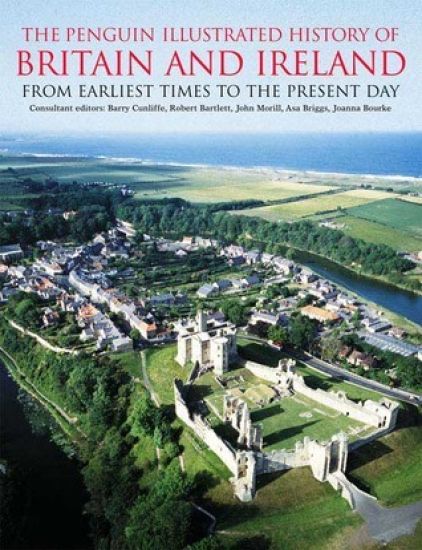
Compiled by a team of leading historians, this is a wonderfully rich, lavishly illustrated history of England, Scotland, Wales and Ireland. The reader is taken on a journey from prehistoric times to the present day, examining such topics as the spread of literacy, the development of transport, and the evolution of country houses on the way. British cities are brought to life in artwork reconstructions that take the reader back to the Dublin of the 18th century or London in the 1850s. Scholarly yet accessible, this is the ideal introduction to British and Irish history.
The Extraordinary Voyage of Pytheas the Greek
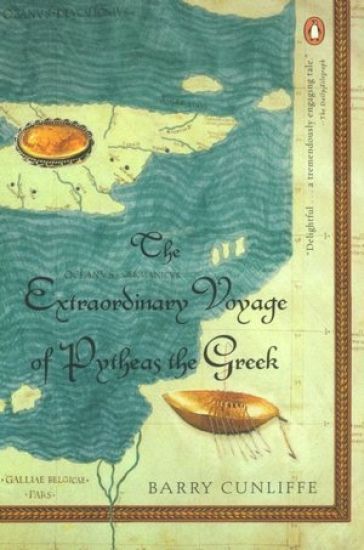
Around 330 b.c., a remarkable adventurer named Pytheas set out from the Greek colony of Massalia (now Marseille) on the Mediterranean Sea to explore the fabled, terrifying lands of northern Europe. Renowned archaeologist Barry Cunliffe here re-creates Pytheas's unprecedented journey, which occurred almost 300 years before Julius Caesar landed in Britain. Beginning with an invaluable pocket history of early Mediterranean civilization, Cunliffe illuminates what Pytheas would have seen and experienced--the route he likely took to reach Brittany, then Britain, Iceland, and Denmark; and evidence of the ancient cultures he would have encountered on shore. The discoveries Pytheas made would reverberate throughout the civilized world for years to come, and in recounting his extraordinary voyage, Cunliffe chronicles an essential chapter in the history of civilization.
The Celts

The Celts

Barry Cunliffe

Oxford University Press
2003
nidottu
Savage and bloodthirsty, or civilized and peaceable? The Celts have long been a subject of enormous fascination, speculation, and misunderstanding. From the ancient Romans to the present day, their real nature has been obscured by a tangled web of preconceived ideas and stereotypes. Barry Cunliffe seeks to reveal this fascinating people for the first time, using an impressive range of evidence, and exploring subjects such as trade, migration, and the evolution of Celtic traditions. Along the way, he exposes the way in which society's needs have shaped our visions of the Celts, and examines such colourful characters as St Patrick, Cú Chulainn, and Boudica. ABOUT THE SERIES: The Very Short Introductions series from Oxford University Press contains hundreds of titles in almost every subject area. These pocket-sized books are the perfect way to get ahead in a new subject quickly. Our expert authors combine facts, analysis, perspective, new ideas, and enthusiasm to make interesting and challenging topics highly readable.
Facing the Sea of Sand

Facing the Sea of Sand

Barry Cunliffe

Oxford University Press
2023
sidottu
Northern Africa is dominated by the Sahara Desert, stretching across the continent from the Atlantic Ocean to the Red Sea. This book is about the people who lived around the edges of the Desert and the different ways in which they responded to its challenges, establishing networks of communication across its expanse. But the Sahara has not always been a desert. From about 9000 BC the region began to enjoy a warm, humid period allowing vegetation to flourish and wild animals to move in. Humans soon followed practising pastoral economies but with the onset of harsher conditions once more around 3000 BC the desert reclaimed its own. Since then fluctuations in climate have continued to affect the lives of people living around the desert fringes. The communities occupying the North African Coast and in the Nile Valley have come under the influence of the states dominating the Near East and the Mediterranean but those living in in the Sahel to the south of the desert have developed their own distinctive cultures. The book tells the story of the growing links between the two worlds, showing that Africa played a crucial part in the development of the Old World before it was drawn into the story of the New World.
The Ancient Celts, Second Edition

The Ancient Celts, Second Edition

Barry Cunliffe

Oxford University Press
2018
nidottu
Fierce warriors and skilled craftsmen, the Celts were famous throughout the Ancient Mediterranean World. They were the archetypal barbarians from the north and were feared by both Greeks and Romans. For two and a half thousand years they have continued to fascinate those who have come into contact with them, yet their origins have remained a mystery and even today are the subject of heated debate among historians and archaeologists. Barry Cunliffe's classic study of the ancient Celtic world was first published in 1997. Since then huge advances have taken place in our knowledge: new finds, new ways of using DNA records to understand Celtic origins, new ideas about the proto-urban nature of early chieftains' strongholds, All these developments are part of this fully updated , and completely redesigned edition. Cunliffe explores the archaeological reality of these bold warriors and skilled craftsmen of barbarian Europe who inspired fear in both the Greeks and the Romans. He investigates the texts of the classical writers and contrasts their view of the Celts with current archaeological findings. Tracing the emergence of chiefdoms and the fifth- to third-century migrations as far as Bosnia and the Czech Republic, he assesses the disparity between the traditional story and the most recent historical and archaeological evidence on the Celts. Other aspects of Celtic identity such as the cultural diversity of the tribes, their social and religious systems, art, language and law, are also examined. From the picture that emerges, we are -- crucially -- able to distinguish between the original Celts, and those tribes which were 'Celtized', giving us an invaluable insight into the true identity of this ancient people.
On the Ocean

On the Ocean

Barry Cunliffe

Oxford University Press
2017
sidottu
For humans the sea is, and always has been, an alien environment. Ever moving and ever changing in mood, it is a place without time, in contrast to the land which is fixed and scarred by human activity giving it a visible history. While the land is familiar, even reassuring, the sea is unknown and threatening. By taking to the sea humans put themselves at its mercy. It has often been perceived to be an alien power teasing and cajoling. The sea may give but it takes. Why, then, did humans become seafarers? Part of the answer is that we are conditioned by our genetics to be acquisitive animals: we like to acquire rare materials and we are eager for esoteric knowledge, and society rewards us well for both. Looking out to sea most will be curious as to what is out there - a mysterious island perhaps but what lies beyond? Our innate inquisitiveness drives us to explore. Barry Cunliffe looks at the development of seafaring on the Mediterranean and the Atlantic, two contrasting seas -- the Mediterranean without a significant tide, enclosed and soon to become familiar, the Atlantic with its frightening tidal ranges, an ocean without end. We begin with the Middle Palaeolithic hunter gatherers in the eastern Mediterranean building simple vessels to make their remarkable crossing to Crete and we end in the early years of the sixteenth century with sailors from Spain, Portugal and England establishing the limits of the ocean from Labrador to Patagonia. The message is that the contest between humans and the sea has been a driving force, perhaps the driving force, in human history.
The Scythians

The Scythians

Barry Cunliffe

Oxford University Press
2019
sidottu
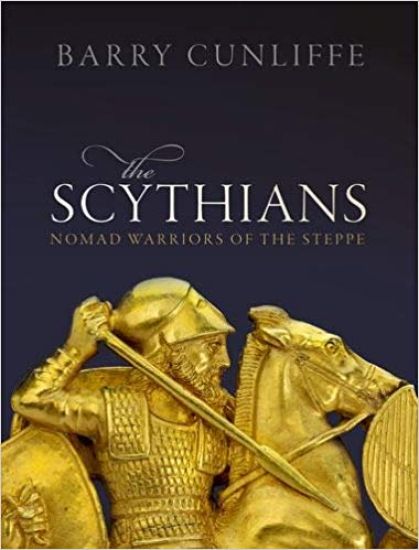
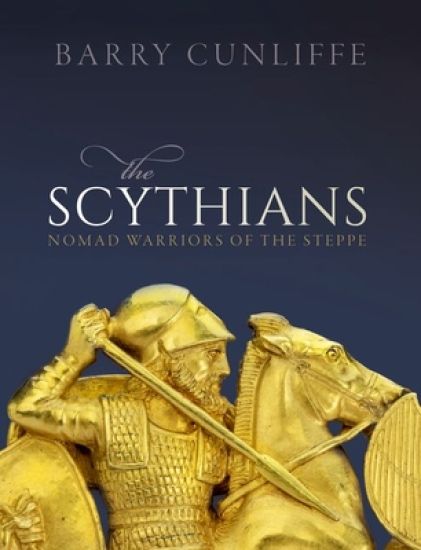
Brilliant horsemen and great fighters, the Scythians were nomadic horsemen who ranged wide across the grasslands of the Asian steppe from the Altai mountains in the east to the Great Hungarian Plain in the first millennium BC. Their steppe homeland bordered on a number of sedentary states to the south - the Chinese, the Persians and the Greeks - and there were, inevitably, numerous interactions between the nomads and their neighbours. The Scythians fought the Persians on a number of occasions, in one battle killing their king and on another occasion driving the invading army of Darius the Great from the steppe. Relations with the Greeks around the shores of the Black Sea were rather different - both communities benefiting from trading with each other. This led to the development of a brilliant art style, often depicting scenes from Scythian mythology and everyday life. It is from the writings of Greeks like the historian Herodotus that we learn of Scythian life: their beliefs, their burial practices, their love of fighting, and their ambivalent attitudes to gender. It is a world that is also brilliantly illuminated by the rich material culture recovered from Scythian burials, from the graves of kings on the Pontic steppe, with their elaborate gold work and vividly coloured fabrics, to the frozen tombs of the Altai mountains, where all the organic material - wooden carvings, carpets, saddles and even tattooed human bodies - is amazingly well preserved. Barry Cunliffe here marshals this vast array of evidence - both archaeological and textual - in a masterful reconstruction of the lost world of the Scythians, allowing them to emerge in all their considerable vigour and splendour for the first time in over two millennia.
The Scythians

The Scythians

Barry Cunliffe

Oxford University Press
2021
nidottu
Brilliant horsemen and great fighters, the Scythians were nomadic horsemen who ranged wide across the grasslands of the Asian steppe from the Altai mountains in the east to the Great Hungarian Plain in the first millennium BC. Their steppe homeland bordered on a number of sedentary states to the south - the Chinese, the Persians and the Greeks - and there were, inevitably, numerous interactions between the nomads and their neighbours. The Scythians fought the Persians on a number of occasions, in one battle killing their king and on another occasion driving the invading army of Darius the Great from the steppe. Relations with the Greeks around the shores of the Black Sea were rather different - both communities benefiting from trading with each other. This led to the development of a brilliant art style, often depicting scenes from Scythian mythology and everyday life. It is from the writings of Greeks like the historian Herodotus that we learn of Scythian life: their beliefs, their burial practices, their love of fighting, and their ambivalent attitudes to gender. It is a world that is also brilliantly illuminated by the rich material culture recovered from Scythian burials, from the graves of kings on the Pontic steppe, with their elaborate gold work and vividly coloured fabrics, to the frozen tombs of the Altai mountains, where all the organic material - wooden carvings, carpets, saddles and even tattooed human bodies - is amazingly well preserved. Barry Cunliffe here marshals this vast array of evidence - both archaeological and textual - in a masterful reconstruction of the lost world of the Scythians, allowing them to emerge in all their considerable vigour and splendour for the first time in over two millennia.
Bretons and Britons

Bretons and Britons

Barry Cunliffe

Oxford University Press
2021
sidottu
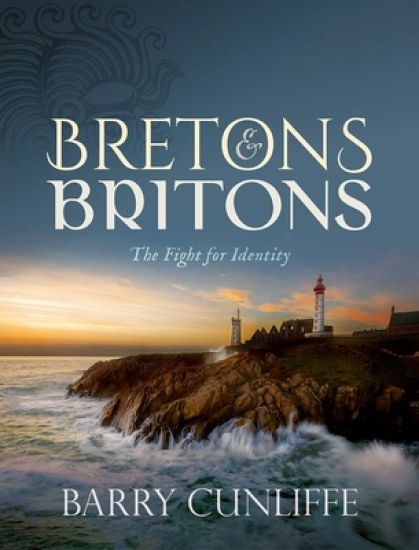
What is it about Brittany that makes it such a favourite destination for the British? To answer this question, Bretons and Britons explores the long history of the Bretons, from the time of the first farmers around 5400 BC to the present, and the very close relationship they have had with their British neighbours throughout this time. More than simply a history of a people, Bretons and Britons is also the author's homage to a country and a people he has come to admire over decades of engagement. Underlying the story throughout is the tale of the Bretons' fierce struggle to maintain their distinctive identity. As a peninsula people living on a westerly excrescence of Europe they were surrounded on three sides by the sea, which gave them some protection from outside interference, but their landward border was constantly threatened - not only by succeeding waves of Romans, Franks, and Vikings, but also by the growing power of the French state. It was the sea that gave the Bretons strength and helped them in their struggle for independence. They shared in the culture of Atlantic-facing Europe, and from the eighteenth century, when a fascination for the Celts was beginning to sweep Europe, they were able to present themselves as the direct successors of the ancient Celts along with the Cornish, Welsh, Scots, and Irish. This gave them a new strength and a new pride. It is this spirit that is still very much alive today.
Driven by the Monsoons

Driven by the Monsoons

Barry Cunliffe

Oxford University Press
2025
sidottu
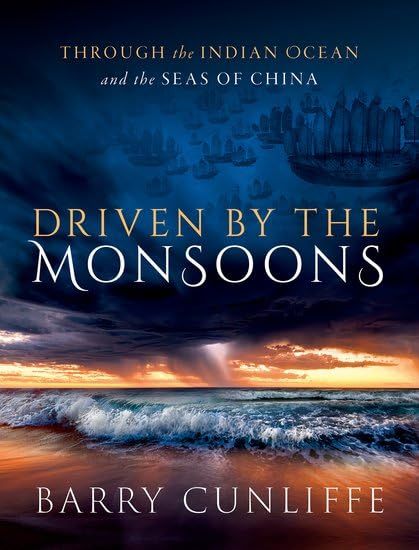
The Silk Road may be one origin of globalization, but the Indian Ocean is another. Barry Cunliffe examines the beginning of maritime trade using the evidence of archaeology and the tales of great travellers such as Marco Polo, Ibn Battuta, and the Chinese Admiral, Zheng He. This story complements that of the land routes, showing how humans have been driven across thousands of years to create and maintain networks whatever the difficulties. Driven by the Monsoons illuminates maritime connections between the Indian Ocean and its surrounding water routes: the Arabian Gulf and the Red and China Seas. It begins with the movement of humans into South-East Asia and ends about 1600 CE when European companies emerge to takeover. It is tale of exotic goods, material needs, adventure, and desire. While conditions at sea and the abilities of the maritime communities provided a degree of stability, the direction and intensity of trade and the types of commodities on the move was determined by the fortunes and aspirations of distant empires, those of China in the east and South-West Asia and the Mediterranean in the west. This ever-changing pressure provided the dynamic situation in which society and economies in East Africa, India and South-East Asia flourished. Driven by the Monsoons explores the birth of the modern, connected, world.
On the Ocean

On the Ocean

Barry Cunliffe

Oxford University Press
2025
nidottu
For humans the sea is, and always has been, an alien environment. Ever moving and ever changing in mood, it is a place without time, in contrast to the land which is fixed and scarred by human activity giving it a visible history. While the land is familiar, even reassuring, the sea is unknown and threatening. By taking to the sea humans put themselves at its mercy. It has often been perceived to be an alien power teasing and cajoling. The sea may give but it takes. Why, then, did humans become seafarers? Part of the answer is that we are conditioned by our genetics to be acquisitive animals: we like to acquire rare materials and we are eager for esoteric knowledge, and society rewards us well for both. Looking out to sea most will be curious as to what is out there - a mysterious island perhaps but what lies beyond? Our innate inquisitiveness drives us to explore. Barry Cunliffe looks at the development of seafaring on the Mediterranean and the Atlantic, two contrasting seas — the Mediterranean without a significant tide, enclosed and soon to become familiar, the Atlantic with its frightening tidal ranges, an ocean without end. We begin with the Middle Palaeolithic hunter gatherers in the eastern Mediterranean building simple vessels to make their remarkable crossing to Crete and we end in the early years of the sixteenth century with sailors from Spain, Portugal and England establishing the limits of the ocean from Labrador to Patagonia. The message is that the contest between humans and the sea has been a driving force, perhaps the driving force, in human history.
Druids

Druids

Barry Cunliffe

Oxford University Press
2010
nidottu
Who were the Druids? What do we know about them? Do they still exist today? The Druids first came into focus in Western Europe - Gaul, Britain, and Ireland - in the second century BC. They are a popular subject; they have been known and discussed for over 2,000 years and few figures flit so elusively through history. They are enigmatic and puzzling, partly because of the lack of knowledge about them has resulted in a wide spectrum of interpretations. Barry Cunliffe takes the reader through the evidence relating to the Druids, trying to decide what can be said and what can't be said about them. He examines why the nature of the druid caste changed quite dramatically over time, and how successive generations have interpreted the phenomenon in very different ways. ABOUT THE SERIES: The Very Short Introductions series from Oxford University Press contains hundreds of titles in almost every subject area. These pocket-sized books are the perfect way to get ahead in a new subject quickly. Our expert authors combine facts, analysis, perspective, new ideas, and enthusiasm to make interesting and challenging topics highly readable.
Britain Begins

Britain Begins

Barry Cunliffe

Oxford University Press
2013
nidottu
The last Ice Age, which came to an end about 12,000 years ago, swept the bands of hunter gatherers from the face of the land that was to become Britain and Ireland, but as the ice sheets retreated and the climate improved so human groups spread slowly northwards, re-colonizing the land that had been laid waste. From that time onwards Britain and Ireland have been continuously inhabited and the resident population has increased from a few hundreds to more than 60 million. Britain Begins is nothing less than the story of the origins of the British and the Irish peoples, from around 10,000BC to the eve of the Norman Conquest. Using the most up to date archaeological evidence together with new work on DNA and other scientific techniques which help us to trace the origins and movements of these early settlers, Barry Cunliffe offers a rich narrative account of the first islanders - who they were, where they came from, and how they interacted one with another. Underlying this narrative throughout is the story of the sea, which allowed the islanders and their continental neighbours to be in constant contact. The story told by the archaeological evidence, in later periods augmented by historical texts, satisfies our need to know who we are and where we come from. But before the development of the discipline of archaeology, people used what scraps there were, gleaned from Biblical and classical texts, to create a largely mythological origin for the British. Britain Begins also explores the development of these early myths, which show our ancestors attempting to understand their origins. And, as Cunliffe shows, today's archaeologists are driven by the same desire to understand the past - the only real difference is that we have vastly more evidence to work with.
By Steppe, Desert, and Ocean

By Steppe, Desert, and Ocean

Barry Cunliffe

Oxford University Press
2017
nidottu
By Steppe, Desert, and Ocean is nothing less than the story of how humans first started building the globalized world we know today. Set on a huge continental stage, from Europe to China, it is a tale covering over 10,000 years, from the origins of farming around 9000 BC to the expansion of the Mongols in the thirteenth century AD. An unashamedly 'big history', it charts the development of European, Near Eastern, and Chinese civilizations and the growing links between them by way of the Indian Ocean, the silk Roads, and the great steppe corridor (which crucially allowed horse riders to travel from Mongolia to the Great Hungarian Plain within a year). Along the way, it is also the story of the rise and fall of empires, the development of maritime trade, and the shattering impact of predatory nomads on their urban neighbours. Above all, as this immense historical panorama unfolds, we begin to see in clearer focus those basic underlying factors - the acquisitive nature of humanity, the differing environments in which people live, and the dislocating effect of even slight climatic variation - which have driven change throughout the ages, and which help us better understand our world today.
Europe Between the Oceans

Europe Between the Oceans

Barry Cunliffe

Yale University Press
2011
pokkari
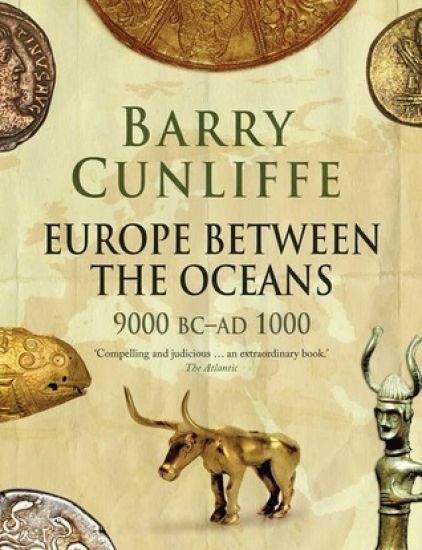
A sensational, interdisciplinary work which entirely reorients our understanding of Europe from 10,000 BC to the time of the Vikings In this magnificent book, distinguished archaeologist Barry Cunliffe reframes our entire conception of early European history, from prehistory through the ancient world to the medieval Viking period. Cunliffe views Europe not in terms of states and shifting political land boundaries but as a geographical niche particularly favored in facing many seas. These seas, and Europe’s great transpeninsular rivers, ensured a rich diversity of natural resources while also encouraging the dynamic interaction of peoples across networks of communication and exchange. The development of these early Europeans is rooted in complex interplays, shifting balances, and geographic and demographic fluidity.Drawing on archaeology, anthropology, and history, Cunliffe has produced an interdisciplinary tour de force. His is a bold book of exceptional scholarship, erudite and engaging, and it heralds an entirely new understanding of Old Europe.
Iron Age Communities in Britain

Iron Age Communities in Britain

Barry Cunliffe

Routledge
2004
sidottu
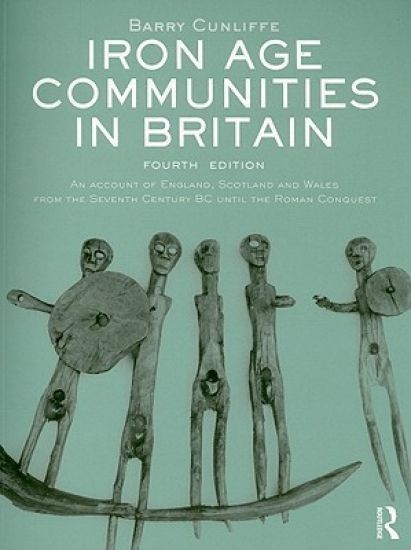
Since its first publication in 1971, Barry Cunliffe's monumental survey has established itself as a classic of British archaeology. This fully revised fourth edition maintains the qualities of the earlier editions, whilst taking into account the significant developments that have moulded the discipline in recent years. Barry Cunliffe here incorporates new theoretical approaches, technological advances and a range of new sites and finds, ensuring that Iron Age Communities in Britain remains the definitive guide to the subject.
Iron Age Communities in Britain

Iron Age Communities in Britain

Barry Cunliffe

Routledge
2009
nidottu
Since its first publication in 1971, Barry Cunliffe's monumental survey has established itself as a classic of British archaeology. This fully revised fourth edition maintains the qualities of the earlier editions, whilst taking into account the significant developments that have moulded the discipline in recent years. Barry Cunliffe here incorporates new theoretical approaches, technological advances and a range of new sites and finds, ensuring that Iron Age Communities in Britain remains the definitive guide to the subject.
Wessex to 1000 AD

Wessex to 1000 AD

Barry Cunliffe

Longman
1993
nidottu
Wessex -- the ancient counties of Dorset, Somerset, Wiltshire, Hampshire and Berkshire -- is remarkable for its economic and social cohesion as a region, and for the extraordinary wealth of its ancient remains. In this authoritative survey, Barry Cunliffe sets the great monuments and famous sites in their full cultural context. His chief concern, however, is to interpret the landscape of the region, and the people who over so many centuries created it. In his hands it becomes an archaeological artefact as eloquent as Avebury and Stonehenge themselves.
Fishbourne Roman Palace

Fishbourne Roman Palace

Barry Cunliffe

The History Press Ltd
1998
nidottu
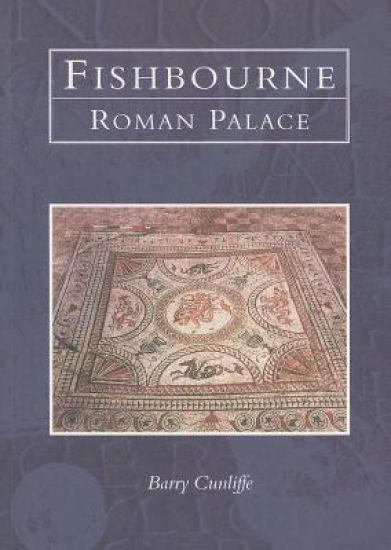
The discovery, during the early 1960s, of the site of a Roman Palace and its garden at Fishbourne, near Chichester, remains the most important and exciting event in Romano-British archaeology over the last half-century. Since his original excavation, Barry Cunliffe has kept in close contact with work on the site and more is now known about the building itself and about its place in the development of Roman Britain. It is still believed that this huge building - covering 10 acres and furnished with many mosaic floors and other luxurious appointments - was indeed a palace, probably belonging to Tiberius Claudius Togidubnus, who has been granted Roman citizenship under Claudius and who as a client king was responsible for governing the area in which the palace was situated. As remarkable as the palace itself is the large formal garden, laid out with paths, hedges, fountains and basins. No comparable Roman garden has been discovered west of Italy. Professor Cunliffe describes the whole story of the historic excavation, unfolding the history of the site from the early military beginnings down to the final destruction of the palace by fire.
Roman Bath Discovered

Roman Bath Discovered

Barry Cunliffe

The History Press Ltd
2009
nidottu
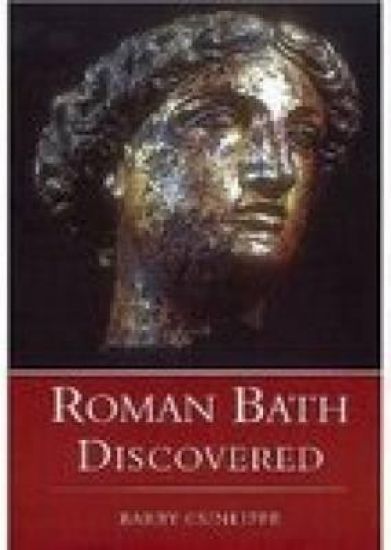
The finding, in 1727, of the gilded bronze head of the Roman goddess Minerva during the construction of the famous Stall Street led to the discovery of the Roman temple and of the baths. Since then archaeologists have discovered more and more about the Roman city of Aquae Sulis. In this new edition of a work first published almost thirty years ago, Professor Cunliffe brings the story right up to date. He deals in detail with the temple and its precinct and with the 'curse tablets' which have been deciphered to reveal the thoughts of Roman visitors. He then explains just how the bathing establishment was organized and explores the relationship between the spa and the town. We learn what life was like for the local inhabitants as well as for the visitors. Finally he charts the process of decline and decay during the 300 years after the Roman period.