Kirjojen hintavertailu. Mukana 12 363 183 kirjaa ja 12 kauppaa.

Kirjahaku

Etsi kirjoja tekijän nimen, kirjan nimen tai ISBN:n perusteella.

5 kirjaa tekijältä Barry H. Steiner

Bernard Brodie and the Foundations of American Nuclear Strategy

Bernard Brodie and the Foundations of American Nuclear Strategy

Barry H. Steiner

University Press of Kansas
1991
sidottu
Despite recent improvements in East-West relations, security interests of states continue to be shaped by concepts and assumptions about nuclear strategy articulted in the writings of Bernard Brodie. The author provides on examination of Brodie's work, the intellectual climate in which it was expressed, its influence on other strategic thinkers, and its continuing relevance for our changing times. Bernard Brodie (1910-1978) is best known as the leading conceptulizer and proponent of using nuclear weapons to deter aggression, and as an articulate voice in the debate over the role of nuclear weapons. He was an incisive critic and a grand strategist, integrating military and political instruments and goals. He focused especially on the impact of nuclear weapons on Soviet-American relations and on preventing thermonuclear war. In this volume the author analyzes how and why Brodie's understanding of weapons of unparalleled explosive force led him to posit the need for revolutionary strategic thinking in broad-minded analytic method and in the focus upon cities as nuclear targets. He shows the effect Brodie's work had on the intellectual climate in which policy is determined, particulary in his frequent combatting of conventional wisdom. The author moves beyond Brodie's well-known interest in nuclear war prevention to highlight his focus upon coerciveness in war and his important but virtually unknown early work on target selection. He also documents how the revolution in strategic thought did not come full-blown: Brodie frequently shifted his views to take account of intervening changes in weaponry and means of delivery, his interpretation of Soviet motives, the war in Korea, and the Cuban missile crisis. Examining Brodie's writings in connection with opposing points of view, the author evaluates both the substance and the methodology of Brodie's thinking. He disaggregates arguments wherever possible, demonstrating how his method can contribute more widely to progress in national security studies. His evaluation of Brodie's strengths and weaknesses is a contribution to the current debate about the role of nuclear weapons in political and military affairs.
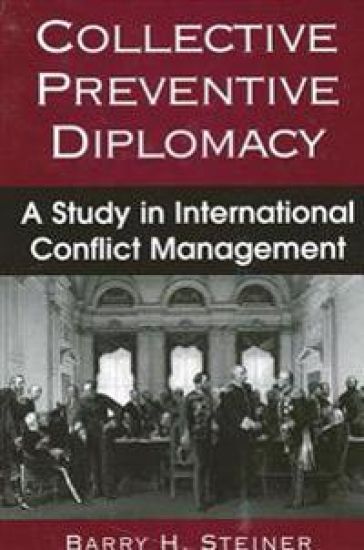
Collective Preventive Diplomacy

Collective Preventive Diplomacy

Barry H. Steiner

State University of New York Press
2004
sidottu
Examines how and why great powers act to defuse ethnic conflict within small powers.Powerful nations have often assumed a leadership role in international relations by becoming involved in ethnic conflict arising within small states. Recently however, their willingness to do so, at least unilaterally, has diminished. This study focuses on why and how powerful nations have acted together to dampen or forestall the expansion of small state conflicts while limiting potential risks to themselves. Employing a case-study method, Barry H. Steiner distinguishes between two types of collective preventive diplomacy, the insulationist and the interventionist. In the former, powerful nations are motivated to contain small power conflict in order to preserve their relations with other powerful nations. In the latter, they act to settle conflict between the small power antagonists themselves.
Collective Preventive Diplomacy

Collective Preventive Diplomacy

Barry H. Steiner

State University of New York Press
2007
pokkari
Examines how and why great powers act to defuse ethnic conflict within small powers.Powerful nations have often assumed a leadership role in international relations by becoming involved in ethnic conflict arising within small states. Recently however, their willingness to do so, at least unilaterally, has diminished. This study focuses on why and how powerful nations have acted together to dampen or forestall the expansion of small state conflicts while limiting potential risks to themselves. Employing a case-study method, Barry H. Steiner distinguishes between two types of collective preventive diplomacy, the insulationist and the interventionist. In the former, powerful nations are motivated to contain small power conflict in order to preserve their relations with other powerful nations. In the latter, they act to settle conflict between the small power antagonists themselves.
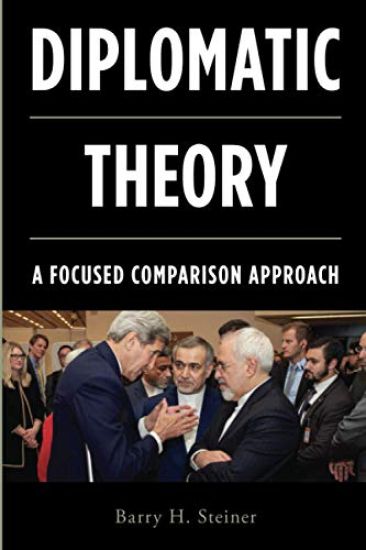
Diplomatic Theory

Diplomatic Theory

Barry H. Steiner

Rowman Littlefield
2018
sidottu
This book is intended as a primer for generalizing on a case-comparison basis about diplomatic statecraft, including resources and techniques available to states to attain their objectives. Twenty years in the making, it employs an inductive method in which small samples of cases occurring at different times and between different states are studied to track and understand specific variable diplomatic behavior. Its concern with empirically-grounded generalization, in which hypotheses are formulated and tested by case similarities and differences, is a new approach to diplomatic analysis. Diplomacy, though central to international relations study and practice, has generally been studied normatively rather than theoretically, in contrast to other international relations topics. Students of diplomacy, emphasizing statecraft’s complexity, have generally shied away from theory, while theory-minded international relations analysts have neglected statecraft and highlighted military capabilities and positional rivalries as determiners of state behavior. This book instead builds diplomatic theory by investigating variation in case experience, especially in the diplomatic choices made by states. It shows that theorizing is enhanced by a diplomatic point of view and by distinguishing diplomatic behavior as cause and as effect.
Diplomatic Theory

Diplomatic Theory

Barry H. Steiner

Rowman Littlefield
2018
nidottu
This book is intended as a primer for generalizing on a case-comparison basis about diplomatic statecraft, including resources and techniques available to states to attain their objectives. Twenty years in the making, it employs an inductive method in which small samples of cases occurring at different times and between different states are studied to track and understand specific variable diplomatic behavior. Its concern with empirically-grounded generalization, in which hypotheses are formulated and tested by case similarities and differences, is a new approach to diplomatic analysis. Diplomacy, though central to international relations study and practice, has generally been studied normatively rather than theoretically, in contrast to other international relations topics. Students of diplomacy, emphasizing statecraft’s complexity, have generally shied away from theory, while theory-minded international relations analysts have neglected statecraft and highlighted military capabilities and positional rivalries as determiners of state behavior. This book instead builds diplomatic theory by investigating variation in case experience, especially in the diplomatic choices made by states. It shows that theorizing is enhanced by a diplomatic point of view and by distinguishing diplomatic behavior as cause and as effect.