Kirjojen hintavertailu. Mukana 11 244 527 kirjaa ja 12 kauppaa.

Kirjahaku

Etsi kirjoja tekijän nimen, kirjan nimen tai ISBN:n perusteella.

6 kirjaa tekijältä Barry Hankins

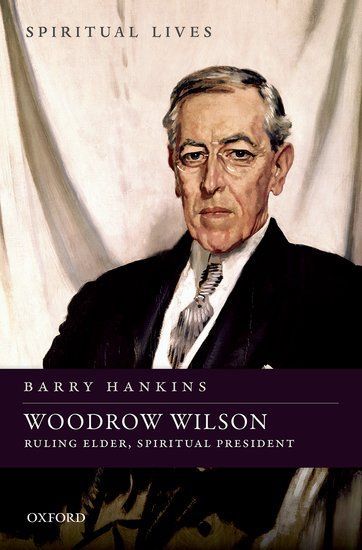
Woodrow Wilson

Woodrow Wilson

Barry Hankins

Oxford University Press
2016
sidottu
When Woodrow Wilson was elected as a ruling elder in the Presbyterian Church in 1897, his preacher father allegedly remarked, "I would rather that he held that position than be president of the United States." Fifteen years later he was both. Easily one of the most religious presidents in American history, almost all of Wilson's policies and important speeches were infused with religious concepts. The son, grandson, and nephew of southern Presbyterian divines, with six consecutive generations of preachers on his mother's side, Wilson viewed his political career as a sacred calling. As he remarked to a Democratic Party leader just before his inauguration in 1913, "God ordained that I should be the next president of the United States." As a scholar, Princeton University president, governor of New Jersey, then president, Wilson spent his entire career trying to further the cause of public righteousness. In 1905, he uttered his life's credo: "There is a mighty task before us and it welds us together. It is to make the United States a mighty Christian nation and to Christianize the World." Nonetheless, the 28th president was not principally a religious figure, and he didn't fit comfortably in any religious camp, either in his own time or today. In Woodrow Wilson: Ruling Elder, Spiritual President, Barry Hankins tells the story of Wilson's religion as he moved from the Calvinist orthodoxy of his youth to a progressive, spiritualized religion short on doctrine and long on morality.
Woodrow Wilson

Woodrow Wilson

Barry Hankins

Oxford University Press
2018
nidottu
When Woodrow Wilson was elected as a ruling elder in the Presbyterian Church in 1897, his preacher father allegedly remarked, "I would rather that he held that position than be president of the United States." Fifteen years later he was both. Easily one of the most religious presidents in American history, almost all of Wilson's policies and important speeches were infused with religious concepts. The son, grandson, and nephew of southern Presbyterian divines, with six consecutive generations of preachers on his mother's side, Wilson viewed his political career as a sacred calling. As he remarked to a Democratic Party leader just before his inauguration in 1913, "God ordained that I should be the next president of the United States." As a scholar, Princeton University president, governor of New Jersey, then president, Wilson spent his entire career trying to further the cause of public righteousness. In 1905, he uttered his life's credo: "There is a mighty task before us and it welds us together. It is to make the United States a mighty Christian nation and to Christianize the World." Nonetheless, the 28th president was not principally a religious figure, and he didn't fit comfortably in any religious camp, either in his own time or today. In Woodrow Wilson: Ruling Elder, Spiritual President, Barry Hankins tells the story of Wilson's religion as he moved from the Calvinist orthodoxy of his youth to a progressive, spiritualized religion short on doctrine and long on morality.
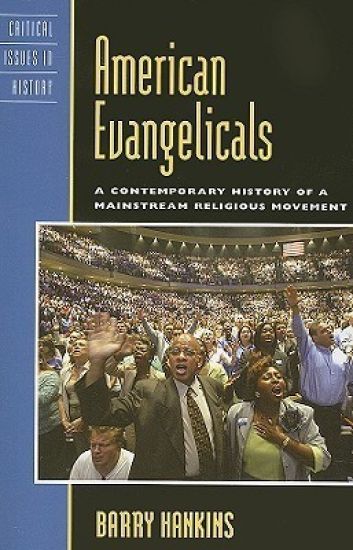
American Evangelicals

American Evangelicals

Barry Hankins

Rowman Littlefield Publishers
2009
nidottu
There may be no group in American society that is more talked about but so little understood as Evangelical Christians. Sometimes dismissed as violent fundamentalists and ignorant flat earthers, few can doubt the political, cultural, and religious significance of the Evangelicals. Barry Hankins puts the Evangelical movement in historical perspective, reaching back to its roots in the Great Awakening of the eighteenth century and leading up to the formative moments of contemporary conservative Protestantism. Taking on key topics such as the standing of science, the authority of scripture, and gender and racial equality, Hankins analyzes what is most essential for us to understand today about this potent movement.
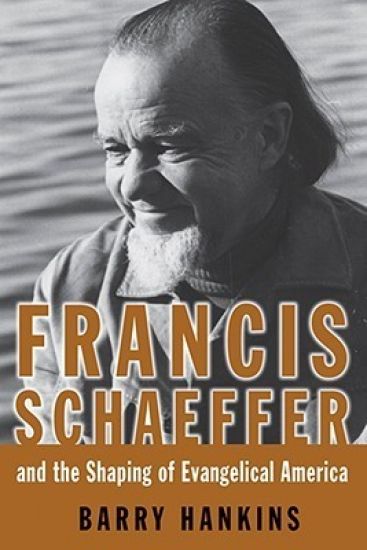
Francis Schaeffer and the Shaping of Evangelical America

Francis Schaeffer and the Shaping of Evangelical America

Barry Hankins

William B Eerdmans Publishing Co
2008
nidottu
Francis Schaeffer (1912-1984) was probably the single greatest intellectual influence on young evangelicals of the 1960s and '70s. He was cultural critic, popular mentor, political activist, Christian apologist, founder of L'Abri, and the author of over twenty books and two important films. It is impossible to understand the intellectual world of contemporary evangelicalism apart from Francis Schaeffer.Barry Hankins has written a critical but appreciative biography that explains how Schaeffer was shaped by the contexts of his life -- from young fundamentalist pastor in America, to greatly admired mentor, to lecturer and activist who encouraged world-wary evangelicals to engage the culture around them. Drawing extensively from primary sources, including personal interviews, Hankins paints a picture of a complex, sometimes flawed, but ultimately prophetic figure in American evangelicalism and beyond.
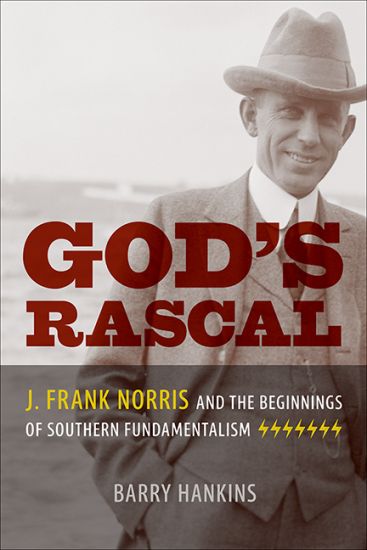
God's Rascal

God's Rascal

Barry Hankins

University of Tennessee Press
2022
nidottu
Loathed by mainstream Southern Baptists, J. Frank Norris (1877–1952) was in many ways the Southern Baptist Convention’s first fundamentalist. Twenty-five years after its first publication, this second edition of Barry Hankins’s field-defining work God’s Rascal: J. Frank Norris and the Beginnings of Southern Fundamentalism engages new scholar- ship on American fundamentalism to reassess one of the most controversial figures in the history of American Christianity. In this completely revised edition, Hankins pens an entirely new chapter on J. Frank Norris’s murder trial, examines newly uncovered details regarding his recurrent sexual improprieties, and reconsiders his views on race in order to place J. Frank Norris, a man both despicable and captivating, among the most significant Southern fundamentalists of the twentieth century.Norris merged a southern populist tradition with militant fundamentalism, carving out a distinctly take-no-prisoners political niche within the Baptist church that often offended his allies as much as his enemies. Indeed, Norris was about as bad as a fundamentalist could be. He resided in a world of swirling conspiracies of leftists who, he argued, intended to subvert both evangelical religion and American culture. There are times when Norris’s ego looms so large in his story that he seemed less interested in the threat these alleged conspiracies posed than in their power to keep him in the limelight. Finally, his tactics foreshadowed those employed in the fundamentalists’ tenacious takeover of the Southern Baptist Convention that would occur more than twenty years after Norris’s death.