Kirjojen hintavertailu. Mukana 11 244 527 kirjaa ja 12 kauppaa.

Kirjahaku

Etsi kirjoja tekijän nimen, kirjan nimen tai ISBN:n perusteella.

3 kirjaa tekijältä Barry M. Shapiro

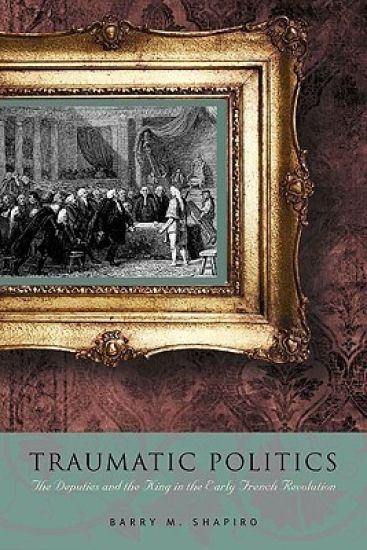
Traumatic Politics

Traumatic Politics

Barry M. Shapiro

Pennsylvania State University Press
2009
sidottu
The opening events of the French Revolution have stood as some of the most familiar in modern European history. Traumatic Politics emerges as a fresh voice from the existing historiography of this widely studied course of events. In applying a psychological lens to the classic problem of why the French Revolution’s first representative assembly was unable to reach a workable accommodation with Louis XVI, Barry Shapiro contends that some of the key political decisions made by the Constituent Assembly were, in large measure, the product of traumatic reactions to the threats to the lives of its members in the summer of 1789. As a result, Assembly policy frequently reflected a preoccupation with what had happened in the past rather than active engagement with present political realities. In arguing that the manner in which the Assembly dealt with the king bears the imprint of the behavior that typically follows exposure to traumatic events, Shapiro focuses on oscillating periods of traumatic repetition and traumatic denial. Highlighting the historical impact of what could be viewed as a relatively “mild” trauma, he suggests that trauma theory has a much wider field of potential applicability than that previously established by historians, who have generally confined themselves to studying the impact of massively traumatic events such as war and genocide. Moreover, in emphasizing the extent to which monarchical loyalties remained intact on the eve of the Revolution, this book also challenges the widely accepted contention that prerevolutionary cultural and discursive innovations had “desacralized” the king well before 1789.
Traumatic Politics

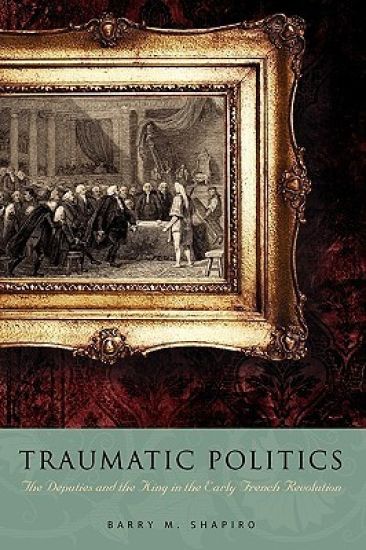
Traumatic Politics

Barry M. Shapiro

Pennsylvania State University Press
2014
pokkari
The opening events of the French Revolution have stood as some of the most familiar in modern European history. Traumatic Politics emerges as a fresh voice from the existing historiography of this widely studied course of events. In applying a psychological lens to the classic problem of why the French Revolution’s first representative assembly was unable to reach a workable accommodation with Louis XVI, Barry Shapiro contends that some of the key political decisions made by the Constituent Assembly were, in large measure, the product of traumatic reactions to the threats to the lives of its members in the summer of 1789. As a result, Assembly policy frequently reflected a preoccupation with what had happened in the past rather than active engagement with present political realities. In arguing that the manner in which the Assembly dealt with the king bears the imprint of the behavior that typically follows exposure to traumatic events, Shapiro focuses on oscillating periods of traumatic repetition and traumatic denial. Highlighting the historical impact of what could be viewed as a relatively “mild” trauma, he suggests that trauma theory has a much wider field of potential applicability than that previously established by historians, who have generally confined themselves to studying the impact of massively traumatic events such as war and genocide. Moreover, in emphasizing the extent to which monarchical loyalties remained intact on the eve of the Revolution, this book also challenges the widely accepted contention that prerevolutionary cultural and discursive innovations had “desacralized” the king well before 1789.
Revolutionary Justice in Paris, 1789–1790

Revolutionary Justice in Paris, 1789–1790

Barry M. Shapiro

Cambridge University Press
2002
pokkari
This book examines how France’s revolutionary authorities handled political opposition in the year following the fall of the Bastille. Though demands for more severe treatment of the enemies of the new regime were frequently and loudly expressed, and though portents and warning signs of the coming unwillingness to tolerate opposition were hardly lacking, political justice in 1789–90 was in fact characterized by a remarkable degree of indulgence and forbearance. Through an investigation of the judicial affairs, which attracted the most public attention in Paris during this period, this study seeks to identify the factors, which produced a temporary victory for policies of mildness and restraint.