Kirjojen hintavertailu. Mukana 12 016 292 kirjaa ja 12 kauppaa.

Kirjahaku

Etsi kirjoja tekijän nimen, kirjan nimen tai ISBN:n perusteella.

5 kirjaa tekijältä Barry R. Masters

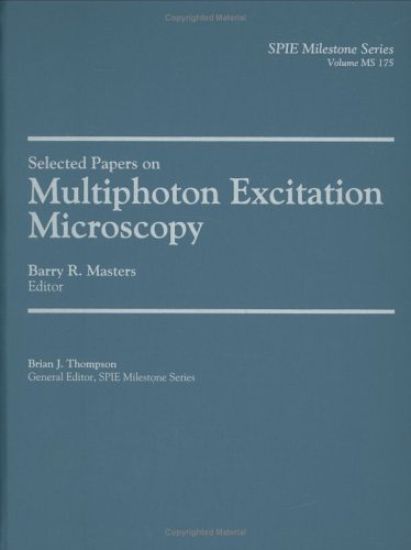
Selected Papers on Multiphoton Excitation Microscopy
In the last decade multiphoton excitation microscopy has emerged as an important technique with ever increasing numbers of significant applications in the fields of biology, chemistry, physics, and medicine. This volume contains key papers on the following topics: developments of nonlinear optical spectroscopy and nonlinear scanning microscopy (SHG, CARS); theory and techniques of multiphoton excitation microscopy; development of laser sources; single-molecule studies; and applications to biology, cell biology, embryology and developmental biology, neuroscience, dermatology, and optical biopsy. A comprehensive bibliography follows the reprinted papers.
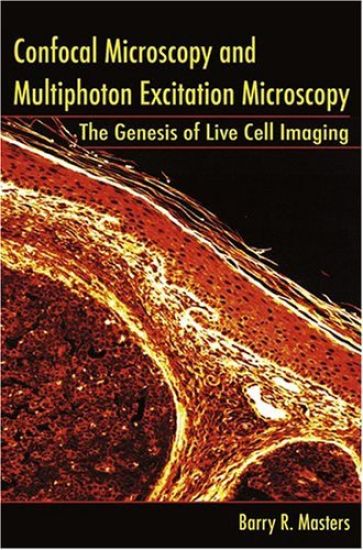
Confocal Microscopy And Multiphoton Excitation Microscopy

Confocal Microscopy And Multiphoton Excitation Microscopy

Barry R. Masters

Society of Photo Optical
2006
pokkari
This text guides you through the principles and practical techniques of confocal and multiphoton microscopy. It also describes the historical connections and parallel inventions that resulted in modern techniques of live cell imaging and their use in biology and medicine. You will find comparisons of different types of confocal and multiphoton microscopes, solutions to the problems one would encounter when using various microscopic techniques, tips on selecting equipment, and an extensive annotated bibliography of additional resources.
Superresolution Optical Microscopy

Superresolution Optical Microscopy

Barry R. Masters

Springer Nature Switzerland AG
2020
sidottu
This book presents a comprehensive and coherent summary of techniques for enhancing the resolution and image contrast provided by far-field optical microscopes. It takes a critical look at the body of knowledge that comprises optical microscopy, compares and contrasts the various instruments, provides a clear discussion of the physical principles that underpin these techniques, and describes advances in science and medicine for which superresolution microscopes are required and are making major contributions. The text fills significant gaps that exist in other works on superresolution imaging, firstly by placing a new emphasis on the specimen, a critical component of the microscope setup, giving equal importance to the enhancement of both resolution and contrast. Secondly, it covers several topics not typically discussed in depth, such as Bessel and Airy beams, the physics of the spiral phase plate, vortex beams and singular optics, photoactivated localizationmicroscopy (PALM), stochastic optical reconstruction microscopy (STORM), structured illumination microscopy (SIM), and light-sheet fluorescence microscopy (LSFM). Several variants of these techniques are critically discussed. Noise, optical aberrations, specimen damage, and artifacts in microscopy are also covered. The importance of validation of superresolution images with electron microscopy is stressed. Additionally, the book includes translations and discussion of seminal papers by Abbe and Helmholtz that proved to be pedagogically relevant as well as historically significant. This book is written for students, researchers, and engineers in the life sciences, medicine, biological engineering, and materials science who plan to work with or already are working with superresolution light microscopes. The volume can serve as a reference for these areas while a selected set of individual chapters can be used as a textbook for a one-semester undergraduate or first-year graduate course on superresolution microscopy. Moreover, the text provides a captivating account of curiosity, skepticism, risk-taking, innovation, and creativity in science and technology. Good scientific practice is emphasized throughout, and the author’s lecture slides on responsible conduct of research are included as an online resource which will be of interest to students, course instructors, and scientists alike.
Superresolution Optical Microscopy

Superresolution Optical Microscopy

Barry R. Masters

Springer Nature Switzerland AG
2021
nidottu
This book presents a comprehensive and coherent summary of techniques for enhancing the resolution and image contrast provided by far-field optical microscopes. It takes a critical look at the body of knowledge that comprises optical microscopy, compares and contrasts the various instruments, provides a clear discussion of the physical principles that underpin these techniques, and describes advances in science and medicine for which superresolution microscopes are required and are making major contributions. The text fills significant gaps that exist in other works on superresolution imaging, firstly by placing a new emphasis on the specimen, a critical component of the microscope setup, giving equal importance to the enhancement of both resolution and contrast. Secondly, it covers several topics not typically discussed in depth, such as Bessel and Airy beams, the physics of the spiral phase plate, vortex beams and singular optics, photoactivated localizationmicroscopy (PALM), stochastic optical reconstruction microscopy (STORM), structured illumination microscopy (SIM), and light-sheet fluorescence microscopy (LSFM). Several variants of these techniques are critically discussed. Noise, optical aberrations, specimen damage, and artifacts in microscopy are also covered. The importance of validation of superresolution images with electron microscopy is stressed. Additionally, the book includes translations and discussion of seminal papers by Abbe and Helmholtz that proved to be pedagogically relevant as well as historically significant. This book is written for students, researchers, and engineers in the life sciences, medicine, biological engineering, and materials science who plan to work with or already are working with superresolution light microscopes. The volume can serve as a reference for these areas while a selected set of individual chapters can be used as a textbook for a one-semester undergraduate or first-year graduate course on superresolution microscopy. Moreover, the text provides a captivating account of curiosity, skepticism, risk-taking, innovation, and creativity in science and technology. Good scientific practice is emphasized throughout, and the author’s lecture slides on responsible conduct of research are included as an online resource which will be of interest to students, course instructors, and scientists alike.
Optical Technology Transfer and Innovation in Ophthalmic Imaging

Optical Technology Transfer and Innovation in Ophthalmic Imaging

Barry R. Masters

Springer International Publishing AG
2025
sidottu
This book presents a new view of symbiotic technology transfer between different fields in the optical sciences. For example, adaptive optics were initially developed for military research programs seeking to correct the effects of atmospheric fluctuations on telescopes. The technology was subsequently transferred to optical microscopes, and then finally used in ophthalmic imaging devices to image photoreceptors in the living human retina. This book examines various recent and historical technology transfers among the optical sciences, and attempts to answer the following questions: What are the mathematical and the physical foundations of these technology advances? What events and influences (military requirements, new journals, new funding sources, the internet, etc.) made the technologies and their transfer possible? What was the impact of technology transfer on the development of optical science? What role did the human eye and visual system play in technology development? This book examines how innovations propagate from one field to another, illustrating the benefits of cross-disciplinary collaboration. This book is about curiosity, skepticism, innovation, and creativity in science and technology, and explores practices that advance innovation and those that inhibit innovation. Analyses of some selected, pertinent case studies highlight the roles of unique individuals who were able to make the journey from initial concept to widespread clinical acceptance of their instruments. What are the common factors of their education, experiences, and approaches that resulted in their inventions and innovations? This book is intended to inspire and encourage those who dream of advancing the diagnostics and the treatment of diseases through new medical devices. It also addresses budding startup dreamers, venture capitalists, research directors, and funding agency administrators by providing new insights into practices that promote and inhibit innovation. This book should be of interest to scientists and researchers in many fields of optics, as well as technical policy makers at funding institutions.