Kirjojen hintavertailu. Mukana 11 717 486 kirjaa ja 12 kauppaa.

Kirjahaku

Etsi kirjoja tekijän nimen, kirjan nimen tai ISBN:n perusteella.

16 kirjaa tekijältä Barry Strauss

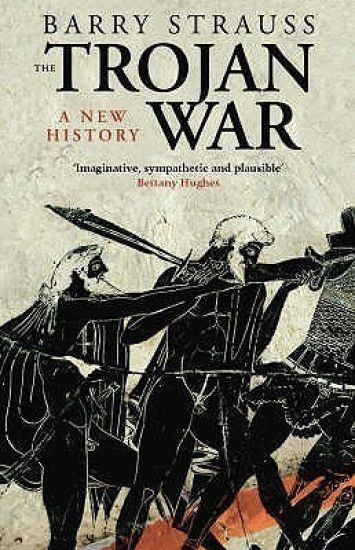
Trojan War

Trojan War

Barry Strauss

Arrow Books Ltd
2008
pokkari
The Trojan War may have been the inevitable consequence of expanding Greek maritime commerce. Written by a leading expert on ancient military history, the true story of the most famous battle in history is every bit as compelling as Homer's epic account - and confirms many of its details.
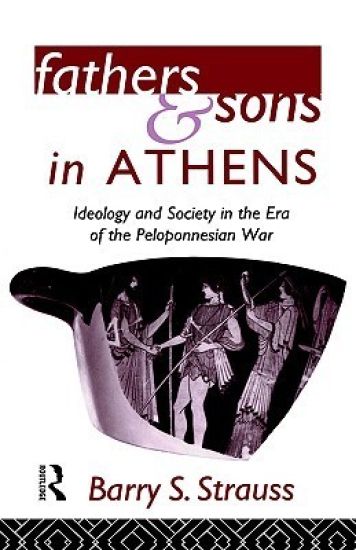
Fathers and Sons in Athens

Fathers and Sons in Athens

Barry Strauss

Routledge
1993
sidottu
As history's first democracy, classical Athens invited political discourse. The Athenians, however could not completely separate the politicals from the private sphere; indeed father-son conflict, from patricide to murdering one's son, was a major public as well as a private theme. In a fascinating historical reappraisal, the author explores the consequences, for Athens and us, of the powerful influence of familial ideology on politics.
Fathers and Sons in Athens

Fathers and Sons in Athens

Barry Strauss

Routledge
2011
nidottu
As history's first democracy, classical Athens invited political discourse. The Athenians, however could not completely separate the politicals from the private sphere; indeed father-son conflict, from patricide to murdering one's son, was a major public as well as a private theme. In a fascinating historical reappraisal, the author explores the consequences, for Athens and us, of the powerful influence of familial ideology on politics.
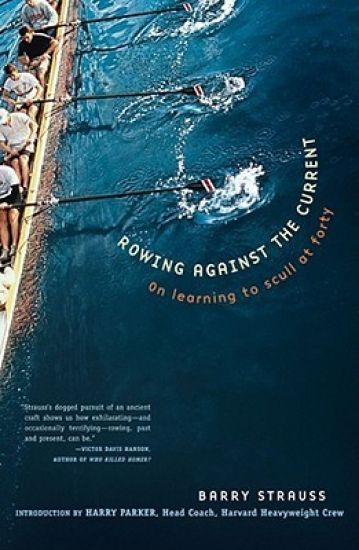
Rowing Against the Current

Rowing Against the Current

Barry Strauss

Scribner
2001
pokkari
In the midst of the standard, dreary midlife crisis -- complete with wine-tasting courses, yoga classes, and a failed attempt at a first novel -- forty-year-old Barry Strauss falls unexpectedly and passionately in love with rowing, a sport in which a twenty-seven-year-old is a has-been. Strauss, a professor of classics and history, writes about the unanticipated delights of an affair that, like so many others, begins as a casual dalliance and develops into a full-blown obsession. Drawn to the sport in part because of his affinity for Greek antiquity, he develops a love for old boathouses, a longing for rivers at dawn, a thirst to test himself, and, ultimately, a renewed sense of self-reliance -- as someone who had experienced sports humiliation as far back as Little League suddenly finds himself bursting into athleticism at an unlikely age. From the awe-inspiring feats of the war-bound Greek triremes with their crews of 172 men rowing on three levels to the solitary pride of finishing a first race in which he gets stuck in the weeds and has to be fished out, Barry Strauss shows us why "there is nothing -- absolutely nothing -- half as much worth doing as simply messing about in boats."
The Battle of Salamis

The Battle of Salamis

Barry Strauss

Simon Schuster
2005
pokkari
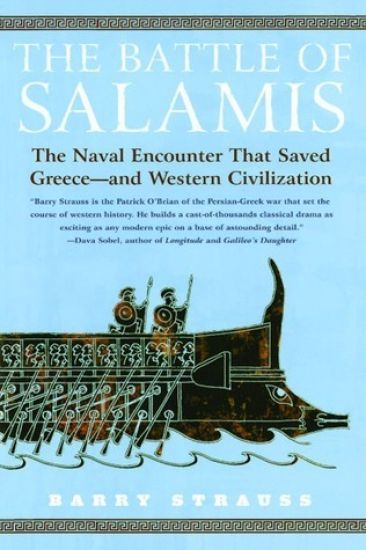
On a late September day in 480 B.C., Greek warships faced an invading Persian armada in the narrow Salamis Straits in the most important naval battle of the ancient world. Overwhelmingly outnumbered by the enemy, the Greeks triumphed through a combination of strategy and deception. More than two millennia after it occurred, the clash between the Greeks and Persians at Salamis remains one of the most tactically brilliant battles ever fought. The Greek victory changed the course of western history -- halting the advance of the Persian Empire and setting the stage for the Golden Age of Athens. In this dramatic new narrative account, historian and classicist Barry Strauss brings this landmark battle to life. He introduces us to the unforgettable characters whose decisions altered history: Themistocles, Athens' great leader (and admiral of its fleet), who devised the ingenious strategy that effectively destroyed the Persian navy in one day; Xerxes, the Persian king who fought bravely but who ultimately did not understand the sea; Aeschylus, the playwright who served in the battle and later wrote about it; and Artemisia, the only woman commander known from antiquity, who turned defeat into personal triumph. Filled with the sights, sounds, and scent of battle, The Battle of Salamis is a stirring work of history.
The Trojan War: A New History

The Trojan War: A New History

Barry Strauss

SIMON SCHUSTER
2007
nidottu
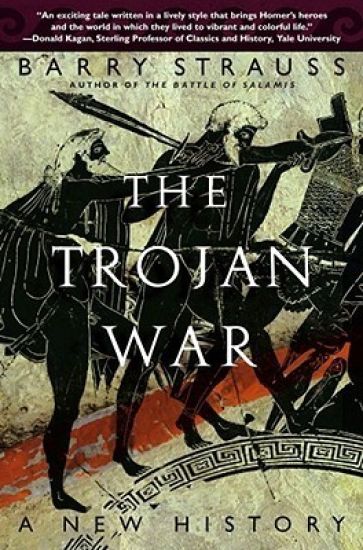
The Trojan War is one of history's most famous conflicts, a ten-year-long war waged over the beautiful Helen. For more than two thousand years this story has been a source of artistic inspiration. But is it true? In The Trojan War historian and classicist Barry Strauss explores the myth and the reality behind the war, from Homer's accounts in The Iliad and The Odyssey to Heinrich Schliemann's discovery of ancient Troy in the late nineteenth century to more recent excavations that have yielded intriguing clues to the story behind the fabled city. The Trojans, it turns out, were not ethnic Greeks but an Anatolian people closely allied with the Hittite Empire to the east. At the time of the Trojan War the Greeks were great seafarers while Troy was a more settled civilization. And while the cause of the war may well have been the kidnapping of a queen--and, more significantly, the seizure of her royal dowry--the underlying cause was a conflict between the Trojans and the Greeks for control of the eastern Aegean Sea. Through vivid reconstructions of the battles and insightful depictions of its famous characters, The Trojan War reveals the history behind Homer's great epic, without losing the poetry and grandeur of the epic myth.
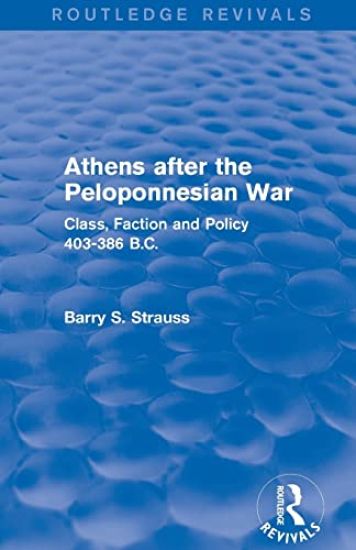
Athens after the Peloponnesian War (Routledge Revivals)
Historians are used to studying the origins of war. The rebuilding in the aftermath of war is a subject that – at least in the case of Athens – has received far less attention. Along with the problems of reconstructing the economy and replenishing the population, the problem of renegotiating political consensus was equally acute. Athens after the Peloponnesian War, first published in 1986, undertakes a radically new investigation into the nature of Athenian political groups. The general model of ‘faction’ provided by political anthropology provides an indispensable paradigm for the Athenian case. More widely, Professor Strauss argues for the importance of the economic, social and ideological changes resulting from the Peloponnesian War in the development of political nexus. Athens after the Peloponnesian War offers a detailed demographic analysis, astute insight into political discourse, and is altogether one of the most thorough treatments of this important period in the Athenian democracy.
Athens after the Peloponnesian War (Routledge Revivals)
Historians are used to studying the origins of war. The rebuilding in the aftermath of war is a subject that – at least in the case of Athens – has received far less attention. Along with the problems of reconstructing the economy and replenishing the population, the problem of renegotiating political consensus was equally acute. Athens after the Peloponnesian War, first published in 1986, undertakes a radically new investigation into the nature of Athenian political groups. The general model of ‘faction’ provided by political anthropology provides an indispensable paradigm for the Athenian case. More widely, Professor Strauss argues for the importance of the economic, social and ideological changes resulting from the Peloponnesian War in the development of political nexus. Athens after the Peloponnesian War offers a detailed demographic analysis, astute insight into political discourse, and is altogether one of the most thorough treatments of this important period in the Athenian democracy.
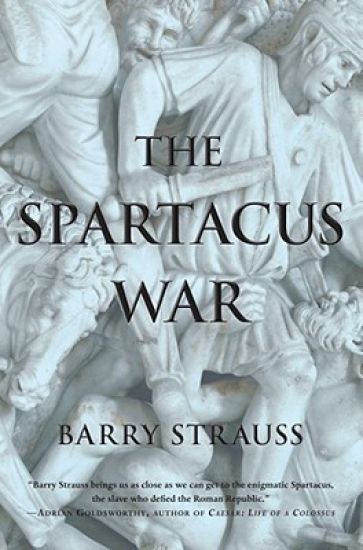
The Spartacus War

The Spartacus War

Barry Strauss

SIMON SCHUSTER
2010
nidottu
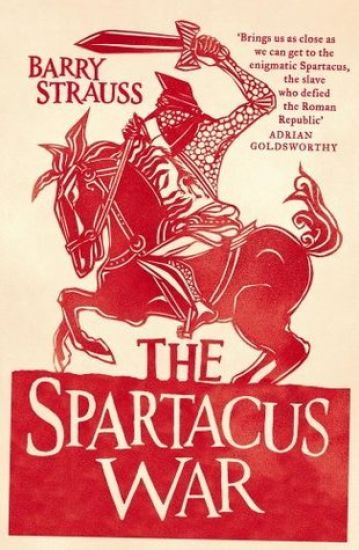
An authoritative account from an expert author: The Spartacus War is the first popular history of the revolt in English. The Spartacus War is the extraordinary story of the most famous slave rebellion in the ancient world, the fascinating true story behind a legend that has been the inspiration for novelists, filmmakers, and revolutionaries for 2,000 years. Starting with only seventy-four men, a gladiator named Spartacus incited a rebellion that threatened Rome itself. With his fellow gladiators, Spartacus built an army of 60,000 soldiers and controlled the southern Italian countryside. A charismatic leader, he used religion to win support. An ex-soldier in the Roman army, Spartacus excelled in combat. He defeated nine Roman armies and kept Rome at bay for two years before he was defeated. After his final battle, 6,000 of his followers were captured and crucified along Rome's main southern highway. The Spartacus War is the dramatic and factual account of one of history's great rebellions. Spartacus was beaten by a Roman general, Crassus, who had learned how to defeat an insurgency. But the rebels were partly to blame for their failure. Their army was large and often undisciplined; the many ethnic groups within it frequently quarreled over leadership. No single leader, not even Spartacus, could keep them all in line. And when faced with a choice between escaping to freedom and looting, the rebels chose wealth over liberty, risking an eventual confrontation with Rome's most powerful forces. The result of years of research, The Spartacus War is based not only on written documents but also on archaeological evidence, historical reconstruction, and the author's extensive travels in the Italian countryside that Spartacus once conquered.
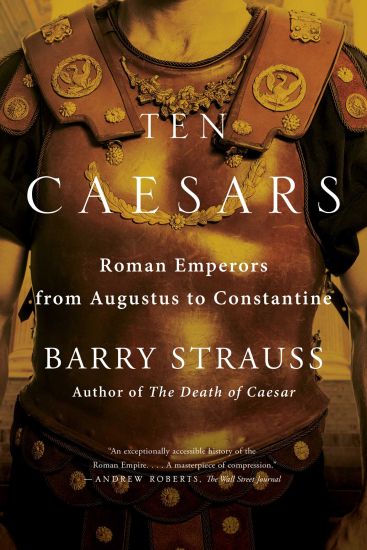
Ten Caesars

Ten Caesars

Barry Strauss

Simon Schuster
2020
pokkari
Bestselling classical historian Barry Strauss delivers “an exceptionally accessible history of the Roman Empire…much of Ten Caesars reads like a script for Game of Thrones” (The Wall Street Journal)—a summation of three and a half centuries of the Roman Empire as seen through the lives of ten of the most important emperors, from Augustus to Constantine.In this essential and “enlightening” (The New York Times Book Review) work, Barry Strauss tells the story of the Roman Empire from rise to reinvention, from Augustus, who founded the empire, to Constantine, who made it Christian and moved the capital east to Constantinople. During these centuries Rome gained in splendor and territory, then lost both. By the fourth century, the time of Constantine, the Roman Empire had changed so dramatically in geography, ethnicity, religion, and culture that it would have been virtually unrecognizable to Augustus. Rome’s legacy remains today in so many ways, from language, law, and architecture to the seat of the Roman Catholic Church. Strauss examines this enduring heritage through the lives of the men who shaped it: Augustus, Tiberius, Nero, Vespasian, Trajan, Hadrian, Marcus Aurelius, Septimius Severus, Diocletian, and Constantine. Over the ages, they learned to maintain the family business—the government of an empire—by adapting when necessary and always persevering no matter the cost. Ten Caesars is a “captivating narrative that breathes new life into a host of transformative figures” (Publishers Weekly). This “superb summation of four centuries of Roman history, a masterpiece of compression, confirms Barry Strauss as the foremost academic classicist writing for the general reader today” (The Wall Street Journal).
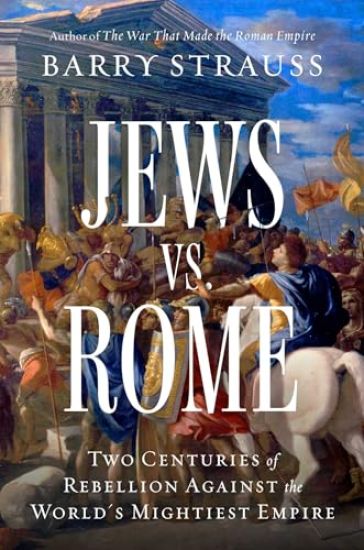
Jews vs. Rome

Jews vs. Rome

Barry Strauss

SIMON SCHUSTER
2025
sidottu
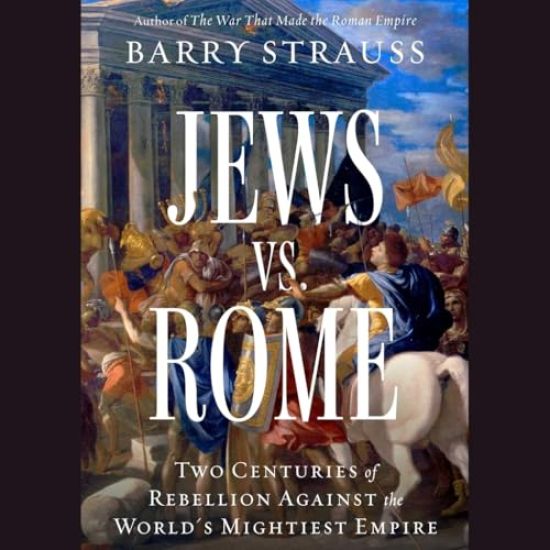
A new history of two centuries of Jewish revolts against the Roman Empire, drawing on recent archeological discoveries and new scholarship by leading historian Barry Strauss.Jews vs. Rome is a gripping account of one of the most momentous eras in human history: the two hundred years of ancient Israel’s battles against Rome that reshaped Judaism and gave rise to Christianity. Barry Strauss vividly captures the drama of this era, highlighting the courageous yet tragic uprisings, the geopolitical clash between the empires of Rome and Persia, and the internal conflicts among Jews. Between 63 BCE and 136 CE, the Jewish people launched several revolts driven by deep-seated religious beliefs and resentment towards Roman rule. Judea, a province on Rome’s eastern fringe, became a focal point of tension and rebellion. Jews vs. Rome recounts the three major uprisings: the Great Revolt of 66–70 CE, which led to the destruction of Jerusalem and the Temple, culminating in the Siege of Masada, where defenders chose mass suicide over surrender; the Diaspora Revolt, ignited by heavy taxes across the Empire; and the Bar Kokhba Revolt. We meet pivotal figures such as Simon Bar Kokhba but also some of those lesser-known women of the era like Berenice, a Jewish princess who played a major role in the politics of the Great Revolt and was improbably the love of Titus—Rome’s future emperor and the man who destroyed Jerusalem and the Temple. Today, echoes of those battles resonate as the Jewish nation faces new challenges and conflicts. Jews vs. Rome offers a captivating narrative that connects the past with the present, appealing to anyone interested in Rome, Jewish history, or the compelling true tales of resilience and resistance.
The War That Made the Roman Empire

The War That Made the Roman Empire

Barry Strauss

SIMON SCHUSTER
2023
pokkari
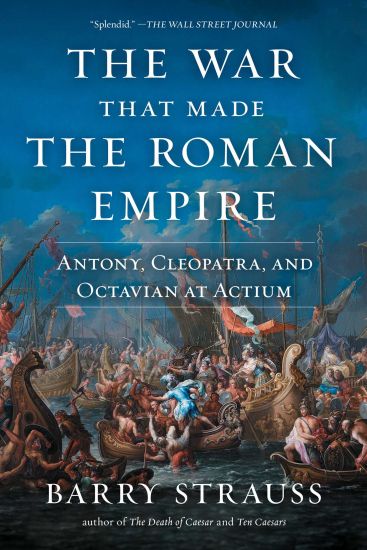
A “splendid” (The Wall Street Journal) account of one of history’s most important and yet little-known wars, the campaign culminating in the Battle of Actium in 31 BC, whose outcome determined the future of the Roman Empire.Following Caesar’s assassination and Mark Antony’s defeat of the conspirators who killed Caesar, two powerful men remained in Rome—Antony and Caesar’s chosen heir, young Octavian, the future Augustus. When Antony fell in love with the most powerful woman in the world, Egypt’s ruler Cleopatra, and thwarted Octavian’s ambition to rule the empire, another civil war broke out. In 31 BC one of the largest naval battles in the ancient world took place—more than 600 ships, almost 200,000 men, and one woman—the Battle of Actium. Octavian prevailed over Antony and Cleopatra, who subsequently killed themselves. The Battle of Actium had great consequences for the empire. Had Antony and Cleopatra won, the empire’s capital might have moved from Rome to Alexandria, Cleopatra’s capital, and Latin might have become the empire’s second language after Greek, which was spoken throughout the eastern Mediterranean, including Egypt. In this “superbly recounted” (The National Review) history, Barry Strauss, ancient history authority, describes this consequential battle with the drama and expertise that it deserves. The War That Made the Roman Empire is essential history that features three of the greatest figures of the ancient world.
Kümme keisrit

Kümme keisrit

Barry Strauss

Äripäev
2023
sidottu
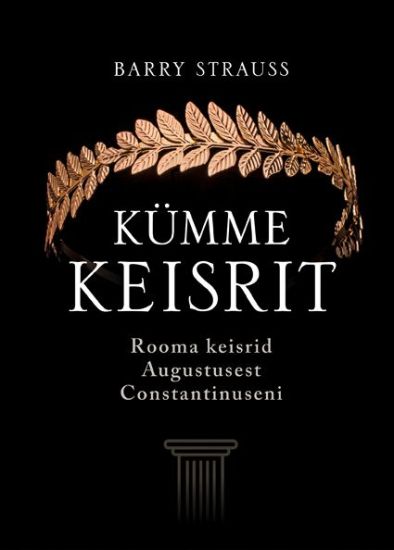
Raamat "Kümme keisrit" on kokkuvõte kolme ja poole sajandi pikkusest Rooma impeeriumi ajaloost jutustatuna kümne kõige olulisema keisri elu kaudu. Teos algab esimese keisri Augustusega ja lõppeb ligikaudu 350 aastat hiljem Constantinusega, kes pöördus ristiusku ning rajas idas uue pealinna Konstantinoopoli. Nende sajandite jooksul saavutas Rooma hiilguse ja territooriumi ning kaotas siis mõlemad.Need kümme Rooma keisrit olid kõige võimekamad ja edukamad. Edukust määratleti erinevalt, aga kõik tahtsid poliitilist võimu riigis, rakendada sõjajõudu piiride taga, käsutada rikkusi, Rooma linna üles ehitada ja jumalatega hästi läbi saada. Ja kõik tahtsid surra kodus oma voodis ja anda võim üle oma valitud järeltulijale.Rooma pärand on tänapäeval säilinud mitmel viisil, alates keelest, õigusest ja arhitektuurist kuni roomakatoliku kirikuni. Strauss uuribki seda püsivat pärandit seda kujundanud meeste elude kaudu.
Jews vs. Rome

Jews vs. Rome

Barry Strauss

SIMON SCHUSTER
2026
pokkari
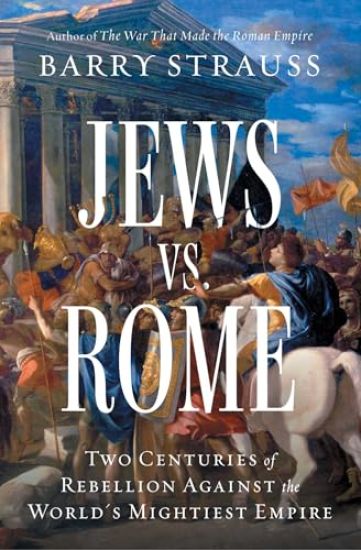
A new history of two centuries of Jewish revolts against the Roman Empire, drawing on recent archeological discoveries and new scholarship by leading historian Barry Strauss. Jews vs. Rome is a gripping account of one of the most momentous eras in human history: the two hundred years of ancient Israel’s battles against Rome that reshaped Judaism and gave rise to Christianity. Barry Strauss vividly captures the drama of this era, highlighting the courageous yet tragic uprisings, the geopolitical clash between the empires of Rome and Persia, and the internal conflicts among Jews. Between 63 BCE and 136 CE, the Jewish people launched several revolts driven by deep-seated religious beliefs and resentment towards Roman rule. Judea, a province on Rome’s eastern fringe, became a focal point of tension and rebellion. Jews vs. Rome recounts the three major uprisings: the Great Revolt of 66–70 CE, which led to the destruction of Jerusalem and the Temple, culminating in the Siege of Masada, where defenders chose mass suicide over surrender; the Diaspora Revolt, ignited by heavy taxes across the Empire; and the Bar Kokhba Revolt. We meet pivotal figures such as Simon Bar Kokhba but also some of those lesser-known women of the era like Berenice, a Jewish princess who played a major role in the politics of the Great Revolt and was improbably the love of Titus—Rome’s future emperor and the man who destroyed Jerusalem and the Temple. Today, echoes of those battles resonate as the Jewish nation faces new challenges and conflicts. Jews vs. Rome offers a captivating narrative that connects the past with the present, appealing to anyone interested in Rome, Jewish history, or the compelling true tales of resilience and resistance.