Kirjojen hintavertailu. Mukana 11 717 486 kirjaa ja 12 kauppaa.

Kirjahaku

Etsi kirjoja tekijän nimen, kirjan nimen tai ISBN:n perusteella.

8 kirjaa tekijältä Ben Bollig

Nestor Perlongher

Nestor Perlongher

Ben Bollig

University of Wales Press
2008
sidottu
This book is the first full-length study in English of the work of the highly regarded and influential Argentine poet and anthropologist Nestor Perlongher (1949-92). Perlongher's pioneering work takes on the most dynamic and conflictive themes of modern-day Latin America such as dictatorship, national identity, exile, issues of gender and marginal sexualities, and modern-day esoteric religions; Bollig's study analyses and contextualizes his work as well as offering important tools for reading and understanding challenging and experimental poetry.
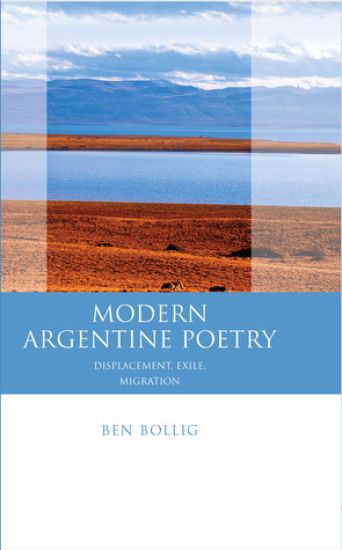
Modern Argentine Poetry

Modern Argentine Poetry

Ben Bollig

University of Wales Press
2011
sidottu
This book will be the first to focus specifically on the exile-poetry link in the case of Argentina since the 1950s. Throughout Argentina's history, authors and important political figures have lived and written in exile. Thus exile is both a vital theme and a practical condition for Argentine letters, yet conversely, contemporary Argentina is a nation of immigrants from Europe and the rest of Latin America. Poetry is often perceived as the least directly political of genres, yet political and other forms of exile have impinged equally on the lives of poets as on any group. This study concentrates on writers who both regarded themselves as in some way exiled and who wrote about exile. This selection includes poets who are influential and recognised, but in general have not enjoyed the detailed study that they deserve: Alejandra Pizarnik, Juan Gelman, Osvaldo Lamborghini, Nestor Perlongher, Sergio Raimondi, Cristian Aliaga, and Washington Cucurto.
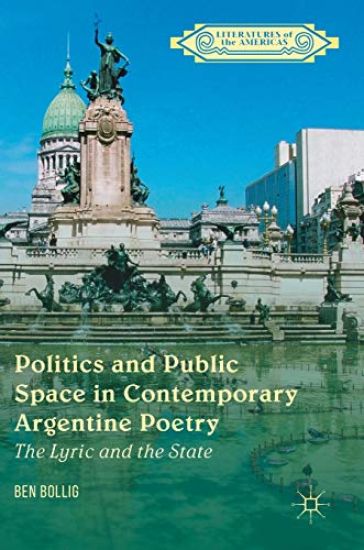
Politics and Public Space in Contemporary Argentine Poetry
This book addresses the connection between political themes and literary form in the most recent Argentine poetry. Ben Bollig uses the concepts of “lyric” and “state” as twin coordinates for both an assessment of how Argentinian poets have conceived a political role for their work and how poems come to speak to us about politics. Drawing on concepts from contemporary literary theory, this striking study combines textual analysis with historical research to shed light on the ways in which new modes of circulation help to shape poetry today.
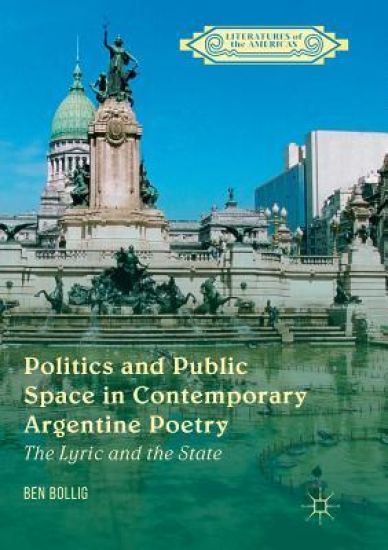
Politics and Public Space in Contemporary Argentine Poetry
This book addresses the connection between political themes and literary form in the most recent Argentine poetry. Ben Bollig uses the concepts of “lyric” and “state” as twin coordinates for both an assessment of how Argentinian poets have conceived a political role for their work and how poems come to speak to us about politics. Drawing on concepts from contemporary literary theory, this striking study combines textual analysis with historical research to shed light on the ways in which new modes of circulation help to shape poetry today.
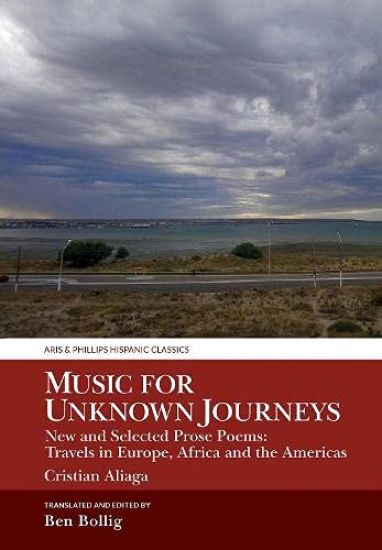
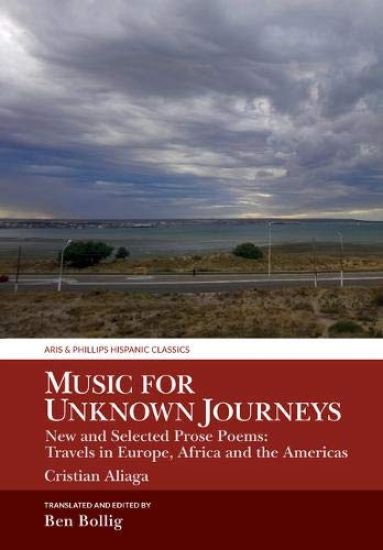
Music for Unknown Journeys by Cristian Aliaga

Music for Unknown Journeys by Cristian Aliaga

Ben Bollig

Liverpool University Press
2021
sidottu
What is the purpose of travel in an age when millions are displaced against their will or have no home to speak of in the first place? How can we travel without being tourists, without erasing the stories of those who live where we visit? These are some of the questions addressed in Cristian Aliaga’s compelling collection of prose poems, Music for Unknown Journeys.This collection contains Aliaga’s “travelling sketches,” in the tradition of Matsuo Basho, John Berger, or W.G. Sebald. Each prose poem is geographically situated in his travels across Patagonia or his more recent journeys around the edge-lands of Europe. His work is politically acute, exploring struggles over territory, resources, and culture, in the places he visits. There is an intense emotional charge as he records the stories of those who globalization and contemporary capitalism have used and left behind. This volume brings together a generous selection of Aliaga’s prose poems, the majority previously unseen in English, as well as a substantial introduction to the author’s work and its context, both literary and political, by the editor and translator.Cristian Aliaga (b. 1962, Tres Cuervos, Province of Buenos Aires) is one of Argentina’s foremost contemporary poets. His work has been highly praised in the TLS and elsewhere.
Music for Unknown Journeys by Cristian Aliaga

Music for Unknown Journeys by Cristian Aliaga

Ben Bollig

LIVERPOOL UNIVERSITY PRESS
2023
nidottu
What is the purpose of travel in an age when millions are displaced against their will or have no home to speak of in the first place? How can we travel without being tourists, without erasing the stories of those who live where we visit? These are some of the questions addressed in Cristian Aliaga’s compelling collection of prose poems, Music for Unknown Journeys.This collection contains Aliaga’s “travelling sketches,” in the tradition of Matsuo Basho, John Berger, or W.G. Sebald. Each prose poem is geographically situated in his travels across Patagonia or his more recent journeys around the edge-lands of Europe. His work is politically acute, exploring struggles over territory, resources, and culture, in the places he visits. There is an intense emotional charge as he records the stories of those who globalization and contemporary capitalism have used and left behind. This volume brings together a generous selection of Aliaga’s prose poems, the majority previously unseen in English, as well as a substantial introduction to the author’s work and its context, both literary and political, by the editor and translator.Cristian Aliaga (b. 1962, Tres Cuervos, Province of Buenos Aires) is one of Argentina’s foremost contemporary poets. His work has been highly praised in the TLS and elsewhere.
Moving Verses

Moving Verses

Ben Bollig

Liverpool University Press
2021
sidottu
From Wild Tales to Zama, Argentine cinema has produced some of the most visually striking and critically lauded films of the 2000s. Argentina also boasts some of the most exciting contemporary poetry in the Spanish language. What happens when its film and poetry meet on screen? Moving Verses studies the relationship between poetry and cinema in Argentina. Although both the “poetics of cinema” and literary adaptation have become established areas of film scholarship in recent years, the diverse modes of exchange between poetry and cinema have received little critical attention. The book analyses how film and poetry transform each another, and how these two expressive media behave when placed into dialogue. Going beyond theories of adaptation, and engaging critically with concepts around intermediality and interdisciplinarity, Moving Verses offers tools and methods for studying both experimental and mainstream film from Latin America and beyond. The corpus includes some of Argentina’s most exciting and radical contemporary directors (Raúl Perrone, Gustavo Fontán) as well as established modern masters (María Luisa Bemberg, Eliseo Subiela), and seldom studied experimental projects (Narcisa Hirsch, Claudio Caldini). The critical approach draws on recent works on intermediality and “impure” cinema to sketch and assess the many and varied ways in which directors “read” poetry on screen.
Moving Verses

Moving Verses

Ben Bollig

LIVERPOOL UNIVERSITY PRESS
2024
nidottu
From Wild Tales to Zama, Argentine cinema has produced some of the most visually striking and critically lauded films of the 2000s. Argentina also boasts some of the most exciting contemporary poetry in the Spanish language. What happens when its film and poetry meet on screen? Moving Verses studies the relationship between poetry and cinema in Argentina. Although both the “poetics of cinema” and literary adaptation have become established areas of film scholarship in recent years, the diverse modes of exchange between poetry and cinema have received little critical attention. The book analyses how film and poetry transform each another, and how these two expressive media behave when placed into dialogue. Going beyond theories of adaptation, and engaging critically with concepts around intermediality and interdisciplinarity, Moving Verses offers tools and methods for studying both experimental and mainstream film from Latin America and beyond. The corpus includes some of Argentina’s most exciting and radical contemporary directors (Raúl Perrone, Gustavo Fontán) as well as established modern masters (María Luisa Bemberg, Eliseo Subiela), and seldom studied experimental projects (Narcisa Hirsch, Claudio Caldini). The critical approach draws on recent works on intermediality and “impure” cinema to sketch and assess the many and varied ways in which directors “read” poetry on screen.