Kirjojen hintavertailu. Mukana 11 717 486 kirjaa ja 12 kauppaa.

Kirjahaku

Etsi kirjoja tekijän nimen, kirjan nimen tai ISBN:n perusteella.

3 kirjaa tekijältä Ben De Bruyn

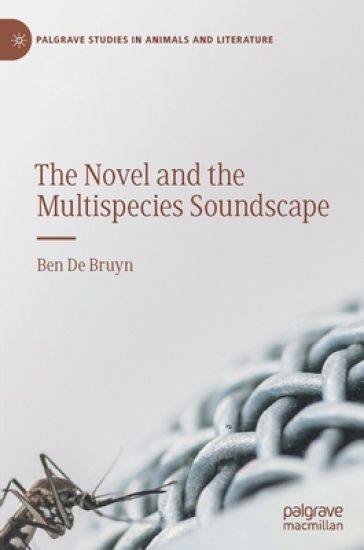
The Novel and the Multispecies Soundscape

The Novel and the Multispecies Soundscape

Ben De Bruyn

Springer Nature Switzerland AG
2020
sidottu
The contemporary novel is not as silent as we tend to believe, nor does it only attend to human plots and characters. As this book shows, writers in a range of subgenres have devoted considerable attention to the voices of nonhuman animals, and to the histories and technologies of listening that shape twenty-first-century cultures and environments. In doing so, their multispecies novels illuminate the cultural meanings we attach to creatures like dogs, frogs, whales, chimpanzees, and Tasmanian tigers – not to mention various bird species and even plants. At the same time, these stories explore the attitudes of distinct communities of human listeners, ranging from vets and musicians to chimp caretakers and sonar technicians. In highlighting animal sounds and their cultural meanings, these novels by authors including Amitav Ghosh, Julia Leigh, Richard Powers, Karen Joy Fowler, Cormac McCarthy, and Han Kang also enrich pressing debates about species extinction, sound pollution, nonhuman communication, and human-animal relations. As we are violently reshaping the planet, they invite us to reimagine our own humanity and animality – and to rethink how we tell stories about multispecies contact zones and their complex soundscapes.

The Novel and the Multispecies Soundscape

The Novel and the Multispecies Soundscape

Ben De Bruyn

Springer Nature Switzerland AG
2021
nidottu
The contemporary novel is not as silent as we tend to believe, nor does it only attend to human plots and characters. As this book shows, writers in a range of subgenres have devoted considerable attention to the voices of nonhuman animals, and to the histories and technologies of listening that shape twenty-first-century cultures and environments. In doing so, their multispecies novels illuminate the cultural meanings we attach to creatures like dogs, frogs, whales, chimpanzees, and Tasmanian tigers – not to mention various bird species and even plants. At the same time, these stories explore the attitudes of distinct communities of human listeners, ranging from vets and musicians to chimp caretakers and sonar technicians. In highlighting animal sounds and their cultural meanings, these novels by authors including Amitav Ghosh, Julia Leigh, Richard Powers, Karen Joy Fowler, Cormac McCarthy, and Han Kang also enrich pressing debates about species extinction, sound pollution, nonhuman communication, and human-animal relations. As we are violently reshaping the planet, they invite us to reimagine our own humanity and animality – and to rethink how we tell stories about multispecies contact zones and their complex soundscapes.
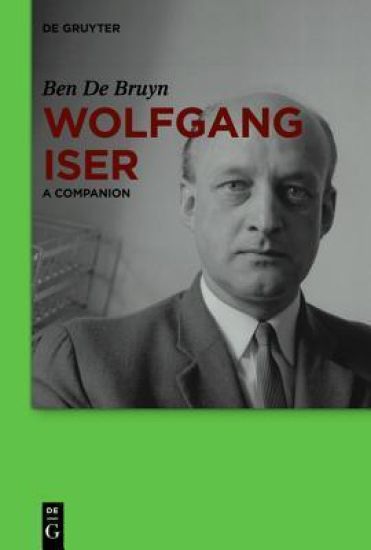
Wolfgang Iser

Wolfgang Iser

Ben De Bruyn

De Gruyter
2012
isokokoinen pokkari
Although Wolfgang Iser is one of the most influential literary theorists of the twentieth century, there is no authoritative study about his oeuvre. The present work remedies that problem by analysing Iser’s German and English writings in detail. Apart from being the first comprehensive account of his work, this study also modifies the established view of Iser’s theory. In contrast to the idea that his only contribution to literary studies is the reception theory of the 1970s, this account demonstrates the importance of Iser’s work on history and anthropology from the 1950s and 1990s. Instead of exclusively focusing on familiar terms such as ‘indeterminacy’, this analysis also discusses Iser’s view of modernity, fiction and culture. As this discussion shows, his writings develop a consistent theory of the novel and the way in which it allows its readers to articulate new views of reality. To situate this theory, Iser’s institutional and intellectual background is described as well, paying special attention to the Poetik und Hermeneutik-circle and thinkers like Blumenberg and Kermode. The continued relevance of his theory is demonstrated via comparisons with recent research on the novel and memory as well as examples from contemporary novelists like Juli Zeh and Hilary Mantel.