Kirjojen hintavertailu. Mukana 11 244 527 kirjaa ja 12 kauppaa.

Kirjahaku

Etsi kirjoja tekijän nimen, kirjan nimen tai ISBN:n perusteella.

5 kirjaa tekijältä Ben McCann

L’Auberge espagnole

L’Auberge espagnole

Ben McCann

Routledge
2020
nidottu
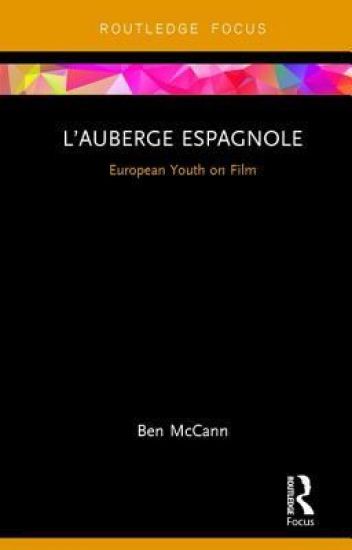
Part romantic comedy, part sitcom, part social drama, L’Auberge espagnole (The Spanish Apartment) recounts a familiar ‘youth’ ritual – the move from university to ‘the real world’, the often complicated personal, romantic and cultural encounters that ensue, and the moral uncertainties that characterize that key biological and physiological developmental stage between adolescence and adulthood. French director Cédric Klapisch showcases the extraordinary colour and beauty of Barcelona’s architecture, and places his hero Xavier at the heart of this smartly written film, which makes a series of wry observations on educational exchange programmes, multi-culturalism, and the direction European youth might take in the twenty-first century.This book addresses the topic of Europe’s youth generation, paying particular attention to the ways in which the film depicts the transition from adolescence to adulthood as allegory for the experiences of European society as it moves through periods of readjustment towards uncertain futures. It also looks into the ecosystem of contemporary French cinema, the Erasmus programme and its influence on youth experience, and identity politics in relation to ‘nationhood’ and ‘European-ness’. The book also examines the two sequels to the film – Russian Dolls (2005) and Chinese Puzzle (2013) – and how the complications faced by the main characters across the trilogy suggest that the move to adulthood is a never-ending process of growing up and reaching a level of self-actualization.
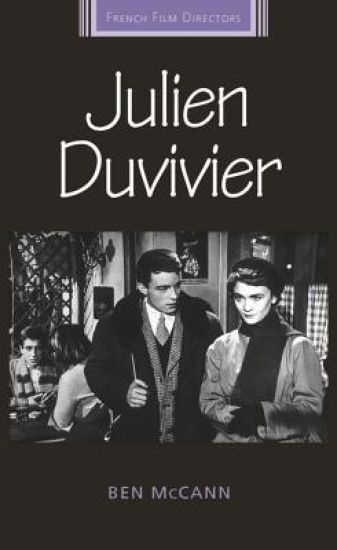
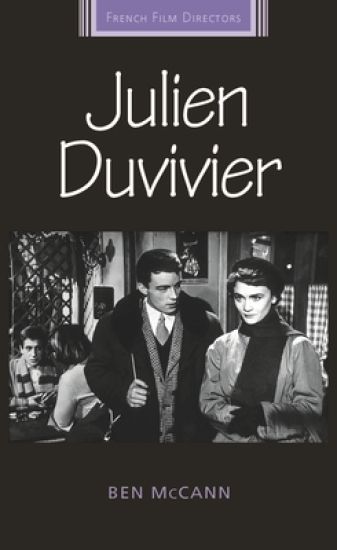
Julien Duvivier

Julien Duvivier

Ben McCann

Manchester University Press
2017
sidottu
This book is the first ever English-language study of Julien Duvivier (1896-1967), once considered one of the world's great filmmakers. It provides new contextual and analytical readings of his films that identify his key themes and techniques, trace patterns of continuity and change, and explore critical assessments of his work over time. His career began in the silent era and ended as the French New Wave was winding down. In between, Duvivier made over sixty films in a long and at times difficult career. He was adept at literary adaptation, biblical epic, and film noir, and this groundbreaking volume illustrates in great detail Duvivier's eclecticism, technical efficiency and visual fluency in works such as Panique (1946) and Voici le temps des assassins (1956). It will particularly appeal to scholars and students of French cinema looking for examples of a director who could straddle the realms of the popular and the auteur.
L’Auberge espagnole

L’Auberge espagnole

Ben McCann

Routledge
2018
sidottu
Part romantic comedy, part sitcom, part social drama, L’Auberge espagnole (The Spanish Apartment) recounts a familiar ‘youth’ ritual – the move from university to ‘the real world’, the often complicated personal, romantic and cultural encounters that ensue, and the moral uncertainties that characterize that key biological and physiological developmental stage between adolescence and adulthood. French director Cédric Klapisch showcases the extraordinary colour and beauty of Barcelona’s architecture, and places his hero Xavier at the heart of this smartly written film, which makes a series of wry observations on educational exchange programmes, multi-culturalism, and the direction European youth might take in the twenty-first century.This book addresses the topic of Europe’s youth generation, paying particular attention to the ways in which the film depicts the transition from adolescence to adulthood as allegory for the experiences of European society as it moves through periods of readjustment towards uncertain futures. It also looks into the ecosystem of contemporary French cinema, the Erasmus programme and its influence on youth experience, and identity politics in relation to ‘nationhood’ and ‘European-ness’. The book also examines the two sequels to the film – Russian Dolls (2005) and Chinese Puzzle (2013) – and how the complications faced by the main characters across the trilogy suggest that the move to adulthood is a never-ending process of growing up and reaching a level of self-actualization.
Julien Duvivier

Julien Duvivier

Ben McCann

Manchester University Press
2019
nidottu
This book is the first ever English-language study of Julien Duvivier (1896-1967), once considered one of the world's great filmmakers. It provides new contextual and analytical readings of his films that identify his key themes and techniques, trace patterns of continuity and change, and explore critical assessments of his work over time. His career began in the silent era and ended as the French New Wave was winding down. In between, Duvivier made over sixty films in a long and at times difficult career. He was adept at literary adaptation, biblical epic, and film noir, and this groundbreaking volume illustrates in great detail Duvivier's eclecticism, technical efficiency and visual fluency in works such as Panique (1946) and Voici le temps des assassins (1956). It will particularly appeal to scholars and students of French cinema looking for examples of a director who could straddle the realms of the popular and the auteur.
Ripping Open the Set

Ripping Open the Set

Ben McCann

Verlag Peter Lang
2013
nidottu
French film design throughout the 1930s was not just descriptive, but also expressive: sets were not merely part of the background, but were vital components of a film’s overall atmosphere, impact and critical afterlife. This was a period when sets were ‘ripped open’, as painted backdrops were replaced by three-dimensional constructions to ensure greater proximity to reality. Accomplished set designers such as Alexandre Trauner, Jacques Krauss and Eugène Lourié crafted a series of designs both realist and expressionistic that brought out the underlying themes of a film’s narrative and helped create an exportable vision of ‘Frenchness’ that influenced other European and American film design practices. This book details the elaborate paraphrasing tendencies of French film design in the 1930s. The author explores the crucial role of the set designer in the film’s evolutionary process and charts how the rapid development of studio practices enabled designers to become progressively more ambitious. The book examines key films such as Quatorze juillet (1932), Un Carnet de bal (1937), La Grande illusion (1937) and Le Jour se lève (1939) to demonstrate how set design works at establishing time and place, generating audience familiarity and recognition and underpinning each film’s visual style.