Kirjojen hintavertailu. Mukana 11 244 527 kirjaa ja 12 kauppaa.

Kirjahaku

Etsi kirjoja tekijän nimen, kirjan nimen tai ISBN:n perusteella.

3 kirjaa tekijältä Benedict M. Ashley

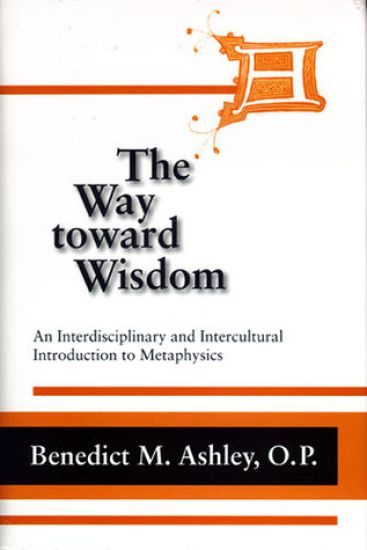
Way Toward Wisdom, the

Way Toward Wisdom, the

Benedict M. Ashley

University of Notre Dame Press
2009
nidottu
Once thought to be the task of metaphysics, the synthesis of knowledge has been discounted by many philosophers today. Benedict Ashley, a leading Thomistic scholar, argues that it remains a valid and intellectually fruitful pursuit by situating metaphysics as an endeavor that must cross disciplinary and cultural boundaries. Working from a realist Thomistic epistemology, Ashley asserts that we must begin our search for wisdom in the natural sciences; only then, he believes, can we ensure that our claims about immaterial and invisible things are rooted in reliable experience of the material. Any attempt to share wisdom, he insists, must derive from a context that is both interdisciplinary and intercultural. Ashley offers an ambitious analysis and synthesis of major historical contributions to the unification of knowledge, including non-Western traditions. Beginning with the question "Metaphysics: Nonsense or Wisdom?" Ashley moves from a critical examination of the foundations of modern science to quantum physics and the Big Bang; from Aristotle's theory of being and change, through Aquinas's five ways, to a critical analysis of modern and postmodern thought. Ashley is able to interweave the approaches of the great philosophers by demonstrating their contributions to philosophical thought in a concrete, specific manner. In the process, he accounts for a contemporary culture overwhelmed by the fragmentation of data and thirsting for an utterly transcendent yet personal God. The capstone of a remarkable career, The Way Toward Wisdom will be welcomed by students in philosophy and theology.

Healing for Freedom

Healing for Freedom

Benedict M. Ashley

The Institute for the Psychological Sciences Press
2013
nidottu
In the midst of anti-religious sentiment, how are Christians to accept the type of freedom offered by modern psychology? Renowned theologian Benedict Ashley presents a Christian view of the human person's call to true freedom. Such liberty requires not only overcoming the typical struggles of personal development, but also attaining the healing that, for some, demands the ministrations of psychotherapy. While recognising that the profound vocation of mankind requires spiritual and ethical integration, Ashley treats the major models of human personhood found in contemporary psychology. His mediating model of the human person sets a sound philosophical foundation that serves to integrate a Christian vision of the human person and the work of psychology. The desire for ultimate flourishing serves as the guide for understanding the interrelationship between human embodiedness, rational thought, choice and communal life. Human beings naturally long to know the ultimate origin and end of life and, by the gift of faith, respond to God's call to holiness and perfection. From this perspective, Ashley calls psychologists to be attentive to both the animal and the personal aspects of being human. In contrast to the claims of the new atheists, he argues that coherence is found not in opposing but rather in confirming the fittingness of human openness to transcendence. Throughout the book, he demonstrates how psychotherapeutic models of healing can be rendered compatible with a Christian notion of knowledge, love and action at embodied, personal and interpersonal levels.
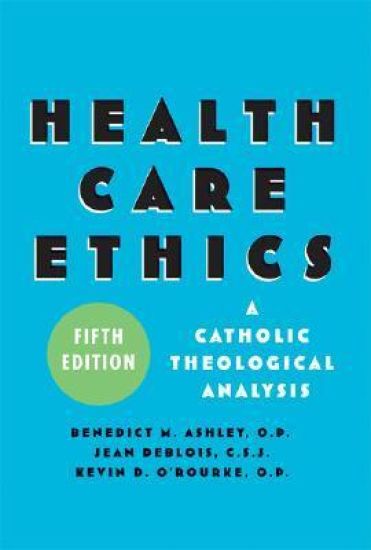
Health Care Ethics

Health Care Ethics

Benedict M. Ashley

Georgetown University Press
2006
pokkari
"Health Care Ethics" is a comprehensive study of significant issues affecting health care and the ethics of health care from the perspective of Catholic theology. It aims to help Christian, and especially Catholic, health care professionals solve concrete problems in terms of principles rooted in scripture and tested by individual experience; however, its basis in real medical experience makes this book a valuable resource for anyone with a general interest in health care ethics. This fifth edition, which includes important contributions by Jean deBlois, C.S.J., considers everyday ethical questions and dilemmas in clinical care and deals more deeply with issues of women's health, mental health, sexual orientation, artificial reproduction, and the new social issues in health care. The authors devote special attention to the various ethical theories currently in use in the United States while clearly presenting a method of ethical decision making based in the Catholic tradition. They discuss the needs of the human person, outlining what it means to be human, both as an individual and as part of a community. This volume has been significantly updated to include new discussions of recent clinical innovations and theoretical issues that have arisen in the field: the Human Genome Project; efforts to control sexual selection of infants; efforts to genetically modify the human genotype and phenotype; the development of palliative care as a medical specialty; the acceptance of non-heart beating persons as organ donors; embryo development and stem cell research; reconstructive and cosmetic surgery; nutrition and obesity; medical mistakes; the negative effects of managed care on the patient-physician relationship; and, recent papal allocution regarding care of patients in a persistent vegetative state and palliative care for dying patients.