Kirjojen hintavertailu. Mukana 11 244 527 kirjaa ja 12 kauppaa.

Kirjahaku

Etsi kirjoja tekijän nimen, kirjan nimen tai ISBN:n perusteella.

12 kirjaa tekijältä Benedict Taylor

Samuel Coleridge-Taylor's Hiawatha

Samuel Coleridge-Taylor's Hiawatha

Benedict Taylor

OXFORD UNIVERSITY PRESS INC
2025
sidottu
The Hiawatha trilogy of cantatas (1898--1900), based on Henry Wadsworth Longfellow's poem The Song of Hiawatha, were some of the most popular and widely performed pieces of music in the opening decade of the twentieth century. As a result, their young African British composer, Samuel Coleridge-Taylor (1875--1912), became widely celebrated in the UK and North America. In this volume, Benedict Taylor examines the musical and political significance of Coleridge-Taylor through the reception history of his Hiawatha trilogy. Coleridge-Taylor's music and efforts on behalf of the African diaspora were made largely from within the white frame in which he grew up and highlight the difficulties of transcultural or interracial mediation at this point in history. Longfellow's source text already constitutes a contested narrative of ethnic identity and appropriation through its epic framing of Native American history from a white, settler perspective. And further complicating the story, the success of Hiawatha made Coleridge-Taylor a focal point for African American attempts at cultural recognition. Not only does Hiawatha afford the chance to explore the music of one of the most important composers of colour in the Western classical music tradition, but the work and its reception forms a prism with which to analyse questions of canonicity, marginalization, race, and identity from the composer's own day to the present.
Samuel Coleridge-Taylor's Hiawatha

Samuel Coleridge-Taylor's Hiawatha

Benedict Taylor

OXFORD UNIVERSITY PRESS INC
2025
nidottu
The Hiawatha trilogy of cantatas (1898--1900), based on Henry Wadsworth Longfellow's poem The Song of Hiawatha, were some of the most popular and widely performed pieces of music in the opening decade of the twentieth century. As a result, their young African British composer, Samuel Coleridge-Taylor (1875--1912), became widely celebrated in the UK and North America. In this volume, Benedict Taylor examines the musical and political significance of Coleridge-Taylor through the reception history of his Hiawatha trilogy. Coleridge-Taylor's music and efforts on behalf of the African diaspora were made largely from within the white frame in which he grew up and highlight the difficulties of transcultural or interracial mediation at this point in history. Longfellow's source text already constitutes a contested narrative of ethnic identity and appropriation through its epic framing of Native American history from a white, settler perspective. And further complicating the story, the success of Hiawatha made Coleridge-Taylor a focal point for African American attempts at cultural recognition. Not only does Hiawatha afford the chance to explore the music of one of the most important composers of colour in the Western classical music tradition, but the work and its reception forms a prism with which to analyse questions of canonicity, marginalization, race, and identity from the composer's own day to the present.
Arthur Sullivan

Arthur Sullivan

Benedict Taylor

Routledge
2019
nidottu
Arthur Sullivan (1842–1900) was Victorian Britain’s most celebrated and popular composer, whose music to this day reaches a wider audience than that of any of his contemporaries. Yet the comic operas on which Sullivan’s reputation is chiefly based have been consistently belittled or ignored by the British musicological establishment, while his serious works have until recently remained virtually unknown. The time is thus long overdue for scholarly re-engagement with Sullivan. The present book offers a new appraisal of the music of this most notable nineteenth-century British composer, combining close analytical attention to his music with critical consideration of the wider aesthetic and social context to his work. Focusing on key pieces in all the major genres in which Sullivan composed, it includes accounts of his most important serious works – the music to The Tempest, the ‘Irish’ Symphony, The Golden Legend, Ivanhoe – alongside detailed examination of the celebrated comic operas created with W.S. Gilbert to present a balanced portrayal of Sullivan’s musical achievement.
Towards a Harmonic Grammar of Grieg's Late Piano Music
The music of Edvard Grieg is justly celebrated for its harmonic richness, a feature especially apparent in the piano works written in the last decades of his life. Grieg was enchanted by what he styled the ’dreamworld’ of harmony, a magical realm whose principles the composer felt remained a mystery even to himself, and he was not alone, in that the complex nature of late-Romantic harmony around 1900 has proved a keen source of debate up to the present day. Grieg’s music forms a particularly profitable repertoire for focusing current debates about the nature of tonality and tonal harmony. Departing from earlier approaches, this study is not simply an inventory of Griegian harmonic traits but seeks rather to ascertain the deeper principles at work governing their meaningful conjunction, how elements of Grieg’s harmonic grammar are utilised in creating an extended tonal syntax. Building both on historical theories and more recent developments, Benedict Taylor develops new models for understanding the complexity of late-Romantic tonal practice as epitomised in Grieg’s music. Such an investigation casts further valuable light on the twin issues of nature and nationalism long connected with the composer: the question of tonality as something natural or culturally constructed and larger historiographical claims concerning Grieg’s apparent position on the periphery of the Austro-German tradition.
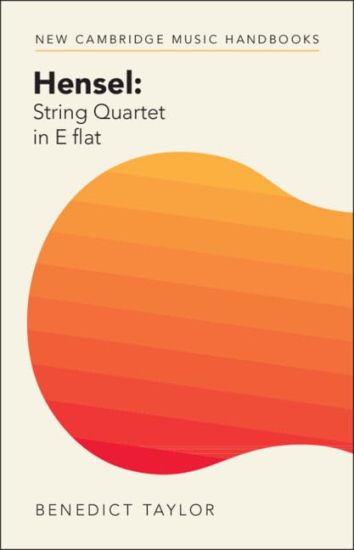
Hensel: String Quartet in E flat

Hensel: String Quartet in E flat

Benedict Taylor

Cambridge University Press
2023
pokkari
The String Quartet in E flat major (1834) by Fanny Hensel, née Mendelssohn, is one of the most important works by a female composer written in the nineteenth century. Composed at a turning point in her life (as Hensel was not only grappling with her own creative voice but also coming to terms with her identity as a married woman, and the role her family expected of her), the quartet is significant in showing a woman composing in a genre that was then almost exclusively the domain of male artists. Benedict Taylor's illuminating book situates itself within developing scholarly discourse on the music of women composers, going beyond apologetics – or condemnation of those who hindered their development – to examine the strength and qualities of the music and how it responded to the most progressive works of the period.
Music, Subjectivity, and Schumann

Music, Subjectivity, and Schumann

Benedict Taylor

Cambridge University Press
2024
pokkari
The concept of subjectivity is one of the most popular in recent scholarly accounts of music; it is also one of the obscurest and most ill-defined. Multifaceted and hard to pin down, subjectivity nevertheless serves an important, if not indispensable purpose, underpinning various assertions made about music and its effect on us. We may not be exactly sure what subjectivity is, but much of the reception of Western music over the last two centuries is premised upon it. Music, Subjectivity, and Schumann offers a critical examination of the notion of musical subjectivity and the first extended account of its applicability to one of the composers with whom it is most closely associated. Adopting a fluid and multivalent approach to a topic situated at the intersection of musicology, philosophy, literature, and cultural history, it seeks to provide a critical refinement of this idea and to elucidate both its importance and limits.
Music, Subjectivity, and Schumann

Music, Subjectivity, and Schumann

Benedict Taylor

Cambridge University Press
2022
sidottu
The concept of subjectivity is one of the most popular in recent scholarly accounts of music; it is also one of the obscurest and most ill-defined. Multifaceted and hard to pin down, subjectivity nevertheless serves an important, if not indispensable purpose, underpinning various assertions made about music and its effect on us. We may not be exactly sure what subjectivity is, but much of the reception of Western music over the last two centuries is premised upon it. Music, Subjectivity, and Schumann offers a critical examination of the notion of musical subjectivity and the first extended account of its applicability to one of the composers with whom it is most closely associated. Adopting a fluid and multivalent approach to a topic situated at the intersection of musicology, philosophy, literature, and cultural history, it seeks to provide a critical refinement of this idea and to elucidate both its importance and limits.
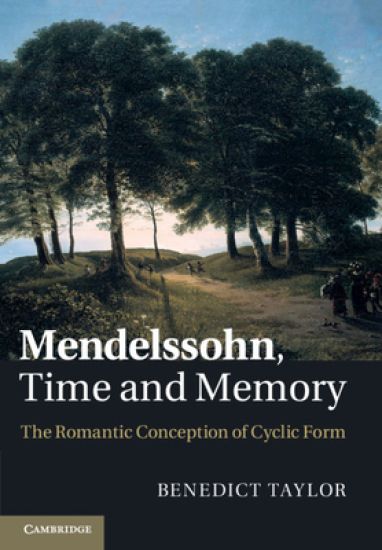
Mendelssohn, Time and Memory

Mendelssohn, Time and Memory

Benedict Taylor

Cambridge University Press
2021
pokkari
Felix Mendelssohn has long been viewed as one of the most historically minded composers in western music. This book explores the conceptions of time, memory and history found in his instrumental compositions, presenting an intriguing new perspective on his ever-popular music. Focusing on Mendelssohn's innovative development of cyclic form, Taylor investigates how the composer was influenced by the aesthetic and philosophical movements of the period. This is of key importance not only for reconsideration of Mendelssohn's work and its position in nineteenth-century culture, but also more generally concerning the relationship between music, time and subjectivity. One of very few detailed accounts of Mendelssohn's music, the study presents a new and provocative reading of the meaning of the composer's work by connecting it to wider cultural and philosophical ideas.
Hensel: String Quartet in E flat

Hensel: String Quartet in E flat

Benedict Taylor

Cambridge University Press
2023
sidottu
The String Quartet in E flat major (1834) by Fanny Hensel, née Mendelssohn, is one of the most important works by a female composer written in the nineteenth century. Composed at a turning point in her life (as Hensel was not only grappling with her own creative voice but also coming to terms with her identity as a married woman, and the role her family expected of her), the quartet is significant in showing a woman composing in a genre that was then almost exclusively the domain of male artists. Benedict Taylor's illuminating book situates itself within developing scholarly discourse on the music of women composers, going beyond apologetics – or condemnation of those who hindered their development – to examine the strength and qualities of the music and how it responded to the most progressive works of the period.
Arthur Sullivan

Arthur Sullivan

Benedict Taylor

Ashgate Publishing Limited
2017
sidottu
Arthur Sullivan (1842–1900) was Victorian Britain’s most celebrated and popular composer, whose music to this day reaches a wider audience than that of any of his contemporaries. Yet the comic operas on which Sullivan’s reputation is chiefly based have been consistently belittled or ignored by the British musicological establishment, while his serious works have until recently remained virtually unknown. The time is thus long overdue for scholarly re-engagement with Sullivan. The present book offers a new appraisal of the music of this most notable nineteenth-century British composer, combining close analytical attention to his music with critical consideration of the wider aesthetic and social context to his work. Focusing on key pieces in all the major genres in which Sullivan composed, it includes accounts of his most important serious works – the music to The Tempest, the ‘Irish’ Symphony, The Golden Legend, Ivanhoe – alongside detailed examination of the celebrated comic operas created with W.S. Gilbert to present a balanced portrayal of Sullivan’s musical achievement.
Mendelssohn

Mendelssohn

Benedict Taylor

Routledge
2015
sidottu
This volume of essays brings together a selection of the most significant and representative writings on Mendelssohn from the last fifty years. Divided into four main subject areas, it makes available twenty-two essays which have transformed scholarly awareness of this crucial and ever-popular nineteenth-century composer and musician; it also includes a specially commissioned introductory chapter which offers a critical overview of the last half century of Mendelssohn scholarship and the direction of future research. The addition of new translations of two influential essays by Carl Dahlhaus, hitherto unavailable in English, adds to the value of this volume which brings back in to circulation important scholarly works and constitutes an indispensable reference work for Mendelssohn scholars.
Towards a Harmonic Grammar of Grieg's Late Piano Music
The music of Edvard Grieg is justly celebrated for its harmonic richness, a feature especially apparent in the piano works written in the last decades of his life. Grieg was enchanted by what he styled the ’dreamworld’ of harmony, a magical realm whose principles the composer felt remained a mystery even to himself, and he was not alone, in that the complex nature of late-Romantic harmony around 1900 has proved a keen source of debate up to the present day. Grieg’s music forms a particularly profitable repertoire for focusing current debates about the nature of tonality and tonal harmony. Departing from earlier approaches, this study is not simply an inventory of Griegian harmonic traits but seeks rather to ascertain the deeper principles at work governing their meaningful conjunction, how elements of Grieg’s harmonic grammar are utilised in creating an extended tonal syntax. Building both on historical theories and more recent developments, Benedict Taylor develops new models for understanding the complexity of late-Romantic tonal practice as epitomised in Grieg’s music. Such an investigation casts further valuable light on the twin issues of nature and nationalism long connected with the composer: the question of tonality as something natural or culturally constructed and larger historiographical claims concerning Grieg’s apparent position on the periphery of the Austro-German tradition.