Kirjojen hintavertailu. Mukana 11 244 527 kirjaa ja 12 kauppaa.

Kirjahaku

Etsi kirjoja tekijän nimen, kirjan nimen tai ISBN:n perusteella.

4 kirjaa tekijältä Benedicta Ward

High King Of Heaven

High King Of Heaven

Benedicta Ward

Mowbray
1999
nidottu
It was not until after the conversion of the English to Christianity that any sustained information was written down about Christian life in these islands. This was done in the eigth century by the monk Bede, and it is mostly through his writings that it is possible to be in touch with the first Christians in England and to know about what they thought and did. Ward looks at this "golden age" of English Christianity, how it ended with the attacks of the Vikings and the "golden age" of faith and culture which followed in the tenth century.
Signs and Wonders

Signs and Wonders

Benedicta Ward

Variorum
1992
sidottu
This book is concerned with the concepts of Christian holiness and spirituality, from Late Antiquity through to the Middle Ages. The first group of articles focuses on the Desert Fathers, the following ones examine key figures in the monastic history of the medieval West, dealing above all with England and with Bede and Anselm of Canterbury. Throughout, Benedicta Ward's aim has been to find an approach that makes full sense of Christian writings, notably the hagiography, miracles and all. This should not be seen, she argues, simply as biography, nor as a quarry for information on social history, valuable though it may be for those purposes. The primary object of these Lives - as of the people about whom they were written - was religious; to neglect this meaning is to risk fundamentally misunderstanding these texts. Ce volume traite des concepts de la sainteté et de la spiritualité chrétiennes, de l’Antiquité tardive jusqu’au Moyen Age. Le premier groupe d’études se concentre sur les Pères du Désert, les suivants font l’examen de personnages-clefs dans l’histoire monastique de l’Occident médiéval, s’attachant avant tout à l’Angleterre et à Bède et Anselme de Cantorbéry. Benedicta Ward à pour propos constant de trouver une approche rendent tout son sens à la litterature chrétienne et notamment à la littérature hagiographique, miracles et autres. Bien que valable à ces deux niveaux, ceci ne devrait pas être perçu, souligne-t’elle, en tant que simple biographie, ni en tant que source d’information sur l’histoire sociale. L’objet premier de ces Vies est d’ordre religieux; toute négligence de ce sens peut mener à une mécompréhension fondamentale de ces textes.
The Venerable Bede: Volume 169

The Venerable Bede: Volume 169

Benedicta Ward

Liturgical Press
2007
nidottu
From his remote Northumbrian monastery, Bede (673-735) exerted an enormous and enduring influence on the study of Scripture, history, mathematics, and Latin literature. This overview of his life and writings, first published in 1990, has now been revised in the light of the most recent scholarship. In it noted scholar Sister Benedicta Ward introduces Bede and analyzes his works and the traditions and events which gave form to his thought.
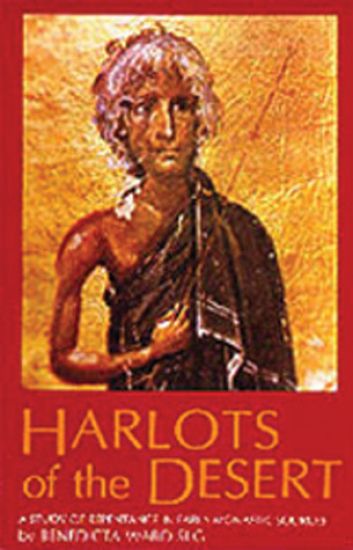
Harlots of the Desert

Harlots of the Desert

Benedicta Ward

Liturgical Press
1987
pokkari
Beauty consuming itself like incense burnt before God in solitude, far from the eyes of men, became the most stirring image of penance conceivable. Stories on conversion from extreme sinfulness to extreme holiness have always attracted humankind’s attention, and this was especially so among the monks of the ancient and medieval world. In the literature of fourth-century Egypt, alongside the wise sayings of the desert fathers and the stories illustrating their way of life, there are also the accounts of the lives of the harlots, Pelagia, Maria, Thais, Mary of Egypt, and a number of lesser figures, all of which were copied, translated, and retold throughout the Middle Ages. In this monograph, Benedicta Ward continues the work she began in The Sayings of the Desert Fathers and The Lives of the Desert Fathers, commenting on early monastic texts by discussing the theme of Christian repentance. She begins with May Magdalene, the archetypal penitent, and goes on to examine the desert tradition, concluding each chapter with new translations of those lives which were most influential in the early Church and on countless generations afterwards.