
Kirjahaku
Etsi kirjoja tekijän nimen, kirjan nimen tai ISBN:n perusteella.
17 kirjaa tekijältä Benjamin Adamah
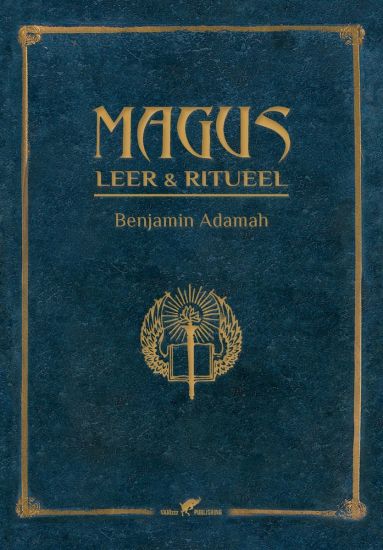
Een ongecensureerd inzicht in de geheimen van magie en de oorspronkelijke hekserij.Magie is een beladen term. Wat is magie eigenlijk? Werkt magie? Als het werkt, hoe werkt het dan? Wat is de echte geschiedenis en essentie van de Europese hekserij, zoals die bestond, nog voor de opkomst van de wicca in de 20e eeuw? MAGUS - Leer & Ritueel opent de toegangspoorten van twee overlappende werelden, die al duizenden jaren parallel aan de alledaagse werkelijkheid bestaan. Niches in onze realiteit, die gevreesd, veroordeeld en vooral niet begrepen werden. Zowel aan de gevorderde als beginnende ge nteresseerde in occulte historie, technieken en beginselen wordt in dit boek een bijzondere samenhang getoond. De echte redenen waarom de kerk en staat magie en vooral hekserij zo obsessief vervolgd en verboden hebben, krijgt daarbij een nieuwe dimensie. MAGUS is echter vooral praktisch geschreven. Veel methodes, zoals bijvoorbeeld voor astraal reizen en het zelf scheppen van een gedachtevorm of servitor (kunstmatige entiteit) kunnen meteen worden toegepast. Dit geldt ook voor de uitgebreid beschreven planeet-engelenmagie via petities, oosterse trainingtechnieken en meer. MAGUS is rijk ge llustreerd en bevat meer dan 90 rituele zegels (sigilli) van engelen, daemones en natuurgeesten.Indien begrepen, kan magie een effectief middel zijn om je leven te intensiveren, je vrijheid te vergroten en je eigen toekomst te scheppen. Het enige wat je er verder bij nodig hebt zijn wilskracht, tijd en discipline. Esotericus Benjamin Adamah (1964) schreef dit boek als insider, met meer dan 35 jaar ervaring.
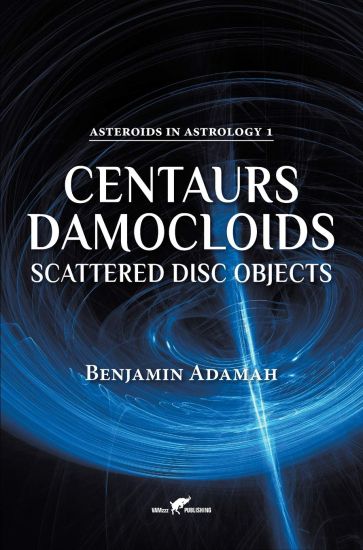
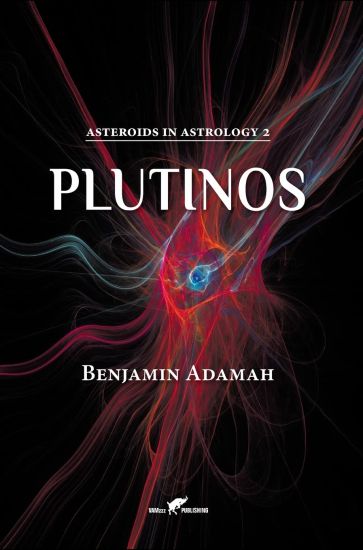
Plutinos are asteroids and in some cases dwarf planet candidates, circling around in the inner Kuiper belt, in orbits comparable to the one of Pluto (Pluto-Charon). Astrological research points out that most Plutinos, like their godfather Pluto, exert a compelling force in both personal and mundane horoscopes. They are radical, transforming, confronting, they penetrate the darkness, the blur, or daily life patterns and have a Scorpio-like preference for what you might call soul-mining. They trigger the awareness of slumbering patterns in the depths of our souls and force us to face the truth. Most Plutinos are "isolating" one or two classic Plutonian keywords, such as: intensifying, dark, transforming, cutting away dead wood, letting go, death, discharging, imploding, violence, criminality, rebellion, dirt, sex, penetration, psychopaths or the occult. Strong transits, to or from these slow moving asteroids, can act as serious turning points in our lives. Negatively, several Plutinos exacerbate those qualities belonging to the darker side of Pluto and its sign Scorpio. All members of this classification fill in many gaps in chart interpretations, adding much to both personal and mundane astrology. After his 2019 debute on Centaurs, Damocloids and SDO's, Benjamin Adamah now presents the astrological meaning of 44 Plutinos. Apart from Orcus(-Vanth), Ixion, Arawn, Huya, Lempo(-Hiisi), Mors-Somnus and Rhadamantus, 37 other important Plutinos, cataloged by MPC-number, are discussed.This book comes with a special appendix about the chart of the USA and its crucial role within the current world-crisis. This analysis is based on Plutinos and the Black Sun-Diamond axis. A second appendix shows a substantial list of Pluto-Charon aspects with asteroids of several classes which - like the Plutinos - have specific Plutonic features in common with the gatekeeper of our solar system. Preview on vamzzz.com
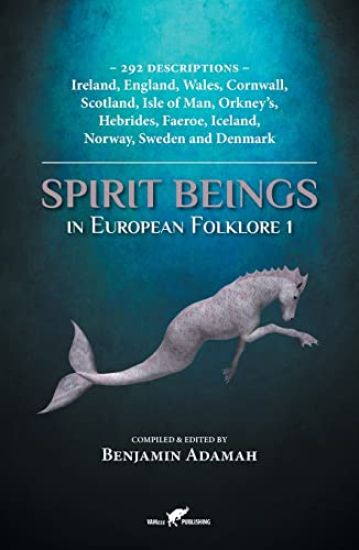
Compendium 1 of the Spirit Beings in European Folklore-series covers the northwestern part of the continent where Celtic and Anglo-Saxon cultures meet the Nordic. This book catalogs the mysterious creatures of Ireland, the Isle of Man, England, Wales, Cornwall, Scotland, Hebrides, Orkneys, Faroe Islands, Iceland, Norway, Sweden and Denmark. For centuries, the peoples of these regions have influenced each other in many ways, including their mythologies and folklore. The latter is perhaps most evident in the various species of Brook-horses or Water-horses. These semi-aquatic ghostly creatures come in all kinds of varieties and are typical of the English or Gaelic speaking parts of Europe and Scandinavia. Many other ghostly entities occur only in specific areas or countries. Some even became cultural icons, such as the Irish Leprechaun, the Knockers from Wales, the Scandinavian Trolls and Huldras or the Icelandic Hulduf lk. England has its Brownies, several kinds of Fairies and locally famous ghost dogs. Iceland and Scandinavia seem to "specialize" in spirit beings who appear fully materialized, such as the different species of Illveli (Evil Whales) and Draugr, the returning dead.Compendium 1 discusses 292 spirit beings in detail, including their alternative names, with additional references to related or subordinate beings and a unique selection of illustrations.
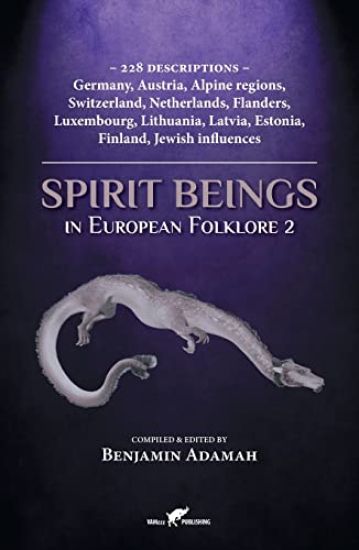
Compendium 2 of the Spirit Beings in European Folklore-series covers the German-speaking parts of Central Europe, the Low Countries, the Baltic region and Finland. Via the Ashkenazi Jews, spirit beings from the Middle East entered Central European culture, which are also included. This originally densely forested part of the continent is particularly rich in nature-spirits and has a wide variety of beings that dwell in forests and mountainous areas (Berggeister) or act as atmospheric forces. Also dominant are the many field-spirits and variations of Alp-like creatures (Mare, Nightmare). There is an overlap with the Nordic and Eastern European Revenant and Vampire-types, and we find several water- and sea-spirits. Among the German-speaking and Baltic peoples, invoking field-spirits was an integrated part of agriculture, with rites continuing into the early 20th century. The Alpine regions have spirits who watch over cattle. In general, forest-spirits are prominent. Germany has its Moosweiblein and Wilder Mann (Woodwose), the Baltic region has its Mātes, and Finland its Mets n V ki. Then there are ghostly animals, and earth- and house-spirits such as the many kinds of Kobolds, the Dutch Kabouter, and the Kaukas of Prussia and Latvia.Compendium 2 discusses 228 spirit beings in detail, including their alternative names, with additional references to related or subordinate beings and a unique selection of illustrations.
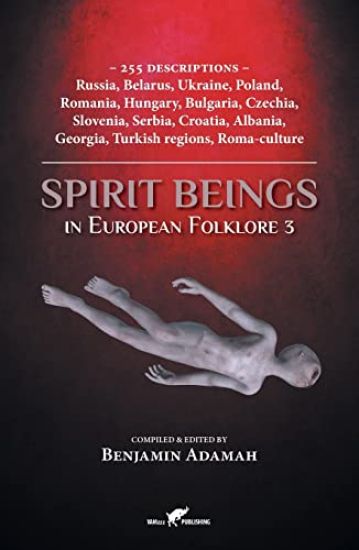
Compendium 3 of the Spirit Beings in European Folklore-series offers an overview of the mysterious, sometimes beautiful and often shadowy entities of the Slavic countries, the Balkans, the Carpathians, Albania, Georgia, and the Turkish and Romani peoples. Many types of Vampires and vampiric Revenants are included - in their original state and purged of later applied disinformation. The undead are prominent in the folklore of Eastern Europe and Albania. Also typical are farm- and household-spirits such as the Domovoy, water-spirits and forest demons like the Russian Leshy, the Chuhaister, or the evil Polish Belt, who like the Ukrainian Blud, leads travelers off their path until they are lost in the deepest part of the forest. Unique is the Russian Bannik or spirit of the bathhouse. Amongst the Slavs, some 'demons', like the Boginka for example, originally belonged to the pre-Christian pantheon. Eastern Europe, in contrast to its returning dead, is rich in seductive female spirits such as the Romanian Iele, the Russian Russalka, the Vila of the Eastern and Southern Slavs and the Bulgarian Samodiva. Via the Balkans, Greek influences entered Slavic culture, while there are also spirits that intersect Germanic and Nordic folklore.Compendium 3 discusses 255 spirit beings in detail, including their alternative names, with additional references to related or subordinate beings and a unique selection of illustrations.
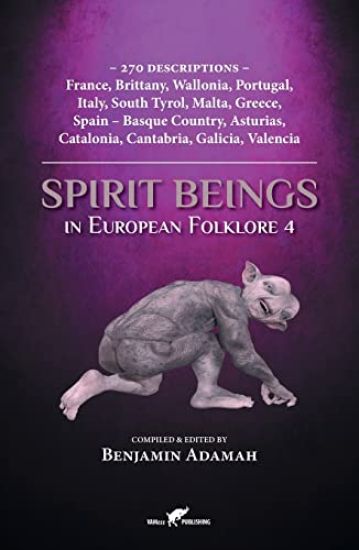
Compendium 4 of the Spirit Beings in European Folklore-series covers an area that starts with Wallonia and continues via France and the Pyrenees, through the Iberian Peninsula, to Italy and Greece. This results in a very diverse and colourful collection of spirit beings, due to the many included Basque nature-spirits or Ireluak, the Spanish Duendes, the Celtic spirits of Brittany, the prankster Italian Folletti and the creatures from Greece. Some creatures from Breton folklore are particularly gruesome, such as the hollow-eyed Ankou, the Werewolf-like Bugul-n z, or the ghostly and Will-o'-the-wisp-like Yan-gant-y-tan, who roams the night roads with his five lit candles. Most Italian ghosts are less gloomy, while the Iberian Peninsula is home to everything ranging from the 'Beauty' to the 'Beast'. Compendium 4 contains - amongst other things - many kinds of dwarf-spirits or Goblins (Lutins, Nutons, Folletti, Farfadettes, Korrigans, Minairons) various seductive and feminine spring creatures, Wild Man-varieties (Basajaunak, Jentilak) and an extensive section on the Incubus-Succubus. It is fascinating to discover how many types of European spirit beings (from Kobold to many female spring-spirits), described in the other Compendiums, can be traced back to creatures from Ancient Greece.Compendium 4 discusses 270 spirit beings in detail, includes their alternative names, additional references to subordinate beings and a unique selection of illustrations.
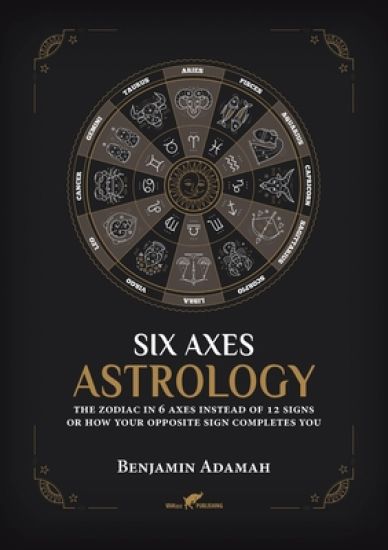
You may have read about your zodiac sign, which is determined by the position of the Sun at the time of your birth. However, what many people don't know is that there is another important aspect to consider. Your opposite zodiac sign represents your unconscious self and has a significant impact on your life. The big secret is: this opposite sign wants to be part of your game and can be of great help If you neglect the qualities and forces, that typify this opposite zodiac sign, they will keep working against you - until you integrate them.So, by simply gaining insight into your opposite sign and integrating its qualities into your personality, decisions and actions, you avoid a lot problems, delays, opposition, and blockages. This formula can make your life much more stable, successful and fulfilling, and speed up your personal development. Instead of spending a lot of money on complex horoscope readings, try the proven formula presented in this booklet first. Aries should integrate Libra, Taurus integrate Scorpio, Gemini integrate Sagittarius, and so on. Don't just take the author's word for it, try it out and see the results for yourself

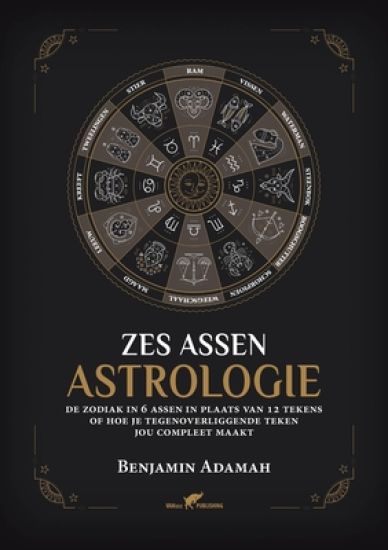
Je sterrenbeeld (lees: je Zonneteken) wordt bepaald door de stand van de Zon op het moment van je geboorte. Wat veel mensen niet weten is dat het teken pal tegenover je Zonneteken je onbewuste ik vertegenwoordigt. Dit tegenoverliggende zodiakteken oefent een zeer belangrijke invloed uit op je leven. Het grote geheim is dat dit tegenovergestelde teken je ik compleet maakt. Het wil deel van je leven uitmaken en kan je daarbij enorm helpen. Het vult je Zonneteken aan en maakt zo je kern compleet en positief. Als je echter dit tegenoverliggende teken verwaarloost, gaat het je tegenwerken als een soort 'innerlijke saboteur'. Net zo lang totdat je het wel integreert.Door simpelweg inzicht te krijgen in je tegenoverliggende teken voorkom je dus veel problemen, vertragingen, aanvaringen met anderen en blokkades. Deze eenvoudige formule kan je leven veel stabieler, succesvoller en bevredigender maken en je persoonlijke ontwikkeling enorm versnellen. Probeer, in plaats van een ingewikkelde horoscooplezing, eerst de beproefde formule uit dit boekje. Ram kan Weegschaal integreren, Stier kan Schorpioen integreren, Tweelingen kan Boogschutter integreren, enzovoort. Geloof niet de auteur op zijn woord, maar probeer het uit en zie de resultaten Benjamin Adamah (1964) is een internationaal erkend auteur van nieuwe astrologieboeken en is al meer dan drie decennia professioneel astroloog.
The Cubewanos get more and more attention in astrology. They form a group of asteroids and dwarf-planets in the Kuiper Belt, just beyond the orbit of Pluto. Their orbital period around the Sun is 260 to 330 years. To be classified as a Cubewano, the asteroid must be quite large (at least about 100 km in diameter).Cubewanos are complex objects, but mainly because of their versatility and less because of inherent conflicts or wounds as with Centaurs and Jupiter Trojans, or obsessive tendencies as seen with Plutinos. Many of these objects are connected to Zeitgeist-phenomena that characterize the 21st century. For example, Quaoar governs growth and expansion through wiki-like structures. Makemake governs new technology, microbiology, satellites, skyscrapers, peak performance, and experiences in all possible fields. Varuna is about major massmedia-events, Many Cubewanos already attracted the attention of astrologers, like Albion (QB1), Logos, Varda, Praamzius, Chaos, Arroboth, Altjirah, Sila-Nunam, Salacia, Borasisi, Deucalion and Teharonhiawako, while this book also covers many interesting Cubewanos that have not been officially named yet. The Haumeids are a group of asteroids that are all connected to the "mother object" Haumea. These fascinating objects are primarily about (distorted) dept-psychological dramas. Additionally, several Trans-Neptunian Objects are discussed with deviant orbits, including Manw .In this third publication of the asteroid-series, Benjamin Adamah explores the astrological significance of 29 Cubewanos, 10 Haumeids, and 11 TNOs with deviant Neptune resonances. Discover the influence of these celestial bodies in worldly affairs and how they impact your personal life


The fourth volume in our series on asteroid astrology, Outer Main Belt Asteroids - Trojans, Hilda, Cybele catalogs 104 astrological interpretations of the Trojans, Hilda-Asteroids, Cybele-Asteroids and related objects. Most of these bodies orbit in the outer region of the main-belt or, like the Jupiter-Trojans, in the orbit of Jupiter itself. Their orbital periods are, on average, two or three times longer than those in the central or inner main-belt. Therefore, their impact during transits is more intense.In addition to asteroids from the above families, Thule asteroids are covered, as well as several interesting anomalous objects such as Venus co-orbitals and strange objects in the orbit of Neptune. Like its predecessors, this book provides thorough and comprehensive information for incorporating asteroids into your astrological practice. A taboo-breaking example is the case of the dominant Cybele asteroid Bertholda in the birth chart of Jeffrey Epstein, clearly showing the inestimable value of asteroids as an often-confronting addition to the classical planetary palette. Horoscopes become highly detailed charts and no longer depend on forcing (incorrect) interpretations, using only the planets and sensitive points. Benjamin Adamah (1964) has become an internationally acknowledged authority on asteroid astrology, having earlier written four volumes on the subject. This book comes with extra tips that make asteroid astrology easy and accessible for everyone.
In MAGUS Lucht & Water leer je ritueel-magisch contact maken met engelen en andere wezens. Veel rituelen kun je alleen uitvoeren, maar de trance-reizen vereisen samenwerking met een partner en zijn ook geschikt voor groepen.De engelen uit de middeleeuwse grimoires hebben een lange en fascinerende geschiedenis. Ontdek hoe deze wezens zich ontwikkelden vanuit Mesopotamische planeetgoden, be nvloed door Perzische, Fenicische, Kana nitische en Joodse tradities. Engelen (mal'achim) zijn hoge intelligenties. Engelen-magie kan unieke inzichten geven of helpen 'onmogelijke situaties' structureel te doorbreken, zodat je een leven kunt realiseren dat veel beter bij je past.Dit boek biedt rituelen en pathworkings voor Micha l, Gabri l, Rapha l, Hani l-Hagi l, Sama l, Sachi l, Cassi l en Metatron. Daarnaast bevat het rituelen voor oorspronkelijk West-Semitische goden en gunstige demonen (agatho-daimones), waaronder Mastema, Azazel, Belial, Ba'al Zebul, El en Asherah. Ook opgenomen is een liefdesritueel, gericht aan de godinnen Astarte, Annat en Nikkal, en een aanroepingsritueel voor de schemergodheden Shahar en Shalim. Het boek besluit met een Pazuzu-ritueel. Pazuzu was in Assyri en Babyloni de meest populaire entiteit om boze geesten af te weren.Alle rituelen in dit boek zijn zorgvuldig gereconstrueerd, gebaseerd op kleitabletten, authentieke psychosferische symboliek en liturgische overleveringen, en voorzien van aanroepteksten in gevocaliseerd Hebreeuws, Fenicisch, Aramees en Akkadisch, met directe Nederlandse vertaling erbij. Tussen de regels vind je daarbij interessante overeenkomsten tussen westers en Semitisch paganisme, mede via de rol van de godin Asherah, en hoe zij politiek-religieus werd gescheiden van haar echtgenoot Jahweh/El, samen met haar heilige plant: de cannabis.
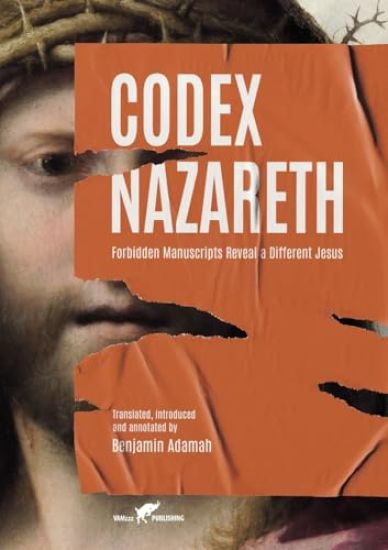

Overleefde Jezus zijn kruisiging? Wat als het leven van Jezus zich heel anders voltrok dan ons eeuwenlang is verteld? Twee Essenen manuscripten, naar verluidt opgesteld rond 37 40 n.Chr., noemen een zekere Euphanias als zijn biologische vader en beschrijven in detail hoe Jezus zijn kruisiging overleefde. Volgens de heersende consensus gaat het om een briljant geconstrueerde vervalsing - maar waarom zette de kerk dan tweemaal alles op alles om publicatie te voorkomen? In Codex Nazareth verschijnen deze verboden documenten voor het eerst samen in n uitgave: volledig vertaald, voorzien van aantekeningen en ingeleid met een diepgravende contextuele analyse. De inhoud wijkt op talloze punten af van de canonieke evangeli n van Matthe s, Marcus, Lucas en Johannes - maar oogt historisch overtuigender. De rollen zouden zijn ontdekt in een bibliotheek in Alexandri , in een voormalig Grieks klooster. Ze werden toegeschreven aan een lid van de Esseense broederschap, die Jezus zou hebben opgeleid tot genezer. Direct na de vondst probeerden kerkelijke en jezu tische machten de publicatie te blokkeren. Via vrijmetselaarsnetwerken kwamen de teksten alsnog in Duitsland terecht. Een Latijns origineel zou later via de Acad mie fran aise zijn verdwenen in de geheime archieven van het Vaticaan. Codex Nazareth daagt uit. Niet om blind te geloven, maar om te bevragen. Je betreedt een nieuw podium van het Christus-mysterie met een unieke inhoud en zeggingskracht.