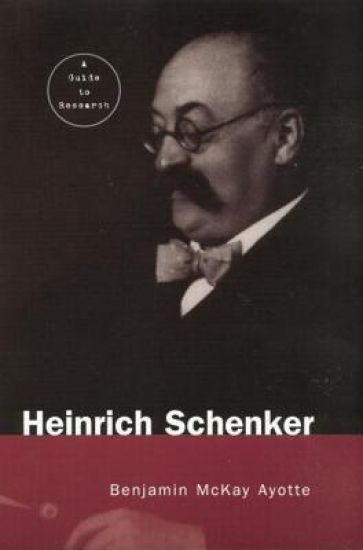
Heinrich Schenker: A Research and Information Guide is an annotated bibliography concerning both the nature of primary sources related to the composer and the scope and significance of the secondary sources which deal with him, his compositions, and his influence as a composer and theorist.
This book consists of over 1,500 citations to both primary sources and the burgeoning secondary literature of Heinrich Schenker, annotated and subdivided by category. The citations are supplemented with indices cross-referencing entries according to individual works and analytical topic.
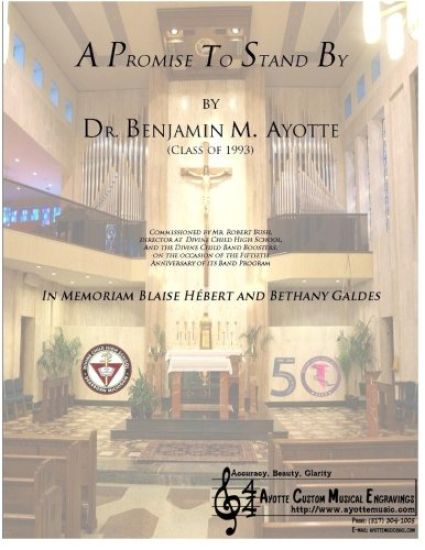
A Promise to Stand By opens with a jubilant fanfare based on the head motive of the Alma Mater, "We bring to thee, we sing to thee" that progresses in ascending semitones in the characteristic scheme of the Falcon Fanfare from E-flat, through E, to F. From that point A], a jaunty rhythmic pulse is introduced, employing mixed meter and displaced accents relative to the predictable opening fanfare motif. During this transitional passage, snippets from the fight song, are heard, and the rhythm "settles" into a slightly-more-predictable 3+22+3 5/8 meter B]. Winds and brass alternate phrases, and the interplay leads to "a pledge of truth and loyalty" C] while the brass ushers in a new key with its fanfares. The ostinato continues, and more fight song snippets are heard but then abruptly interrupted. The middle section is a funeral march based on a chant-like melody in the winds set against brass drones of a fifth. The melody becomes elongated and harmonized with each melodic tone becoming a source of harmony. Biting dissonance reflects the pain of death and loss. Voices begin to chant "in paradisum." After a third iteration of the harmonized chant, a solo horn intones the Gregorian chant, "In Paradisum," which depict the entry of the departed soul into eternity a solitary voice for a solitary journey . Soon, though, other voices join in as the "angels lead the soul] into paradise" first on the fifth, the appropriate perfect consonance, and then on the sweeter third. More voices join in, and the triumph is evident, as if to say, "thanks be to God who giveth us the victory over death through Our Lord Jesus Christ 1 Cor. 15:57]" The trombones begin to intone the Fight Song (for they who fought the good fight cf. 2 Timothy, 4:7]) signaling a gradual return to normalcy, but a changed normalcy as our relationship to our departed loved ones undergoes a change after death. "Vincero " ("victory") can be heard and the last strains of the Alma Mater can be heard "a pledge of truth and loyalty; a promise to stand by " as the triumphal strains inspired by Puccini's Nessun Dorma are heard and the band finished with all its power.