Kirjojen hintavertailu. Mukana 11 244 527 kirjaa ja 12 kauppaa.

Kirjahaku

Etsi kirjoja tekijän nimen, kirjan nimen tai ISBN:n perusteella.

9 kirjaa tekijältä Benjamin Bennett

Hugo von Hofmannsthal

Hugo von Hofmannsthal

Benjamin Bennett

Cambridge University Press
2009
pokkari
This book focuses on Hugo von Hofmannsthal's intense, lifelong concentration upon a single cohesive set of poetic, philosophical and ethical concerns, a quality of his work which has been neglected in the bulk of existing scholarship. Professor Bennett examines Hofmannsthal's work in the context of literary theory and the history of philosophy, referring especially to Nietzsche, German Idealism and the poetics of German Classicism. He identifies three principal areas of concern to Hofmannsthal: the theory of genre, the question of the role of literature in society and the search for a fruitful response to the problem of the historical development of culture. The argument proceeds by way of detailed interpretation of texts, including Der Tor und der Tod, the Chandos letter, Ariadne auf Naxos, Der Schwierige, Das Salzburger Grosse Welttheater and Der Turm.
Hugo von Hofmannsthal

Hugo von Hofmannsthal

Benjamin Bennett

Cambridge University Press
1988
sidottu
This book focuses on Hugo von Hofmannsthal's intense, lifelong concentration upon a single cohesive set of poetic, philosophical and ethical concerns, a quality of his work which has been neglected in the bulk of existing scholarship. Professor Bennett examines Hofmannsthal's work in the context of literary theory and the history of philosophy, referring especially to Nietzsche, German Idealism and the poetics of German Classicism. He identifies three principal areas of concern to Hofmannsthal: the theory of genre, the question of the role of literature in society and the search for a fruitful response to the problem of the historical development of culture. The argument proceeds by way of detailed interpretation of texts, including Der Tor und der Tod, the Chandos letter, Ariadne auf Naxos, Der Schwierige, Das Salzburger Grosse Welttheater and Der Turm.
All Theater Is Revolutionary Theater

All Theater Is Revolutionary Theater

Benjamin Bennett

Cornell University Press
2004
sidottu
All Theater Is Revolutionary Theater is the first book to consider why, in the Western tradition (and only in the Western tradition), theatrical drama is regarded as its own literary or poetic type, when the criteria needed to differentiate drama from other forms of writing do not resemble the criteria by which types of prose or verse are ordinarily distinguished. Through close readings of such playwrights as Beckett, Brecht, Büchner, Eliot, Shaw, Wedekind, and Robert Wilson, Benjamin Bennett looks at the relationship between literature and drama, identifying typical problems in the development of dramatic literature and exploring how the uncomfortable association with theatrical performance affects the operation of drama in literary history.Bennett's historical investigations into theoretical works ranging from Aristotle to Artaud, Brecht, and Diderot suggest that the attempt to include drama in the system of Western literature causes certain specific incongruities that, in his view, have the salutary effect of preserving the otherwise endangered possibility of a truly liberal, progressive, or revolutionary literature.
The Dark Side of Literacy

The Dark Side of Literacy

Benjamin Bennett

Fordham University Press
2008
sidottu
Reading is good for us. The reading of literature, we are told, enlarges our horizons, extends our experience beyond our own lives. But the moral and political dangers that attend the association of reading with experience have long been understood. And is that association even valid? What if precisely our most important literary texts are constructed so as to challenge or disrupt it? This book is a radical criticism of the concept of "reading," especially of the concept of "the" reader, as commonly used in literary criticism. Bennett starts with the point that "reading" does not name a single, identifiable type of experience or class of experiences. Her then sketches in broad terms the historical provenance of "the" reader, in an argument that includes discussions of Dante, Boccaccio, Cervantes, Marlowe, and German idealist philosophy. In two concluding chapters on modern German novellas, he suggests that most major European literary works since the eighteenth century are written in direct opposition to the central concepts by which criticism has sought to lay hold of them.
Shaping a Modern Ethics

Shaping a Modern Ethics

Benjamin Bennett

Bloomsbury Academic
2020
sidottu
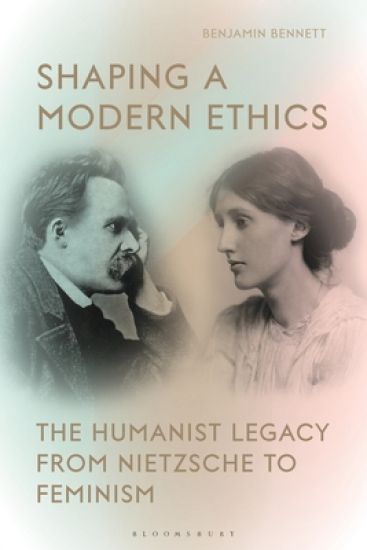
Is there any such thing as a single ethical system to which all human beings could conceivably subscribe? The short answer is no; and most people, being tolerant, would probably agree with this answer. Yet most people, precisely in being tolerant, also subscribe to an idea of “human rights” which presupposes just such a universal ethics. This basic question of ethics is similarly treacherous when approached on a higher technical level. Specialists have long recognized that Kant’s categorical imperative is neither theoretically nor practically tenable. But efforts to revive and repair the Kantian project—including especially the monumental work of Jürgen Habermas—have all themselves been theoretically questionable, while developing a complexity that makes them impractical.Must we then simply do without ethics in the sense of a universal ethical method? By way of a close study of literary and philosophical texts, from Freud to Machiavelli, Benjamin Bennett shows why the failure of a universal or propositional ethics is indeed unavoidable. He uncovers a modern non-propositional ethics that cannot be grasped in a single theoretical move but can only be approached as a collection of instances of a modern ethical “we”, three key examples of which Bennett explores in this book: - The “we” of irony, whose speakers share a strictly preter-verbal knowledge which is concealed in their actual utterances - The insistent exclusive “we” of a group that has neither its own physical locality nor even a clear intellectual identity, comparable to the “we” of Jews in the diaspora - The “we” of feminism, a separate “we” from that embracing people who happen to have been born women.
Shaping a Modern Ethics

Shaping a Modern Ethics

Benjamin Bennett

Bloomsbury Academic
2021
nidottu
Is there any such thing as a single ethical system to which all human beings could conceivably subscribe? The short answer is no; and most people, being tolerant, would probably agree with this answer. Yet most people, precisely in being tolerant, also subscribe to an idea of “human rights” which presupposes just such a universal ethics. This basic question of ethics is similarly treacherous when approached on a higher technical level. Specialists have long recognized that Kant’s categorical imperative is neither theoretically nor practically tenable. But efforts to revive and repair the Kantian project—including especially the monumental work of Jürgen Habermas—have all themselves been theoretically questionable, while developing a complexity that makes them impractical.Must we then simply do without ethics in the sense of a universal ethical method? By way of a close study of literary and philosophical texts, from Freud to Machiavelli, Benjamin Bennett shows why the failure of a universal or propositional ethics is indeed unavoidable. He uncovers a modern non-propositional ethics that cannot be grasped in a single theoretical move but can only be approached as a collection of instances of a modern ethical “we”, three key examples of which Bennett explores in this book: - The “we” of irony, whose speakers share a strictly preter-verbal knowledge which is concealed in their actual utterances - The insistent exclusive “we” of a group that has neither its own physical locality nor even a clear intellectual identity, comparable to the “we” of Jews in the diaspora - The “we” of feminism, a separate “we” from that embracing people who happen to have been born women.
Aesthetics as Secular Millennialism

Aesthetics as Secular Millennialism

Benjamin Bennett

Bucknell University Press
2013
sidottu
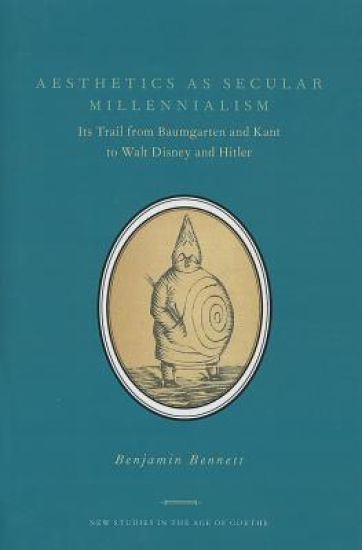
The concept of secular millennialism summarizes a crucial point made by Hannah Arendt in The Origins of Totalitarianism: that twentieth-century totalitarian movements, in Nazi Germany and in the Soviet Union under Stalin, are not nationalistic but essentially millennialist, focused on the achievement of a universal world order. The question of whether totalitarian thinking can be located in a secular millennialist tradition is brought to the forefront in Aesthetics as Secular Millennialism: Its Trail from Baumgarten and Kant to Walt Disney and Hitler by Benjamin Bennett. Bennett contends that the new philosophical science of aesthetics—beginning in the eighteenth century with Baumgarten, Kant, and Schiller—is the source of such a tradition. Bennett uses the term “aesthetics” to designate a tradition which begins under that name but, in the course of the nineteenth century, concerns itself less directly with questions of beauty or art while not losing its secular millennialist tendency. He argues that modern philosophical hermeneutics, in Dilthey, Heidegger, and Gadamer, belongs to the aesthetic tradition. Bennett explores the realistic novel as the main vehicle by which aesthetic tradition maintains itself in the nineteenth century and attracts a large popular following. The argument culminates in a discussion of relations among aesthetics, totalitarian propaganda, and the “totalitarian imagination” with its dream of “human omnipotence” (Arendt). Aesthetics as Secular Millennialism also maintains an attentiveness to instances of resistance against the aesthetic impetus in history—hence ultimately against totalitarianism.
Aesthetics as Secular Millennialism

Aesthetics as Secular Millennialism

Benjamin Bennett

Bucknell University Press
2015
nidottu
The concept of secular millennialism summarizes a crucial point made by Hannah Arendt in The Origins of Totalitarianism: that twentieth-century totalitarian movements, in Nazi Germany and in the Soviet Union under Stalin, are not nationalistic but essentially millennialist, focused on the achievement of a universal world order. The question of whether totalitarian thinking can be located in a secular millennialist tradition is brought to the forefront in Aesthetics as Secular Millennialism: Its Trail from Baumgarten and Kant to Walt Disney and Hitler by Benjamin Bennett. Bennett contends that the new philosophical science of aesthetics—beginning in the eighteenth century with Baumgarten, Kant, and Schiller—is the source of such a tradition. Bennett uses the term “aesthetics” to designate a tradition which begins under that name but, in the course of the nineteenth century, concerns itself less directly with questions of beauty or art while not losing its secular millennialist tendency. He argues that modern philosophical hermeneutics, in Dilthey, Heidegger, and Gadamer, belongs to the aesthetic tradition. Bennett explores the realistic novel as the main vehicle by which aesthetic tradition maintains itself in the nineteenth century and attracts a large popular following. The argument culminates in a discussion of relations among aesthetics, totalitarian propaganda, and the “totalitarian imagination” with its dream of “human omnipotence” (Arendt). Aesthetics as Secular Millennialism also maintains an attentiveness to instances of resistance against the aesthetic impetus in history—hence ultimately against totalitarianism.
Gender Ascendant

Gender Ascendant

Benjamin Bennett

De Gruyter
2025
sidottu
Does feminist theory—the theoretical grasp of exactly how a patriarchal oppression of women operates and has operated in Western societies—arise simply as women’s response to the experience of oppression? Bennett argues that no such substantial current of thought ever arises in this manner, and that feminist theory is not truly grasped until we uncover in intellectual history the not-yet-feminist body of thought from which it emerges. He approaches this matter by discussing an anti-aesthetic tendency in the work of major eighteenth-century German authors, both male and female, a tendency which develops (he claims) in the direction of proto-feminism. Especially notable is the kind of feminist theory in question here, a theory which focuses uncompromisingly on the hardest possible problems it encounters: on a gender-based logic by which women writers, precisely in asserting themselves as women, run up against an imperative of silence; on the recognition that in a strictly ethical feminist view, gender difference is inaccessible to the understanding; and on the problem of a future for feminism in a world where the aesthetic approach to art and literature has apparently prevailed once and for all.