Kirjojen hintavertailu. Mukana 11 244 527 kirjaa ja 12 kauppaa.

Kirjahaku

Etsi kirjoja tekijän nimen, kirjan nimen tai ISBN:n perusteella.

17 kirjaa tekijältä Benjamin J. Cohen

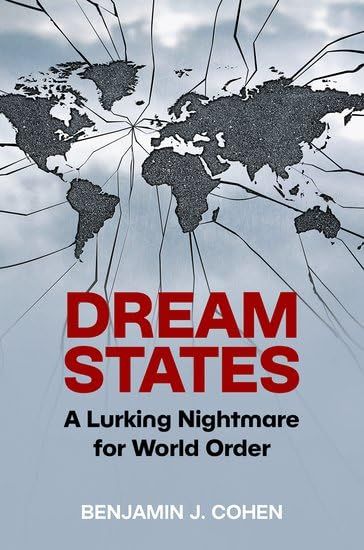
Dream States

Dream States

Benjamin J. Cohen

OXFORD UNIVERSITY PRESS INC
2025
sidottu
Around the world, numerous communities seek the protections of sovereignty--a "dream state" of their own--to preserve their traditional way of life. However, these secessionist movements create risk of prolonged conflict in countries of every size and location, from tiny statelets in the Caribbean or Pacific to large and fragile multiethnic federations like Russia, India, and even the United States. Dream States asks and answers two questions: How serious is the danger of separatist conflict? And what can be done about it? Using diverse examples from recent history, Benjamin J. Cohen guides readers through types of dream states, some harmless and others more threatening. Cohen argues that abandoning the traditional dichotomous conceptualization of statehood, which insists that communities are either fully sovereign or else completely subordinate, presents the best way to reduce the threat of violent conflict. Given the increasing emphasis on territorial and ethnic identity in political movements throughout the world, this book is essential reading for anyone interested in separatism and why it poses a threat to peace and international order.
Dream States

Dream States

Benjamin J. Cohen

OXFORD UNIVERSITY PRESS INC
2025
nidottu
Around the world, numerous communities seek the protections of sovereignty--a "dream state" of their own--to preserve their traditional way of life. However, these secessionist movements create risk of prolonged conflict in countries of every size and location, from tiny statelets in the Caribbean or Pacific to large and fragile multiethnic federations like Russia, India, and even the United States. Dream States asks and answers two questions: How serious is the danger of separatist conflict? And what can be done about it? Using diverse examples from recent history, Benjamin J. Cohen guides readers through types of dream states, some harmless and others more threatening. Cohen argues that abandoning the traditional dichotomous conceptualization of statehood, which insists that communities are either fully sovereign or else completely subordinate, presents the best way to reduce the threat of violent conflict. Given the increasing emphasis on territorial and ethnic identity in political movements throughout the world, this book is essential reading for anyone interested in separatism and why it poses a threat to peace and international order.
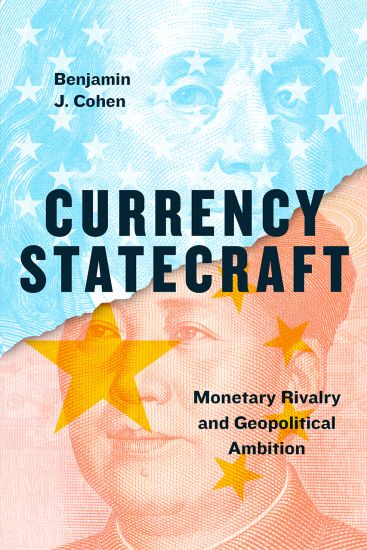
Currency Statecraft

Currency Statecraft

Benjamin J. Cohen

University of Chicago Press
2018
sidottu
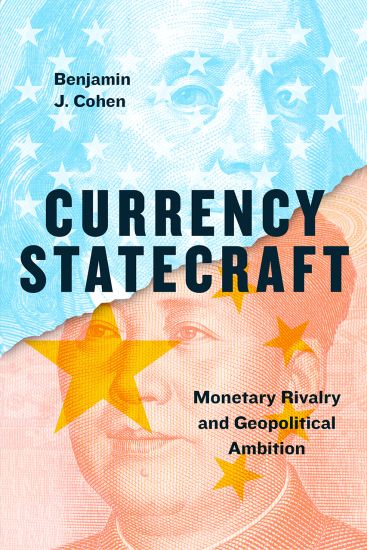
At any given time, a limited number of national currencies are used as instruments of international commerce, to settle foreign trade transactions or store value for investors and central banks. How countries whose currencies gain international appeal choose to use this status forms their strategy of currency statecraft. In different circumstances, issuing governments may welcome and promote the internationalization of their currency, tolerate it, or actively oppose it. Benjamin J. Cohen offers a provocative explanation of the strategic policy choices at play. In a comprehensive review that ranges from World War II to the present, Cohen convincingly argues that one goal stands out as the primary motivation for currency statecraft: the extent of a country’s geopolitical ambition, or how driven it is to build or sustain a prominent place in the international community. When a currency becomes internationalized, it generally increases the power of the nation that produces it. In the persistent contestation that characterizes global politics, that extra edge can matter greatly, making monetary rivalry an integral component of geopolitics. Today, the major example of monetary rivalry is the emerging confrontation between the US dollar and the Chinese renminbi. Cohen describes how China has vigorously promoted the international standing of its currency in recent years, even at the risk of exacerbating relations with the United States, and explains how the outcome could play a major role in shaping the broader geopolitical engagement between the two superpowers.
Currency Statecraft

Currency Statecraft

Benjamin J. Cohen

University of Chicago Press
2018
nidottu
At any given time, a limited number of national currencies are used as instruments of international commerce, to settle foreign trade transactions or store value for investors and central banks. How countries whose currencies gain international appeal choose to use this status forms their strategy of currency statecraft. In different circumstances, issuing governments may welcome and promote the internationalization of their currency, tolerate it, or actively oppose it. Benjamin J. Cohen offers a provocative explanation of the strategic policy choices at play. In a comprehensive review that ranges from World War II to the present, Cohen convincingly argues that one goal stands out as the primary motivation for currency statecraft: the extent of a country’s geopolitical ambition, or how driven it is to build or sustain a prominent place in the international community. When a currency becomes internationalized, it generally increases the power of the nation that produces it. In the persistent contestation that characterizes global politics, that extra edge can matter greatly, making monetary rivalry an integral component of geopolitics. Today, the major example of monetary rivalry is the emerging confrontation between the US dollar and the Chinese renminbi. Cohen describes how China has vigorously promoted the international standing of its currency in recent years, even at the risk of exacerbating relations with the United States, and explains how the outcome could play a major role in shaping the broader geopolitical engagement between the two superpowers.
Global Monetary Governance

Global Monetary Governance

Benjamin J. Cohen

Routledge
2007
sidottu
Benjamin J. Cohen has been one of the most original and influential writers on international political economy. This book provides an overview of his contribution to the field, grouped around the central theme of global monetary governance. The book is divided into three sections: challenges to systemic governance - examines the challenge of governance of the international monetary system looking at such crucial issues as monetary reform, the growth of capital markets and financial globalization dealing with financial crisis – looks at efforts to deal effectively with financial crises, analyzing the relationships between governments and banks in the management of international debt problems and the case for capital controls. There are case studies of the Asian financial crisis and several other key instances of instability in world markets the new geography of money – analyzes the crisis of legitimacy created by a global system where governing authority is exercised now more by market forces than by sovereign states. It explores the geopolitical implications of the competition between the two most widely used currencies in the world today, the US dollar and the Euro and spells out the main implications for policy makers. The concluding chapters evaluate the merits and prospects for the two most widely discussed policy alternatives available to governments responsible for the world’s many less competitive currencies – dollarization or monetary union.
Global Monetary Governance

Global Monetary Governance

Benjamin J. Cohen

Routledge
2007
nidottu
Benjamin J. Cohen has been one of the most original and influential writers on international political economy. This book provides an overview of his contribution to the field, grouped around the central theme of global monetary governance. The book is divided into three sections: challenges to systemic governance - examines the challenge of governance of the international monetary system looking at such crucial issues as monetary reform, the growth of capital markets and financial globalization dealing with financial crisis – looks at efforts to deal effectively with financial crises, analyzing the relationships between governments and banks in the management of international debt problems and the case for capital controls. There are case studies of the Asian financial crisis and several other key instances of instability in world markets the new geography of money – analyzes the crisis of legitimacy created by a global system where governing authority is exercised now more by market forces than by sovereign states. It explores the geopolitical implications of the competition between the two most widely used currencies in the world today, the US dollar and the Euro and spells out the main implications for policy makers. The concluding chapters evaluate the merits and prospects for the two most widely discussed policy alternatives available to governments responsible for the world’s many less competitive currencies – dollarization or monetary union.
The Future of Global Currency

The Future of Global Currency

Benjamin J. Cohen

Routledge
2010
sidottu
Can the euro challenge the supremacy of the U.S. dollar as a global currency? From the time Europe’s joint money was born, many have predicted that it would soon achieve parity with the dollar or possibly even surpass it. In reality, however, the euro has remained firmly planted in the dollar’s shadow. The essays collected in this volume explain why. Because of America’s external deficits and looming foreign debt, the dollar can never be as dominant as it once was. But Europe’s money is unable to mount an effective challenge. The euro suffers from a number of critical structural deficiencies, including an anti-growth bias that is built into the institutions of the monetary union and an ambiguous governance structure that sows doubts among prospective users. As recent events have demonstrated, members of the euro zone remain vulnerable to financial crisis. Moreover, lacking a single voice, the bloc continues to punch below its weight in monetary diplomacy. The world seems headed toward a leaderless monetary order, with several currencies in contention but none clearly dominant.This collection distils the views of one of the world’s leading scholars in global currency, and will be of considerable interest to students and scholars of international finance and international political economy.
The Future of Global Currency

The Future of Global Currency

Benjamin J. Cohen

Routledge
2010
nidottu
Can the euro challenge the supremacy of the U.S. dollar as a global currency? From the time Europe’s joint money was born, many have predicted that it would soon achieve parity with the dollar or possibly even surpass it. In reality, however, the euro has remained firmly planted in the dollar’s shadow. The essays collected in this volume explain why. Because of America’s external deficits and looming foreign debt, the dollar can never be as dominant as it once was. But Europe’s money is unable to mount an effective challenge. The euro suffers from a number of critical structural deficiencies, including an anti-growth bias that is built into the institutions of the monetary union and an ambiguous governance structure that sows doubts among prospective users. As recent events have demonstrated, members of the euro zone remain vulnerable to financial crisis. Moreover, lacking a single voice, the bloc continues to punch below its weight in monetary diplomacy. The world seems headed toward a leaderless monetary order, with several currencies in contention but none clearly dominant.This collection distils the views of one of the world’s leading scholars in global currency, and will be of considerable interest to students and scholars of international finance and international political economy.
The Future of Money

The Future of Money

Benjamin J. Cohen

Princeton University Press
2006
pokkari
Is globalization leading us toward a world of fewer and fewer currencies and, consequently, simplified monetary management? Many specialists believe this is the case, as the territorial monopolies national governments have long claimed over money appears to be eroding. In The Future of Money, Benjamin Cohen argues that this view--which he calls the "Contraction Contention"--is wrong. Rigorously argued, written with extraordinary clarity, and thoroughly up-to-date, this book demonstrates that the global population of currencies is set to expand greatly, not contract, making monetary governance more difficult, not less. At the book's core is an innovative theoretical model for understanding the strategic preferences of states in monetary management. Should governments defend their traditional monetary sovereignty, or should they seek some kind of regional consolidation of currencies? The model offers two broad advances. First, whereas most scholarly work evaluates strategic options individually or in comparison to just one other alternative, this model emphasizes the three-dimensional nature of the decisions involved. Second, the model emphasizes degrees of currency regionalization as a central determinant of state preferences. Cohen also systematically explores the role of the private sector as an alternative source of money. The book concludes with two key policy proposals. First, fiscal policy should be resurrected as a tool of macroeconomic management, to offset the present-day erosion in the effectiveness of monetary policy. Second, the International Monetary Fund should more actively help coordinate the decentralized strategic decision-making of governments. The future of money will be perilous. But, by mapping out the alternative policies countries can follow, The Future of Money shows it need not be chaotic.
International Political Economy

International Political Economy

Benjamin J. Cohen

Princeton University Press
2008
pokkari
The field of international political economy gained prominence in the early 1970s--when the Arab oil embargo and other crises ended the postwar era of virtually unhindered economic growth in the United States and Europe--and today is an essential part of both political science and economics. This book offers the first comprehensive examination of this important field's development, the contrasting worldviews of its American and British schools, and the different ways scholars have sought to meet the challenges posed by an ever more complex and interdependent world economy. Benjamin Cohen explains the critical role played by the early "intellectual entrepreneurs," a generation of pioneering scholars determined to bridge the gap between international economics and international politics. Among them were brilliant thinkers like Robert Keohane, Susan Strange, and others whose legacies endure to the present day. Cohen shows how their personalities and the historical contexts in which they worked influenced how the field evolved. He examines the distinctly different insights of the American and British schools and addresses issues that have been central to the field's development, including systemic transformation, system governance, and the place of the sovereign state in formal analysis. The definitive intellectual history of international political economy, this book is the ideal volume for IPE scholars and those interested in learning more about the field.
Currency Power

Currency Power

Benjamin J. Cohen

PRINCETON UNIVERSITY PRESS
2015
sidottu
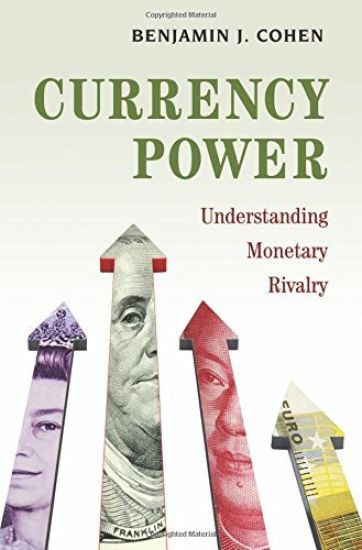
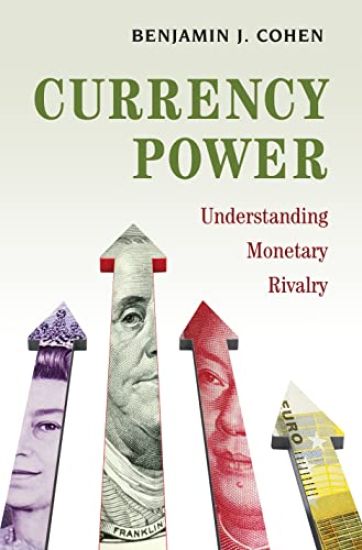
Monetary rivalry is a fact of life in the world economy. Intense competition between international currencies like the US dollar, Europe's euro, and the Chinese yuan is profoundly political, going to the heart of the global balance of power. But what exactly is the relationship between currency and power, and what does it portend for the geopolitical standing of the United States, Europe, and China? Popular opinion holds that the days of the dollar, long the world's dominant currency, are numbered. By contrast, Currency Power argues that the current monetary rivalry still greatly favors America's greenback. Benjamin Cohen shows why neither the euro nor the yuan will supplant the dollar at the top of the global currency hierarchy. Cohen presents an innovative analysis of currency power and emphasizes the importance of separating out the various roles that international money might have. After systematically exploring the links between currency internationalization and state power, Cohen turns to the state of play among today's top currencies. The greenback, he contends, is the "indispensable currency"--the one that the world can't do without. Only the dollar is backed by all the economic and political resources that make a currency powerful. Meanwhile, the euro is severely handicapped by structural defects in the design of its governance mechanisms, and the yuan suffers from various practical limitations in both finance and politics. Contrary to today's growing opinion, Currency Power demonstrates that the dollar will continue to be the leading global currency for some time to come.
Currency Power

Currency Power

Benjamin J. Cohen

Princeton University Press
2018
pokkari
Why the dollar will remain the world's most powerful currencyMonetary rivalry is a fact of life in the world economy. Intense competition between international currencies like the US dollar, Europe's euro, and the Chinese yuan is profoundly political, going to the heart of the global balance of power. But what exactly is the relationship between currency and power, and what does it portend for the geopolitical standing of the United States, Europe, and China? Popular opinion holds that the days of the dollar, long the world’s dominant currency, are numbered. By contrast, Currency Power argues that the current monetary rivalry still greatly favors America’s greenback. Benjamin Cohen shows why neither the euro nor the yuan will supplant the dollar at the top of the global currency hierarchy.Cohen presents an innovative analysis of currency power and emphasizes the importance of separating out the various roles that international money might have. After systematically exploring the links between currency internationalization and state power, Cohen turns to the state of play among today’s top currencies. The greenback, he contends, is the "indispensable currency"—the one that the world can’t do without. Only the dollar is backed by all the economic and political resources that make a currency powerful. Meanwhile, the euro is severely handicapped by structural defects in the design of its governance mechanisms, and the yuan suffers from various practical limitations in both finance and politics.Contrary to today’s growing opinion, Currency Power demonstrates that the dollar will continue to be the leading global currency for some time to come.
The Geography of Money

The Geography of Money

Benjamin J. Cohen

Cornell University Press
2000
pokkari
The traditional assumption holds that the territory of money coincides precisely with the political frontiers of each nation state: France has the franc, the United Kingdom has the pound, the United States has the dollar. But the disparity between that simple mental landscape and the actual organization of currency spaces has grown in recent years, as territorial boundaries of individual states limit currency circulation less and less. Many currencies are used outside their "home" country for transactions either between nations or within foreign states. In this book, Benjamin J. Cohen asks what this new geography of money reveals about financial and political power. Cohen shows how recent changes in the geography of money challenge state sovereignty. He examines the role of money and the scope of cross-border currency competition in today's world. Drawing on new work in geography and network theory to explain the new spatial organization of monetary relations, Cohen suggests that international relations, political as well as economic, are being dramatically reshaped by the increasing interpenetration of national monetary spaces. This process, he explains, generates tensions and insecurities as well as opportunities for cooperation.
Rethinking International Political Economy

Rethinking International Political Economy

Benjamin J. Cohen

EDWARD ELGAR PUBLISHING LTD
2023
nidottu
In this timely book, Benjamin J. Cohen identifies and analyses a range of critical pathologies currently afflicting the field of international political economy (IPE) and offers remedies to restore the field’s vitality. The book addresses the purpose of IPE as a field of study, highlighting the key questions posed by scholars since the modern field’s inception, and explores how research seeks to engage with politics in practice.Tackling contemporary factionalism in the field, chapters consider IPE’s remarkable diversity and fragmentation of research traditions across the globe and draw attention to the lack of clear methods and behavioural assumptions established as ‘best practice’ internationally. To rejuvenate the field, Cohen argues, reforms are needed that would both encourage more policy engagement by IPE scholars and maximize opportunities to enjoy the benefits of the field’s diversity. The book offers a cutting-edge research agenda, emphasising the need for collaboration across scholarly divides and the obligations of leading professional associations and societies to countervail the forces that keep these groups separated. A powerful critique and a rousing call-to-arms, this book is crucial reading for scholars of IPE in search of innovative ways to develop new research and revitalise the field as a whole. It also offers key insights for students who need to understand the challenges facing IPE and its potential research trajectories.
Advanced Introduction to International Political Economy

Advanced Introduction to International Political Economy

Benjamin J. Cohen

Edward Elgar Publishing Ltd
2019
sidottu
Acclaim for previous edition:'Benjamin J. Cohen's Advanced Introduction to International Political Economy evaluates the fragmented intellectual landscape of international political economy and suggests points of convergence, if not integration, among its varied elements. His analysis is wide-ranging and balanced, geographically and in its examination of a variety of standpoints; it is engaging in its combination of sympathy and criticism. All advanced students of the field will benefit from reading it.'- Robert O. Keohane, Princeton University, US Elgar Advanced Introductions are stimulating and thoughtful introductions to major fields in the social sciences and law, expertly written by the world's leading scholars. Designed to be accessible yet rigorous, they offer concise and lucid surveys of the substantive and policy issues associated with discrete subject areas. Now in its second edition, Benjamin J. Cohen's introduction provides a comprehensive and up-to-date global survey of the field of international political economy. With detailed discussions regarding the divergent paths of different schools of thought in the field, this unique guide explores the links between contending factions. This Advanced Introduction gives students access to the multiple analytical styles and traditions of all perspectives in this rich field of study. Key features of the second edition: • Concise introduction to the field in an accessible, non-technical form updated with the most recent discussions in IPE• Further in depth analysis of the most established American and British schools of IPE• Extended discussion of other key regions contributing to IPE, including Continental Europe, Latin America, Australia, Canada and China. Written in a concise and dynamic style, this Advanced Introduction serves as a thoughtful entry point text for advanced undergraduate and graduate students, as well as being an excellent go-to resource for scholars specializing in international political economy.
Advanced Introduction to International Political Economy

Advanced Introduction to International Political Economy

Benjamin J. Cohen

Edward Elgar Publishing Ltd
2019
nidottu
Acclaim for previous edition:'Benjamin J. Cohen's Advanced Introduction to International Political Economy evaluates the fragmented intellectual landscape of international political economy and suggests points of convergence, if not integration, among its varied elements. His analysis is wide-ranging and balanced, geographically and in its examination of a variety of standpoints; it is engaging in its combination of sympathy and criticism. All advanced students of the field will benefit from reading it.'- Robert O. Keohane, Princeton University, US Elgar Advanced Introductions are stimulating and thoughtful introductions to major fields in the social sciences and law, expertly written by the world's leading scholars. Designed to be accessible yet rigorous, they offer concise and lucid surveys of the substantive and policy issues associated with discrete subject areas. Now in its second edition, Benjamin J. Cohen's introduction provides a comprehensive and up-to-date global survey of the field of international political economy. With detailed discussions regarding the divergent paths of different schools of thought in the field, this unique guide explores the links between contending factions. This Advanced Introduction gives students access to the multiple analytical styles and traditions of all perspectives in this rich field of study. Key features of the second edition: • Concise introduction to the field in an accessible, non-technical form updated with the most recent discussions in IPE• Further in depth analysis of the most established American and British schools of IPE• Extended discussion of other key regions contributing to IPE, including Continental Europe, Latin America, Australia, Canada and China. Written in a concise and dynamic style, this Advanced Introduction serves as a thoughtful entry point text for advanced undergraduate and graduate students, as well as being an excellent go-to resource for scholars specializing in international political economy.
Rethinking International Political Economy

Rethinking International Political Economy

Benjamin J. Cohen

EDWARD ELGAR PUBLISHING LTD
2022
sidottu
In this timely book, Benjamin J. Cohen identifies and analyses a range of critical pathologies currently afflicting the field of international political economy (IPE) and offers remedies to restore the field’s vitality. The book addresses the purpose of IPE as a field of study, highlighting the key questions posed by scholars since the modern field’s inception, and explores how research seeks to engage with politics in practice.Tackling contemporary factionalism in the field, chapters consider IPE’s remarkable diversity and fragmentation of research traditions across the globe and draw attention to the lack of clear methods and behavioural assumptions established as ‘best practice’ internationally. To rejuvenate the field, Cohen argues, reforms are needed that would both encourage more policy engagement by IPE scholars and maximize opportunities to enjoy the benefits of the field’s diversity. The book offers a cutting-edge research agenda, emphasising the need for collaboration across scholarly divides and the obligations of leading professional associations and societies to countervail the forces that keep these groups separated. A powerful critique and a rousing call-to-arms, this book is crucial reading for scholars of IPE in search of innovative ways to develop new research and revitalise the field as a whole. It also offers key insights for students who need to understand the challenges facing IPE and its potential research trajectories.