Kirjojen hintavertailu. Mukana 11 717 486 kirjaa ja 12 kauppaa.

Kirjahaku

Etsi kirjoja tekijän nimen, kirjan nimen tai ISBN:n perusteella.

6 kirjaa tekijältä Benjamin Sachs

Explaining Right and Wrong

Explaining Right and Wrong

Benjamin Sachs

Routledge
2020
nidottu
Explaining Right and Wrong aims to shake the foundations of contemporary ethics by showing that moral philosophers have been deploying a mistaken methodology in their efforts to figure out the truth about what we morally ought to do. Benjamin Sachs argues that moral theorizing makes sense only if it is conceived of as an explanatory project and carried out accordingly. The book goes on to show that the most prominent forms of moral monism—consequentialism, Kantianism, and contractarianism/contractualism—as well as Rossian pluralism, each face devastating explanatory objections. It offers in place of these flawed options a brand-new family of normative ethical theories, non-Rossian pluralism. It then argues that the best kind of non-Rossian pluralism will be spare; in particular, it will deny that an action can be wrong in virtue of constituting a failure to distribute welfare in a particular way or that an action can be wrong in virtue of constituting a failure to rescue. Furthermore, it also aims to show that a great deal of contemporary writing on the distribution of health care resources in cases of scarcity is targeted at questions that either have no answers at all or none that ordinary moral theorizing can uncover.

Contractarianism, Role Obligations, and Political Morality
This book argues that contractarianism is well suited as a political morality and explores the implications of deploying it in this way. It promises to revive contractarianism as a viable political theory, breaking it free from its Rawlsian moorings while taking seriously the long-standing objections to it.It’s natural to think that the state owes things to its people: physical security, public health and sanitation services, and a functioning judiciary, for example. But is there a theory—a political morality—that can explain why this is so and who the state’s people are? This new contractarianism deploys a reversed state of nature thought experiment as the starting point of political theorizing. From this starting point it develops a political morality: a theory of the common ground of the role moralities attached to the various roles within the state. Contractarianism, so understood, can provide a basis for already popular ideas in political theory—such as political and legal liberalism—and overturn conventional wisdom, for example that the state is obligated to secure justice and that animals should have no legal standing.Contractarianism, Role Obligations, and Political Morality will be of interest to scholars and advanced students working in moral and political philosophy.
Contractarianism, Role Obligations, and Political Morality
This book argues that contractarianism is well suited as a political morality and explores the implications of deploying it in this way. It promises to revive contractarianism as a viable political theory, breaking it free from its Rawlsian moorings while taking seriously the long-standing objections to it.It’s natural to think that the state owes things to its people: physical security, public health and sanitation services, and a functioning judiciary, for example. But is there a theory—a political morality—that can explain why this is so and who the state’s people are? This new contractarianism deploys a reversed state of nature thought experiment as the starting point of political theorizing. From this starting point it develops a political morality: a theory of the common ground of the role moralities attached to the various roles within the state. Contractarianism, so understood, can provide a basis for already popular ideas in political theory—such as political and legal liberalism—and overturn conventional wisdom, for example that the state is obligated to secure justice and that animals should have no legal standing.Contractarianism, Role Obligations, and Political Morality will be of interest to scholars and advanced students working in moral and political philosophy.
Explaining Right and Wrong

Explaining Right and Wrong

Benjamin Sachs

Routledge
2017
sidottu
Explaining Right and Wrong aims to shake the foundations of contemporary ethics by showing that moral philosophers have been deploying a mistaken methodology in their efforts to figure out the truth about what we morally ought to do. Benjamin Sachs argues that moral theorizing makes sense only if it is conceived of as an explanatory project and carried out accordingly. The book goes on to show that the most prominent forms of moral monism—consequentialism, Kantianism, and contractarianism/contractualism—as well as Rossian pluralism, each face devastating explanatory objections. It offers in place of these flawed options a brand-new family of normative ethical theories, non-Rossian pluralism. It then argues that the best kind of non-Rossian pluralism will be spare; in particular, it will deny that an action can be wrong in virtue of constituting a failure to distribute welfare in a particular way or that an action can be wrong in virtue of constituting a failure to rescue. Furthermore, it also aims to show that a great deal of contemporary writing on the distribution of health care resources in cases of scarcity is targeted at questions that either have no answers at all or none that ordinary moral theorizing can uncover.

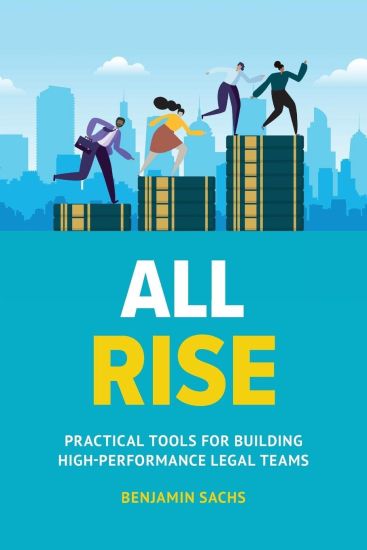
All Rise

All Rise

Benjamin Sachs

Lioncrest Publishing
2022
sidottu
Attorneys need high-performing teams that can work well under pressure. But in many organizations, especially large firms, attorneys are often left on their own to figure out how to build their teams, resulting in inconsistent and haphazard management that makes even the best performers feel like cogs in a machine. Many senior leaders view this as inevitable, writing off high attrition as a cost of doing business.The best lawyers see the world differently. In All Rise, Ben Sachs explains how attorneys can catapult their careers by distinguishing themselves not merely through their legal work but their ability to build incredible legal teams. Leveraging his experience across law and business, Ben Sachs unpacks the science of great teams, identifies best practices across industries, and provides a practical roadmap perfectly tailored to attorneys. No matter your tenure-from junior associates "managing up" to senior partners managing entire practice groups-these tools will help you unlock a more collaborative, more productive, higher-retention team.