Kirjojen hintavertailu. Mukana 12 390 323 kirjaa ja 12 kauppaa.

Kirjahaku

Etsi kirjoja tekijän nimen, kirjan nimen tai ISBN:n perusteella.

10 kirjaa tekijältä Benoît Godin

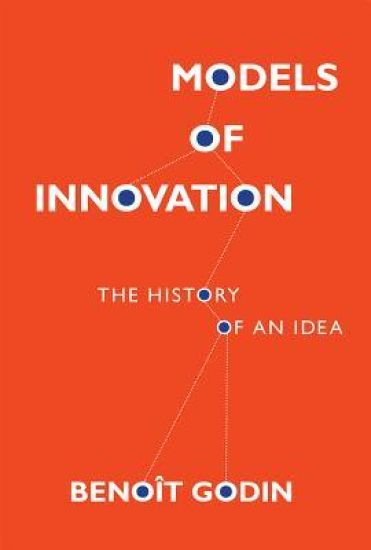
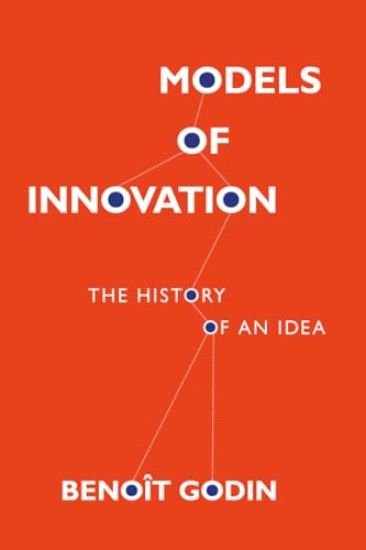
Models of Innovation

Models of Innovation

Benoît Godin

MIT Press
2017
sidottu
Benoit Godin is a Professor at the Institut national de la recherche scientifique, Montreal.Models abound in science, technology, and society (STS) studies and in science, technology, and innovation (STI) studies. They are continually being invented, with one author developing many versions of the same model over time. At the same time, models are regularly criticized. Such is the case with the most influential model in STS-STI: the linear model of innovation.In this book, Benoit Godin examines the emergence and diffusion of the three most important conceptual models of innovation from the early twentieth century to the late 1980s: stage models, linear models, and holistic models. Godin first traces the history of the models of innovation constructed during this period, considering why these particular models came into being and what use was made of them. He then rethinks and debunks the historical narratives of models developed by theorists of innovation. Godin documents a greater diversity of thinkers and schools than in the conventional account, tracing a genealogy of models beginning with anthropologists, industrialists, and practitioners in the first half of the twentieth century to their later formalization in STS-STI.Godin suggests that a model is a conceptualization, which could be narrative, or a set of conceptualizations, or a paradigmatic perspective, often in pictorial form and reduced discursively to a simplified representation of reality. Why are so many things called models? Godin claims that model has a rhetorical function. First, a model is a symbol of "scientificity." Second, a model travels easily among scholars and policy makers. Calling a conceptualization or narrative or perspective a model facilitates its propagation.
Measurement and Statistics on Science and Technology
How do we objectively measure scientific activities? What proportion of economic activities should a society devote to research and development? How can public-sector and private-sector research best be directed to achieve social goals? Governments and researchers from industrial countries have been measuring science and technology for more than eighty years. This book provides the first comprehensive account of the attempts to measure science and technology activities in Western countries and the successes and shortcomings of statistical systems. Godin guides readers through the historical moments that led to the development of statistics on science and technology and also examines the socio-political dynamics behind social measurement. This enlightening account will be of interest to students and academics investigating science measurement as well as policy makers working in this burgeoning field.
Measurement and Statistics on Science and Technology
How do we objectively measure scientific activities? What proportion of economic activities should a society devote to research and development? How can public-sector and private-sector research best be directed to achieve social goals? Governments and researchers from industrial countries have been measuring science and technology for more than eighty years. This book provides the first comprehensive account of the attempts to measure science and technology activities in Western countries and the successes and shortcomings of statistical systems. Godin guides readers through the historical moments that led to the development of statistics on science and technology and also examines the socio-political dynamics behind social measurement. This enlightening account will be of interest to students and academics investigating science measurement as well as policy makers working in this burgeoning field.
Innovation Contested

Innovation Contested

Benoît Godin

Routledge
2015
sidottu
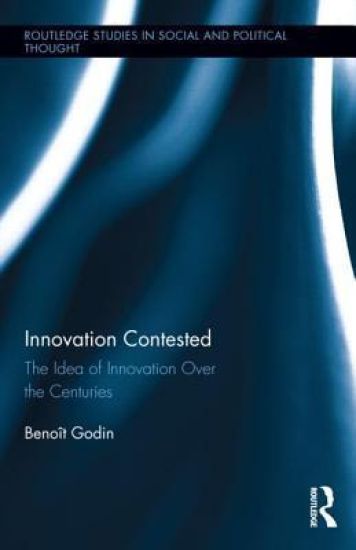
Innovation is everywhere. In the world of goods (technology), but also in the world of words: innovation is discussed in the scientific and technical literature, but also in the social sciences and humanities. Innovation is also a central idea in the popular imaginary, in the media and in public policy. Innovation has become the emblem of the modern society and a panacea for resolving many problems.Today, innovation is spontaneously understood as technological innovation because of its contribution to economic "progress". Yet for 2,500 years, innovation had nothing to do with economics in a positive sense. Innovation was pejorative and political. It was a contested idea in philosophy, religion, politics and social affairs. Innovation only got de-contested in the last century. This occurred gradually beginning after the French revolution. Innovation shifted from a vice to a virtue. Innovation became an instrument for achieving political and social goals.In this book, Benoît Godin lucidly examines the representations and meaning(s) of innovation over time, its diverse uses, and the contexts in which the concept emerged and changed. This history is organized around three periods or episteme: the prohibition episteme, the instrument episteme, and the value episteme.
Innovation Contested

Innovation Contested

Benoît Godin

TAYLOR FRANCIS LTD
2024
nidottu
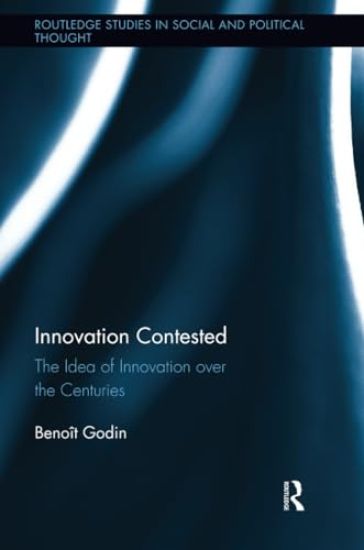
Innovation is everywhere. In the world of goods (technology), but also in the world of words: innovation is discussed in the scientific and technical literature, but also in the social sciences and humanities. Innovation is also a central idea in the popular imaginary, in the media and in public policy. Innovation has become the emblem of the modern society and a panacea for resolving many problems.Today, innovation is spontaneously understood as technological innovation because of its contribution to economic "progress". Yet for 2,500 years, innovation had nothing to do with economics in a positive sense. Innovation was pejorative and political. It was a contested idea in philosophy, religion, politics and social affairs. Innovation only got de-contested in the last century. This occurred gradually beginning after the French revolution. Innovation shifted from a vice to a virtue. Innovation became an instrument for achieving political and social goals.In this book, Benoît Godin lucidly examines the representations and meaning(s) of innovation over time, its diverse uses, and the contexts in which the concept emerged and changed. This history is organized around three periods or episteme: the prohibition episteme, the instrument episteme, and the value episteme.
The Invention of Technological Innovation

The Invention of Technological Innovation

Benoît Godin

Edward Elgar Publishing Ltd
2019
sidottu
This timely book provides an intellectual and conceptual history of a key representation of innovation: technological innovation. Tracing the history of the discourses of scholars, practitioners and policy-makers, and exploring how and why innovation became defined as technological, Benoît Godin studies the emergence of the term, its meaning, and its transformation and use over time. Part I of this unique book offers a genealogy of technological innovation from technological unemployment through technological change and technological progress. Part II then turns to the discourse on technological innovation, asserting that it has emerged as a key term because it serves utilitarian functions. The Invention of Technological Innovation will be of interest to students and academics studying the concepts and theories of innovation, whilst also being a key resource for policy-makers, managers and analysts looking to gain a deeper understanding of the topic.
The Idea of Technological Innovation

The Idea of Technological Innovation

Benoît Godin

Edward Elgar Publishing Ltd
2020
sidottu
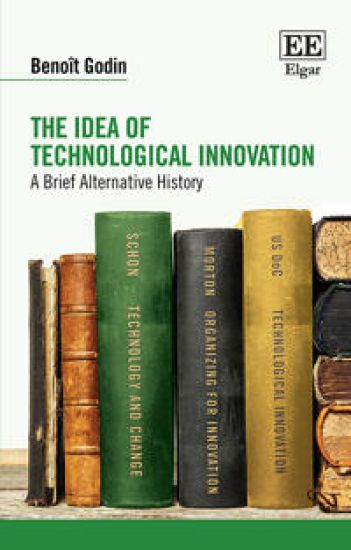
This timely book explores technological innovation as a concept, dissecting its emergence, development and use. Benoît Godin offers an exciting new historiography of the subject, arguing that the study of innovation originates not from scholars but from practitioners of innovation. Godin looks to engineers, managers, consultants and policymakers as the instigators of our current understanding of technological innovation. Offering a conceptual history of the subject, Part I considers the many iterations of innovation - as an science applied, outcome, process and system - to track and analyse the changing discourses surrounding technological innovation. In Part II, the author turns to historic and contemporary innovation policy to illustrate the critical role that practitioners have had in formulating and strategizing policy. Effectively rewriting the historiography of the topic, this book is critical reading for scholars of innovation studies, sociology and the history of science and technology. Students will benefit from Godin's pioneering approach to the subject and policymakers will also find value in the book's unique insight into innovation.
The Idea of Technological Innovation

The Idea of Technological Innovation

Benoît Godin

Edward Elgar Publishing Ltd
2020
nidottu
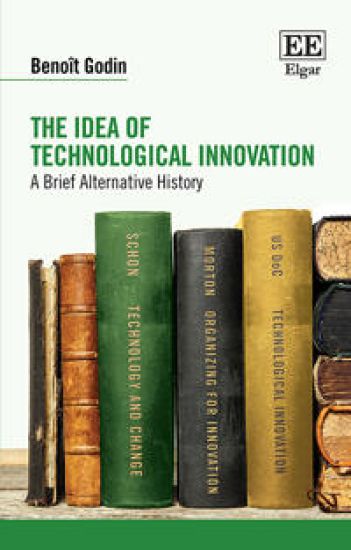
This timely book explores technological innovation as a concept, dissecting its emergence, development and use. Benoît Godin offers an exciting new historiography of the subject, arguing that the study of innovation originates not from scholars but from practitioners of innovation. Godin looks to engineers, managers, consultants and policymakers as the instigators of our current understanding of technological innovation. Offering a conceptual history of the subject, Part I considers the many iterations of innovation - as an science applied, outcome, process and system - to track and analyse the changing discourses surrounding technological innovation. In Part II, the author turns to historic and contemporary innovation policy to illustrate the critical role that practitioners have had in formulating and strategizing policy. Effectively rewriting the historiography of the topic, this book is critical reading for scholars of innovation studies, sociology and the history of science and technology. Students will benefit from Godin's pioneering approach to the subject and policymakers will also find value in the book's unique insight into innovation.