Kirjojen hintavertailu. Mukana 11 699 587 kirjaa ja 12 kauppaa.

Kirjahaku

Etsi kirjoja tekijän nimen, kirjan nimen tai ISBN:n perusteella.

10 kirjaa tekijältä Bernard Adams

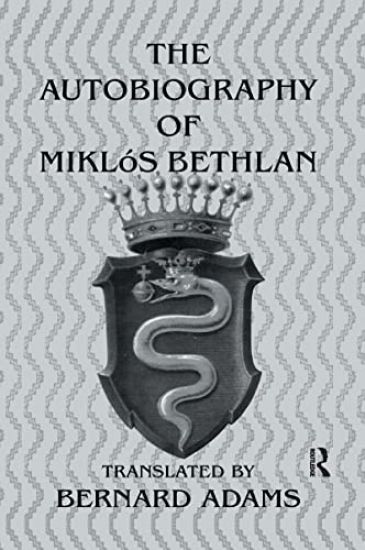
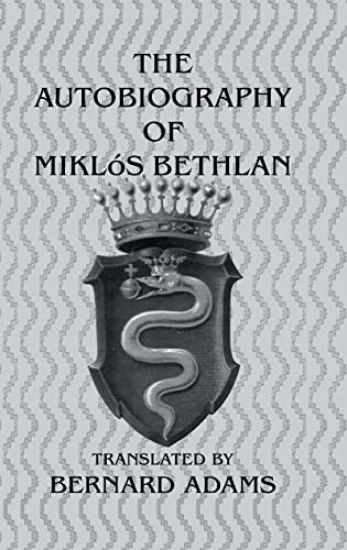
Autobiography Of Miklos Bethlen

Autobiography Of Miklos Bethlen

Bernard Adams

Kegan Paul
2005
sidottu
First published in 2005. The Bethlen family was an ancient noble house of considerable wealth and influence in Transylvania. The writer of this autobiography Count Miklos (born 1642) was a General in 1682, Privy Councillor in 1689, Foispan in 1690 and Chancellor in 1691, after an excellent education and distinguished career in public life. He then clashed with General Rabutin, from 1696 the Austrian Commander in chief in Transylvania, which led to his arrest and imprisonment on a charge of treason in 1703. His autobiography, one of the most extensive of the literary memoirs that came from Transylvania at the period (among them the Letters from Turkey of Kelemen Mikes and Metamorphosis Transylvaniae of Peter Apor, both published by Kegan Paul in Bernard Adam's English translation), was written in prison and under sentence of death in Hungary and Austria. Transferred to Viennese confinement in 1708 and pardoned by Emperor Charles III in 1712, Bethlen was never allowed to return to Transylvania, spent his last years in relative freedom in Vienna, and died in 1716.
Autobiography Of Miklos Bethlen

Autobiography Of Miklos Bethlen

Bernard Adams

Routledge
2016
nidottu
First published in 2005. The Bethlen family was an ancient noble house of considerable wealth and influence in Transylvania. The writer of this autobiography Count Miklos (born 1642) was a General in 1682, Privy Councillor in 1689, Foispan in 1690 and Chancellor in 1691, after an excellent education and distinguished career in public life. He then clashed with General Rabutin, from 1696 the Austrian Commander in chief in Transylvania, which led to his arrest and imprisonment on a charge of treason in 1703. His autobiography, one of the most extensive of the literary memoirs that came from Transylvania at the period (among them the Letters from Turkey of Kelemen Mikes and Metamorphosis Transylvaniae of Peter Apor, both published by Kegan Paul in Bernard Adam's English translation), was written in prison and under sentence of death in Hungary and Austria. Transferred to Viennese confinement in 1708 and pardoned by Emperor Charles III in 1712, Bethlen was never allowed to return to Transylvania, spent his last years in relative freedom in Vienna, and died in 1716.
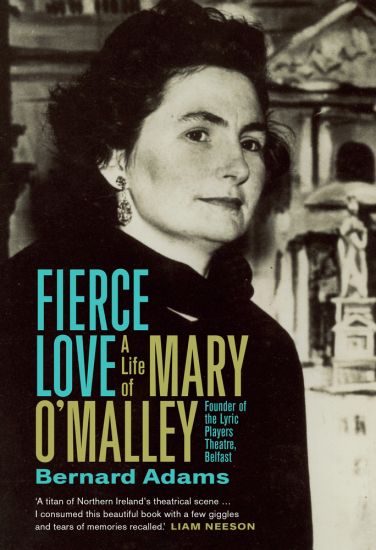
Fierce Love

Fierce Love

Bernard Adams

THE LILLIPUT PRESS LTD
2022
nidottu
Fierce Love is a compelling and candid biography of Cork-born theatre pioneer (1918-2006) Mary O’Malley, founder-director of Belfast’s Lyric Players Theatre from 1951 to 1981. Neé Hickey, Mary went to Loreto Secondary School in Navan, Co. Meath, writing and directing her first play, The Lost Princess, before living with her mother in Dublin. There she became a key member of the New Theatre Group, immersed in the city’s social and cultural life and joining the Irish Society for Intellectual Freedom. On 14 September 1947 Mary married Armagh-born psychiatrist Pearse O’Malley, later moving to Belfast’s Derryvolgie Avenue off the Malone Road. There she formed a fifty-seat studio theatre above the stables and created Belfast Lyric Players Theatre, a company of actors and artists who were to put on 140 plays over seventeen years on a stage only ten-foot wide, asserting a broad Irish and European culture. W.B Yeats, twenty-six of whose plays were performed, was her standard-bearer. In 1952 she was elected to Belfast Corporation as an Irish Labour Party councillor, and in 1957 she founded the literary magazine Threshold, which enjoyed a thirty-year lifespan. Her other activities included running a drama school, an art gallery and music academy, while raising a family of three. As she battled conservatism, a socialist and nationalist in a Unionist city, this courageous and tenacious woman transformed Belfast with her playhouse — Liam Neeson and Ciarán Hinds were among her protégées — expanding her repertoire and bridging the political quagmire of the sixties to build a permanent 300-seater Lyric Players theatre, which opened with Yeats’s Cuchulain Cycle in October 1968. Her fierce will survived the Troubles, ensuring that her broad-based community theatre never had to close its doors. Her vision was posthumously crowned by the 2011 Lyric Theatre building overlooking the Lagan. Fierce Love celebrates these achievements, chronicling a resourceful and controversial individual, who swam against the tide of populism and sectarianism to establish an independent academy for actors and artists in a tireless quest for imaginative freedom and excellence. Mary O’Malley’s life was complex, and her legacy enduring.
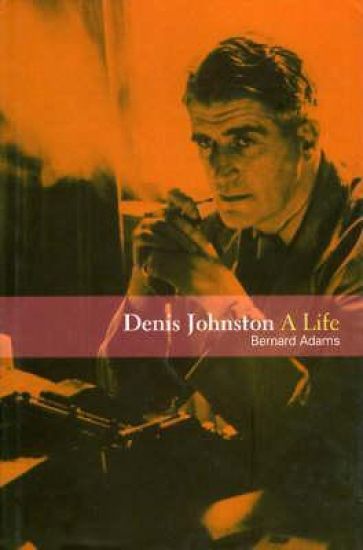
Denis Johnston

Denis Johnston

Bernard Adams

The Lilliput Press Ltd
2002
sidottu
This is the first biography of Denis Johnston, barrister, theatre director, film-maker, pioneering television producer, war correspondent, essayist and celebrated playwright. Johnston was of Ulster Presbyterian stock, born into Edwardian Dublin, where he was briefly held hostage in his family home at Lansdowne Road during the 1916 Rising. Son of a Supreme Court judge, he was schooled at St Andrew’s in Dublin, in Edinburgh and Christ’s College, Cambridge, and at Harvard University. He made the name of the Gate Theatre in 1929 with his astonishing first play The Old Lady Says ‘No!’, created the radio epic ‘Lillibulero’ for the BBC in Belfast, and earned an OBE for his war reporting from North Africa, Yugoslavia and Buchenwald. In 1950 he decamped to New York and taught for many years at colleges in Massachusetts, founding the Poets’ Theatre in Boston. An Irishman of wide horizons and wit, and a prodigal dissenter, his multi-faceted life illuminates the cultural history of the past century. He was turbulently married to the actresses Shelah Richards and Betty Chancellor, and had four children, among them the novelist Jennifer Johnston. In this masterly biography, Adams draws upon Johnston’s copious and intimate diaries, letters and uncompleted autobiography deposited in Trinity College, Dublin, cataloguing the ‘untidy museum’ of his subject’s past. The result is an enthralling narrative of the extraordinary secret life of a complex, self-doubting individual, which brings new light to bear on one of the twentieth century’s most original Irish writers.