Kirjojen hintavertailu. Mukana 11 678 731 kirjaa ja 12 kauppaa.

Kirjahaku

Etsi kirjoja tekijän nimen, kirjan nimen tai ISBN:n perusteella.

4 kirjaa tekijältä Bernard Beatty

Byron's Don Juan

Byron's Don Juan

Bernard Beatty

Routledge
2016
sidottu
First published in 1985. What sort of poem is Don Juan, and how does it maintain its momentum through its long and often struggling narrative? These are the questions that Bernard Beatty proposes in this subtle and elegant discussion of Byron’s masterwork. The legend of Don Juan was entrenched in European literature and other arts long before it came under Byron’s hands, yet Byron’s treatment of the story is often almost unrecognisably far from its forebears. Beatty indicates how deeply Byron has assimilated his predecessors in order to produce his own work. The sustained argument of this book raises questions of interest not only to students of Byron but of comedy in general, as well as of the place of religious motifs in apparently secularised modes.
Byron's Don Juan

Byron's Don Juan

Bernard Beatty

Routledge
2017
nidottu
First published in 1985. What sort of poem is Don Juan, and how does it maintain its momentum through its long and often struggling narrative? These are the questions that Bernard Beatty proposes in this subtle and elegant discussion of Byron’s masterwork. The legend of Don Juan was entrenched in European literature and other arts long before it came under Byron’s hands, yet Byron’s treatment of the story is often almost unrecognisably far from its forebears. Beatty indicates how deeply Byron has assimilated his predecessors in order to produce his own work. The sustained argument of this book raises questions of interest not only to students of Byron but of comedy in general, as well as of the place of religious motifs in apparently secularised modes.
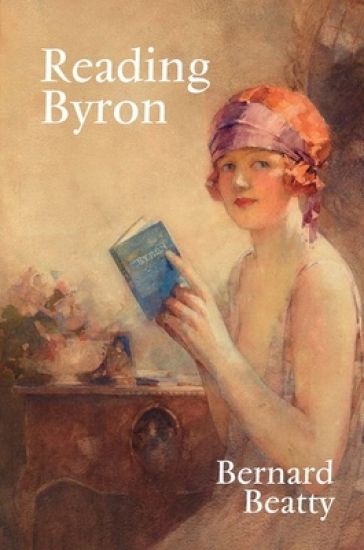
Reading Byron

Reading Byron

Bernard Beatty

LIVERPOOL UNIVERSITY PRESS
2022
sidottu
Perhaps no great poet, in any language, has suffered more than Byron from being merely read about rather than actually read. As Bernard Beatty remarks in his introduction to this important collection of essays, the popular conception of ‘Byron’ still often approximates to ‘Rupert Everett with a limp’.Reading Byron is the product and summation of nearly sixty years devoted to studying and teaching his poetry. It argues that, far from being ‘mad, bad and dangerous to know’, Byron is serious, ethically orientated and rewarding to read. The book is in three parts: Poems – Life – Politics. Five new essays have been written especially for the first and largest section, which provides fresh perspectives on Byron’s major works. The volume continues with three of Beatty's lively lectures on unappreciated aspects of Byron the man, and three pithy essays on Byron as a complex, if not systematic, political thinker.While Beatty does not question the pre-eminent status of the ‘bright’ Don Juan, devoting a chapter to an unconventional reading of its final cantos, he argues powerfully that nineteenth-century readers, who responded on an unprecedented scale to the forceful poetic structures of the ‘dark’ Byron in Childe Harold's Pilgrimage, The Tales, Manfred, and Cain, were right to do so. Introduced by Jerome McGann (editor of the great Clarendon edition of the poet's works) and concluded in dialogue with Gavin Hopps (co-editor of the forthcoming Longman edition), Reading Byron is itself essential reading for any student or lover of Romantic poetry.
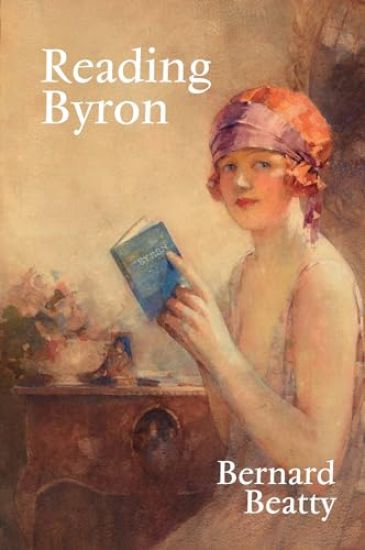
Reading Byron

Reading Byron

Bernard Beatty

LIVERPOOL UNIVERSITY PRESS
2025
nidottu
Perhaps no great poet, in any language, has suffered more than Byron from being merely read about rather than actually read. As Bernard Beatty remarks in his introduction to this important collection of essays, the popular conception of ‘Byron’ still often approximates to ‘Rupert Everett with a limp’.Reading Byron is the product and summation of nearly sixty years devoted to studying and teaching his poetry. It argues that, far from being ‘mad, bad and dangerous to know’, Byron is serious, ethically orientated and rewarding to read. The book is in three parts: Poems – Life – Politics. Five new essays have been written especially for the first and largest section, which provides fresh perspectives on Byron’s major works. The volume continues with three of Beatty's lively lectures on unappreciated aspects of Byron the man, and three pithy essays on Byron as a complex, if not systematic, political thinker.While Beatty does not question the pre-eminent status of the ‘bright’ Don Juan, devoting a chapter to an unconventional reading of its final cantos, he argues powerfully that nineteenth-century readers, who responded on an unprecedented scale to the forceful poetic structures of the ‘dark’ Byron in Childe Harold's Pilgrimage, The Tales, Manfred, and Cain, were right to do so. Introduced by Jerome McGann (editor of the great Clarendon edition of the poet's works) and concluded in dialogue with Gavin Hopps (co-editor of the forthcoming Longman edition), Reading Byron is itself essential reading for any student or lover of Romantic poetry.