Kirjojen hintavertailu. Mukana 11 244 527 kirjaa ja 12 kauppaa.

Kirjahaku

Etsi kirjoja tekijän nimen, kirjan nimen tai ISBN:n perusteella.

15 kirjaa tekijältä Bernard Faure

Chan Insights and Oversights

Chan Insights and Oversights

Bernard Faure

Princeton University Press
1996
pokkari
For many people attracted to Eastern religions (particularly Zen Buddhism), Asia seems the source of all wisdom. As Bernard Faure examines the study of Chan/Zen from the standpoint of postmodern human sciences and literary criticism, he challenges this inversion of traditional "Orientalist" discourse: whether the Other is caricatured or idealized, ethnocentric premises marginalize important parts of Chan thought. Questioning the assumptions of "Easterners" as well, including those of the charismatic D. T. Suzuki, Faure demonstrates how both West and East have come to overlook significant components of a complex and elusive tradition. Throughout the book Faure reveals surprising hidden agendas in the modern enterprise of Chan studies and in Chan itself. After describing how Jesuit missionaries brought Chan to the West, he shows how the prejudices they engendered were influenced by the sectarian constraints of Sino-Japanese discourse. He then assesses structural, hermeneutical, and performative ways of looking at Chan, analyzes the relationship of Chan and local religion, and discusses Chan concepts of temporality, language, writing, and the self. Read alone or with its companion volume, The Rhetoric of Immediacy, this work offers a critical introduction not only to Chinese and Japanese Buddhism but also to "theory" in the human sciences.

Visions of Power

Visions of Power

Bernard Faure

Princeton University Press
2000
pokkari
Bernard Faure's previous works are well known as guides to some of the more elusive aspects of the Chinese tradition of Chan Buddhism and its outgrowth, Japanese Zen. Continuing his efforts to look at Chan/Zen with a full array of postmodernist critical techniques, Faure now probes the imaginaire, or mental universe, of the Buddhist Soto Zen master Keizan Jokin (1268-1325). Although Faure's new book may be read at one level as an intellectual biography, Keizan is portrayed here less as an original thinker than as a representative of his culture and an example of the paradoxes of the Soto school. The Chan/Zen doctrine that he avowed was allegedly reasonable and demythologizing, but he lived in a psychological world that was just as imbued with the marvelous as was that of his contemporary Dante Alighieri. Drawing on his own dreams to demonstrate that he possessed the magical authority that he felt to reside also in icons and relics, Keizan strove to use these "visions of power" to buttress his influence as a patriarch. To reveal the historical, institutional, ritual, and visionary elements in Keizan's life and thought and to compare these to Soto doctrine, Faure draws on largely neglected texts, particularly the Record of Tokoku (a chronicle that begins with Keizan's account of the origins of the first of the monasteries that he established) and the kirigami, or secret initiation documents.
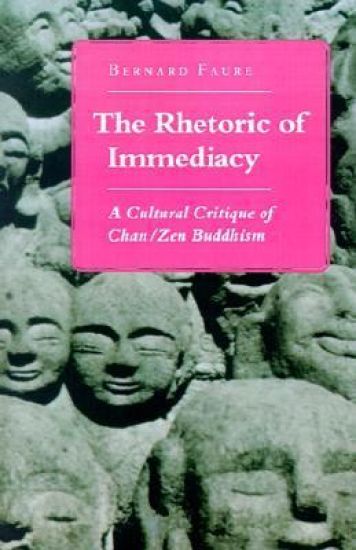
The Rhetoric of Immediacy

The Rhetoric of Immediacy

Bernard Faure

Princeton University Press
1994
pokkari
Through a highly sensitive exploration of key concepts and metaphors, Bernard Faure guides Western readers in appreciating some of the more elusive aspects of the Chinese tradition of Chan Buddhism and its outgrowth, Japanese Zen. He focuses on Chan's insistence on "immediacy"--its denial of all traditional mediations, including scripture, ritual, good works--and yet shows how these mediations have always been present in Chan. Given this apparent duplicity in its discourse, Faure reveals how Chan structures its practice and doctrine on such mental paradigms as mediacy/immediacy, sudden/gradual, and center/margins.
The Red Thread

The Red Thread

Bernard Faure

Princeton University Press
1998
pokkari
Is there a Buddhist discourse on sex? In this innovative study, Bernard Faure reveals Buddhism's paradoxical attitudes toward sexuality. His remarkably broad range covers the entire geography of this religion, and its long evolution from the time of its founder, Xvkyamuni, to the premodern age. The author's anthropological approach uncovers the inherent discrepancies between the normative teachings of Buddhism and what its followers practice. Framing his discussion on some of the most prominent Western thinkers of sexuality--Georges Bataille and Michel Foucault--Faure draws from different reservoirs of writings, such as the orthodox and heterodox "doctrines" of Buddhism, and its monastic codes. Virtually untapped mythological as well as legal sources are also used. The dialectics inherent in Mahvyvna Buddhism, in particular in the Tantric and Chan/Zen traditions, seemed to allow for greater laxity and even encouraged breaking of taboos. Faure also offers a history of Buddhist monastic life, which has been buffeted by anticlerical attitudes, and by attempts to regulate sexual behavior from both within and beyond the monastery. In two chapters devoted to Buddhist homosexuality, he examines the way in which this sexual behavior was simultaneously condemned and idealized in medieval Japan. This book will appeal especially to those interested in the cultural history of Buddhism and in premodern Japanese culture. But the story of how one of the world's oldest religions has faced one of life's greatest problems makes fascinating reading for all.
The Power of Denial

The Power of Denial

Bernard Faure

Princeton University Press
2003
pokkari
Innumerable studies have appeared in recent decades about practically every aspect of women's lives in Western societies. The few such works on Buddhism have been quite limited in scope. In The Power of Denial, Bernard Faure takes an important step toward redressing this situation by boldly asking: does Buddhism offer women liberation or limitation? Continuing the innovative exploration of sexuality in Buddhism he began in The Red Thread, here he moves from his earlier focus on male monastic sexuality to Buddhist conceptions of women and constructions of gender. Faure argues that Buddhism is neither as sexist nor as egalitarian as is usually thought. Above all, he asserts, the study of Buddhism through the gender lens leads us to question what we uncritically call Buddhism, in the singular. Faure challenges the conventional view that the history of women in Buddhism is a linear narrative of progress from oppression to liberation. Examining Buddhist discourse on gender in traditions such as that of Japan, he shows that patriarchy--indeed, misogyny--has long been central to Buddhism. But women were not always silent, passive victims. Faure points to the central role not only of nuns and mothers (and wives) of monks but of female mediums and courtesans, whose colorful relations with Buddhist monks he considers in particular. Ultimately, Faure concludes that while Buddhism is, in practice, relentlessly misogynist, as far as misogynist discourses go it is one of the most flexible and open to contradiction. And, he suggests, unyielding in-depth examination can help revitalize Buddhism's deeper, more ancient egalitarianism and thus subvert its existing gender hierarchy. This groundbreaking book offers a fresh, comprehensive understanding of what Buddhism has to say about gender, and of what this really says about Buddhism, singular or plural.
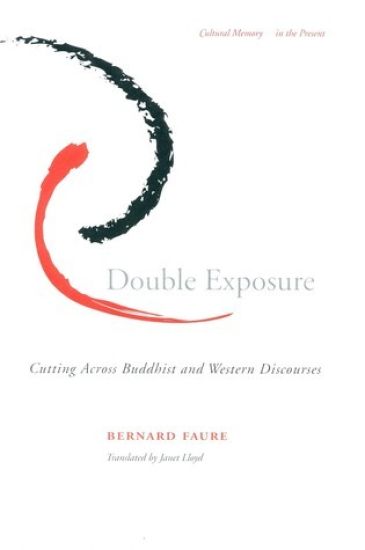
Double Exposure

Double Exposure

Bernard Faure

Stanford University Press
2003
sidottu
This book explores the possible relations between Western types of rationality and Buddhism. It also examines some clichés about Buddhism and questions the old antinomies of Western culture ("faith and reason," or "idealism and materialism"). The use of the Buddhist notion of the Two Truths as a hermeneutic device leads to a double or multiple exposure that will call into question our mental habits and force us to ask questions differently, to think "in a new key." Double Exposure is somewhat of an oddity. Written by a specialist for nonspecialists, it is not a book of vulgarization. Although it aims at a better integration of Western and Buddhist thought, it is not an exercise in comparative philosophy or religion. It is neither a contribution to Buddhist scholarship in the narrow sense, nor a contribution to some vague Western "spirituality." Cutting across traditional disciplines and blurring established genres, it provides a leisurely but deeply insightful stroll through philosophical and literary texts, dreams, poetry, and paradoxes.
Double Exposure

Double Exposure

Bernard Faure

Stanford University Press
2003
pokkari
This book explores the possible relations between Western types of rationality and Buddhism. It also examines some clichés about Buddhism and questions the old antinomies of Western culture ("faith and reason," or "idealism and materialism"). The use of the Buddhist notion of the Two Truths as a hermeneutic device leads to a double or multiple exposure that will call into question our mental habits and force us to ask questions differently, to think "in a new key." Double Exposure is somewhat of an oddity. Written by a specialist for nonspecialists, it is not a book of vulgarization. Although it aims at a better integration of Western and Buddhist thought, it is not an exercise in comparative philosophy or religion. It is neither a contribution to Buddhist scholarship in the narrow sense, nor a contribution to some vague Western "spirituality." Cutting across traditional disciplines and blurring established genres, it provides a leisurely but deeply insightful stroll through philosophical and literary texts, dreams, poetry, and paradoxes.
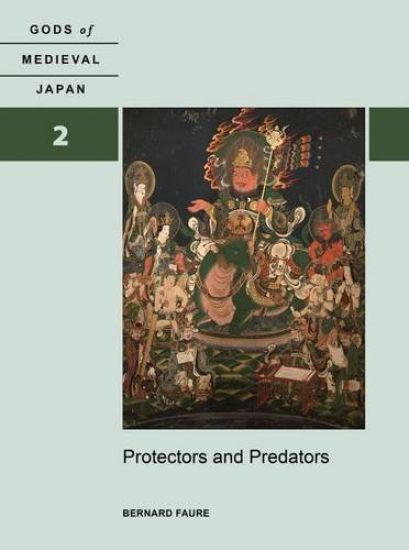
Protectors and Predators

Protectors and Predators

Bernard Faure

University of Hawai'i Press
2015
nidottu
Written by one of the leading scholars of Japanese religion, Protectors and Predators is the second installment of a multivolume project that promises to be a milestone in our understanding of the mythico-ritual system of esoteric Buddhism—specifically the nature and roles of deities in the religious world of medieval Japan and beyond. Bernard Faure introduces readers to medieval Japanese religiosity and shows the centrality of the gods in religious discourse and ritual. Throughout he engages theoretical insights drawn from structuralism, post-structuralism, and Actor-Network Theory to retrieve the “implicit pantheon” (as opposed to the “explicit orthodox pantheon”) of esoteric Japanese Buddhism (Mikky?). His work is particularly significant given its focus on the deities’ multiple and shifting representations, overlappings, and modes of actions rather than on individual characters and functions.In Protectors and Predators Faure argues that the “wild” gods of Japan were at the center of the medieval religious landscape and came together in complex webs of association not divisible into the categories of “Buddhist,” “indigenous,” or “Shinto.” Furthermore, among the most important medieval gods, certain ones had roots in Hinduism, others in Daoism and Yin-Yang thought. He displays vast knowledge of his subject and presents his research—much of it in largely unstudied material—with theoretical sophistication. His arguments and analyses assume the centrality of the iconographic record as a complement to the textual record, and so he has brought together a rich and rare collection of more than 170 color and black-and-white images. This emphasis on iconography and the ways in which it complements, supplements, or deconstructs textual orthodoxy is critical to a fuller comprehension of a set of medieval Japanese beliefs and practices and offers a corrective to the traditional division of the field into religious studies, which typically ignores the images, and art history, which oftentimes overlooks their ritual and religious meaning.Protectors and Predators and its companion volumes should persuade readers that the gods constituted a central part of medieval Japanese religion and that the latter cannot be reduced to a simplistic confrontation, parallelism, or complementarity between some monolithic teachings known as “Buddhism” and “Shinto.” Once these reductionist labels and categories are discarded, a new and fascinating religious landscape begins to unfold.
The Fluid Pantheon

The Fluid Pantheon

Bernard Faure

University of Hawai'i Press
2015
nidottu
Written by one of the leading scholars of Japanese religion, The Fluid Pantheon is the first installment of a multivolume project that promises to be a milestone in our understanding of the mythico-ritual system of esoteric Buddhism—specifically the nature and roles of deities in the religious world of medieval Japan and beyond. Bernard Faure introduces readers to medieval Japanese religiosity and shows the centrality of the gods in religious discourse and ritual; in doing so he moves away from the usual textual, historical, and sociological approaches that constitute the “method” of current religious studies. The approach considers the gods (including buddhas and demons) as meaningful and powerful interlocutors and not merely as cyphers for social groups or projections of the human mind. Throughout he engages insights drawn from structuralism, post-structuralism, and Actor-network theory to retrieve the “implicit pantheon” (as opposed to the “explicit orthodox pantheon”) of esoteric Japanese Buddhism (Mikky?). Through a number of case studies, Faure describes and analyzes the impressive mythological and ritual efflorescence that marked the medieval period, not only in the religious domain, but also in the political, artistic, and literary spheres. He displays vast knowledge of his subject and presents his research—much of it in largely unstudied material—with theoretical sophistication. His arguments and analyses assume the centrality of the iconographic record, and so he has brought together in this volume a rich and rare collection of more than 180 color and black-and-white images. This emphasis on iconography and the ways in which it complements, supplements, or deconstructs textual orthodoxy is critical to a fuller comprehension of a set of medieval Japanese beliefs and practices. It also offers a corrective to the traditional division of the field into religious studies, which typically ignores the images, and art history, which oftentimes overlooks their ritual and religious meaning. The Fluid Pantheon and its companion volumes should persuade readers that the gods constituted a central part of medieval Japanese religion and that the latter cannot be reduced to a simplistic confrontation, parallelism, or complementarity between some monolithic teachings known as “Buddhism” and “Shinto.” Once these reductionist labels and categories are discarded, a new and fascinating religious landscape begins to unfold.
Rage and Ravage

Rage and Ravage

Bernard Faure

University of Hawai'i Press
2022
sidottu
Written by one of the leading scholars of Japanese religion, Rage and Ravage is the third installment of a milestone project in our understanding of the mythico-ritual system of esoteric Buddhism—specifically the nature and roles of deities in the religious world of medieval Japan and beyond. Bernard Faure introduces readers to medieval Japanese religiosity and shows the centrality of the gods in religious discourse and ritual; in doing so he moves away from the usual textual, historical, and sociological approaches that constitute the ""method"" of current religious studies. Throughout, he engages theoretical insights draws from structuralism, post-structuralism, and Actor-Network Theory to retrieve the ""implicit pantheon"" (as opposed to the ""explicit orthodox pantheon"") of esoteric Japanese Buddhism (Mikky?ì).In volumes one and two, The Fluid Pantheon and Predators and Protectors, Faure argued against a polarity or dichotomy between buddhas and kami by emphasizing the existence of deities that did not belong to either category, and he rejected the retrospective notion of ""hybridity."" The present work makes a similar case about the reified distinction between gods and demons to show that, due to the fluid nature of the Japanese pantheon, these terms do not represent stable identities: gods can become demons, and demons are sometimes deified. Divine protectors were often former predators, and in some instances they retained their predatory features even after being converted. After emphasizing the demonic aspects of devas as ""gods or spirits of obstacles"" in the earlier volumes, Faure now focuses on the deva-like or ""divine"" aspects of deities that have been described as ""demonic."" Rage and Ravage and its companion volumes persuade readers that the gods constituted a central part of medieval Japanese religion and that the latter cannot be reduced to a simplistic confrontation, parallelism, or complementarity between some monolithic teachings known as ""Buddhism"" and ""Shinto."" Once these reductionist labels and categories are discarded, a new and fascinating religious landscape begins to unfold.
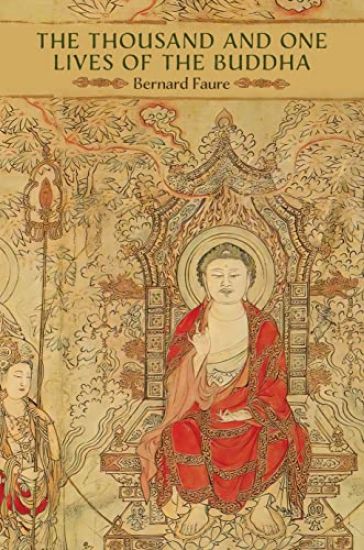
The Thousand and One Lives of the Buddha

The Thousand and One Lives of the Buddha

Bernard Faure

UNIVERSITY OF HAWAI'I PRESS
2022
sidottu
Praise for the French edition"This is a book that should be read by all those who are interested, whether near or far, in Buddhism, its history and its interpretations. . . . [Faure] proposes considering the ‘Life of the Buddha’ as a kind of treasure that never ceases to be reinvented and experienced, from story to story, from language to language, from culture to culture." —Roger-Pol Droit, Le MondeMany biographies of the Buddha have been published in the last 150 years, and all claim to describe the authentic life of the historical Buddha. This book, written by one of the leading scholars of Buddhism and Japanese religion, starts from the opposite assumption and argues that we do not yet possess the archival and archeological materials required to compose such a biography: All we have are narratives, not facts. Yet traditional biographies have neglected the literary, mythological, and ritual elements in the life of the Buddha. Bernard Faure aims to bridge this gap and shed light on a Buddha that is not historical but has constituted a paradigm of practice and been an object of faith for 2,500 years.The Thousand and One Lives of the Buddha opens with a criticism of the prevalent historicism before examining the mythological elements in a life of the Buddha no longer constrained by an artificial biographical framework. Once the search for the "historical Buddha" is abandoned, there is no longer any need to limit the narrative to early Indian stories. The life—or lives—of the Buddha, as an expression of the creative imaginations of Buddhists, developed beyond India over the centuries. Faure accordingly shifts his focus to East Asia and, more particularly, to Japan. Finally, he examines recent developments of the Buddha’s life in not only Asia but also the modern West and neglected literary genres such as science fiction.
The Thousand and One Lives of the Buddha

The Thousand and One Lives of the Buddha

Bernard Faure

UNIVERSITY OF HAWAI'I PRESS
2022
nidottu
Praise for the French edition"This is a book that should be read by all those who are interested, whether near or far, in Buddhism, its history and its interpretations. . . . [Faure] proposes considering the ‘Life of the Buddha’ as a kind of treasure that never ceases to be reinvented and experienced, from story to story, from language to language, from culture to culture." —Roger-Pol Droit, Le MondeMany biographies of the Buddha have been published in the last 150 years, and all claim to describe the authentic life of the historical Buddha. This book, written by one of the leading scholars of Buddhism and Japanese religion, starts from the opposite assumption and argues that we do not yet possess the archival and archeological materials required to compose such a biography: All we have are narratives, not facts. Yet traditional biographies have neglected the literary, mythological, and ritual elements in the life of the Buddha. Bernard Faure aims to bridge this gap and shed light on a Buddha that is not historical but has constituted a paradigm of practice and been an object of faith for 2,500 years.The Thousand and One Lives of the Buddha opens with a criticism of the prevalent historicism before examining the mythological elements in a life of the Buddha no longer constrained by an artificial biographical framework. Once the search for the "historical Buddha" is abandoned, there is no longer any need to limit the narrative to early Indian stories. The life—or lives—of the Buddha, as an expression of the creative imaginations of Buddhists, developed beyond India over the centuries. Faure accordingly shifts his focus to East Asia and, more particularly, to Japan. Finally, he examines recent developments of the Buddha’s life in not only Asia but also the modern West and neglected literary genres such as science fiction.
Lords of Life

Lords of Life

Bernard Faure

UNIVERSITY OF HAWAI'I PRESS
2026
sidottu
Written by one of the leading scholars of Japanese religion, Lords of Life is the fifth and last book of a multivolume project that stands as a milestone in our understanding of the mythico-ritual system of esoteric Buddhism—specifically the nature and roles of deities within the religious landscape of medieval Japan and beyond. Bernard Faure introduces readers to medieval Japanese religiosity, highlighting the central role of gods in religious discourse and ritual. In doing so, he departs from traditional textual, historical, and sociological approaches that constitute the "method" of current religious studies. Instead, Faure draws on theoretical insights from structuralism, post-structuralism, and Actor-Network Theory to retrieve the "implicit pantheon" (as opposed to the "explicit orthodox pantheon") of esoteric Japanese Buddhism (Mikkyo). In the earlier volumes—The Fluid Pantheon and Predators and Protectors— Faure argued against a polarity or dichotomy between buddhas and kami by emphasizing the existence of deities that did not belong to either category, and he rejected the retrospective notion of "hybridity." In Rage and Ravage, he made a similar case about the reified distinction between gods and demons to show that, due to the fluid nature of the Japanese pantheon, these terms do not represent stable identities: gods can become demons, and demons are sometimes deified. From Stars to Stones, the fourth volume, showed how mythological notions influenced (and in return were transformed by) medieval Japanese religion and the performing arts (geino). In this final book, Lords of Life, Faure explores the concept of surveillance in Daoism and Buddhism, the significance of the gods of destiny, and how they transform the official, or frontal, Buddhist doctrine of karma. This perspective offers a distinctive view of Buddhism, approaching it as if through a "back door." Throughout this monumental series, Faure expertly weaves together religion's various strands to underscore his argument that Japanese religion cannot be fully understood by relying solely on abstract categories like "Buddhism" and "Shinto," despite convention and convenience.
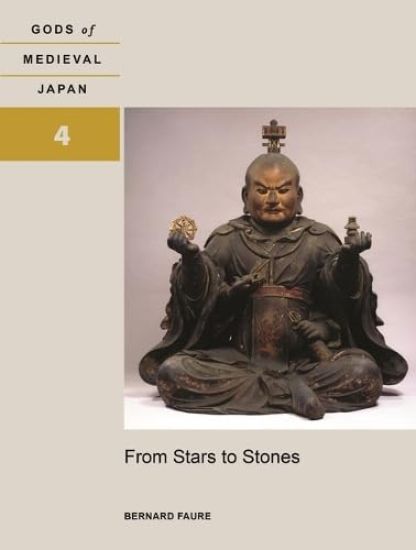
From Stars to Stones

From Stars to Stones

Bernard Faure

UNIVERSITY OF HAWAI'I PRESS
2025
sidottu
Written by one of the leading scholars of Japanese religion, From Stars to Stones is the fourth installment of a multivolume project that promises to be a milestone in our understanding of the mythico-ritual system of esoteric Buddhism—specifically the nature and roles of deities in the religious world of medieval Japan and beyond. Bernard Faure introduces readers to medieval Japanese religiosity and shows the centrality of the gods in religious discourse and ritual; in doing so he moves away from the usual textual, historical, and sociological approaches that constitute the "method" of current religious studies. Throughout, he engages theoretical insights drawn from structuralism, post-structuralism, and Actor-Network Theory to retrieve the "implicit pantheon" (as opposed to the "explicit orthodox pantheon") of esoteric Japanese Buddhism (Mikkyo). In volumes one and two, The Fluid Pantheon and Predators and Protectors, Faure argued against a polarity or dichotomy between buddhas and kami by emphasizing the existence of deities that did not belong to either category, and he rejected the retrospective notion of "hybridity." In volume three, Rage and Ravage, Faure made a similar case about the reified distinction between gods and demons to show that, due to the fluid nature of the Japanese pantheon, these terms do not represent stable identities: gods can become demons, and demons are sometimes deified. Moving from the deities of the Earth and the dialectic of autochthony to the theme of embryology, volume four, From Stars to Stones, is organized around a deity (or an aspect of it) identified as "placenta kojin" (ena kojin) and the network or nebula it forms with a few divinities—often personalizations of one or more of its aspects. If Rage and Ravage brought us back to earth, this book is a return to the womb and to the matrix of Japanese religion, which in turns opens up to the stars. It shows how mythological notions influenced (and in returned were transformed by) medieval Japanese religion and the performing arts (geino). From Stars to Stones and its companion volumes should persuade readers that the gods constituted a central part of medieval Japanese religion and that the latter cannot be reduced to a simplistic confrontation, parallelism, or complementarity between some monolithic teachings known as "Buddhism" and "Shinto." Once these reductionist labels and categories are discarded, a new and fascinating religious landscape begins to unfold.
Unmasking Buddhism

Unmasking Buddhism

Bernard Faure

Wiley-Blackwell (an imprint of John Wiley Sons Ltd)
2009
nidottu
UNMASKING BUDDHISM Can we talk of Buddhism as a unified religion or are there many Buddhisms? Is Buddhism a religion of tolerance and pacifism as many people think? Is Buddhism a religion without god(s)? Or is it more of a philosophy than a religion? Renowned Buddhist scholar Bernard Faure answers these and other questions about the basic history, beliefs and nature of Buddhism in easy-to-understand language. It is an ideal introduction for anyone who has unanswered questions about one of the world’s largest and most popular religions.