
Kirjahaku
Etsi kirjoja tekijän nimen, kirjan nimen tai ISBN:n perusteella.
17 kirjaa tekijältä Bernard Sharratt
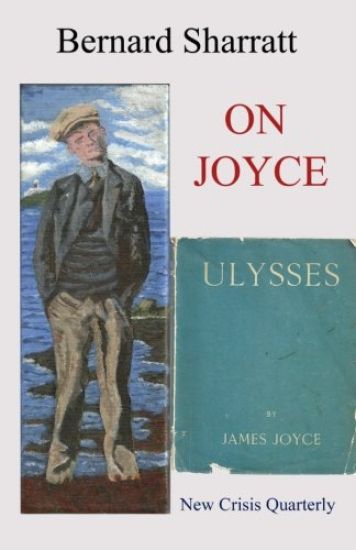
This short book offers three accessible essays. Joyce's Boarding House shows how the use of language in Dubliners might justify his claim for the book as a chapter in the moral history of Ireland. Portrait of the Artist as an Undergraduate considers two very different ways of reading Joyce which together have made Portrait an ironically appropriate 'set book'. An essay on Ulysses explores the puzzling theological concerns which shaped Joyce's reaction to his mother's death and to his own extraordinary literary creations.Praise for Sharratt's previous work: .. an absolutely important first-rate book -Terry Eagleton .. fascinating, entertaining, . . very impressive-David Lodge .. the most richly-packed book by an English critic in recent years-Nicholas Tredell .. astonishing, powerful, playful, brilliantly clever and attractive-Fred Inglis
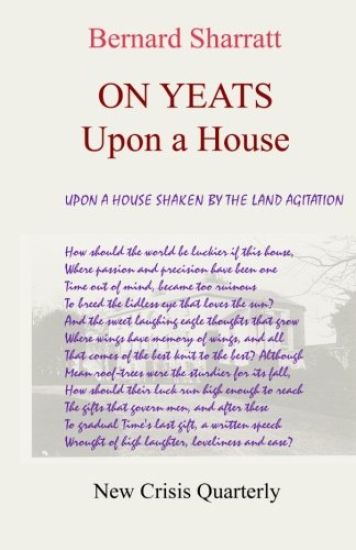
W. B. Yeats's short poem 'Upon a House Shaken by the Land Agitation' may be only a minor work in the Yeats canon, but, in an unusually challenging exercise in literary criticism, it is here taken seriously as posing uncomfortable moral and political questions, not simply in Yeats's Ireland but to any reader of the poem today, as its own questions are placed within a gradually widening context of national developments and global issues.Praise for Sharratt's previous work: .. an absolutely important first-rate book -Terry Eagleton .. I am Honoured by Sharratt's attention - Seamus Heaney .. fascinating, entertaining, . . very impressive-David Lodge .. the most richly-packed book by an English critic in recent years-Nicholas Tredell .. astonishing, powerful, playful, brilliantly clever and attractive-Fred Inglis
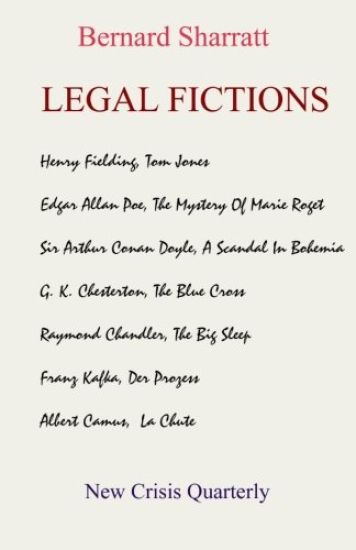
A series of attempted answers to a suitably challenging mock-examination paper probe the curious relations between various literary works and the specific procedures, problems, and dilemmas of the legal process, from the dubious status of evidence in the fiction of magistrate-novelist Henry Fielding, through the deeply suspect work of fictional detectives, to the unreliable processes of trial and confession in Kafka and Camus. Once entangled, readers are invited to complete the examination for themselves, and of themselves.Re-issued from Bernard Sharratt's Reading Relations (1982).Praise for Sharratt's previous work: .. an absolutely important first-rate book -Terry Eagleton .. fascinating, entertaining, . . very impressive-David Lodge .. the most richly-packed book by an English critic in recent years-Nicholas Tredell .. astonishing, powerful, playful, brilliantly clever and attractive-Fred Inglis
In three very different kinds of writing, this short book tackles various facets of the curious problems of time. A reflexive essay probes what it is that we are measuring when we try to consider our familiar time-based cultural activities. A review of a very ambitious but unwritten book investigates how we might radically change the way we spend our working time. And a satirically deconstructive reading of one of Derrida's most influential essays suggests an alternative approach even to our thinking about time. Ranging from an anticipation of the implications of 3-D printing to a critique of the politics of deconstruction and a reconsideration of 'socially necessary labour time' this brief work will take only an hour to read but a long time to assimilate.Praise for Sharratt's previous work: .. an absolutely important first-rate book -Terry Eagleton .. fascinating, entertaining, . . very impressive-David Lodge .. the most richly-packed book by an English critic in recent years-Nicholas Tredell .. astonishing, powerful, playful, brilliantly clever and attractive-Fred Inglis
Drama and democracy are critically entwined. This book considers some of the interconnections. A posthumous letter to Raymond Williams asks questions about his neglected television plays. The ambivalent politics of popular drama, from melodrama to TV, is analysed. And a highly ambitious and elliptical, but as yet barely imagined, work tries to trace the complex relations between the emergence of both democracy and drama in classical Athens and our ongoing problems in implementing what we might mean by democracy.Praise for Sharratt's previous work: .. an absolutely important first-rate book -Terry Eagleton .. fascinating, entertaining, . . very impressive-David Lodge .. the most richly-packed book by an English critic in recent years-Nicholas Tredell .. astonishing, powerful, playful, brilliantly clever and attractive-Fred Inglis
Critical Paranoia: From 'Lit.Crit.' to Digital Futures
Bernard Sharratt
New Crisis Quarterly
2015
nidottu
From 'Lit.Crit.' to the digital future...These various pieces trace a trajectory from a concern with problems of traditional literary criticism, through an often reluctant engagement with a variety of fashionable theoretical approaches and issues, to an initially optimistic involvement in the early development of the contemporary digital landscape. Taken together, they comprise a sketch-map of some of the significant and still unfolding shifts in what it has meant to sustain a belief in the importance of a Humanities education today.Praise for Sharratt's previous work: .. an absolutely important first-rate book -Terry Eagleton .. fascinating, entertaining, . . very impressive-David Lodge .. the most richly-packed book by an English critic in recent years-Nicholas Tredell .. astonishing, powerful, playful, brilliantly clever and attractive-Fred Inglis
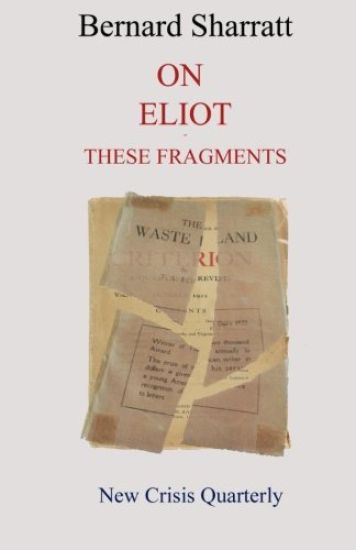
At the centre of this unusual bookon T. S. Eliot are two very differentand even incompatible critical accountsof The Waste Land, situated within asequence of changing personal reactions to Eliot's work over fifty years anda series of reflections on criticism, politics, copyright, publishing, and the cultural implications of new digital technologies.
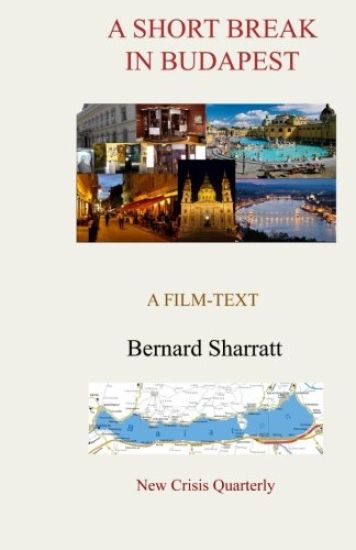
Paul arrives in Budapest to give a lecture, but finds himself seeking an elusive woman, and increasingly caught up in some odd connections between football hooliganism, a mafia protection racket, a shooting or two, and the strange work of a dissident sculptor. And all he really wanted to do was get a freebie trip out of the British Council and, finally, eat some Hungarian goulash.Film-texts are in the format of a film-script, but are not designed for actual film production. They are intended to be read and imagined, and play with a variety of familiar film genres, including romantic comedy, political thriller, and tourist guide: a kind of fantasy travel souvenir. Other NCQ film-texts are set in Athens, Prague, Rome, Venice, and fourth-century Egypt.
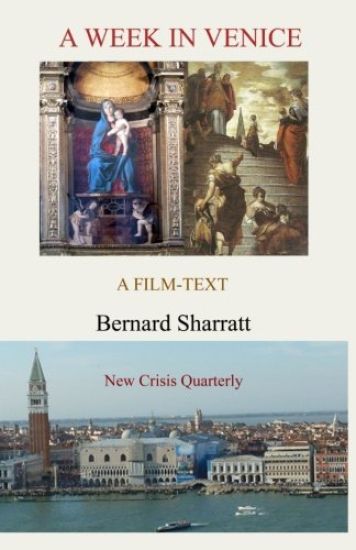
Dave and Kate arrive in Venice as strangers, for very different reasons, until a sequence of bizarre events bring them uneasily together. But are they confronting blackmail, terrorism, radical politics, or just some silly pranks? And is the whole marvellous city in peril, or is it just a matter of who, crucially, is responsible for the few public toilets and those appalling adverts spoiling the great facades of beautiful Venice?Film-texts are in the format of a film-script, but are not designed for actual film production. They are intended to be read and imagined, and play with a variety of familiar film genres, including romantic comedy, political thriller, and tourist guide: a kind of fantasy travel souvenir. Other NCQ film-texts are set in Athens, Prague, Rome, Venice, and fourth-century Egypt.
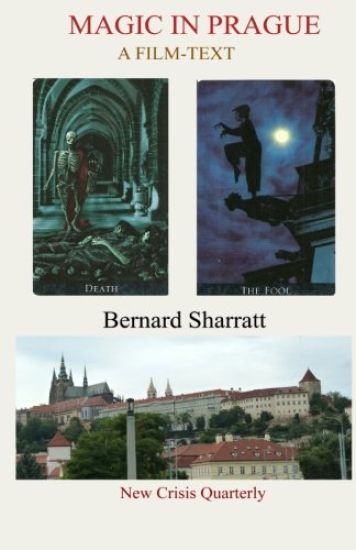
Tom Brady is due to give his last-ever lecture, in one of his favourite cities, magical Prague. But he hadn't reckoned with a feisty old lady, a highly secret society, an international scam, and the attentions of some very nasty people who want this to be his last-ever trip, anywhere. Can an unexpected alliance of old friends, a dubious journalist, and an ex-hacker save the day - and the world financial system? Film-texts are in the format of a film-script, but are not designed for actual film production. They are intended to be read and imagined, and play with a variety of familiar film genres, including romantic comedy, political thriller, and tourist guide: a kind of fantasy travel souvenir. Other NCQ film-texts are set in Athens, Budapest, Rome, Venice, and fourth-century Egypt.
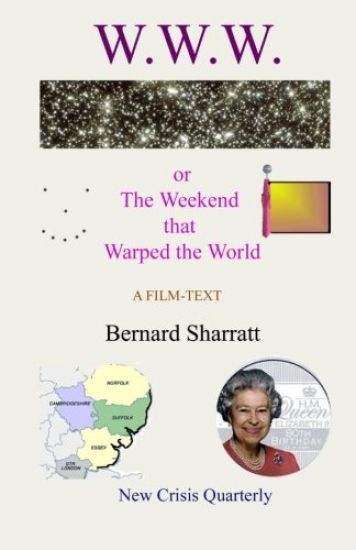
So what were those F16s doing low over Cambridge? Why did the Norfolk coast move in the night? Or strange stars suddenly start blinking on the screens of SETI? Could Frank, in his hi-tech wheelchair, crack the problem? Or was it all down to Chrissie, with her fabulous flexible laptop that folds into a pink umbrella? Would young Alex, or security expert Brian, or the mad Lord Anglia, or even the man in brown, ever understand why the whole world, even the weather maps, seemed to have become crazily warped? Perhaps it was just another day at the office for Sir G-G. Or perhaps British movies had finally gone insane.Film-texts are in the format of a film-script, but are not designed for actual film production. They are intended to be read and imagined, with a bit of help from on-line maps and images, and play with a variety of familiar film genres, including romantic comedy, political thriller, and tourist guide: some are a kind of fantasy travel souvenir.Other NCQ film-texts are set in Athens, Budapest, Prague, Rome, Venice, and fourth-century Egypt.
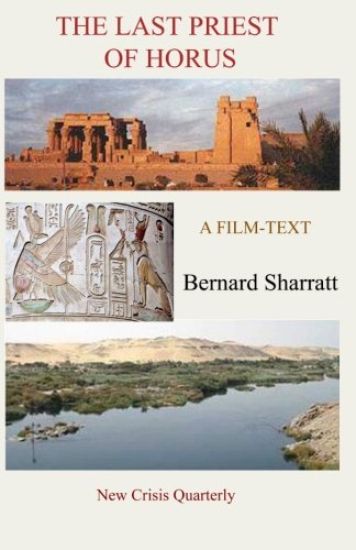
The success of Christianity in the Roman Empire was also the harsh defeat of a much older religion. Egypt in the 4th century was the battleground. Christians were also split among themselves, with Athanasius of Alexandria the pivotal figure in that vicious internal struggle. And some Egyptians continued to resist the long Roman occupation. But what finally happened to the last priests of the old ways, with their ancient temples and decaying cults? Did they just accept defeat? Or did at least one of them forge an unexpected response, traces of which are still to be discovered today?Film-texts are in the format of a film-script, but are not designed for actual film production. They are intended to be read and imagined, and play with a variety of familiar film genres, including romantic comedy, political thriller, and tourist guide: a kind of fantasy travel souvenir. This one was written in the shadow of the occupation of Iraq. Other NCQ film-texts are set in Athens, Prague, Rome, Venice, and Budapest.
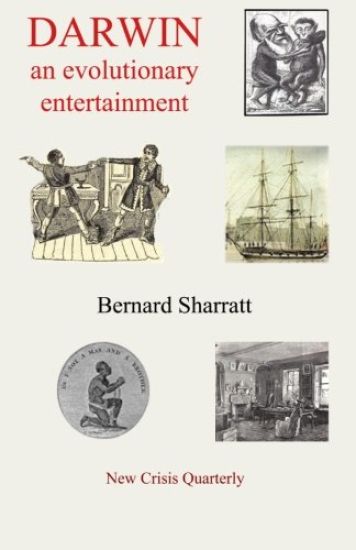
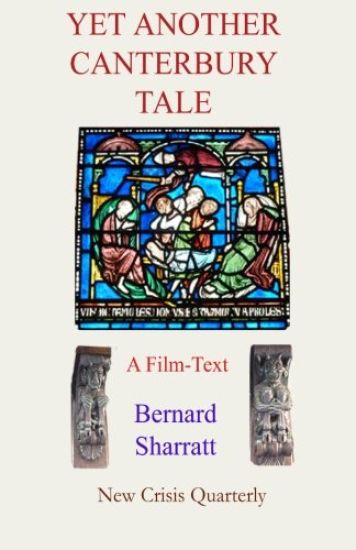
Yet Another Canterbury Tale: A film-text for pseudo-scholars
Bernard Sharratt
New Crisis Quarterly
2016
nidottu
A film-text for pseudo-scholars It was the usual story, of course: Boy meets Girl, Client hires Private Eye, and the two tales get entangled during a leisurely stroll around the highlights of an ancient city. But the mystery is 450 years old, and seems to involve an ominous Stranger, a forgetful German academic, a couple of warring Russian oligarchs, and final proof that Shakespeare was really from Canterbury, not Stratford, after all. So, just a normal day for a Cathedral Shepherd looking after an attractive American visitor. Written as a guide to favourite spots for friends visiting Canterbury on the occasion of the Marlowe commemorative conferences and celebrations held in 2014.Film-texts are in the format of a film-script, but are not designed for actual film production. They are intended to be read and imagined, and play with a variety of familiar film genres, including romantic comedy, political thriller, and tourist guide: a kind of fantasy travel souvenir. Other NCQ film-texts are set in Athens, Prague, Rome, Venice, and fourth-century Egypt.