Kirjojen hintavertailu. Mukana 11 717 486 kirjaa ja 12 kauppaa.

Kirjahaku

Etsi kirjoja tekijän nimen, kirjan nimen tai ISBN:n perusteella.

9 kirjaa tekijältä Bernd Roeck

Florence 1900

Florence 1900

Bernd Roeck

Yale University Press
2009
sidottu
An absorbing picture of turn-of-the-century Florence and those who traveled there to experience its cultural riches By the end of the nineteenth century, Florence was a key destination for cultured travelers from Europe and America. Writers such as Wilde, Rilke, and Mann; painters such as Degas and Klee; and not least, the young art historian Aby Warburg and his wife, Mary, flocked to Florence to escape the encroachments of modern life at home and to revel in the city’s rich artistic and cultural past.This beguiling book fuses narrative and ideas to consider how the encounter between modernism and Renaissance culture was experienced by both visitors to Florence and its inhabitants. Based on Aby Warburg’s letters, diaries, and notebooks; on Italian and German archives; and on conversations with E. H. Gombrich (director of the famous Institute that Warburg founded), the book is an intimate guide to life in Florence and the theaters, restaurants, galleries, and salons frequented by visiting cultural exiles. At the same time, the book paints an evocative picture of a city at the cusp of the modern age, adjusting to electricity and the motor car on one hand and to social unrest and a clash of cultures on the other.
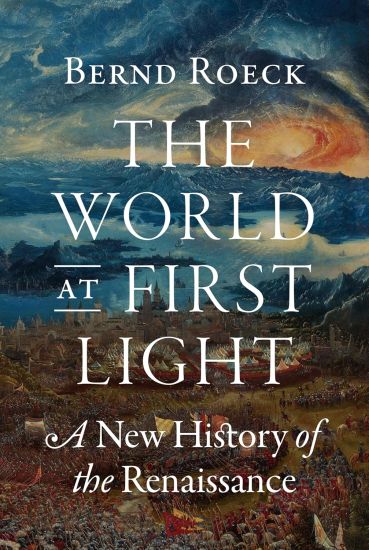
The World at First Light

The World at First Light

Bernd Roeck

PRINCETON UNIVERSITY PRESS
2025
sidottu
A magisterial history of the Renaissance and the birth of the modern worldThe cultural epoch we know as the Renaissance emerged at a certain time and in a certain place. Why then and not earlier? Why there and not elsewhere? In The World at First Light, historian Bernd Roeck explores the cultural and historical preconditions that enabled the European Renaissance. Roeck shows that the rediscovery of ancient knowledge, including the science of the medieval Arab world, played a critical role in shaping the beginnings of Western modernity. He explains that the Renaissance emerged in a part of Europe where competing states and cities formed relatively open societies. Most of the era’s creative minds—from Leonardo da Vinci and Michelangelo to Copernicus and Galileo—came from the middle classes. The art of arguing flowered, the basso continuo to intellectual and cultural breakthroughs.Roeck argues that two revolutions shaped the Renaissance: a media revolution, triggered by Gutenberg’s invention of movable type—which itself was a driving force behind the scientific revolution—and the advent of modern science. He also reports on the dark side of the era—hatred of Jews, witch panic, religious wars, and the atrocities of colonialism. In a series of meditative counterfactuals, Roeck considers other cultural rebirths throughout the first millennium, from the Islamic empire to the Carolingians, examining why the epic developments of the Renaissance took place in the West and not elsewhere. The complicated legacy of the Renaissance, he shows, encompasses the art of critical thinking as learned from the ancients, the emergence of the modern state, and the genesis of democracy.