
Kirjahaku
Etsi kirjoja tekijän nimen, kirjan nimen tai ISBN:n perusteella.
7 kirjaa tekijältä Bernd Ulmann
As classic digital computers are about to reach their physical and architectural boundaries, interest in unconventional approaches to computing, such as quantum and analog computers, is rapidly increasing. For a wide variety of practical applications, analog computers can outperform classic digital computers in terms of both raw computational speed and energy efficiency. This makes them ideally suited a co-processors to digital computers, thus forming hybrid computers. This second edition of "Analog and Hybrid Computer Programming" provides a thorough introduction to the programming of analog and hybrid computers. It contains a wealth of practical examples, ranging from simple problems such as radioactive decay, harmonic oscillators, and chemical reaction kinetics to advanced topics which include the simulation of neurons, chaotic systems such as a double-pendulum simulation and many more. In addition to these examples, it contains a chapter on special functions which can be used as "subroutines" in an analog computer setup.
Analog computing is one of the main pillars of Unconventional Computing. Almost forgotten for decades, we now see an ever-increasing interest in electronic analog computing because it offers a path to high-performance and highly energy-efficient computing. These characteristics are of great importance in a world where vast amounts of electric energy are consumed by today’s computer systems. Analog computing can deliver efficient solutions to many computing problems, ranging from general purpose analog computation to specialised systems like analog artificial neural networks. The book “Analog Computing” has established itself over the past decade as the standard textbook on the subject and has been substantially extended in this second edition, which includes more than 300 additional bibliographical entries, and has been expanded in many areas to include much greater detail. These enhancements will confirm this book’s status as the leading work in the field. It covers the history of analog computing from the Antikythera Mechanism to recent electronic analog computers and uses a wide variety of worked examples to provide a comprehensive introduction to programming analog computers. It also describes hybrid computers, digital differential analysers, the simulation of analog computers, stochastic computers, and provides a comprehensive treatment of classic and current analog computer applications. The last chapter looks into the promising future of analog computing.
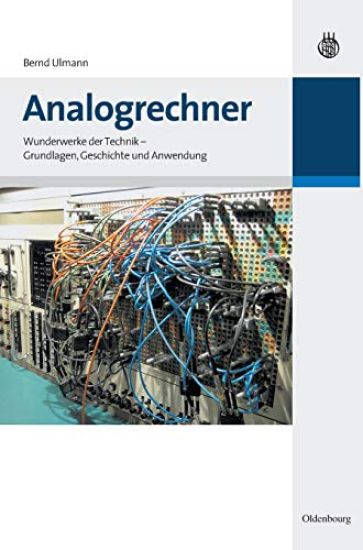
Ein Buch, das nicht nur die Grundlagen der Technik von Analogrechnern prasentiert, sondern vor allen Dingen die Geschichte der unterschiedlichen Analogrechner-Systeme anschaulich darstellt. Die Anwendungsgebiete reichen dabei von der Losung grundlegender mathematischer Probleme uber Berechnungen in Okosystemen, in der Seismologie, Steuerungs- und Regelungstechnik und militarischen Anwendungen bis zu einigen uberraschenden Beispielen aus Kunst und Unterhaltung.
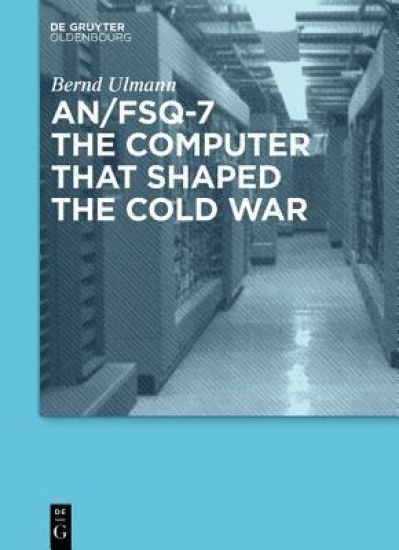
One of the most impressive computer systems ever was the vacuum tube based behemoth AN/FSQ-7, which was the heart of the ''Semi Automatic Ground Environment''. Machines of this type were children of the Cold War and had a tremendous effect in politics. They also generated a vast amount of spin-offs which still shape our world. This book focuses on the technological achievements and details of this marvelous machine and of its predecessor Whirlwind. The various developments, ranging from magnetic core memory to data transmission via telephone lines, are covered in detail with schematics, circuit descriptions and small programming examples. This book is a treasure trove for those interested in the technology of early digital computers and those interested in the impact these machines had and still have on our current computer systems.
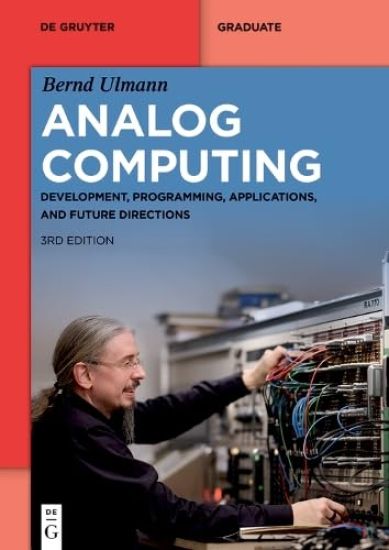
Analog computing is one of the main pillars of Unconventional Computing. Almost forgotten for decades, we now see an ever-increasing interest in electronic analog computing because it offers a path to high-performance and highly energy-efficient computing. These characteristics are of great importance in a world where vast amounts of electric energy are consumed by today’s computer systems. Analog computing can deliver efficient solutions to many computing problems, ranging from general purpose analog computation to specialised systems like analog artificial neural networks. The book “Analog Computing” has established itself over the past decade as the standard textbook on the subject and has been substantially extended in this second edition, which includes more than 300 additional bibliographical entries, and has been expanded in many areas to include much greater detail. These enhancements will confirm this book’s status as the leading work in the field. It covers the history of analog computing from the Antikythera Mechanism to recent electronic analog computers and uses a wide variety of worked examples to provide a comprehensive introduction to programming analog computers. It also describes hybrid computers, digital differential analysers, the simulation of analog computers, stochastic computers, and provides a comprehensive treatment of classic and current analog computer applications. The last chapter looks into the promising future of analog computing.