Kirjojen hintavertailu. Mukana 12 016 292 kirjaa ja 12 kauppaa.

Kirjahaku

Etsi kirjoja tekijän nimen, kirjan nimen tai ISBN:n perusteella.

8 kirjaa tekijältä Bertrand Badie

The Imported State

The Imported State

Bertrand Badie

Stanford University Press
2000
sidottu
This book traces the rise of the modern state—a mode of organizing political power within a closed territory—in post-Enlightenment Europe and its spread to the remainder of the world, especially colonial and postcolonial societies. The result of a long process of evolution dating back to the Roman Empire, this new form of state was characterized by the coincidence of public power and public space and the legalization of political and social relations. Intimately linked to the transformation of Western European cultures at a time when their economic might allowed them to conquer many regions of the world, the modern state provided a model that was adopted in most countries. The book analyzes the different conditions in which the modern state was grafted onto different cultural realities: a metropolitan model adopted by settlers or imposed as an instrument of colonial domination, or a representation of modernity selected by non-Western leaders out of fascination for its alleged efficiency and rationality. The author shows that, from the beginning, various logics of importation led non-Western cultures to invent their own practices of the state, thereby transforming the original model. In many countries, notably in postcolonial societies, discrepancies appeared between political actions and political representations and principles on which the state was supposed to rest. This has often led to political crises and breakdowns of legality and legitimacy, and to the formation of new types of social relations in spaces the state cannot control. At the international level, a similar phenomenon can be seen: international networks, based on trade links, religion, and culture, are now able to bypass official interstate relations.
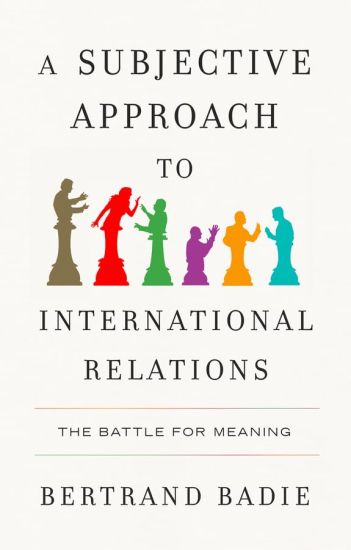
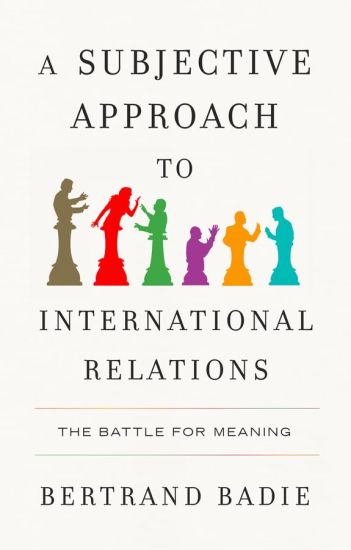
A Subjective Approach to International Relations

A Subjective Approach to International Relations

Bertrand Badie

JOHN WILEY AND SONS LTD
2025
sidottu
China’s growing power and Russia’s invasion of Ukraine have thrust geopolitics back to the centre of the global stage, but the old frameworks of international relations, with their positivist methods and their emphasis on structural determinants, will not enable us to understand the increasingly dangerous world in which we are living today. Bertrand Badie argues that states and the many other actors now operating in the international arena are products of their cultural contexts and political traditions. Their perspectives and motivations are profoundly subjective in character and are shaped by the narratives, memories and emotions that constitute people’s everyday realities. In Badie’s view, international disputes in the twenty-first century are best understood through the concept of the ‘battle for meaning’, confrontations between different modes of understanding the world. His judgement is that peace and stability depend on greater sensitivity to the worldviews of other actors in the international arena. A willingness to try to see the world from the perspective of one’s friends, rivals and even one’s enemies is vital. This timely and engaging book by one of the world’s leading scholars of international relations will be of great interest to students and scholars in politics and IR and to anyone concerned about the growing tensions in the world today.
A Subjective Approach to International Relations

A Subjective Approach to International Relations

Bertrand Badie

JOHN WILEY AND SONS LTD
2025
nidottu
China’s growing power and Russia’s invasion of Ukraine have thrust geopolitics back to the centre of the global stage, but the old frameworks of international relations, with their positivist methods and their emphasis on structural determinants, will not enable us to understand the increasingly dangerous world in which we are living today. Bertrand Badie argues that states and the many other actors now operating in the international arena are products of their cultural contexts and political traditions. Their perspectives and motivations are profoundly subjective in character and are shaped by the narratives, memories and emotions that constitute people’s everyday realities. In Badie’s view, international disputes in the twenty-first century are best understood through the concept of the ‘battle for meaning’, confrontations between different modes of understanding the world. His judgement is that peace and stability depend on greater sensitivity to the worldviews of other actors in the international arena. A willingness to try to see the world from the perspective of one’s friends, rivals and even one’s enemies is vital. This timely and engaging book by one of the world’s leading scholars of international relations will be of great interest to students and scholars in politics and IR and to anyone concerned about the growing tensions in the world today.
Humiliation in International Relations

Humiliation in International Relations

Bertrand Badie

Hart Publishing
2019
nidottu
In international relations (IR), some states often deny the legal status of others, stigmatising their practices or even their culture. Such acts of deliberate humiliation at the diplomatic level are common occurrences in modern diplomacy. In the period following the breakup of the famous ‘Concert of Europe’, many kinds of club-based diplomacy have been tried, all falling short of anything like inclusive multilateralism. Examples of this effort include the G7, G8, G20 and even the P5. Such ‘contact groups’ are put forward as if they were actual ruling institutions, endowed with the power to exclude and marginalise.Today, the effect of such acts of humiliation is to reveal the international system’s limits and its lack of diplomatic effectiveness. The use of humiliation as a regular diplomatic action steadily erodes the power of the international system. These actions appear to be the result of a botched mixture of a colonial past, a failed decolonisation, a mistaken vision of globalisation and a very dangerous post-bipolar reconstruction.Although this book primarily takes a social psychology approach to IR, it also mobilizes the resources of the French sociological tradition, mainly inspired by Emile Durkheim. It is translated from Le temps des humiliés. Pathologie des relations internationales (Paris, Odile Jacob, 2014).
Humiliation in International Relations

Humiliation in International Relations

Bertrand Badie

Hart Publishing
2017
sidottu
In international relations (IR), some states often deny the legal status of others, stigmatising their practices or even their culture. Such acts of deliberate humiliation at the diplomatic level are common occurrences in modern diplomacy. In the period following the breakup of the famous ‘Concert of Europe’, many kinds of club-based diplomacy have been tried, all falling short of anything like inclusive multilateralism. Examples of this effort include the G7, G8, G20 and even the P5. Such ‘contact groups’ are put forward as if they were actual ruling institutions, endowed with the power to exclude and marginalise.Today, the effect of such acts of humiliation is to reveal the international system’s limits and its lack of diplomatic effectiveness. The use of humiliation as a regular diplomatic action steadily erodes the power of the international system. These actions appear to be the result of a botched mixture of a colonial past, a failed decolonisation, a mistaken vision of globalisation and a very dangerous post-bipolar reconstruction.Although this book primarily takes a social psychology approach to IR, it also mobilizes the resources of the French sociological tradition, mainly inspired by Emile Durkheim. It is translated from Le temps des humiliés. Pathologie des relations internationales (Paris, Odile Jacob, 2014).
Rethinking International Relations

Rethinking International Relations

Bertrand Badie

Edward Elgar Publishing Ltd
2020
sidottu
In this thought-provoking book, Bertrand Badie argues that the traditional paradigms of international relations are no longer sustainable, and that ignorance of these shifting systems and of alternative models is a major source of contemporary international conflict and disorder. Through a clear examination of the political, historical and social context, Badie illuminates the challenges and possibilities of an 'intersocial' and multilateral approach to international relations. Badie lays the foundations for understanding by first tracing the history of traditional Eurocentric international relations, from the Westphalian Peace of the seventeenth century through to the power politics of the mid-twentieth century, and discussing the processes, such as decolonisation, by which this system has been destabilised. Chapters consider issues such as the changing powers and identity of the state, regionalism, and war and conflict, demonstrating the impact of globalisation and the growing influence of both non-Western and non-state actors in the international arena and highlighting the need for a more widespread understanding of these realities. Rethinking International Relations will be essential reading for all scholars and students of international relations and political science. Its insights will also prove useful to policymakers and other actors involved in diplomatic relations and international public policy.
Rethinking International Relations

Rethinking International Relations

Bertrand Badie

Edward Elgar Publishing Ltd
2021
nidottu
In this thought-provoking book, Bertrand Badie argues that the traditional paradigms of international relations are no longer sustainable, and that ignorance of these shifting systems and of alternative models is a major source of contemporary international conflict and disorder. Through a clear examination of the political, historical and social context, Badie illuminates the challenges and possibilities of an 'intersocial' and multilateral approach to international relations. Badie lays the foundations for understanding by first tracing the history of traditional Eurocentric international relations, from the Westphalian Peace of the seventeenth century through to the power politics of the mid-twentieth century, and discussing the processes, such as decolonisation, by which this system has been destabilised. Chapters consider issues such as the changing powers and identity of the state, regionalism, and war and conflict, demonstrating the impact of globalisation and the growing influence of both non-Western and non-state actors in the international arena and highlighting the need for a more widespread understanding of these realities. Rethinking International Relations will be essential reading for all scholars and students of international relations and political science. Its insights will also prove useful to policymakers and other actors involved in diplomatic relations and international public policy.
New Perspectives on the International Order

New Perspectives on the International Order

Bertrand Badie

Birkhauser Verlag AG
2018
sidottu
We are told again and again that the world has become increasingly complex and indecipherable. However, this book reminds us that we are no longer alone in the world, that it is time to move away from the mental categories of the Cold War and stop treating all those who challenge our vision of the international order as guilty “deviants” or “Barbarians.” The author challenges the diplomacy of Western states, who want to continue to rule the world against history, and in particular that of France, which too often oscillates between arrogance, indecision, and ambiguity. The power play is stuck. The international order can no longer be regulated by a small club of oligarchs who exclude the weaker ones, ignore the demands of societies, and ignore the demands for justice that emerge from a new world where the actors are more numerous, more diverse and more restive to arbitrary disciplines. For this reason, this book also offers ways to think an international order that would be, if not fair, at least less unfair.