Kirjojen hintavertailu. Mukana 11 244 527 kirjaa ja 12 kauppaa.

Kirjahaku

Etsi kirjoja tekijän nimen, kirjan nimen tai ISBN:n perusteella.

3 kirjaa tekijältä Beth Bailey

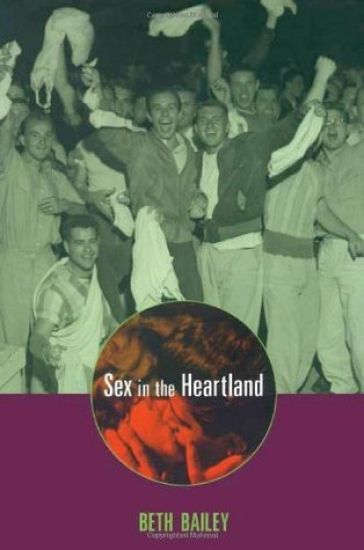
Sex in the Heartland

Sex in the Heartland

Beth Bailey

Harvard University Press
2002
nidottu
Sex in the Heartland is the story of the sexual revolution in a small university town in the quintessential heartland state of Kansas. Bypassing the oft-told tales of radicals and revolutionaries on either coast, Beth Bailey argues that the revolution was forged in towns and cities alike, as "ordinary" people struggled over the boundaries of public and private sexual behavior in postwar America. Bailey fundamentally challenges contemporary perceptions of the revolution as simply a triumph of free love and gay lib. Rather, she explores the long-term and mainstream changes in American society, beginning in the economic and social dislocations of World War II and the explosion of mass media and communication, which aided and abetted the sexual upheaval of the 1960s. Focusing on Lawrence, Kansas, we discover the intricacies and depth of a transformation that was nurtured at the grass roots. Americans used the concept of revolution to make sense of social and sexual changes as they lived through them. Everything from the birth control pill and counterculture to Civil Rights, was conflated into "the revolution," an accessible but deceptive simplification, too easy to both glorify and vilify. Bailey untangles the radically different origins, intentions, and outcomes of these events to help us understand their roles and meanings for sex in contemporary America. She argues that the sexual revolution challenged and partially overturned a system of sexual controls based on oppression, inequality, and exploitation, and created new models of sex and gender relations that have shaped our society in powerful and positive ways.
America's Army

America's Army

Beth Bailey

The Belknap Press
2009
sidottu
In 1973, not long after the last American combat troops returned from Vietnam, President Nixon fulfilled his campaign promise and ended the draft. No longer would young men find their futures determined by the selective service system; nor would the U.S. military have a guaranteed source of recruits.America’s Army is the story of the all-volunteer force, from the draft protests and policy proposals of the 1960s through the Iraq War. It is also a history of America in the post-Vietnam era. In the Army, America directly confronted the legacies of civil rights and black power, the women’s movement, and gay rights. The volunteer force raised questions about the meaning of citizenship and the rights and obligations it carries; about whether liberty or equality is the more central American value; what role the military should play in American society not only in time of war, but in time of peace. And as the Army tried to create a volunteer force that could respond effectively to complex international situations, it had to compete with other “employers” in a national labor market and sell military service alongside soap and soft drinks. Based on exhaustive archival research, as well as interviews with Army officers and recruiters, advertising executives, and policy makers, America’s Army confronts the political, moral, and social issues a volunteer force raises for a democratic society as well as for the defense of our nation.
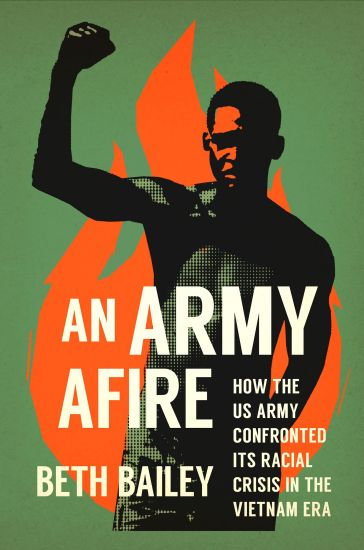
An Army Afire

An Army Afire

Beth Bailey

THE UNIVERSITY OF NORTH CAROLINA PRESS
2023
sidottu
By the Tet Offensive in early 1968, what had been widely heralded as the best qualified, best-trained army in US history was descending into crisis as the Vietnam War raged without end. Morale was tanking. AWOL rates were rising. And in August of that year, a group of Black soldiers seized control of the infamous Long Binh Jail, burned buildings, and beat a white inmate to death with a shovel. The days of "same mud, same blood" were over, and by the end of the decade, a new generation of Black GIs had decisively rejected the slights and institutional racism their forefathers had endured. Acclaimed military historian Beth Bailey shows how the Army experienced, defined, and tried to solve racism and racial tension (in its own words, "the problem of race") in the Vietnam War era. Some individuals were sympathetic to the problem but offered solutions that were more performative than transformational, while others proposed remedies that were antithetical to the army's fundamental principles of discipline, order, hierarchy, and authority. Bailey traces a frustrating yet fascinating arc where the army initially rushed to create solutions without taking the time to fully identify the origins, causes, and proliferation of racial tension. It was a difficult, messy process, but only after Army leaders ceased viewing the issue as a Black issue and accepted their own roles in contributing to the problem did change become possible.