Kirjojen hintavertailu. Mukana 11 548 142 kirjaa ja 12 kauppaa.

Kirjahaku

Etsi kirjoja tekijän nimen, kirjan nimen tai ISBN:n perusteella.

4 kirjaa tekijältä Beth Baron

The Women's Awakening in Egypt

The Women's Awakening in Egypt

Beth Baron

Yale University Press
1997
pokkari
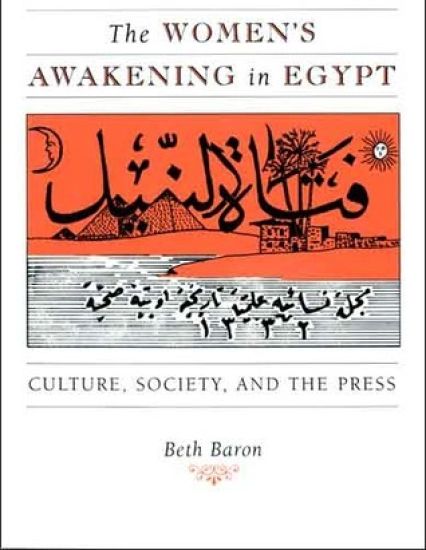
Between 1892 and 1920 nearly thirty Arabic periodicals by, for, and about women were produced in Egypt for circulation throughout the Arab world. This flourishing women's press provided a forum for debating such topics as the rights of woman, marriage and divorce, and veiling and seclusion, and also offered a mechanism for disseminating new ideologies and domestic instruction. In this book, Beth Baron presents the first sustained study of this remarkable material, exploring the connections between literary culture and social transformation.Starting with profiles of the female intellectuals who pioneered the women's press in Egypt—the first generation of Arab women to write and publish extensively—Baron traces the women's literary output from production to consumption. She draws on new approaches in cultural history to examine the making of periodicals and to reconstruct their audience, and she suggests that it is impossible to assess the influence of the Arabic press without comprehending the circumstances under which it operated.Turning to specific issues argued in the pages of the women's press, Baron finds that women's views ranged across a wide spectrum. The debates are set in historical context, with elaborations on the conditions of women's education and work. Together with other sources, the journals show significant changes in the activities of urban middle- and upper-class Egyptian women in the decades before the 1919 revolution and underscore the sense that real improvement in women's lives—the women's awakening—was at hand. Baron's discussion of this extraordinary trove of materials highlights the voices of the female intellectuals who championed this awakening and broadens our understanding of the social and cultural history of the period.
Egypt as a Woman

Egypt as a Woman

Beth Baron

University of California Press
2007
pokkari
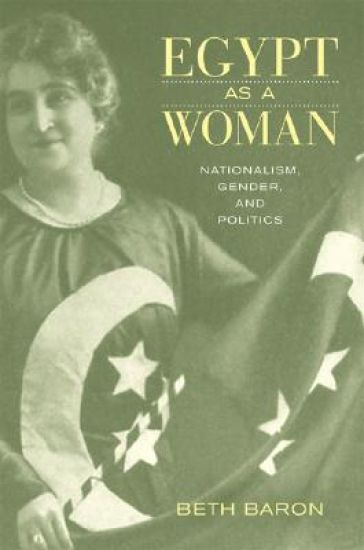
This original and historically rich book examines the influence of gender in shaping the Egyptian nation from the nineteenth century through the revolution of 1919 and into the 1940s. In Egypt as a Woman, Beth Baron divides her narrative into two strands: the first analyzes the gendered language and images of the nation, and the second considers the political activities of women nationalists. She shows that, even though women were largely excluded from participation in the state, the visual imagery of nationalism was replete with female figures. Baron juxtaposes the idealization of the family and the feminine in nationalist rhetoric with transformations in elite households and the work of women activists striving for national independence.
The Orphan Scandal

The Orphan Scandal

Beth Baron

Stanford University Press
2014
sidottu
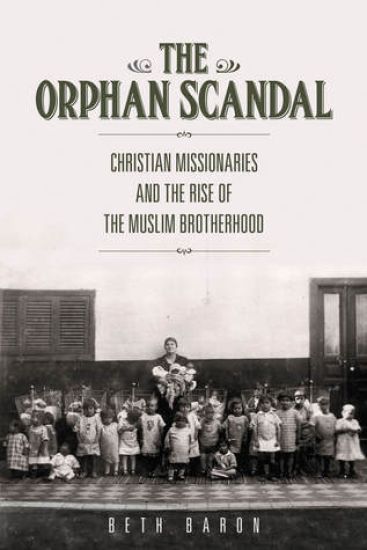
On a sweltering June morning in 1933 a fifteen-year-old Muslim orphan girl refused to rise in a show of respect for her elders at her Christian missionary school in Port Said. Her intransigence led to a beating—and to the end of most foreign missions in Egypt—and contributed to the rise of Islamist organizations. Turkiyya Hasan left the Swedish Salaam Mission with scratches on her legs and a suitcase of evidence of missionary misdeeds. Her story hit a nerve among Egyptians, and news of the beating quickly spread through the country. Suspicion of missionary schools, hospitals, and homes increased, and a vehement anti-missionary movement swept the country. That missionaries had won few converts was immaterial to Egyptian observers: stories such as Turkiyya's showed that the threat to Muslims and Islam was real. This is a great story of unintended consequences: Christian missionaries came to Egypt to convert and provide social services for children. Their actions ultimately inspired the development of the Muslim Brotherhood and similar Islamist groups. In The Orphan Scandal, Beth Baron provides a new lens through which to view the rise of Islamic groups in Egypt. This fresh perspective offers a starting point to uncover hidden links between Islamic activists and a broad cadre of Protestant evangelicals. Exploring the historical aims of the Christian missions and the early efforts of the Muslim Brotherhood, Baron shows how the Muslim Brotherhood and like-minded Islamist associations developed alongside and in reaction to the influx of missionaries. Patterning their organization and social welfare projects on the early success of the Christian missions, the Brotherhood launched their own efforts to "save" children and provide for the orphaned, abandoned, and poor. In battling for Egypt's children, Islamic activists created a network of social welfare institutions and a template for social action across the country—the effects of which, we now know, would only gain power and influence across the country in the decades to come.
The Orphan Scandal

The Orphan Scandal

Beth Baron

Stanford University Press
2014
pokkari
On a sweltering June morning in 1933 a fifteen-year-old Muslim orphan girl refused to rise in a show of respect for her elders at her Christian missionary school in Port Said. Her intransigence led to a beating—and to the end of most foreign missions in Egypt—and contributed to the rise of Islamist organizations. Turkiyya Hasan left the Swedish Salaam Mission with scratches on her legs and a suitcase of evidence of missionary misdeeds. Her story hit a nerve among Egyptians, and news of the beating quickly spread through the country. Suspicion of missionary schools, hospitals, and homes increased, and a vehement anti-missionary movement swept the country. That missionaries had won few converts was immaterial to Egyptian observers: stories such as Turkiyya's showed that the threat to Muslims and Islam was real. This is a great story of unintended consequences: Christian missionaries came to Egypt to convert and provide social services for children. Their actions ultimately inspired the development of the Muslim Brotherhood and similar Islamist groups. In The Orphan Scandal, Beth Baron provides a new lens through which to view the rise of Islamic groups in Egypt. This fresh perspective offers a starting point to uncover hidden links between Islamic activists and a broad cadre of Protestant evangelicals. Exploring the historical aims of the Christian missions and the early efforts of the Muslim Brotherhood, Baron shows how the Muslim Brotherhood and like-minded Islamist associations developed alongside and in reaction to the influx of missionaries. Patterning their organization and social welfare projects on the early success of the Christian missions, the Brotherhood launched their own efforts to "save" children and provide for the orphaned, abandoned, and poor. In battling for Egypt's children, Islamic activists created a network of social welfare institutions and a template for social action across the country—the effects of which, we now know, would only gain power and influence across the country in the decades to come.