Kirjojen hintavertailu. Mukana 12 016 292 kirjaa ja 12 kauppaa.

Kirjahaku

Etsi kirjoja tekijän nimen, kirjan nimen tai ISBN:n perusteella.

4 kirjaa tekijältä Beth Linker

War's Waste

War's Waste

Beth Linker

University of Chicago Press
2014
nidottu
With US soldiers stationed around the world and engaged in multiple conflicts, Americans will be forced for the foreseeable future to come to terms with those permanently disabled in battle. At the moment, we accept rehabilitation as the proper social and cultural response to the wounded, swiftly returning injured combatants to their civilian lives. But this was not always the case, as Beth Linker reveals in War's Waste. Linker explains how, before entering World War I, the United States sought a way to avoid the enormous cost of providing injured soldiers with pensions, which it had done since the Revolutionary War. Emboldened by their faith in the new social and medical sciences, reformers pushed rehabilitation as a means to "rebuild" disabled soldiers, relieving the nation of a monetary burden and easing the decision to enter the Great War. Linker's narrative moves from the professional development of orthopedic surgeons and physical therapists to the curative workshops, or hospital spaces where disabled soldiers learned how to repair automobiles as well as their own artificial limbs. The story culminates in the postwar establishment of the Veterans Administration, one of the greatest legacies to come out of the First World War.
War's Waste

War's Waste

Beth Linker

University of Chicago Press
2011
sidottu
With US soldiers stationed around the world and engaged in multiple conflicts, Americans will be forced for the foreseeable future to come to terms with those permanently disabled in battle. At the moment, we accept rehabilitation as the proper social and cultural response to the wounded, swiftly returning injured combatants to their civilian lives. But this was not always the case, as Beth Linker reveals in her provocative new book, "War's Waste". Linker explains how, before entering World War I, the United States sought a way to avoid the enormous cost of providing injured soldiers with pensions, which it had done since the Revolutionary War. Emboldened by their faith in the new social and medical sciences, reformers pushed rehabilitation as a means to 'rebuild' disabled soldiers, relieving the nation of a monetary burden and easing the decision to enter the Great War. Linker's narrative moves from the professional development of orthopedic surgeons and physical therapists to the curative workshops, or hospital spaces where disabled soldiers learned how to repair automobiles as well as their own artificial limbs. The story culminates in the postwar establishment of the Veteran's Administration, one of the greatest legacies to come out of the First World War.
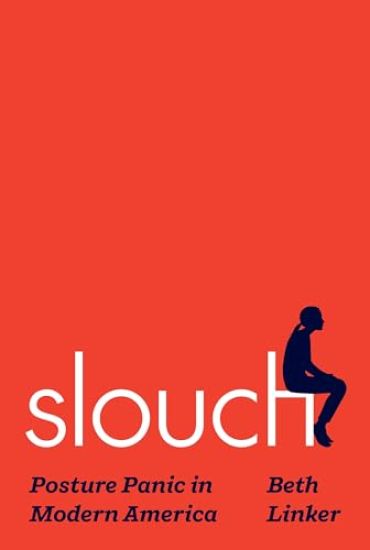
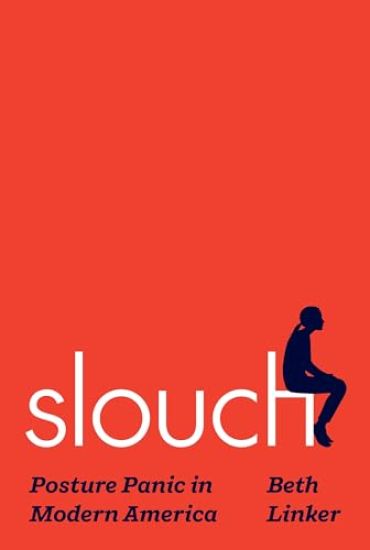
Slouch

Slouch

Beth Linker

PRINCETON UNIVERSITY PRESS
2024
sidottu
The strange and surprising history of the so-called epidemic of bad posture in modern America—from eugenics and posture pageants to today’s promoters of “paleo posture”In 1995, a scandal erupted when the New York Times revealed that the Smithsonian possessed a century’s worth of nude “posture” photos of college students. In this riveting history, Beth Linker tells why these photos were only a small part of the incredible story of twentieth-century America’s largely forgotten posture panic—a decades-long episode in which it was widely accepted as scientific fact that Americans were suffering from an epidemic of bad posture, with potentially catastrophic health consequences. Tracing the rise and fall of this socially manufactured epidemic, Slouch also tells how this period continues to feed today’s widespread anxieties about posture.In the early twentieth century, the eugenics movement and fears of disability gave slouching a new scientific relevance. Bad posture came to be seen as an individual health threat, an affront to conventional race hierarchies, and a sign of American decline. What followed were massive efforts to measure, track, and prevent slouching and, later, back pain—campaigns that reached schools, workplaces, and beyond, from the creation of the American Posture League to posture pageants. The popularity of posture-enhancing products, such as girdles and lumbar supports, exploded, as did new fitness programs focused on postural muscles, such as Pilates and modern yoga. By 1970, student protests largely brought an end to school posture exams and photos, but many efforts to fight bad posture continued, despite a lack of scientific evidence.A compelling history that mixes seriousness and humor, Slouch is a unique and provocative account of the unexpected origins of our largely unquestioned ideas about bad posture.
Slouch

Slouch

Beth Linker

PRINCETON UNIVERSITY PRESS
2026
pokkari
The strange and surprising history of the so-called epidemic of bad posture in modern America—from eugenics and posture pageants to today’s promoters of “paleo posture” In 1995, a scandal erupted when the New York Times revealed that the Smithsonian possessed a century’s worth of nude “posture” photos of college students. In this riveting history, Beth Linker tells why these photos were only a small part of the incredible story of twentieth-century America’s largely forgotten posture panic—a decades-long episode in which it was widely accepted as scientific fact that Americans were suffering from an epidemic of bad posture, with potentially catastrophic health consequences. Tracing the rise and fall of this socially manufactured epidemic, Slouch also tells how this period continues to feed today’s widespread anxieties about posture. In the early twentieth century, the eugenics movement and fears of disability gave slouching a new scientific relevance. Bad posture came to be seen as an individual health threat, an affront to conventional race hierarchies, and a sign of American decline. What followed were massive efforts to measure, track, and prevent slouching and, later, back pain—campaigns that reached schools, workplaces, and beyond, from the creation of the American Posture League to posture pageants. The popularity of posture-enhancing products, such as girdles and lumbar supports, exploded, as did new fitness programs focused on postural muscles, such as Pilates and modern yoga. By 1970, student protests largely brought an end to school posture exams and photos, but many efforts to fight bad posture continued, despite a lack of scientific evidence. A compelling history that mixes seriousness and humor, Slouch is a unique and provocative account of the unexpected origins of our largely unquestioned ideas about bad posture.