Kirjojen hintavertailu. Mukana 12 016 292 kirjaa ja 12 kauppaa.

Kirjahaku

Etsi kirjoja tekijän nimen, kirjan nimen tai ISBN:n perusteella.

10 kirjaa tekijältä Beth Macy

Factory Man: How One Furniture Maker Battled Offshoring, Stayed Local - And Helped Save an American Town
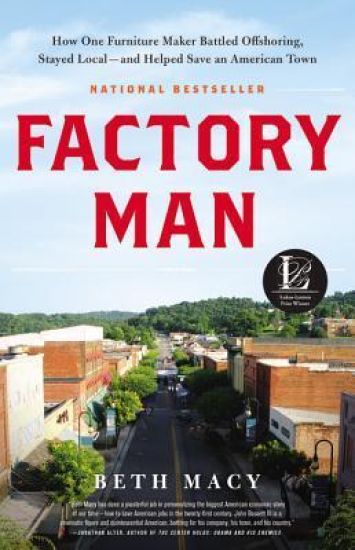
The instant New York Times bestseller about one man's battle to save hundreds of jobs by demonstrating the greatness of American business. The Bassett Furniture Company was once the world's biggest wood furniture manufacturer. Run by the same powerful Virginia family for generations, it was also the center of life in Bassett, Virginia. But beginning in the 1980s, the first waves of Asian competition hit, and ultimately Bassett was forced to send its production overseas. One man fought back: John Bassett III, a shrewd and determined third-generation factory man, now chairman of Vaughan-Bassett Furniture Co, which employs more than 700 Virginians and has sales of more than $90 million. In Factory Man, Beth Macy brings to life Bassett's deeply personal furniture and family story, along with a host of characters from an industry that was as cutthroat as it was colorful. As she shows how he uses legal maneuvers, factory efficiencies, and sheer grit and cunning to save hundreds of jobs, she also reveals the truth about modern industry in America.

Raising Lazarus: Hope, Justice, and the Future of America's Overdose Crisis
A "deeply reported, deeply moving" (Patrick Radden Keefe) account of everyday heroes fighting on the front lines of the overdose crisis, from the New York Times bestselling author of Dopesick (inspiration for the Peabody Award-winning Hulu limited series) and Factory Man. Nearly a decade into the second wave of America's overdose crisis, pharmaceutical companies have yet to answer for the harms they created. As pending court battles against opioid makers, distributors, and retailers drag on, addiction rates have soared to record-breaking levels during the COVID pandemic, illustrating the critical need for leadership, urgency, and change. Meanwhile, there is scant consensus between law enforcement and medical leaders, nor an understanding of how to truly scale the programs that are out there, working at the ragged edge of capacity and actually saving lives. Distilling this massive, unprecedented national health crisis down to its character-driven emotional core as only she can, Beth Macy takes us into the country's hardest hit places to witness the devastating personal costs that one-third of America's families are now being forced to shoulder. Here we meet the ordinary people fighting for the least of us with the fewest resources, from harm reductionists risking arrest to bring lifesaving care to the homeless and addicted to the activists and bereaved families pushing to hold Purdue and the Sackler family accountable. These heroes come from all walks of life; what they have in common is an up-close and personal understanding of addiction that refuses to stigmatize--and therefore abandon--people who use drugs, as big pharma execs and many politicians are all too ready to do. Like the treatment innovators she profiles, Beth Macy meets the opioid crisis where it is--not where we think it should be or wish it was. Bearing witness with clear eyes, intrepid curiosity, and unfailing empathy, she brings us the crucial next installment in the story of the defining disaster of our era, one that touches every single one of us, whether directly or indirectly. A complex story of public health, big pharma, dark money, politics, race, and class that is by turns harrowing and heartening, infuriating and inspiring, Raising Lazarus is a must-read for all Americans.
Raising Lazarus: Hope, Justice, and the Future of America's Overdose Crisis
A "deeply reported, deeply moving" (Patrick Radden Keefe) account of everyday heroes fighting on the front lines of the overdose crisis, from the New York Times bestselling author of Dopesick (inspiration for the Peabody Award-winning Hulu limited series) and Factory Man. Nearly a decade into the second wave of America's overdose crisis, pharmaceutical companies have yet to answer for the harms they created. As pending court battles against opioid makers, distributors, and retailers drag on, addiction rates have soared to record-breaking levels during the COVID pandemic, illustrating the critical need for leadership, urgency, and change. Meanwhile, there is scant consensus between law enforcement and medical leaders, nor an understanding of how to truly scale the programs that are out there, working at the ragged edge of capacity and actually saving lives. Distilling this massive, unprecedented national health crisis down to its character-driven emotional core as only she can, Beth Macy takes us into the country's hardest hit places to witness the devastating personal costs that one-third of America's families are now being forced to shoulder. Here we meet the ordinary people fighting for the least of us with the fewest resources, from harm reductionists risking arrest to bring lifesaving care to the homeless and addicted to the activists and bereaved families pushing to hold Purdue and the Sackler family accountable. These heroes come from all walks of life; what they have in common is an up-close and personal understanding of addiction that refuses to stigmatize--and therefore abandon--people who use drugs, as big pharma execs and many politicians are all too ready to do. Like the treatment innovators she profiles, Beth Macy meets the opioid crisis where it is--not where we think it should be or wish it was. Bearing witness with clear eyes, intrepid curiosity, and unfailing empathy, she brings us the crucial next installment in the story of the defining disaster of our era, one that touches every single one of us, whether directly or indirectly. A complex story of public health, big pharma, dark money, politics, race, and class that is by turns harrowing and heartening, infuriating and inspiring, Raising Lazarus is a must-read for all Americans.
Dopesick

Dopesick

Beth Macy

Little Brown and Company
2018
sidottu
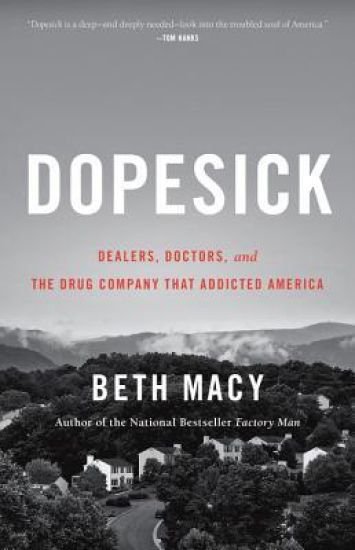
The only book to fully chart the devastating opioid crisis in America: An unforgettable portrait of the families and first responders on the front lines, from a New York Times bestselling author and journalist who has lived through it.In this masterful work, Beth Macy takes us into the epicenter of America's twenty-plus year struggle with opioid addiction. From distressed small communities in Central Appalachia to wealthy suburbs; from disparate cities to once-idyllic farm towns; it's a heartbreaking trajectory that illustrates how this national crisis has persisted for so long and become so firmly entrenched. Beginning with a single dealer who lands in a small Virginia town and sets about turning high school football stars into heroin overdose statistics, Macy endeavors to answer a grieving mother's question-why her only son died-and comes away with a harrowing story of greed and need. From the introduction of OxyContin in 1996, Macy parses how America embraced a medical culture where overtreatment with painkillers became the norm. In some of the same distressed communities featured in her bestselling book Factory Man, the unemployed use painkillers both to numb the pain of joblessness and pay their bills, while privileged teens trade pills in cul-de-sacs, and even high school standouts fall prey to prostitution, jail, and death. Through unsparing, yet deeply human portraits of the families and first responders struggling to ameliorate this epidemic, each facet of the crisis comes into focus. In these politically fragmented times, Beth Macy shows, astonishingly, that the only thing that unites Americans across geographic and class lines is opioid drug abuse. But in a country unable to provide basic healthcare for all, Macy still finds reason to hope-and signs of the spirit and tenacity necessary in those facing addiction to build a better future for themselves and their families."Everyone should read Beth Macy's story of the American opioid epidemic" -- Professor Anne C Case, Professor Emeritus at Princeton University and Sir Angus Deaton, winner of the Nobel Prize in Economics
Dopesick: Dealers, Doctors, and the Drug Company That Addicted America
A Hulu limited series inspired by the New York Times bestselling book by Beth Macy. Journalist Beth Macy's definitive account of America's opioid epidemic "masterfully interlaces stories of communities in crisis with dark histories of corporate greed and regulatory indifference" (New York Times) -- from the boardroom to the courtroom and into the living rooms of Americans. In this extraordinary work, Beth Macy takes us into the epicenter of a national drama that has unfolded over two decades. From the labs and marketing departments of big pharma to local doctor's offices; wealthy suburbs to distressed small communities in Central Appalachia; from distant cities to once-idyllic farm towns; the spread of opioid addiction follows a tortuous trajectory that illustrates how this crisis has persisted for so long and become so firmly entrenched. Beginning with a single dealer who lands in a small Virginia town and sets about turning high school football stars into heroin overdose statistics, Macy sets out to answer a grieving mother's question-why her only son died-and comes away with a gripping, unputdownable story of greed and need. From the introduction of OxyContin in 1996, Macy investigates the powerful forces that led America's doctors and patients to embrace a medical culture where overtreatment with painkillers became the norm. In some of the same communities featured in her bestselling book Factory Man, the unemployed use painkillers both to numb the pain of joblessness and pay their bills, while privileged teens trade pills in cul-de-sacs, and even high school standouts fall prey to prostitution, jail, and death. Through unsparing, compelling, and unforgettably humane portraits of families and first responders determined to ameliorate this epidemic, each facet of the crisis comes into focus. In these politically fragmented times, Beth Macy shows that one thing uniting Americans across geographic, partisan, and class lines is opioid drug abuse. But even in the midst of twin crises in drug abuse and healthcare, Macy finds reason to hope and ample signs of the spirit and tenacity that are helping the countless ordinary people ensnared by addiction build a better future for themselves, their families, and their communities. "An impressive feat of journalism, monumental in scope and urgent in its implications." -- Jennifer Latson, The Boston Globe
Paper Girl: A Memoir of Home and Family in a Fractured America
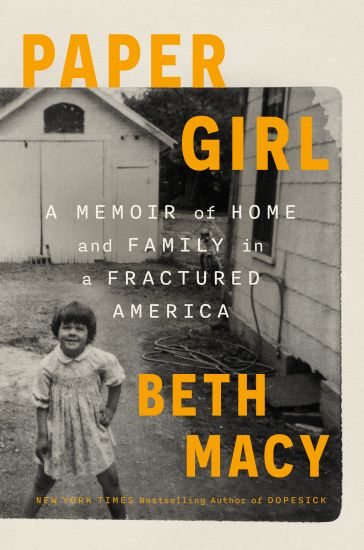
From one of our most acclaimed chroniclers of the forces eroding America's social fabric, her most personal and powerful work: a reckoning with the changes that have rocked her own beloved small Ohio hometown Urbana, Ohio, was not a utopia when Beth Macy grew up there in the '70s and '80s, certainly not for her family. Her dad was known as the town drunk, which hurt, as did their poverty. But Urbana had a healthy economy and thriving schools, and Macy had middle-class schoolmates whose families became her role models. Though she left for college on a Pell Grant and then a faraway career in journalism, she still clung gratefully to the place that helped raise her. But as Macy's mother's health declined in 2020, she couldn't shake the feeling that her town had dramatically hardened. Macy had grown up as the paper girl, delivering the local newspaper, which was the community's civic glue. Now she found scant local news and precious little civic glue. Yes, much of the work that once supported the middle class had gone away, but that didn't begin to cover the forces turning Urbana into a poorer and angrier place. Absenteeism soared in the schools and in the workplace as a mental health crisis gripped the small city. Some of her old friends now embraced conspiracies. In nearby Springfield, Macy watched as her ex-boyfriend--once the most liberal person she knew--became a lead voice of opposition against the Haitian immigrants, parroting false talking points throughout the 2024 presidential campaign. This was not an assignment Beth Macy had ever imagined taking on, but after her mother's death, she decided to figure out what happened to Urbana in the forty years since she'd left. The result is an astonishing book that, by taking us into the heart of one place, brings into focus our most urgent set of national issues. Paper Girl is a gift of courage, empathy, and insight. Beth Macy has turned to face the darkness in her family and community, people she loves wholeheartedly, even the ones she sometimes struggles to like. And in facing the truth--in person, with respect--she has found sparks of human dignity that she has used to light a signal fire of warning but also of hope.
Truevine

Truevine

Beth Macy

Pan Books
2018
pokkari
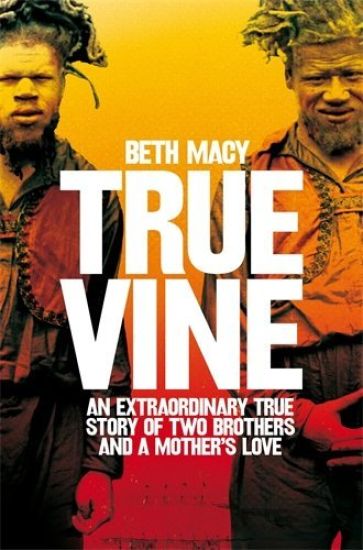
In Truevine, Virginia, in 1899 everyone the Muse brothers knew was either a former slave, or a child or grandchild of slaves. George and Willie Muse were just six and nine years old, but they worked the fields from dawn to dark. Until a white man offered them candy and stole them away to become circus freaks. For the next twenty-eight years, their distraught mother struggled to get them back. But were they really kidnapped? And how did their mother, a barely literate black woman in the segregated South, manage to bring them home? And why, after coming home, would they want to go back to the circus?In Truevine, bestselling author Beth Macy reveals for the first time what really happened to the Muse brothers. It is an unforgettable story of cruelty and exploitation, but also of loyalty, determination and love.
Dopesick

Dopesick

Beth Macy

BLOOMSBURY PUBLISHING PLC
2021
pokkari
A portrait of the devastating opioid crisis in America from a New York Times bestselling author and journalist who has lived through it.