Kirjojen hintavertailu. Mukana 11 244 527 kirjaa ja 12 kauppaa.

Kirjahaku

Etsi kirjoja tekijän nimen, kirjan nimen tai ISBN:n perusteella.

11 kirjaa tekijältä Bill Reid

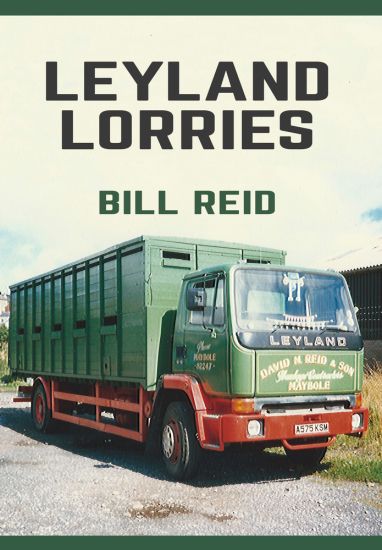
Leyland Lorries

Leyland Lorries

Bill Reid

Amberley Publishing
2017
nidottu
The origins of Leyland lorries are found in steam wagon manufacture in the town of Leyland, Lancashire. The manufacturer, then known as the Lancashire Steam Motor Company, was established in 1884. By 1904 the first petrol-engined lorry was built and in 1907 the company name was changed to Leyland Motors Limited. Leyland produced a range of vehicles over the following decades, from steam wagons and petrol-engined lorries to bus and, eventually, eight-wheeled lorries. The postwar years saw a series of mergers and acquisitions, including the eventual merger with the British Motor Corporation in the late 1960s, which lead to the creation of British Leyland. For the enthusiast, Leyland produced a wide range of vehicles over the years for both the domestic and international market. Lavishly illustrated with an array of rare and unpublished photographs, Leyland Lorries is the perfect companion for anyone wanting to learn more of the Leyland story.
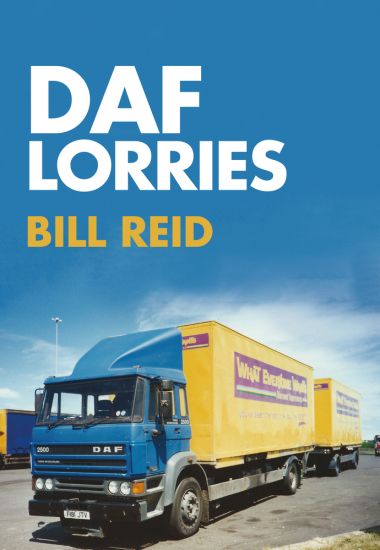
DAF Lorries

DAF Lorries

Bill Reid

Amberley Publishing
2017
nidottu
Hub van Doorne and his brother Wim set up a transport engineering company at Eindhoven, the Netherlands, in 1928. The official name was to become Van Doorne’s Aanhangwagenfabriek, which translated as ‘Van Doorne’s trailer factory’, and the company was subsequently known as DAF. In 1948, DAF’s first prototype lorries were produced and the company maintained the reputation for quality products established by their earlier trailers. A few DAF lorries were exported to the UK in the early 1960s and, within a few years, driven by the newfound legality of sleeper cabs and the production of their own 2600 cab, DAF was a major player in the industry. Constant innovation in cabs and engines eventually led DAF to become the top-selling heavyweight truck brand in the UK. With its exceptionally diverse range, DAF enjoys an enduring popularity among truck and lorry enthusiasts. This book explores the company’s history with a lavish collection of images and detailed captions.
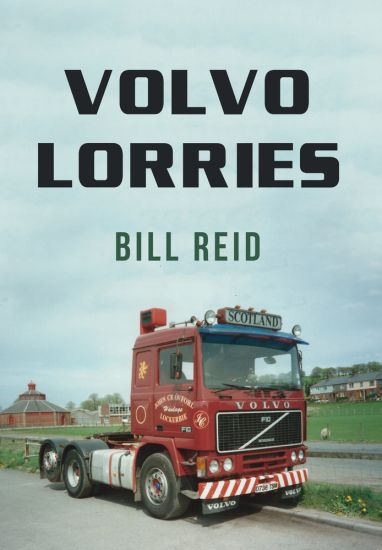
Volvo Lorries

Volvo Lorries

Bill Reid

Amberley Publishing
2017
nidottu
Car production at Volvo began in 1926 in Stockholm with a prototype. By 1927 small goods vehicles based on the car designs were in production at Gothenburg, and heavier three-tonners were being produced by 1928. Already known for their robust cars, Volvo lorries first came to British roads in 1967 after Jim McKelvie, a former road haulier, saw the need for better trucks than UK manufacturers were producing at the time, and imported the Volvo F86 model as a 30/32 ton artic unit. The lorry was light, had a high power-to-weight ratio and provided incomparable comfort for the driver. It took the UK market by storm. This early import was the forerunner of later Volvo trucks across the entire range, with various models of bus chassis also being introduced to the UK markets. Volvo production has gone forward in leaps and bounds, today being a major player on the world stage. Though a relative newcomer to the UK scene, Volvos have gained a very large following. Lavishly illustrated with rare and unpublished photographs, Volvo Lorries traces their history in Britain from the early F86 imports of the 1960s to the FH16 750 bhp fleet flagships seen on the roads today.
British Livestock Lorries

British Livestock Lorries

Bill Reid

Amberley Publishing
2018
nidottu
Long before motorised transport, movement of animals was by means of walking individual beasts, or by herding or droving. Much of the road system around Britain evolved from the routes taken by the drovers and their herds. With the coming of the railways, animals for market went by train. This type of traffic was a good income for the railways, with their mass or bulk transport facility. In the early twentieth century, livestock haulage was slow in starting, mainly because the lorries of the time were small and couldn’t compete with the railways. However, by the 1930s larger and stronger lorries were available and local livestock haulage became a viable proposition, eventually taking over from the railways entirely. Livestock road haulage was usually done with a basic platform lorry and a demountable livestock container. These could be anything from home-built to coachbuilt types by specialist builders. The onstruction was usually in hardwood, until the advent of steel and aluminium. In more recent times, much larger and more powerful vehicles have evolved to cater for animal welfare and driving time. With the diverse range of appearances and colour schemes seen on these vehicles over the years, Bill Reid’s terrific array of photographs will fascinate lorry enthusiasts and agriculture enthusiasts alike.
British Tipper Lorries

British Tipper Lorries

Bill Reid

Amberley Publishing
2019
nidottu
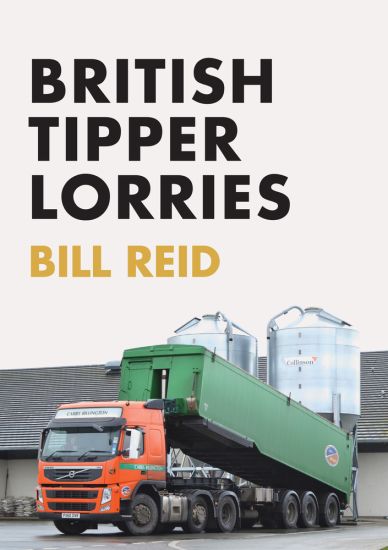
Tipper lorries have been part and parcel of road transport since the beginnings of the age of motor vehicles. In fact their roots are in horse-drawn carts, which were built to tip by balance and gravity. For many years, and probably still today, the tipper lorry was seen as a dirty, well-worn, poorly maintained and overloaded example of road haulage, not particularly beloved by the general public. As they are used in all forms from lightweight four-wheelers to maximum capacity artics, carrying almost any commodity that could be loaded in bulk, tipper lorries could be said to be the backbone of British industrial requirements. All makes of lorries have been used as tippers, with no exceptions, providing a great variety for the road transport enthusiast. Many endure short, hard-worked lives, while others soldier on to greater longevity, perhaps engaged in long-distance work. As time has passed, lorries have been allowed to carry more weight and become larger and, as a consequence, more powerful. For the transport enthusiast this brought an even bigger variety of types, up to 44 tonnes gross weight, which Bill Reid, with nearly 200 unpublished images, shows in this fascinating book.
British Recovery Vehicles

British Recovery Vehicles

Bill Reid

Amberley Publishing
2019
nidottu
A recovery vehicle, or breakdown wagon, is the type of truck you hope you will never need. Unfortunately, they are an integral part of everyday life and are to be seen in various forms attending breakdowns and road traffic accidents. From the beginnings of mechanised transport there has always been the need for towing disabled motor vehicles, and the earliest recovery was carried out by real horse power. In time, most urban and rural garages would have an old car converted as a towing vehicle, parked in a corner awaiting the call for help. As motor vehicles became larger, so did the recovery vehicles, right up to heavy lorry and bus conversions that could handle the transport of the time. Specialist recovery companies were set up for towing and transport of disabled vehicles, while local garages maintained an ability to deal with customer breakdowns and accidents. Recovery trucks have evolved into large multi-wheeled vehicles with up to five axles, equipped with custom-built equipment, including cranes and heavy-duty winches. Some of these vehicles are the most spectacular sights in road transport. Showing a wide variety of vehicles, Bill Reid celebrates Britain’s road recovery vehicles in a selection of rare and previously unpublished images.
Bonnie Scottish Trucks

Bonnie Scottish Trucks

Bill Reid

Old Pond Publishing Ltd
2016
sidottu
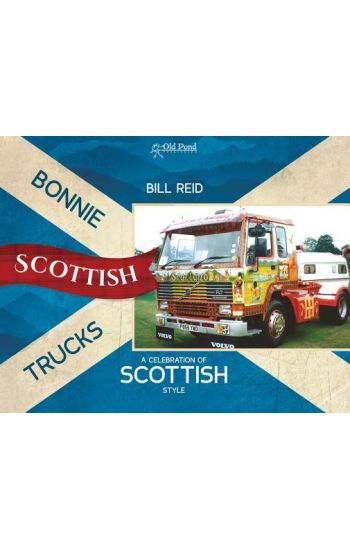
Traditional Scottish liveries have long featured combinations of tartans, thistles, stags, piper and monograms on a strong background colour.Bonnie Scottish Trucks brings together 231 high quality photos of trucks operated by past and present Scottish companies, small firms and owner drivers who have used their vehicles as a means of attracting the eye of potential customers and as a matter of pride in the presentation of their business. To emphasise the ownership and purpose of the vehicle, the user's name is emblazoned on the front and sides in shade lettering leaving the onlooker in no doubt. Although not exclusive to Scotland, this treatment seems to have been more prolific and has stood the test of time in Scotland.The beautiful vehicles featured in this book were spotted by author, Bill Reid around the country, in towns, in cattle markets, on the road, and anywhere else trucks or lorries can be found. This striking collection will appeal to drivers, road transport enthusiasts and in particular those with an interest in vintage commercial vehicles.
25 Years of the Ayrshire Road Run

25 Years of the Ayrshire Road Run

Bill Reid

AMBERLEY PUBLISHING
2018
nidottu
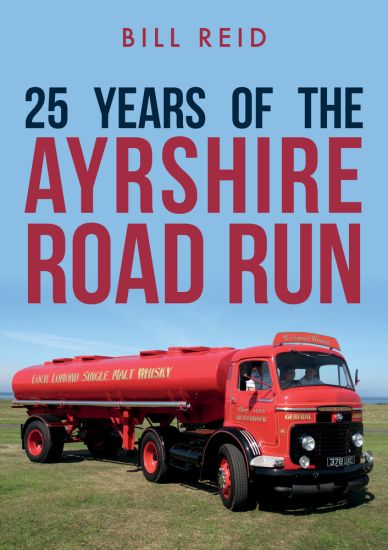
The Ayrshire Road Run was instigated in 1993 as an adjunct to the established annual vintage rally organised by the Ayrshire Vintage Tractor & Machinery Club (AVT&MC). The idea was to promote the rally by running entered commercial vehicles around the major towns in Ayrshire. Over the following years the Road Run attracted more and more vintage vehicles, from small vans and double-decker buses to full-sized articulated lorries. The event has continued to grow, attracting more than a hundred vehicles each year. Here, organiser Bill Reid celebrates twenty-five years of the run with a superb collection of photographs documenting the various participants from over the years.