Kirjojen hintavertailu. Mukana 11 717 486 kirjaa ja 12 kauppaa.

Kirjahaku

Etsi kirjoja tekijän nimen, kirjan nimen tai ISBN:n perusteella.

7 kirjaa tekijältä Bill V. Mullen

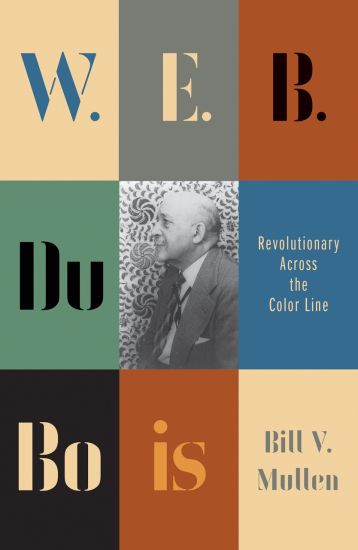
W.E.B. Du Bois

W.E.B. Du Bois

Bill V. Mullen

Pluto Press
2016
pokkari
On the 27th August, 1963, the day before Martin Luther King electrified the world from the steps of the Lincoln Memorial with the immortal words, 'I Have a Dream', the life of another giant of the Civil Rights movement quietly drew to a close in Accra, Ghana: W.E.B. DuBois. In this new biography, Bill V. Mullen interprets the seismic political developments of the Twentieth Century through Du Bois’s revolutionary life. Du Bois was born in Massachusetts in 1868, just three years after formal emancipation of America’s slaves. In his extraordinarily long and active political life, he would emerge as the first black man to earn a PhD from Harvard; surpass Booker T. Washington as the leading advocate for African American rights; co-found the NAACP, and involve himself in anti-imperialist and anti-colonial struggles across Asia and Africa. Beyond his Civil Rights work, Mullen also examines Du Bois's attitudes towards socialism, the USSR, China’s Communist Revolution, and the intersectional relationship between capitalism, poverty and racism. An accessible introduction to a towering figure of American Civil Rights, perfect for anyone wanting to engage with Du Bois’s life and work.
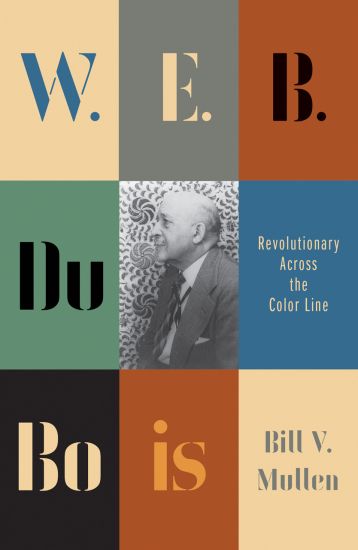
W.E.B. Du Bois

W.E.B. Du Bois

Bill V. Mullen

Pluto Press
2016
sidottu
On the 27th August, 1963, the day before Martin Luther King electrified the world from the steps of the Lincoln Memorial with the immortal words, 'I Have a Dream', the life of another giant of the Civil Rights movement quietly drew to a close in Accra, Ghana: W.E.B. DuBois. In this new biography, Bill V. Mullen interprets the seismic political developments of the Twentieth Century through Du Bois’s revolutionary life. Du Bois was born in Massachusetts in 1868, just three years after formal emancipation of America’s slaves. In his extraordinarily long and active political life, he would emerge as the first black man to earn a PhD from Harvard; surpass Booker T. Washington as the leading advocate for African American rights; co-found the NAACP, and involve himself in anti-imperialist and anti-colonial struggles across Asia and Africa. Beyond his Civil Rights work, Mullen also examines Du Bois's attitudes towards socialism, the USSR, China’s Communist Revolution, and the intersectional relationship between capitalism, poverty and racism. An accessible introduction to a towering figure of American Civil Rights, perfect for anyone wanting to engage with Du Bois’s life and work.
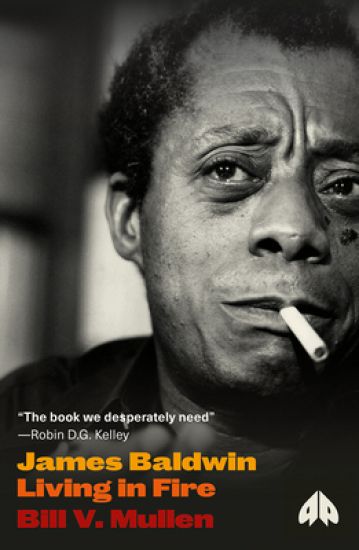
James Baldwin

James Baldwin

Bill V. Mullen

PLUTO PRESS
2024
pokkari
'A scrupulous biography' Publishers Weekly 'Fresh, incisive, and uplifting' Kirkus 'If you want to know the real Baldwin, this is the book to read' Robin D.G. Kelley, author of Thelonious Monk James Baldwin is an icon of liberation who created some of the most important literary works of his time, including the novels Go Tell It on the Mountain and If Beale Street Could Talk. Here, Bill V. Mullen celebrates the life of the great African-American writer and activist. As a lifelong anti-imperialist, black queer advocate, and feminist, James Baldwin was a passionate chronicler of the rise of the Civil Rights Movement, the US war against Vietnam, the Palestinian liberation struggle, and the rise of LGBTQ+ rights. Mullen pays homage to Baldwin's truly radical approach to his life, writing and activism. Constantly in struggle for an anti-racist, emancipated world, Baldwin's philosophy and politics were ahead of their time, predicting many of today's movements such as Black Lives Matter.
James Baldwin

James Baldwin

Bill V. Mullen

Pluto Press
2019
sidottu
'A scrupulous biography' Publishers Weekly 'Fresh, incisive, and uplifting' Kirkus 'If you want to know the real Baldwin, this is the book to read' Robin D.G. Kelley, author of Thelonious Monk James Baldwin is an icon of liberation who created some of the most important literary works of his time, including the novels Go Tell It on the Mountain and If Beale Street Could Talk. Here, Bill V. Mullen celebrates the life of the great African-American writer and activist. As a lifelong anti-imperialist, black queer advocate, and feminist, James Baldwin was a passionate chronicler of the rise of the Civil Rights Movement, the US war against Vietnam, the Palestinian liberation struggle, and the rise of LGBTQ+ rights. Mullen pays homage to Baldwin's truly radical approach to his life, writing and activism. Constantly in struggle for an anti-racist, emancipated world, Baldwin's philosophy and politics were ahead of their time, predicting many of today's movements such as Black Lives Matter.
Afro Orientalism

Afro Orientalism

Bill V. Mullen

University of Minnesota Press
2004
nidottu
Reveals a century of political solidarity uniting Asians and African AmericansAs early as 1914, in his pivotal essay “The World Problem of the Color Line,” W. E. B. Du Bois was charting a search for Afro-Asian solidarity and for an international anticolonialism. In Afro-Orientalism, Bill Mullen traces the tradition of revolutionary thought and writing developed by African American and Asian American artists and intellectuals in response to Du Bois’s challenge.Afro-Orientalism unfolds here as a distinctive strand of cultural and political work that contests the longstanding, dominant discourse about race and nation first fully named in Edward Said’s Orientalism. Mullen tracks Afro-Asian engagement with U.S. imperialism-including writings by Richard Wright, Grace and James Boggs, Robert F. Williams, and Fred Ho-and companion struggles against racism and capitalism around the globe. To this end, he offers Afro-Orientalism as an antidote to essentialist, race-based, or narrow conceptions of ethnic studies and postcolonial studies, calling on scholars in these fields to re-imagine their critical enterprises as mutually constituting and politically interdependent.
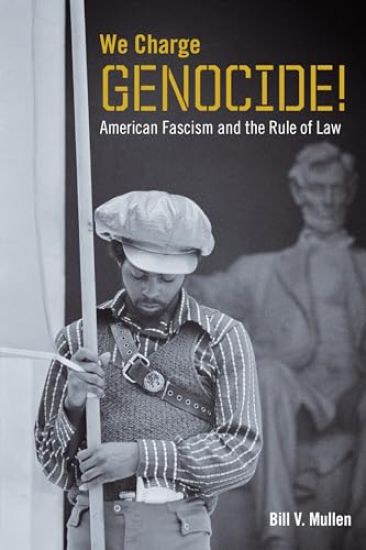
We Charge Genocide!

We Charge Genocide!

Bill V. Mullen

FORDHAM UNIVERSITY PRESS
2024
sidottu
A revealing exploration of domestic fascism in the United States from the 1930s to the January 6th insurrection in Washington, D.C. In 1951, the Civil Rights Congress presented to the United Nations We Charge Genocide, a more than two-hundred-page petition that held the United States accountable for genocide against African Americans. This landmark text represented the dawn of Black Lives Matter and is as relevant today as it was then, as evidenced by the rise of white supremacist groups across the nation and the January 6th Capitol riot which disclosed the specter of a fascist revival in the US Tracing this specter to its roots, We Charge Genocide! provides an original interpretation of American fascism as a permanent and longstanding current in US politics dating to the origins of US settler-colonialism. Picking up where Angela Davis's 1971 essay, "Political Prisoners, Prisons, and Black Liberation," left off, We Charge Genocide! reveals how the United States legal system has contributed to the growth of fascist states and fascist movements domestically and internationally. American Studies scholar Bill V. Mullen contends that the preservation of a white supremacist world order—and the prevention of revolutionary threats to that order—structure the discourse and practice of US fascism. He names this fascist modality the "counterrevolution of law" in tribute to the radicals on the American Left, such as George Jackson, Angela Davis, Herbert Marcuse, and the Black Panther Party, who perceived the American state's destruction of revolutionary groups and ideas as a distinctive form of American fascism. Mullen argues that US law, particularly US "race law," has been an enabling mechanism for modalities of fascist rule that have locked historic blocs of non-white populations into an iron cage of legal and extralegal violence. To this end We Charge Genocide! offers a legal historiography of US fascism rooted in law's capacity to legitimate and sustain racial domination. By recovering the legacy of important organizations, such as the Civil Rights Congress and Black Panther Party, which have both theorized and resisted American legal fascism, Mullen demonstrates how their work and critical theorists like Davis, Marcuse, Jackson, Walter Benjamin, and Ernst Fraenkel illuminate the threat of American legal fascism to its most vulnerable racialized victims of state violence in our time, including gender and transgender violence.
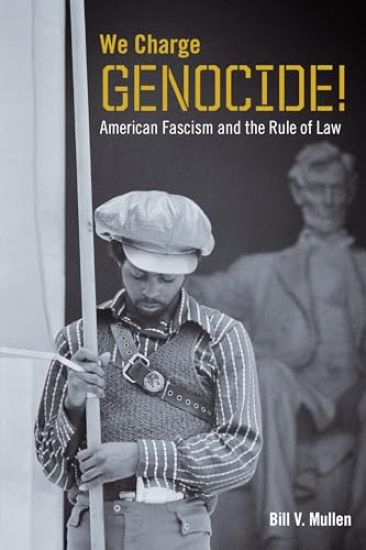
We Charge Genocide!

We Charge Genocide!

Bill V. Mullen

FORDHAM UNIVERSITY PRESS
2024
pokkari
A revealing exploration of domestic fascism in the United States from the 1930s to the January 6th insurrection in Washington, D.C. In 1951, the Civil Rights Congress presented to the United Nations We Charge Genocide, a more than two-hundred-page petition that held the United States accountable for genocide against African Americans. This landmark text represented the dawn of Black Lives Matter and is as relevant today as it was then, as evidenced by the rise of white supremacist groups across the nation and the January 6th Capitol riot which disclosed the specter of a fascist revival in the US Tracing this specter to its roots, We Charge Genocide! provides an original interpretation of American fascism as a permanent and longstanding current in US politics dating to the origins of US settler-colonialism. Picking up where Angela Davis's 1971 essay, "Political Prisoners, Prisons, and Black Liberation," left off, We Charge Genocide! reveals how the United States legal system has contributed to the growth of fascist states and fascist movements domestically and internationally. American Studies scholar Bill V. Mullen contends that the preservation of a white supremacist world order—and the prevention of revolutionary threats to that order—structure the discourse and practice of US fascism. He names this fascist modality the "counterrevolution of law" in tribute to the radicals on the American Left, such as George Jackson, Angela Davis, Herbert Marcuse, and the Black Panther Party, who perceived the American state's destruction of revolutionary groups and ideas as a distinctive form of American fascism. Mullen argues that US law, particularly US "race law," has been an enabling mechanism for modalities of fascist rule that have locked historic blocs of non-white populations into an iron cage of legal and extralegal violence. To this end We Charge Genocide! offers a legal historiography of US fascism rooted in law's capacity to legitimate and sustain racial domination. By recovering the legacy of important organizations, such as the Civil Rights Congress and Black Panther Party, which have both theorized and resisted American legal fascism, Mullen demonstrates how their work and critical theorists like Davis, Marcuse, Jackson, Walter Benjamin, and Ernst Fraenkel illuminate the threat of American legal fascism to its most vulnerable racialized victims of state violence in our time, including gender and transgender violence.