Kirjojen hintavertailu. Mukana 11 342 296 kirjaa ja 12 kauppaa.

Kirjahaku

Etsi kirjoja tekijän nimen, kirjan nimen tai ISBN:n perusteella.

5 kirjaa tekijältä Billy Jones

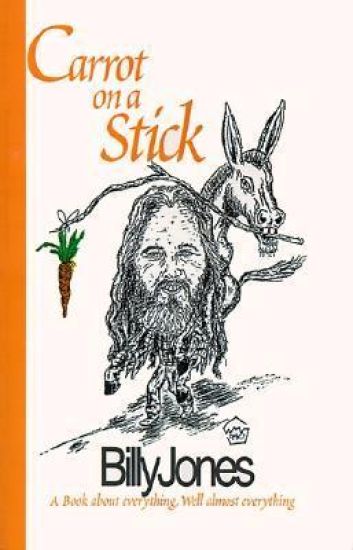
Carrot on a Stick

Carrot on a Stick

Billy Jones

Xlibris Us
2000
sidottu
For over two million miles and the better part of twenty-five years, I rode around. All those years, I never knew what it was I wanted to do when I grew up, so I didn't. When I was young, big trucks and the call of the open road were all I could hear. It always seemed as if the pot of gold at the end of the rainbow was just beyond the next horizon. I chased many dreams over the years, but none of them were ever to be mine. A dream can never be yours if it isn't really yours to begin with. Eventually I stopped dreaming, and it was then I died. There were several long, hard years that I thought I served no purpose except to take up space. I'm not going to tell you here all the stories about broken hearts and dreams long since lost. We've all experienced heartaches and disillusionment to some degree, and it would serve no purpose to go into detail here. I'll only say that sooner or later we all have to get over it. I started writing in nineteen-ninety-six as a means to work out the pain of a broken heart and hoped to write songs, as music is one of my greatest passions, second only to beautiful women, of course. It didn't take me long to figure out that there are too many angst-filled poets in the world writing more gloom and despair than we'll ever want to read, so I asked God to let me write something funny. He did. I began sharing my songs and poetry with friends who encouraged me to write more. My telephone rang all the time with people wanting to hear my latest musings, so I joyfully complied with their wishes. Soon I was reading in church, at coffee houses and even in bars. Everywhere I went, even at work, people wanted to hear my poetry. It wasn't long before I figured out that while all of this was fun, it was really a waste of time. I needed to write a book, and write a book I did. In the last three years I have finished ten books, am working on ten more, and if you are reading this, then I have published my first book, CARROT ON A STICK. All of this from a guy who had a perfect "D" average in English class and never learned to type. I guess that accounts for the bad grammar and errors in punctuation, but I think you'll get the point anyway. Is something dangling here?
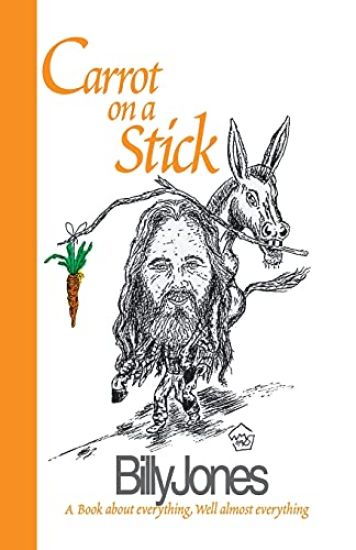
Carrot on a Stick

Carrot on a Stick

Billy Jones

Xlibris Us
2000
pokkari
For over two million miles and the better part of twenty-five years, I rode around. All those years, I never knew what it was I wanted to do when I grew up, so I didn't. When I was young, big trucks and the call of the open road were all I could hear. It always seemed as if the pot of gold at the end of the rainbow was just beyond the next horizon. I chased many dreams over the years, but none of them were ever to be mine. A dream can never be yours if it isn't really yours to begin with. Eventually I stopped dreaming, and it was then I died. There were several long, hard years that I thought I served no purpose except to take up space. I'm not going to tell you here all the stories about broken hearts and dreams long since lost. We've all experienced heartaches and disillusionment to some degree, and it would serve no purpose to go into detail here. I'll only say that sooner or later we all have to get over it. I started writing in nineteen-ninety-six as a means to work out the pain of a broken heart and hoped to write songs, as music is one of my greatest passions, second only to beautiful women, of course. It didn't take me long to figure out that there are too many angst-filled poets in the world writing more gloom and despair than we'll ever want to read, so I asked God to let me write something funny. He did. I began sharing my songs and poetry with friends who encouraged me to write more. My telephone rang all the time with people wanting to hear my latest musings, so I joyfully complied with their wishes. Soon I was reading in church, at coffee houses and even in bars. Everywhere I went, even at work, people wanted to hear my poetry. It wasn't long before I figured out that while all of this was fun, it was really a waste of time. I needed to write a book, and write a book I did. In the last three years I have finished ten books, am working on ten more, and if you are reading this, then I have published my first book, CARROT ON A STICK. All of this from a guy who had a perfect "D" average in English class and never learned to type. I guess that accounts for the bad grammar and errors in punctuation, but I think you'll get the point anyway. Is something dangling here?
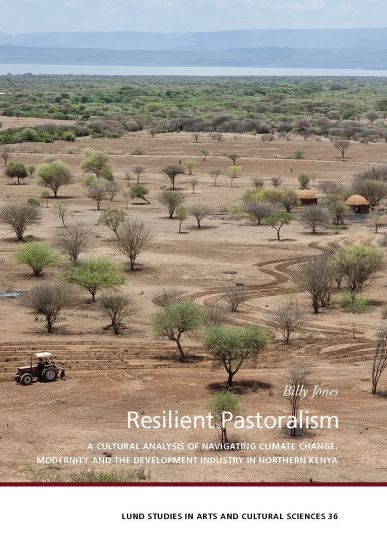
Resilient pastoralism : a cultural analysis of navigating climate change, modernity and the development industry in northern Kenya
Droughts, Floods, Violence and Poverty. The drylands of Northern Kenya are not an easy place to live. Up here, pastoralism has been the dominant way of life for centuries. But over the past half a century, the grass has all but run out, the ecosystem has fallen apart, and extreme poverty is the norm. And yet, some people have found a new way to get by. A growing number of people are switching from traditional forms of pastoralism to intensively plant grass on private farms. By feeding fodder to their livestock and harvesting the seeds, they are thriving in the face of crippling financial pressures and an increasingly erratic climate. At the same time, millions of dollars of aid money have been poured into the region via projects to improve livelihoods and rehabilitate the environment. Very few have succeeded. Only a handful of locally run projects have managed to make an impact by helping grass farmers build resilient, environmentally friendly livelihoods. This thesis tells the story of pastoralism and Development in Baringo, Northern Kenya. It explores the social, political and ecological processes which have marginalised the economy and investigates how pastoralists are adapting their way of life through grass farming. It also critically examines the International Development Industry’s attempts to bring sustainable development to the region, asking how and why so many have failed. By contrasting these failed attempts with more successful local initiatives, it hopes to trigger a discussion about how we might move towards more localised, collaborative approaches to Development in the world’s most marginalised landscapes.