Kirjojen hintavertailu. Mukana 11 529 262 kirjaa ja 12 kauppaa.

Kirjahaku

Etsi kirjoja tekijän nimen, kirjan nimen tai ISBN:n perusteella.

8 kirjaa tekijältä Bin Yang

Between Winds and Clouds

Between Winds and Clouds

Bin Yang

Columbia University Press
2008
sidottu
Between Winds and Clouds tells the two-thousand-year history of Yunnan, an ethnic frontier bordered by Tibet, mainland Southeast Asia, and southwest China. Yunnan's prime geographic location turned the site into a center of cross-regional trade, and consequently, it became a desirable conquest for Eurasian rivals. Bin Yang details the fight for military control of Yunnan and its demographic, administrative, and economic transformation into a local entity. In conclusion, he discusses the impact of Yunnan's imperial legacy on modern state building, or, conversely, the way in which the modern state has contributed to the development of imperial discourse. Deploying a unique cross-regional approach, Yang brings the activities of Southeast and East Asia, Tibet, the Indian Ocean, and modern Europe to bear on the history of Yunnan, emphasizing both the local and the international forces that played a role in the region's long-term transformation.
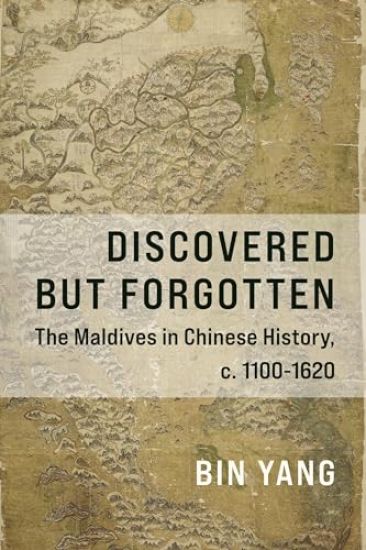
Discovered but Forgotten

Discovered but Forgotten

Bin Yang

Columbia University Press
2024
sidottu
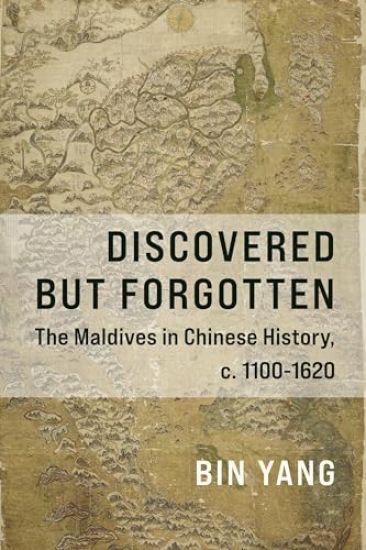
Chinese traders and explorers first visited the Maldives, an archipelago in the Indian Ocean, in the early fourteenth century. The traveler Wang Dayuan “discovered” the island sultanate for the Chinese world, and merchants increasingly dealt in Maldivian goods such as coconuts, cowrie shells, and ambergris. Zheng He’s fifteenth-century voyages ventured to the islands, by then a trading hub, and brought their envoys to Beijing. But the Maldives faded from Chinese records by the end of the sixteenth century, after the Ming state suddenly retreated from the Indian Ocean and shifted focus to Southeast Asia.Discovered but Forgotten is a pioneering examination of China’s relations with the Maldives and Sino-Indian Ocean interactions, offering new ways to understand Chinese maritime exploration and the global history of the Indian Ocean. Drawing on a wide range of sources—including written records, Chinese and Jesuit maps, and archaeological analysis of shipwrecks—Bin Yang provides a comprehensive account of Chinese links to the Maldives and the Indian Ocean world from ancient times through the late Ming era. He scrutinizes Chinese understandings of the islands, emphasizing both seafaring material culture and textual knowledge production. Yang reconsiders the works of travelers such as Marco Polo and Ibn Battuta in light of Chinese explorations, and he opens a window onto a colorful world of intriguing commodities, port marriages, and voyages across the vast waters of maritime Asia. Transregional and interdisciplinary, Discovered but Forgotten reveals how a remote archipelago shaped the vast Chinese empire.
Discovered but Forgotten

Discovered but Forgotten

Bin Yang

Columbia University Press
2024
pokkari
Chinese traders and explorers first visited the Maldives, an archipelago in the Indian Ocean, in the early fourteenth century. The traveler Wang Dayuan “discovered” the island sultanate for the Chinese world, and merchants increasingly dealt in Maldivian goods such as coconuts, cowrie shells, and ambergris. Zheng He’s fifteenth-century voyages ventured to the islands, by then a trading hub, and brought their envoys to Beijing. But the Maldives faded from Chinese records by the end of the sixteenth century, after the Ming state suddenly retreated from the Indian Ocean and shifted focus to Southeast Asia.Discovered but Forgotten is a pioneering examination of China’s relations with the Maldives and Sino-Indian Ocean interactions, offering new ways to understand Chinese maritime exploration and the global history of the Indian Ocean. Drawing on a wide range of sources—including written records, Chinese and Jesuit maps, and archaeological analysis of shipwrecks—Bin Yang provides a comprehensive account of Chinese links to the Maldives and the Indian Ocean world from ancient times through the late Ming era. He scrutinizes Chinese understandings of the islands, emphasizing both seafaring material culture and textual knowledge production. Yang reconsiders the works of travelers such as Marco Polo and Ibn Battuta in light of Chinese explorations, and he opens a window onto a colorful world of intriguing commodities, port marriages, and voyages across the vast waters of maritime Asia. Transregional and interdisciplinary, Discovered but Forgotten reveals how a remote archipelago shaped the vast Chinese empire.
Cowrie Shells and Cowrie Money
Originating in the sea, especially in the waters surrounding the low-lying islands of the Maldives, Cypraea moneta (sometimes confused with Cypraea annulus) was transported to various parts of Afro-Eurasia in the prehistoric era, and in many cases, it was gradually transformed into a form of money in various societies for a long span of time. Yang provides a global examination of cowrie money within and beyond Afro-Eurasia from the archaeological period to the early twentieth century. By focusing on cowrie money in Indian, Chinese, Southeast Asian and West African societies and shell money in Pacific and North American societies, Yang synthsises and illustrates the economic and cultural connections, networks and interactions over a longue durée and in a cross-regional context. Analysing locally varied experiences of cowrie money from a global perspective, Yang argued that cowrie money was the first global money that shaped Afro-Eurasian societies both individually and collectively. He proposes a paradigm of the cowrie money world that engages local, regional, transregional and global themes.
Cowrie Shells and Cowrie Money
Originating in the sea, especially in the waters surrounding the low-lying islands of the Maldives, Cypraea moneta (sometimes confused with Cypraea annulus) was transported to various parts of Afro-Eurasia in the prehistoric era, and in many cases, it was gradually transformed into a form of money in various societies for a long span of time. Yang provides a global examination of cowrie money within and beyond Afro-Eurasia from the archaeological period to the early twentieth century. By focusing on cowrie money in Indian, Chinese, Southeast Asian and West African societies and shell money in Pacific and North American societies, Yang synthsises and illustrates the economic and cultural connections, networks and interactions over a longue durée and in a cross-regional context. Analysing locally varied experiences of cowrie money from a global perspective, Yang argued that cowrie money was the first global money that shaped Afro-Eurasian societies both individually and collectively. He proposes a paradigm of the cowrie money world that engages local, regional, transregional and global themes.