Kirjojen hintavertailu. Mukana 11 244 527 kirjaa ja 12 kauppaa.

Kirjahaku

Etsi kirjoja tekijän nimen, kirjan nimen tai ISBN:n perusteella.

8 kirjaa tekijältä Birgit Müller

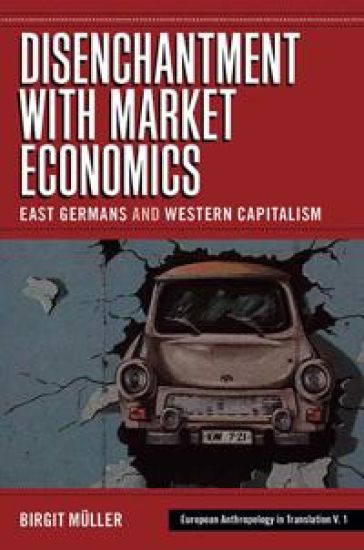
Disenchantment with Market Economics

Disenchantment with Market Economics

Birgit Müller

Berghahn Books
2007
sidottu
The life-worlds and personal experiences of workers and employees in three enterprises in East Berlin at the moment of political and economic upheaval stand at the centre of the book. It sets out in 1989 at the moment of the fall of the Berlin Wall witnessing the confrontations with the market economy and examining the reinterpretations of the socialist past as the political and economic changes take place. Disenchantment with Market Economics captures a unique moment in history and unveils myths and promises of liberal market economy from the perspective of those who lived through the break down of the planned economy at their workplaces in East Berlin. While Western managers regarded the expansion of their businesses towards Eastern Europe as a civilising mission, the East German employees reacted with complex strategies of individual adaptation and resistance.
Disenchantment with Market Economics

Disenchantment with Market Economics

Birgit Müller

Berghahn Books
2007
pokkari
The life-worlds and personal experiences of workers and employees in three enterprises in East Berlin at the moment of political and economic upheaval stand at the centre of the book. It sets out in 1989 at the moment of the fall of the Berlin Wall witnessing the confrontations with the market economy and examining the reinterpretations of the socialist past as the political and economic changes take place. Disenchantment with Market Economics captures a unique moment in history and unveils myths and promises of liberal market economy from the perspective of those who lived through the break down of the planned economy at their workplaces in East Berlin. While Western managers regarded the expansion of their businesses towards Eastern Europe as a civilising mission, the East German employees reacted with complex strategies of individual adaptation and resistance.
Distributives und integratives Verhandeln

Distributives und integratives Verhandeln

Birgit Müller

Grin Publishing
2011
pokkari
Studienarbeit aus dem Jahr 2011 im Fachbereich BWL - Personal und Organisation, Note: 1,0, Donau-Universit t Krems - Universit t f r Weiterbildung, Veranstaltung: Verhanldlungsf hrung, Sprache: Deutsch, Abstract: "Im Leben geht es nicht darum, gute Karten zu haben, sondern auch mit einem schlechten Blatt gut zu spielen." Robert Louis Stevenson 1. Einleitung Menschen verhandeln tagt glich sowohl im beruflichen als auch im privaten Bereich. H ufig sind wir uns dessen nicht bewusst. Wir verhandeln mit uns selbst, beispielsweise ber das monatliche Ausgabenbudget f r ein kostspieliges Hobby, mit Vorgesetzten, Mitarbeitern, Verk ufern, aber auch mit unserem Partner ber das n chste gemeinsame Reiseziel. Auch Pflegekr fte verhandeln bzw. k mpfen f r eine bessere Bezahlung. Ob mit dem Vorgesetzten ber eine Gehaltserh hung diskutiert, ein neues Budget f r ihre Abteilung ausgehandelt oder mit einem Kollegen ein Diensttausch arrangiert wird, das alles sind Verhandlungen. Als Ursachen f r die Notwendigkeit von Verhandlungen lassen sich Interessengegens tze und unterschiedliche strukturelle Gegebenheiten identifizieren. Die Aussage von dem Sozial konom John Galbraith "Neben Sex ist Verhandeln das h ufigste und problematischste Engagement zwischen zwei Personen, und zwischen beiden Aktivit ten besteht ein Zusammenhang" untermauert die These, dass Verhandlungen viele Herausforderungen mit sich bringen (Seeboth: 2011: N.N.). Verhandlungen zu f hren ist ein elementarer Bestandteil im privaten Bereich unseres Lebens, aber besonders im allt glichen Business (vgl. Fisher et al. 2000:15). Die H ufigkeit von Verhandlungsprozessen nimmt st ndig zu. Deshalb ist ein ausreichendes Verhandlungsgeschick eine begehrte Schl sselqualifikation. Eine gro e Zahl an Verhandlungen scheitert regelhaft, weil sich Parteien einfach nicht einig werden.