Kirjojen hintavertailu. Mukana 11 244 527 kirjaa ja 12 kauppaa.

Kirjahaku

Etsi kirjoja tekijän nimen, kirjan nimen tai ISBN:n perusteella.

3 kirjaa tekijältä Birgit S Seibold

Emily Hobhouse and the Reports on the Concentration Camps during the Boer War 1899-1902

Emily Hobhouse and the Reports on the Concentration Camps during the Boer War 1899-1902

Birgit S Seibold

ibidem-Verlag, Jessica Haunschild u Christian Schon
2011
nidottu
"The black spot the one very black spot in the picture is the frightful mortality in the Concentration Camps. I entirely agree with you in thinking, that while a hundred explanations may be offered and a hundred excuses made, they do not really amount to any adequate defence. I should much prefer to say at once, so far as the Civil authorities are concerned, that we were suddenly confronted with a problem not of our making, with which it was beyond our power properly to grapple. And no doubt its vastness was not realised soon enough. It was not till six weeks or two months ago that it dawned on me personally, (I cannot speak for others), that the enormous mortality was not merely incidental to the first formation of the camps and the sudden inrush of thousands of people already sick and starving, but was going to continue. The fact that it continues, is no doubt a condemnation of the Camp system. The whole thing, I think now, has been a mistake." - Alfred Milner to Joseph Chamberlain, December 7th, 1901 The British scorched earth policy during the last phase of the Anglo-Boer War of 1899-1902 led to the burning of farms, the destruction of homesteads, harvests and livestock and to the internment of the civil population in the so-called concentration camps. There, people -- mainly women and children -- died of malnutrition and diseases such as measles, pneumonia and typhoid. The death rate in the camps was so high -- nearly 28,000 white Boers succumbed - that the English population, renowned for its gallantry and chivalry, was consternated. Lloyd George blamed his government for its policy of extermination, Campbell-Bannerman spoke of methods of barbarism, and philanthropic institutions protested, led by Emily Hobhouse, who was the first civilian to investigate the conditions of the camps. The government reacted and sent a ladies' commission under the leadership of Millicent Garrett Fawcett to South Africa. Birgit Seibold's study is the first to compare the 'inofficial' and the official report on the camps and to give an insight into conditions in each of the thirty-three white concentration camps. Based on first-hand research among the Hobhouse manuscripts, this book is both scholarly and compulsively readable.
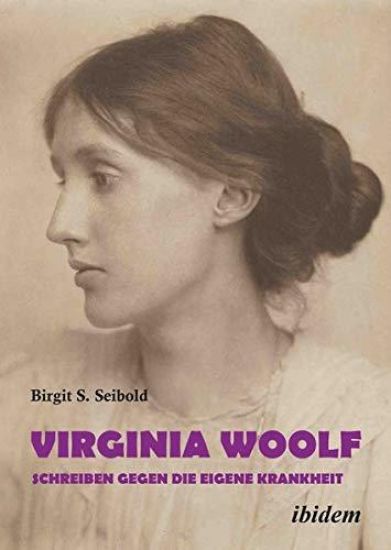
Virginia Woolf – Schreiben gegen die eigene Krankheit
Virginia Woolf war ein literarisches Genie und eine Wegbereiterin der Emanzipation der Frauen. Ihr Leben war gezeichnet von ewigen Hochs und Tiefs, Manien, Psychosen und Depressionen, Zust nden, in denen ihr Mann Leonard Woolf sie mal als sane, mal als insane (irrsinnig, verr ckt) bezeichnete. Dennoch - oder vielleicht gerade deshalb - hatte sie eine unglaubliche Schaffenskraft. In der Analyse ihrer Tageb cher und Briefe gewinnt der Leser einen Eindruck von Virginia Woolfs Pers nlichkeit, zu der auch ihre Krankheit, die bipolare oder manisch-depressive Krankheit, geh rt. In diesen schildert sie ihre Befindlichkeiten, die dann meist zu einer Depression oder einer Manie f hrten. Da Virginia Woolf eine Meisterin der Worte war, schrieb sie nieder, was viele Betroffene nicht einmal in Worte gefasst wiedergeben k nnen. Dies gilt auch f r Leonard Woolf, der die Gef hle seiner Frau exzellent beschreibt und gleichfalls die L cken Virginias in den Tageb chern und Briefen f llt. Virginia konnte in Zeiten der Manie, Psychose und Depression nicht mehr schreiben. Birgit Seibold gew hrt in ihrem j ngsten Werk nicht nur faszinierende Einblicke in Virginia Woolfs Leben, Leiden und Schreiben, sondern wendet sich auch an Betroffene und Angeh rige von Manisch-Depressiven und macht ihnen Mut, Episoden zu berstehen, indem sie aufzeigt, dass ein bipolarer Mensch trotz oder gerade aufgrund seiner Krankheit Gro es vollbringen kann. Zwar ist es ein Leben, das nach einer manischen Episode immer wieder bei Null anf ngt, aber auch ein solches l sst sich meistern. Das Buch ist ebenso empfehlenswert f r Psychiater und Psychologen, denn Virginia und Leonard Woolf beschreiben darin akribisch Virginias Befindlichkeiten - Gef hle, die ein Arzt oder Psychologe so blicherweise nicht h rt. Es ist somit ein Buch f r Betroffene, Angeh rige, rzte und Psychologen und alle, die sich f r Virginia Woolf interessieren.
Hunger

Hunger

Birgit S Seibold

ibidem-Verlag, Jessica Haunschild u Christian Schon
2025
nidottu
Starvation is a silent killer. We watch approximately 800 million people in this world being hungry and about 9 million dying of hunger each year. In 2024, 2.4 billion people, roughly 30% of the world’s population, were moderately or severely food-insecure. To be free from hunger is a human right according to article 25 of the Universal Declaration of Human Rights. This book, Hunger, focuses on philosophical and sociological issues, inquires into the goodwill of the world community, rather than in economic figures and processes. If starvation and undernourishment can be prevented, if famines can be predicted, why do we still have hunger in our world? The question is, if we are all brothers and sisters, why do we let our brothers and sisters starve?