Kirjojen hintavertailu. Mukana 11 699 587 kirjaa ja 12 kauppaa.

Kirjahaku

Etsi kirjoja tekijän nimen, kirjan nimen tai ISBN:n perusteella.

6 kirjaa tekijältä Birgitte Anderberg

Bjørn Nørgaard

Bjørn Nørgaard

Birgitte Anderberg

SMK Forlag
2022
sidottu
Portræt af Bjørn Nørgaard (f. 1947) som udfolder hovedlinjerne i kunstnerens bevægelse som billedhugger fra 1960'erne til idag samt bidrag der belyser og diskuterer udvalgte aspekter af Bjørn Nørgaards æstetiske praksis
Bjørn Nørgaard

Bjørn Nørgaard

Birgitte Anderberg

SMK Forlag
2010
sidottu
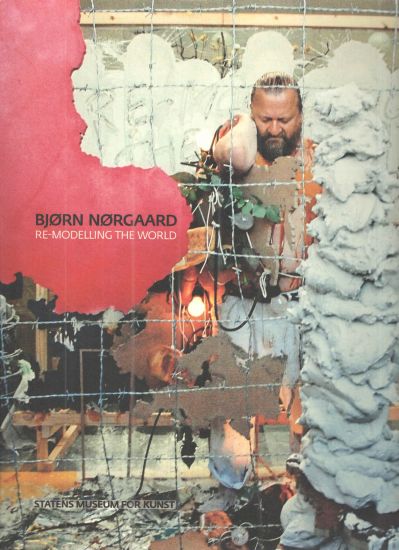
The exhibition and book Bjørn Nørgaard. Re-Modelling the World presents one of the most ground-breaking and agenda-setting figures within Nordic contemporary art since the mid-1960s. When Bjørn Nørgaard began his career as a very young man, he operated on the outskirts of the established art scene. Right from the outset, he adopted a critical view of the main institutions of art – particularly the art academy, art museum, and art criticism – and it is quite telling that he got his education within the working collective Eks-Skolen (The Experimental Art School) rather than at the Royal Danish Academy of Fine Art, which at the time was regarded as the main route leading to widespread recognition as an artist. The experimental art school formed a setting for individual and collective explorations of the links between art, politics, economics, and everyday lived life. This involved the use of new materials, new forms of working, and new forms of presentation, some of which drew on the lessons learnt by historical avant-garde art founded in the early twentieth century, but at the same time, the work was strongly influenced by the young artists’ encounters with the most recent art from Germany and the USA where happenings, installation art, and action art had begun to gain prominence. The book and exhibition Bjørn Nørgaard. Re-Modelling the World showcases a prominent artist’s road from the 1960s with their radical, at times Utopian striving for open-ended works up towards the popular, narrative, and visually seductive artistic production that has characterised Bjørn Nørgaard in recent decades. This road has led to monumental works in the public space, but these large-scale works have emerged side by side with material actions and performances, which the artist has maintained as part of his practice throughout his career. In the mid-1960s, no-one would ever have guessed that an experimental artistic practise that initially took on the most humble and fragile forms – using plaster, wire, cardboard, and textiles as favourite materials – would ever progress the way it did, even reaching far into the institutions to which the artist offered such resistance as a young man. Nevertheless, a red thread runs through his entire production, and this is documented in this book.
Bjørn Nørgaard

Bjørn Nørgaard

Birgitte Anderberg

SMK Forlag
2010
sidottu
The exhibition and book Bjørn Nørgaard. Re-Modelling the World presents one of the most ground-breaking and agenda-setting figures within Nordic contemporary art since the mid-1960s. When Bjørn Nørgaard began his career as a very young man, he operated on the outskirts of the established art scene. Right from the outset, he adopted a critical view of the main institutions of art – particularly the art academy, art museum, and art criticism – and it is quite telling that he got his education within the working collective Eks-Skolen (The Experimental Art School) rather than at the Royal Danish Academy of Fine Art, which at the time was regarded as the main route leading to widespread recognition as an artist. The experimental art school formed a setting for individual and collective explorations of the links between art, politics, economics, and everyday lived life. This involved the use of new materials, new forms of working, and new forms of presentation, some of which drew on the lessons learnt by historical avant-garde art founded in the early twentieth century, but at the same time, the work was strongly influenced by the young artists’ encounters with the most recent art from Germany and the USA where happenings, installation art, and action art had begun to gain prominence. The book and exhibition Bjørn Nørgaard. Re-Modelling the World showcases a prominent artist’s road from the 1960s with their radical, at times Utopian striving for open-ended works up towards the popular, narrative, and visually seductive artistic production that has characterised Bjørn Nørgaard in recent decades. This road has led to monumental works in the public space, but these large-scale works have emerged side by side with material actions and performances, which the artist has maintained as part of his practice throughout his career. In the mid-1960s, no-one would ever have guessed that an experimental artistic practise that initially took on the most humble and fragile forms – using plaster, wire, cardboard, and textiles as favourite materials – would ever progress the way it did, even reaching far into the institutions to which the artist offered such resistance as a young man. Nevertheless, a red thread runs through his entire production, and this is documented in this book.
What's Happening?

What's Happening?

Birgitte Anderberg

SMK Forlag
2015
nidottu
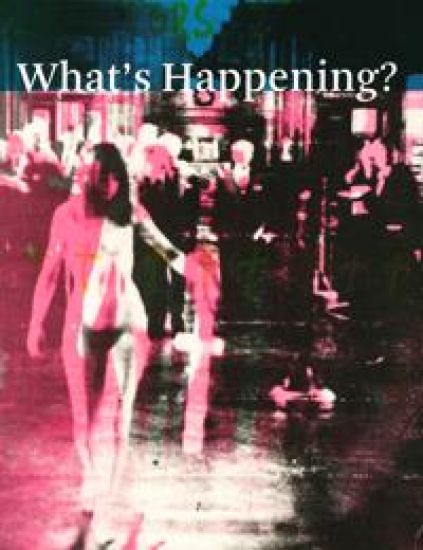
Katalogets hovedartikel af Birgitte Anderberg beskriver den danske eksperimentelle kunstscene i perioden 1965-75 med særlig vægt på 1970’ernes kvindelige kunstnere og periodens tidlige avantgarde kunst. Anderbergs artikel suppleres af en lang række tekster fra perioden af kunstnerne selv – om kunsten og det der skete i tiden.
What's Happening?

What's Happening?

Birgitte Anderberg

SMK Forlag
2015
nidottu
The main article of this catalogue by Birgitte Anderberg explores the Danish experimental art scene from 1965 to 1975 and focuses especially on the female artists from the 1970s and the early Avant-Garde art. The article is accompanied by a large number of texts from the period by the artists themselves – about the art and what happened at that time.