Kirjahaku
Etsi kirjoja tekijän nimen, kirjan nimen tai ISBN:n perusteella.
19 kirjaa tekijältä Bo Bennett
This book is part of a course that covers hundreds of life-enhancing topics that they don't teach in high-school or most colleges, but should. This is more than a course on self-improvement; it is a course on mastering life. If life had an instruction book... this would be it.This is book eight of the Life Mastery course: Mastering Vocabulary. This short book discusses the importance of a good vocabulary as well as 100+ vocabulary words every successful individual should know.By the end of this course, you will be on the right track to designing the life you want to live, and living it well
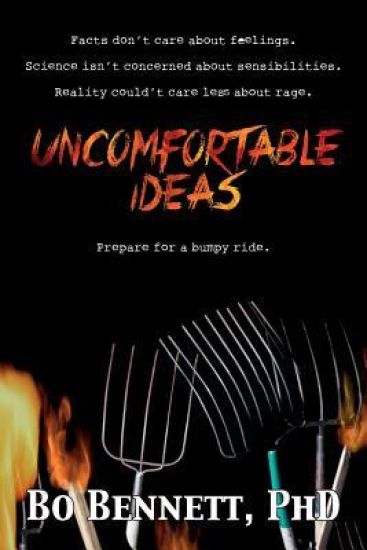
Many of our ideas about the world are based more on feelings than facts, sensibilities than science, and rage than reality. We gravitate toward ideas that make us feel comfortable in areas such as religion, politics, philosophy, social justice, love and sex, humanity, and morality. We avoid ideas that make us feel uncomfortable. This avoidance is a largely unconscious process that affects our judgment and gets in the way of our ability to reach rational and reasonable conclusions. By understanding how our mind works in this area, we can start embracing uncomfortable ideas and be better informed, be more understanding of others, and make better decisions in all areas of life.Some uncomfortable ideas entertained in this book: - Political correctness can be harmful - Identity politics is a dangerous game - Morality is functionally democratic - Victims often do share some of the responsibility - God is a far more horrifying character than Satan - There is no such thing as freewill - Americans are manipulated into being pro-war - Non-whites can be racist, and women can be sexist - Some people do "choose to be gay" - Sometimes the bad guys win - Obese people are not perfect the way they are - It's okay to find inappropriate jokes funnyFacts don't care about feelings. Science isn't concerned about sensibilities. And reality couldn't care less about rage. Uncomfortable ideas. Prepare for a bumpy ride.
This book is part of a course that covers hundreds of life-enhancing topics that they don't teach in high-school or most colleges, but should. This is more than a course on self-improvement; it is a course on mastering life. If life had an instruction book... this would be it.This is book eight of the Life Mastery course: Mastering Vocabulary. This short book discusses the importance of a good vocabulary as well as 100+ vocabulary words every successful individual should know.By the end of this course, you will be on the right track to designing the life you want to live, and living it well
A fact is a fact, right? Unfortunately, it's not that simple. A "fact" is primarily defined as "a thing that is indisputably the case." The problem with that definition is that virtually anything can be disputed, and most things are. But the legal language of "beyond a reasonable doubt" applies to this definition. Many times, especially on the Internet, facts that are disputed are done so WITHOUT reasonable doubt. For example, there is an entire organization devoted to disputing the fact that the earth is NOT flat.A secondary definition of "fact" is "a piece of information used as evidence or as part of a report or news article." These "facts" are still "things that are indisputably the case," or are supposed to be, but used in this context; facts are used to support a theory, conclusion, or opinion. For example, one might argue that the government is out to enslave its citizens. They may offer several facts to support that argument including the facts that the government can imprison people, the government has imprisoned people, and the government has no plans to stop imprisoning people. No reasonable person would dispute those facts, but that doesn't mean that the facts adequately support the argument or claim.Very little information we consume is straight fact. We consume opinion, commentary, satire, gossip, conspiracy theories, marketing copy, and other forms of non-facts. Even when we are given facts, it can be done in such way to mislead, deceive, and manipulate where we are led to develop a false sense of confidence in our conclusions based on these facts.Oh, by the way, "alternative facts," are falsehoods.In this book, we will go over important concepts that will help you to become a more responsible consumer of information including: - Important terms such as fake news site, click bait, echo chamber, and more. - How our cognitive biases get in the way when it comes to accepting reality. - How to quickly evaluate any information source. - How to ask the right questions when deciding how much weight to give information. - How to spot when you are being misled, deceived, manipulated, or outright lied to.We may not have a legal obligation when it comes to being a responsible consumer of information. But one can easily argue that we do have a moral obligation. A society is only as good as its citizens, and our intellectual contributions or lack thereof have far-reaching effects. While this short course is unlikely to make you a master of parsing information, it's a heck of a good start
Maybe you were born to Christian parents and raised as a Christian. Or maybe you are just a part of a Christian nation. You might have attended church regularly, or maybe just on special occasions. If asked, you say that you believe in God, but you really never thought about what that means exactly. You are a well-educated person who accepts the idea of Biblical miracles, but only the more "reasonable" ones. You have read some of the Bible, mostly just parts of the New Testament, but never committed to reading the Bible cover to cover. You are a good person who admires the many "Christian values" as demonstrated by Jesus Christ. But something does not feel right.* Science tells us that the universe is 13.7 billion years old, but the Bible tells us it's 6,000 years old.* Science tells us life is the result of emergent properties in combined molecules, and we have evolved from a very primitive life form, but the Bible says that God made us, as is, from dust, and blew life in our noses.* You see a world where little bunnies burn to death in forest fires, and wonder why an all-good and loving God would allow such a thing to happen.* You pray to God and you realize that sometimes your prayers are answered, and sometimes they aren't -- just as if you didn't pray at all.* You hear about other religions and wonder why your religion is right and every other religion on the planet is wrong.* You have a real problem with the idea of all your non-Jesus-believing friends and family spending eternity in Hell.In fact, the more you look around, the more you see a world absent of this perfect image of a perfect God. As much as you want to avoid critical thinking and "just let go and have faith," you find that you cannot believe in something contrary to your logic and reason -- no matter how much you want to. This might lead to feelings of guilt, insincerity, and/or hypocrisy. Yet you just can't imagine living life without God, and you don't have to.When you start asking serious questions about God and religion, you begin to see through the stories of people living inside the stomachs of big fish, 900-year-old men, and bodies coming back to life after three days, and understand how man created God, and not the other way around. By daring to question "sacred" religion, challenging your childhood beliefs, and risking eternal damnation (okay, so there might be a minor side effect to reading this book), you will discover an appreciation for religion on a new level, as well as a renewed appreciation for the human race.Through a unique blend of science, philosophy, theology, and a touch of humor, you will see how you can trust your logic and reason, be true to yourself, and embrace God -- not as a being, but as a concept -- The Concept.

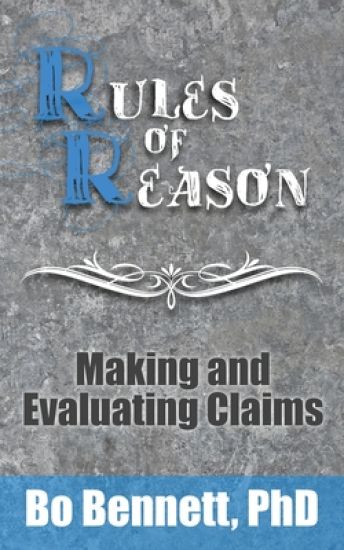
Claims are constantly being made, many of which are confusing, ambiguous, too general to be of value, exaggerated, unfalsifiable, and suggest a dichotomy when no such dichotomy exists. Good critical thinking requires a thorough understanding of the claim before attempting to determine its veracity. Good communication requires the ability to make clear, precise, explicit claims, or "strong" claims. The rules of reason in this book provide the framework for obtaining this understanding and ability.This book is about the eleven rules of reason for making and evaluating claims. Each covered in detail in the book. These are: 1) Acknowledge the Limits of Your Knowledge Regarding the Claim. 2) Explore Your Biases Related to the Claim. 3) Isolate the Actual Claim. 4) Clearly and Precisely Define Each Relevant Term. 5) Use Terms That Reflect the Scope of the Claim Accurately. 6) Operationalize Terms When Possible. 7) Make the Claim Falsifiable When Possible. 8) Express an Accurate and Meaningful Level of Confidence. 9) Convert Causes to Contributing Factors When Appropriate. 10) Make Strong Analogies and Call Out Weak Ones. 11) Filter All Relevant Assumptions Through These Same Rules.By the time you have finished this short book, no matter how good you were before at evaluating claims, you will be even better at it.
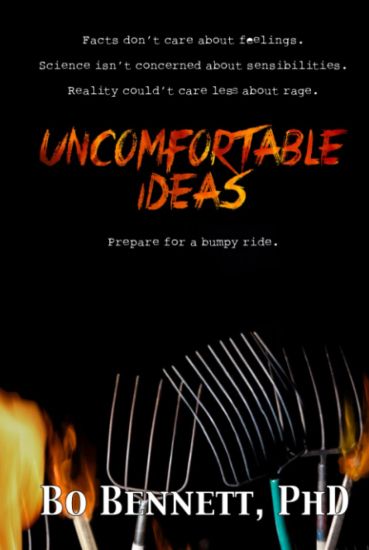
Prepare for a Bumpy Ride.Many of our ideas about the world are based more on feelings than facts, sensibilities than science, and rage than reality. We gravitate toward ideas that make us feel comfortable in areas such as religion, politics, philosophy, social justice, love and sex, humanity, and morality. We avoid ideas that make us feel uncomfortable. This avoidance is a largely unconscious process that affects our judgment and gets in the way of our ability to reach rational and reasonable conclusions. By understanding how our mind works in this area, we can start embracing uncomfortable ideas and be better informed, be more understanding of others, and make better decisions in all areas of life.Some uncomfortable ideas entertained in this book: - Political correctness can be harmful- Identity politics is a dangerous game- Morality is functionally democratic- Victims often do share some of the responsibility- God is a far more horrifying character than Satan- There is no such thing as freewill- Americans are manipulated into being pro-war- Non-whites can be racist, and women can be sexist- Some people do "choose to be gay"- Sometimes the bad guys win- Obese people are not perfect the way they are- It's okay to find inappropriate jokes funnyFacts don't care about feelings. Science isn't concerned about sensibilities. And reality couldn't care less about rage. ⭐⭐⭐⭐⭐ "A bumpy ride indeed. Whether one agrees or disagrees with the content, it still manages to make one think critically about certain things, and that is always a good thing. What's more, it is being presented in a non-threatening, clear, balanced, and objective way. A great way to tackle uncomfortable ideas." ⭐⭐⭐⭐⭐ "Very eye-opening. Making us question the things that make them uncomfortable and why, is what we all need. Love it "
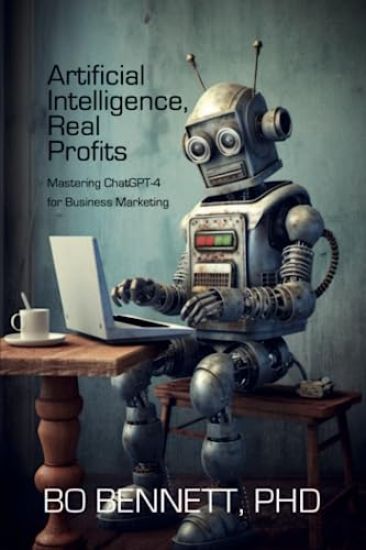
Unlock the Power of AI: Revolutionize Your Marketing Strategy with "Artificial Intelligence, Real Profits: Mastering ChatGPT-4 for Business Marketing."Are you tired of traditional marketing strategies that fail to deliver the results you need? Are you ready to embrace the power of Artificial Intelligence (AI) to take your business marketing to the next level? Look no further than "Artificial Intelligence, Real Profits: Mastering ChatGPT-4 for Business Marketing."This comprehensive guide is your gateway to unlocking the full potential of AI-driven marketing. From content creation to social media management, ChatGPT-4 has the power to revolutionize the way you do business. But what exactly is ChatGPT-4, and how can it benefit your business?ChatGPT-4 is a cutting-edge AI technology that uses natural language processing to generate human-like responses to text-based prompts. In other words, it can write like a human, but at a much faster pace and with greater accuracy. This makes it an invaluable tool for businesses looking to streamline their marketing efforts and drive real, tangible results.In "Artificial Intelligence, Real Profits," you'll learn how to leverage ChatGPT-4 to create compelling content that resonates with your target audience. Whether you're writing blog posts, email newsletters, or social media updates, ChatGPT-4 can help you craft messages that are engaging, persuasive, and free of errors.But that's just the beginning. This book also covers advanced topics like chatbot development, lead generation, and customer service automation. With ChatGPT-4 as your secret weapon, you'll be able to create personalized experiences for your customers that drive conversions and build brand loyalty.Of course, no AI technology is perfect, and ChatGPT-4 is no exception. That's why "Artificial Intelligence, Real Profits" also covers best practices for working with AI, including how to avoid bias and ensure ethical use of the technology.Whether you're a seasoned marketing professional or a budding entrepreneur, "Artificial Intelligence, Real Profits" is your ultimate guide to mastering AI-driven business marketing. With practical tips, real-world examples, and expert insights, this book will help you unlock the full potential of ChatGPT-4 and take your business to new heights.
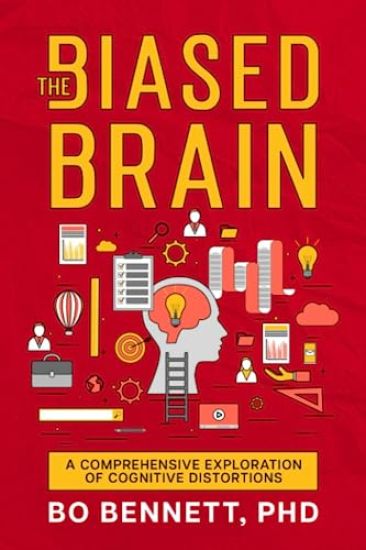
Unravel the Secrets of Your Mind: A Journey into Cognitive BiasesStep into the intriguing world of cognitive biases with this comprehensive guide that promises to transform the way you perceive yourself and others. Packed with fascinating insights, this book unveils the subtle but powerful ways our minds shape our understanding of reality.In The Biased Brain, you will delve deep into the heart of human cognition and discover hundreds of cognitive biases that influence our decisions. Written by an expert in the field, this book is a powerful tool that will enable you to navigate your life with enhanced understanding and control.Nearly 500 pages packed with well-researched, engaging content that will draw you into the labyrinth of the human mind. You will explore concepts that will make you question your assumptions and provoke you to think critically about your thought processes. This book doesn't just offer theoretical knowledge; it also provides practical solutions to identify and overcome your biases.It doesn't matter whether you're a student of psychology, a curious observer of human behavior, or someone who's simply looking to better understand their own mind-this book has something for everyone. In fact, it might just be the most insightful book you will read this year.Are you ready to challenge your perceptions and unveil the biases hiding in plain sight? This book is your map to understanding the complex landscape of human cognition. So, why wait? Start your journey now and transform the way you see yourself and the world.Grab your copy of The Biased Brain today and embark on an enlightening journey into the human mind.
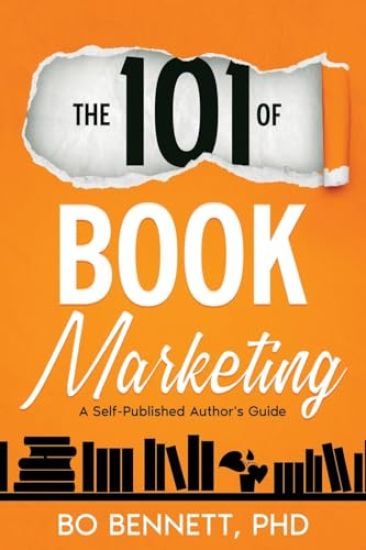
Navigate the Trail of Self-Publishing with Ease: A Comprehensive Guide to Book MarketingSelf-publishing your book is just the start of your journey. The real challenge lies in promoting your masterpiece, making it visible to the right audience, and generating sales. "The 101 of Book Marketing: A Self-Published Author's Guide" has all the answers you've been seeking.This comprehensive guide deciphers the cluttered landscape of self-publishing, offering clear insights into its definition, benefits, and challenges. The book makes a compelling case for why book marketing is crucial, highlighting realistic expectations for organic growth that won't cough up your fortune.Did you know that you, as an author, are a brand yourself? This book helps you develop and consistently maintain your author brand. It also provides tactics to build a robust online presence, showcasing the importance of having a personal website, social media engagement, and leveraging networking platforms like Facebook, Twitter, LinkedIn, Instagram, and more.While emphasizing the digital world, the book doesn't disregard the magic of offline marketing strategies. It guides you on organizing book readings and signings, networking events, and speaking engagements. You also get a roadmap for accumulating beneficial book reviews and methods of implementing promotional techniques for boosting visibility.Advertising your book doesn't have to be a daunting task. This guide demystifies where to advertise, weighing in on paid advertising versus free advertising options. Discover how Artificial Intelligence is transforming book marketing and how Amazon's algorithm can be harnessed for self-publishing success.Gauge your success and maintain the marketing momentum with the help of valuable tips on setting and measuring goals and formulating long-term marketing plans. Learn from the case studies of successful self-published authors, concluding with an appendix of useful resources for your reference. Get your copy today and embark on a successful self-publishing journey