Kirjojen hintavertailu. Mukana 12 016 292 kirjaa ja 12 kauppaa.

Kirjahaku

Etsi kirjoja tekijän nimen, kirjan nimen tai ISBN:n perusteella.

9 kirjaa tekijältä Bob Becking

Micah

Micah

Bob Becking

YALE UNIVERSITY PRESS
2023
sidottu
A new translation and commentary on the biblical book of Micah that proposes a convincing new theory of its composition history While the biblical book of Micah is most famous for its images of peace—swords forged into to plowshares, spears turned into pruning hooks—and its passages of prophetic hope, the book is largely composed of prophecies of ruin. The historical Micah, who likely lived in the late eighth century BCE, is the first recorded prophet to predict the fateful fall of Jerusalem, and he also foretells the destruction of the regions of Samaria and Judah, in addition to the more well-known promises of Judah’s eventual restoration. Bob Becking translates the Hebrew text anew and illuminates the book’s most important elements, including its literary features, political context, and composition history. Drawing on ancient Near Eastern comparative evidence, archaeological notes, and inscriptions, Becking surveys the debates surrounding the book’s interpretation and argues that it be regarded as three separate source texts: the early first chapter; a large middle section containing a proto-apocalyptic, alternating prophetic futurology collected and molded by a later redactor; and an added section advocating for legal reform under Josiah.
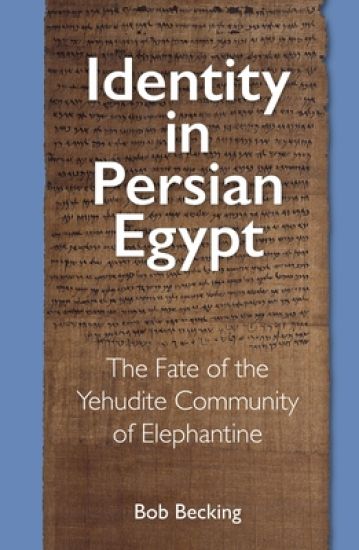
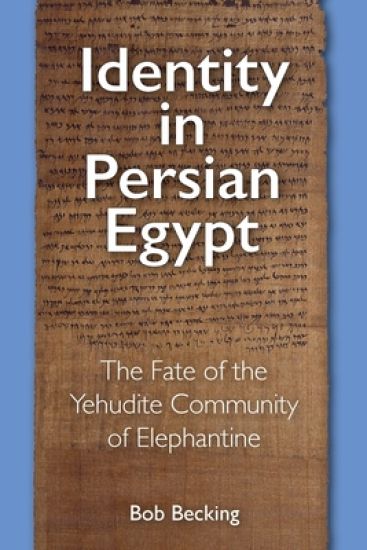
Identity in Persian Egypt

Identity in Persian Egypt

Bob Becking

Eisenbrauns
2020
sidottu
In this book, Bob Becking provides a comprehensive and up-to-date overview of the origins, lives, and eventual fate of the Yehudites, or Judeans, at Elephantine, framed within the greater history of the rise and fall of the Persian Empire. The Yehudites were among those mercenaries recruited by the Persians to defend the southwestern border of the empire in the fifth century BCE. Becking argues that this group, whom some label as the first “Jews,” lived on the island of Elephantine in relative peace with other ethnic groups under the aegis of the pax persica. Drawing on Aramaic and Demotic texts discovered during excavations on the island and at Syene on the adjacent shore of the Nile, Becking finds evidence of intermarriage, trade cooperation, and even a limited acceptance of one another’s gods between the various ethnic groups at Elephantine. His analysis of the Elephantine Yehudites’ unorthodox form of Yahwism provides valuable insight into the group’s religious beliefs and practices. An important contribution to the study of Yehudite life in the diaspora, this accessibly written and sweeping history enhances our understanding of the varieties of early Jewish life and how these contributed to the construction of Judaism.
Identity in Persian Egypt

Identity in Persian Egypt

Bob Becking

Pennsylvania State University Press
2023
pokkari
In this book, Bob Becking provides a comprehensive and up-to-date overview of the origins, lives, and eventual fate of the Yehudites, or Judeans, at Elephantine, framed within the greater history of the rise and fall of the Persian Empire. The Yehudites were among those mercenaries recruited by the Persians to defend the southwestern border of the empire in the fifth century BCE. Becking argues that this group, whom some label as the first “Jews,” lived on the island of Elephantine in relative peace with other ethnic groups under the aegis of the pax persica. Drawing on Aramaic and Demotic texts discovered during excavations on the island and at Syene on the adjacent shore of the Nile, Becking finds evidence of intermarriage, trade cooperation, and even a limited acceptance of one another’s gods between the various ethnic groups at Elephantine. His analysis of the Elephantine Yehudites’ unorthodox form of Yahwism provides valuable insight into the group’s religious beliefs and practices. An important contribution to the study of Yehudite life in the diaspora, this accessibly written and sweeping history enhances our understanding of the varieties of early Jewish life and how these contributed to the construction of Judaism.
Nahum

Nahum

Bob Becking

Sheffield Phoenix Press Ltd
2024
sidottu
In this first volume of our Trauma Bible Commentary series, Bob Becking encourages attention to Nahum as a text that could-or probably should-be read as a reflection to trauma. The text sits within a history of humankind that is full of traumatising events, which may be experienced on an almost daily basis.The small Book of Nahum saw the light of day in times of trouble. Samaria was reduced to an Assyrian province; Judah to a vassal-state-both suffered from the presence of the Assyrian yoke, including loss of independence, deportations and paying of tribute.This commentary re-considers the author, noting he was a person who had inside knowledge of Assyrian culture and language. This anonymous author was veiled behind the name Nahum, meaning consolation. What kind of consolation is promised in this pamphlet and at what price? In what way is the book of Nahum to be seen as a consoling reaction to this trauma? ​​Becking provides a contemporary trauma informed critique of the book's approach-and by reading against the grain explains Nahum's way out of trauma is not the only route; rather another pathway of mourning, coping and healing could be taken. The God of Nahum has two faces: one compassionate and one full of wrath. Using close textual analysis, Becking argues that the Assyrians will be defeated by divine wrath leading to an end of Israel's trauma. Reading Nahum conceptually, reveals that the book is based on the idea of retribution: 'an eye for an eye'. Theologically this raises big questions when appropriating the 'message' of Nahum to our times: Is it not against humanitarianism to believe in such a revengeful God?Or is it perhaps worse: to adopt this idea to justify human acts in the many traumatising conflicts that determine our age?
Nahum

Nahum

Bob Becking

Sheffield Phoenix Press Ltd
2024
pokkari
In this first volume of our Trauma Bible Commentary series, Bob Becking encourages attention to Nahum as a text that could-or probably should-be read as a reflection to trauma. The text sits within a history of humankind that is full of traumatising events, which may be experienced on an almost daily basis.The small Book of Nahum saw the light of day in times of trouble. Samaria was reduced to an Assyrian province; Judah to a vassal-state-both suffered from the presence of the Assyrian yoke, including loss of independence, deportations and paying of tribute.This commentary re-considers the author, noting he was a person who had inside knowledge of Assyrian culture and language. This anonymous author was veiled behind the name Nahum, meaning consolation. What kind of consolation is promised in this pamphlet and at what price? In what way is the book of Nahum to be seen as a consoling reaction to this trauma? ​​Becking provides a contemporary trauma informed critique of the book's approach-and by reading against the grain explains Nahum's way out of trauma is not the only route; rather another pathway of mourning, coping and healing could be taken. The God of Nahum has two faces: one compassionate and one full of wrath. Using close textual analysis, Becking argues that the Assyrians will be defeated by divine wrath leading to an end of Israel's trauma. Reading Nahum conceptually, reveals that the book is based on the idea of retribution: 'an eye for an eye'. Theologically this raises big questions when appropriating the 'message' of Nahum to our times: Is it not against humanitarianism to believe in such a revengeful God?Or is it perhaps worse: to adopt this idea to justify human acts in the many traumatising conflicts that determine our age?
Israel's Past

Israel's Past

Bob Becking

De Gruyter
2021
sidottu
How should one write a history of Ancient Israel? In the last few decades, a lively discussion has taken place on the historiography of ancient Israel. Minimalists such as Philip Davies, Thomas Thompson, and Niels Peter Lemche challenged the usefulness of the Hebrew Bible as a source for constructing Israel's past. Maximalists like Baruch Halpern and William Dever argued instead that the data from the Hebrew Bible should be trusted until otherwise proven. Others – among whom we can name Hans Barstad, Rainer Albertz, and Lester Grabbe – took a third road. The essays in this volume follow that third road by applying insights from the field of philosophy of history. A dozen case studies from David to the earliest Samaritans demonstrate how difficult it is to write a history of ancient Israel without falling in the abyss of an ideology in one direction or another. The matrix designed by Manfred Weippert to look at the past through five windows (landscape, climate, archaeology, epigraphy and only at the end the Hebrew Bible) turned out to be more helpful. The conclusion of this research is that there are some stable pillars in the swamp of the past, but it comes with the warning that the space between these pillars is large and cannot easily be filled.
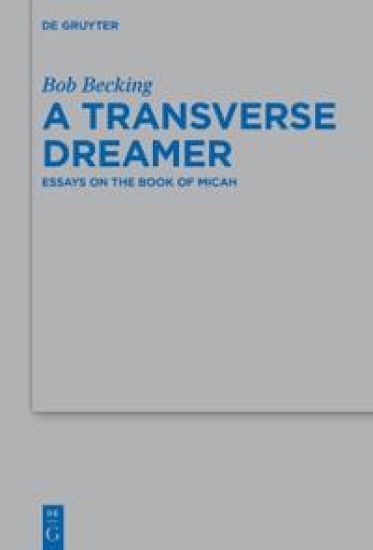
A Transverse Dreamer

A Transverse Dreamer

Bob Becking

De Gruyter
2023
sidottu
The final text of the Book of Micah provokes a series of questions:- Can the Book be read as a coherent composition or is it the result of a complex redaction history?- Was Micah a prophet of doom whose literary heritage was later softened by the inclusion of oracles of salvation?The essays in this book center around these questions. Some of them are of a more general character, while others analyze specific passages. Some articles discuss the Book of Micah by looking at specific themes (prophecy; religious polemics; metaphors). The others are concerned with the proclamation of a peaceful future (Micah 4:1-5); the famous moral incentive in Micah 6:8 and the question of prophetic and divine gender in Micah 7:8-13. They have two features in common:- A thorough reading of the Hebrew text informed by grammar and syntax.- A comparative approach: the Book of Micah is seen as part of the ancient Near Eastern culture.All in all, the author defends the view that the Book of Micah contains three independent literary elements: Micah 1: a prophecy of doom; Micah 2-5 a two-sided futurology, and 6-8 a later appropriation of Micah’s message.
A Transverse Dreamer

A Transverse Dreamer

Bob Becking

De Gruyter
2025
isokokoinen pokkari
The final text of the Book of Micah provokes a series of questions:- Can the Book be read as a coherent composition or is it the result of a complex redaction history?- Was Micah a prophet of doom whose literary heritage was later softened by the inclusion of oracles of salvation?The essays in this book center around these questions. Some of them are of a more general character, while others analyze specific passages. Some articles discuss the Book of Micah by looking at specific themes (prophecy; religious polemics; metaphors). The others are concerned with the proclamation of a peaceful future (Micah 4:1-5); the famous moral incentive in Micah 6:8 and the question of prophetic and divine gender in Micah 7:8-13. They have two features in common:- A thorough reading of the Hebrew text informed by grammar and syntax.- A comparative approach: the Book of Micah is seen as part of the ancient Near Eastern culture.All in all, the author defends the view that the Book of Micah contains three independent literary elements: Micah 1: a prophecy of doom; Micah 2-5 a two-sided futurology, and 6-8 a later appropriation of Micah’s message.
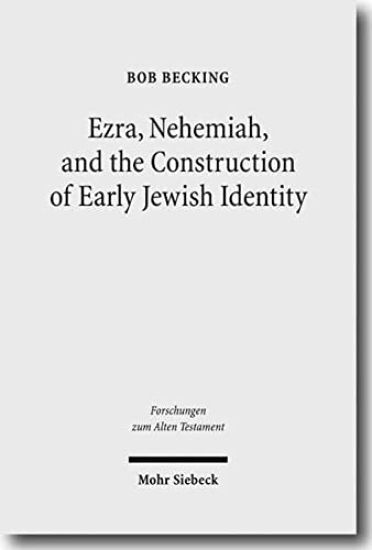
Ezra, Nehemiah, and the Construction of Early Jewish Identity
The post-exilic of Persian period showed a transition in the religion in ancient Israel from Yahwism(s) to Judaism(s). The events of exile and return made it impossible to completely fall back on the traditional religious identity. The essays in this volume try to reconstruct the path taken in that transition. The characters of Ezra and Nehemiah are generally seen as playing a formative role in this process. By reading texts from the biblical books supposedly written by Ezra and Nehemiah in a religio-historical context, new light falls on the process of change.