Kirjojen hintavertailu. Mukana 11 717 486 kirjaa ja 12 kauppaa.

Kirjahaku

Etsi kirjoja tekijän nimen, kirjan nimen tai ISBN:n perusteella.

61 kirjaa tekijältä Boethius

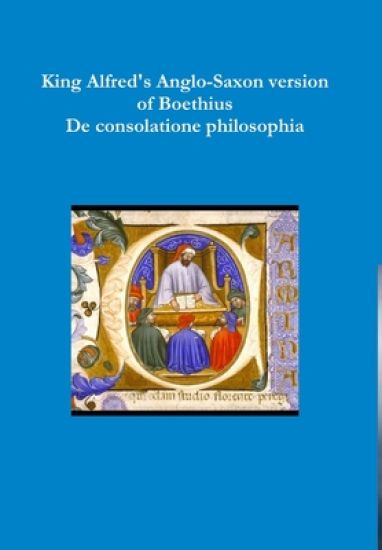
King Alfred's Anglo-Saxon version of Boethius De consolatione philosophiae
The Old English Boethius is an Old English translation / adaptation of the sixth-century Consolation of Philosophy by Boethius, dating from between c. 880 and 950. Boethius's work is prosimetrical, alternating between prose and verse, and one of the two surviving manuscripts of the Old English translation renders the poems as Old English alliterative verse: these verse translations are known as the Metres of Boethius. NOTE: While Introduction and notes are in modern English, and a glossary is also included, the book does not contain a translation into modern English of the text of Consolation of Philosophy.
Boethius: On Aristotle On Interpretation 1-3

Boethius: On Aristotle On Interpretation 1-3

Boethius

Bristol Classical Press
2010
sidottu
Boethius (c. 480-c. 525) wrote his highly influential second commentary on Aristotle's On Interpretationin Latin, but using the style of the Greek commentaries on Aristotle. It was part of his project to bring knowledge of Plato and Aristotle to the Latin-speaking world of his fellow Christians. The project was cruelly interrupted by his execution at the age of about 45, leaving the Latin world under-informed about Greek Philosophy for 700 years. Boethius reveals to us how On Interpretation was understood not only by himself, but also by some of the best Greek interpreters, especially Alexander and Porphyry. Alexander had insisted that its subject was composite thoughts, not composite sentences nor composite things - it is thoughts that are primarily true or false. Although Aristotle's first six chapters define name, verb, sentence, statement, affirmation and negation, Porphyry had claimed that Aristotelians believe in three types of name and verb, written, spoken and mental, in other words a language of the mind. Boethius discusses individuality and ascribes to Aristotle a view that each individual is distinguished by having a composite quality that is not merely unshared, but unshareable. Boethius also discusses why we can still say that the dead Homer is a poet, despite having forbidden us to say that the dead Socrates is either sick or well. But Boethius' most famous contribution is his interpretation of Aristotle's discussion of the threat of that tomorrow's events, for example a sea battle, will have been irrevocable 10,000 years ago, if it was true 10,000 years ago that there would be a sea battle on that day. In Boethius' later "Consolation of Philosophy", written in prison awaiting execution, he offered a seminal conception of eternity to solve the related problem of future events being irrevocable because of God's foreknowledge of them.
Boethius: On Aristotle on Interpretation 4-6

Boethius: On Aristotle on Interpretation 4-6

Boethius

Bristol Classical Press
2011
sidottu
Boethius (c. 480-c. 525) was a Christian philosopher and author of many translations and works of philosophy, most famously the Consolations of Philosophy which were probably written when he was under house arrest, having been accused of treason by King Theoderic the Great. He was subsequently executed. On Interpretation is the second part of the Organon, as Aristotle's collected works on logic are known; it deals comprehensively and systematically with the relationship between logic and language. In his first six chapters, Aristotle defines name, verb, sentence, statement, affirmation and negation. Boethius preserves lost interpretations by two of the greatest earlier interpreters, Alexander and Porphyry, and the defence of the work's authenticity against criticism. He records the idea of Porphyry that Aristotelians believe in three types of name and verb, written, spoken and mental, in other words a language of the mind. Boethius' commentary formed part of his project to bring knowledge of Plato and Aristotle to the Latin-speaking world. It had great influence, remaining the standard introduction to On Interpretation throughout the Latin Middle Ages.
Boethius's "De Topicis Differentiis"

Boethius's "De Topicis Differentiis"

Boethius

Cornell University Press
2004
pokkari
In Ciceronis Topica and De topicis differentiis are Boethius's two treatises on Topics (loci). Together these two works present Boethius's theory of the art of discovering arguments, a theory that was highly influential in the history of medieval logic.
Boethius's "in Ciceronis Topica"

Boethius's "in Ciceronis Topica"

Boethius

Cornell University Press
2004
pokkari
In Ciceronis Topica and De topicis differentiis are Boethius's two treatises on Topics (loci). Together these two works present Boethius's theory of the art of discovering arguments, a theory that was highly influential in the history of medieval logic. Eleonore Stump here presents the first English language translation of In Ciceronis Topica, Boethius's extended commentary on Cicero's Topica. To supplement her translation, Professor Stump has provided an introduction that supplies essential information about In Ciceronis Topica, Boethius's life, and the tradition of dialectic; her detailed notes explore the many philosophical problems in Boethius's text. A significant contribution to the history of Western intellectual life in its own right, Boethius's ''In Ciceronis Topica" makes an excellent companion to Professor Stump's earlier work, Boethius's "De topicis differentiis" (also available from Cornell).
The Metres of Boethius, on the Consolation of Philosophy
The 18th century was a wealth of knowledge, exploration and rapidly growing technology and expanding record-keeping made possible by advances in the printing press. In its determination to preserve the century of revolution, Gale initiated a revolution of its own: digitization of epic proportions to preserve these invaluable works in the largest archive of its kind. Now for the first time these high-quality digital copies of original 18th century manuscripts are available in print, making them highly accessible to libraries, undergraduate students, and independent scholars.The Age of Enlightenment profoundly enriched religious and philosophical understanding and continues to influence present-day thinking. Works collected here include masterpieces by David Hume, Immanuel Kant, and Jean-Jacques Rousseau, as well as religious sermons and moral debates on the issues of the day, such as the slave trade. The Age of Reason saw conflict between Protestantism and Catholicism transformed into one between faith and logic -- a debate that continues in the twenty-first century.++++The below data was compiled from various identification fields in the bibliographic record of this title. This data is provided as an additional tool in helping to insure edition identification: ++++British LibraryT105558With a half-title. Parallel Latin and English text. With the preface of Peter Berty in Latin and English. P.i occurs on the verso. The text appears complete despite the pagination.London: printed for the author, by J. Crowder, and sold by G. G. J. and J. Robinson, 1792. 9], cix, 3],6-108p., plate: port.; 8
Boethius's Consolation of Philosophy. Translated From the Latin, With Notes and Illustrations, by the Rev. Mr. Philip Ridpath,
The 18th century was a wealth of knowledge, exploration and rapidly growing technology and expanding record-keeping made possible by advances in the printing press. In its determination to preserve the century of revolution, Gale initiated a revolution of its own: digitization of epic proportions to preserve these invaluable works in the largest archive of its kind. Now for the first time these high-quality digital copies of original 18th century manuscripts are available in print, making them highly accessible to libraries, undergraduate students, and independent scholars.The Age of Enlightenment profoundly enriched religious and philosophical understanding and continues to influence present-day thinking. Works collected here include masterpieces by David Hume, Immanuel Kant, and Jean-Jacques Rousseau, as well as religious sermons and moral debates on the issues of the day, such as the slave trade. The Age of Reason saw conflict between Protestantism and Catholicism transformed into one between faith and logic -- a debate that continues in the twenty-first century.++++The below data was compiled from various identification fields in the bibliographic record of this title. This data is provided as an additional tool in helping to insure edition identification: ++++British LibraryT143757With a half-title.London: printed for C. Dilly, 1785. 4], xxxi, 1],224p.; 8
Boethius: On Aristotle On Interpretation 1-3
Boethius (c.480-c.525) wrote his highly influential second commentary on Aristotle's On Interpretation in Latin, but using the style of the Greek commentaries on Aristotle. It was part of his project to bring knowledge of Plato and Aristotle to the Latin-speaking world of his fellow Christians. The project was cruelly interrupted by his execution at the age of about 45, leaving the Latin world under-informed about Greek Philosophy for 700 years. Boethius reveals to us how On Interpretation was understood not only by himself, but also by some of the best Greek interpreters, especially Alexander and Porphyry. Alexander had insisted that its subject was composite thoughts, not composite sentences nor composite things - it is thoughts that are primarily true or false. Although Aristotle's first six chapters define name, verb, sentence, statement, affirmation and negation, Porphyry had claimed that Aristotelians believe in three types of name and verb, written, spoken and mental, in other words a language of the mind.Boethius discusses individuality and ascribes to Aristotle a view that each individual is distinguished by having a composite quality that is not merely unshared, but unshareable. Boethius also discusses why we can still say that the dead Homer is a poet, despite having forbidden us to say that the dead Socrates is either sick or well. But Boethius' most famous contribution is his interpretation of Aristotle's discussion of the threat of that tomorrow's events, for example a sea battle, will have been irrevocable 10,000 years ago, if it was true 10,000 years ago that there would be a sea battle on that day. In Boethius' later Consolation of Philosophy, written in prison awaiting execution, he offered a seminal conception of eternity to solve the related problem of future events being irrevocable because of God's foreknowledge of them.Boethius' influential commentary was part of his ideal of bringing Plato and Aristotle to the Latin-speaking world. Throughout the Latin Middle Ages, it remained the standard introduction to On Interpretation.This volume contains the first English translation of Boethius' commentary, as well as a detailed introduction, notes and bibliography.
Boethius: On Aristotle on Interpretation 4-6
Boethius (c. 480-c. 525) was a Christian philosopher and author of many translations and works of philosophy, most famously the Consolations of Philosophy which were probably written when he was under house arrest, having been accused of treason by King Theoderic the Great. He was subsequently executed. On Interpretation is the second part of the Organon, as Aristotle's collected works on logic are known; it deals comprehensively and systematically with the relationship between logic and language. In his first six chapters, Aristotle defines name, verb, sentence, statement, affirmation and negation. Boethius preserves lost interpretations by two of the greatest earlier interpreters, Alexander and Porphyry, and the defence of the work's authenticity against criticism. He records the idea of Porphyry that Aristotelians believe in three types of name and verb, written, spoken and mental, in other words a language of the mind. Boethius' commentary formed part of his project to bring knowledge of Plato and Aristotle to the Latin-speaking world. It had great influence, remaining the standard introduction to On Interpretation throughout the Latin Middle Ages.
Boethius' Consolation Of Philosophy

Boethius' Consolation Of Philosophy

Boethius

Literary Licensing, LLC
2014
sidottu
Boethius' Consolation of Philosophy is a philosophical and literary masterpiece written by the Roman philosopher and statesman, Boethius, in the early 6th century. The book is written in the form of a dialogue between Boethius and Lady Philosophy, who appears to him in his prison cell where he is awaiting execution. Boethius is despondent and despairing, having been unjustly accused of treason and sentenced to death. Lady Philosophy appears to him to provide comfort and wisdom, and to guide him towards a deeper understanding of the nature of happiness, fortune, and the human condition.Throughout the book, Lady Philosophy engages Boethius in a series of discussions on a range of topics, including the nature of good and evil, the relationship between happiness and virtue, the role of fortune in human affairs, and the nature of God and the universe. She argues that true happiness can only be found through a life of virtue and that the pursuit of wealth, power, and fame is ultimately futile and leads to misery. She also argues that God is the ultimate source of all good and that human suffering can be understood as a means of spiritual growth and purification.Boethius' Consolation of Philosophy is a work of profound philosophical and literary significance. It has been widely read and studied throughout the centuries and has influenced many great thinkers, including Dante, Chaucer, and Shakespeare. The book is a testament to the enduring power of philosophy and the human capacity for wisdom and understanding, even in the face of adversity and suffering.This Is A New Release Of The Original 1897 Edition.This scarce antiquarian book is a facsimile reprint of the old original and may contain some imperfections such as library marks and notations. Because we believe this work is culturally important, we have made it available as part of our commitment for protecting, preserving, and promoting the world's literature in affordable, high quality, modern editions, that are true to their original work.
The Consolation of Philosophy

The Consolation of Philosophy

Boethius

Clarendon Press
1999
sidottu
Boethius composed the Consolatio Philosophiae in the sixth century AD whilst awaiting death under torture. He had been condemned on a charge of treason which he protested was manifestly unjust. Though a convinced Christian, in detailing the true end of life which is the soul's knowledge of God, he consoled himself not with Christian precepts but with the tenets of Greek philosophy. This work dominated the intellectual world of the Middle Ages; writers as diverse as Thomas Aquinas, Jean de Meun, and Dante were inspired by it. In England it was rendered into Old English by Alfred the Great, into Middle English by Geoffrey Chaucer, and later Queen Elizabeth I made her own translation. The circumstances of composition, the heroic demeanour of the author, and the `Menippean' texture (part prose, part verse; Boethius was a considerable poet) have combined to exercise a fascination over students of philosophy and of literature ever since. Professor Walsh has included an introduction and explanatory notes which combined with his new translation make the text accessible to general readers and scholars alike.
The Consolation of Philosophy

The Consolation of Philosophy

Boethius

Oxford University Press
2008
nidottu
Boethius composed the De Consolatione Philosophiae in the sixth century AD whilst awaiting death under torture, condemned on a charge of treason which he protested was manifestly unjust. Though a convinced Christian, in detailing the true end of life which is the soul's knowledge of God, he consoled himself not with Christian precepts but with the tenets of Greek philosophy. This work dominated the intellectual world of the Middle Ages; writers as diverse as Thomas Aquinas, Jean de Meun, and Dante were inspired by it. In England it was rendered in to Old English by Alfred the Great, into Middle English by Geoffrey Chaucer, and later Queen Elizabeth I made her own translation. The circumstances of composition, the heroic demeanour of the author, and the 'Menippean' texture of part prose, part verse have combined to exercise a fascination over students of philosophy and literature ever since. ABOUT THE SERIES: For over 100 years Oxford World's Classics has made available the widest range of literature from around the globe. Each affordable volume reflects Oxford's commitment to scholarship, providing the most accurate text plus a wealth of other valuable features, including expert introductions by leading authorities, helpful notes to clarify the text, up-to-date bibliographies for further study, and much more.
The Consolation of Philosophy
Written while Boethius was in prison awaiting execution, The Consolation of Philosophy consists of a dialogue in alternating prose and verse between the author, lamenting his own sorrows, and a majestic woman, who is the incarnation of his guardian Philosophy. The woman develops a modified form of Neoplatonism and Stoicism, demonstrating the unreality of earthly fortunes, then proving that the highest good and the highest happiness are in God, and reconciling the apparent contradictions concerning the existence of everything.
The Consolation of Philosophy
Written while Boethius was in prison awaiting execution, The Consolation of Philosophy consists of a dialogue in alternating prose and verse between the author, lamenting his own sorrows, and a majestic woman, who is the incarnation of his guardian Philosophy. The woman develops a modified form of Neoplatonism and Stoicism, demonstrating the unreality of earthly fortunes, then proving that the highest good and the highest happiness are in God, and reconciling the apparent contradictions concerning the existence of everything.