Kirjojen hintavertailu. Mukana 11 244 527 kirjaa ja 12 kauppaa.

Kirjahaku

Etsi kirjoja tekijän nimen, kirjan nimen tai ISBN:n perusteella.

26 kirjaa tekijältä Boris Groys

Under Suspicion

Under Suspicion

Boris Groys

Columbia University Press
2012
sidottu
The public generally regards the media with suspicion and distrust. Therefore, the media's primary concern is to regain that trust through the production of sincerity. Advancing the field of media studies in a truly innovative way, Boris Groys focuses on the media's affect of sincerity and its manufacture of trust to appease skeptics. Groys identifies forms of media sincerity and its effect on politics, culture, society, and conceptions of the self. He relies on different philosophical writings thematizing the gaze of the other, from the theories of Heidegger, Sartre, Mauss, and Bataille to the poststructuralist formulations of Lacan and Derrida. He also considers media "states of exception" and their creation of effects of sincerity-a strategy that feeds the media's predilection for the extraordinary and the sensational, further fueling the public's suspicions. Emphasizing the media's production of emotion over the presentation (or lack thereof) of "facts," Groys launches a timely study boldly challenging the presumed authenticity of the media's worldview.
Art Power

Art Power

Boris Groys

MIT Press
2013
pokkari
A new book by Boris Groys acknowledges the problem and potential of art's complex relationship to power.Art has its own power in the world, and is as much a force in the power play of global politics today as it once was in the arena of cold war politics. Art, argues the distinguished theoretician Boris Groys, is hardly a powerless commodity subject to the art market's fiats of inclusion and exclusion. In Art Power, Groys examines modern and contemporary art according to its ideological function. Art, Groys writes, is produced and brought before the public in two ways-as a commodity and as a tool of political propaganda. In the contemporary art scene, very little attention is paid to the latter function.Arguing for the inclusion of politically motivated art in contemporary art discourse, Groys considers art produced under totalitarianism, Socialism, and post-Communism. He also considers today's mainstream Western art-which he finds behaving more and more according the norms of ideological propaganda: produced and exhibited for the masses at international exhibitions, biennials, and festivals. Contemporary art, Groys argues, demonstrates its power by appropriating the iconoclastic gestures directed against itself-by positioning itself simultaneously as an image and as a critique of the image. In Art Power, Groys examines this fundamental appropriation that produces the paradoxical object of the modern artwork.
History Becomes Form

History Becomes Form

Boris Groys

MIT Press
2013
pokkari
An insider's account of the art and artists of the most interesting Russian artistic phenomenon since the Russian Avant-Garde.In the 1970s and 1980s, a group of "unofficial" artists in Moscow-artists not recognized by the state, not covered by state-controlled media, and cut off from wider audiences-created artworks that gave artistic form to a certain historical moment: the experience of Soviet socialism. The Moscow conceptualists not only reflected and analyzed by artistic means a spectacle of Soviet life but also preserved its memory for a future that turned out to be different from the officially predicted one. They captured both the shabby austerity of everyday Soviet life and the utopian energy of Soviet culture. In History Becomes Form, Boris Groys offers a contemporary's account of what he calls the most interesting Russian artistic phenomenon since the Russian avant-garde.The book collects Groys's essays on Moscow conceptualism, most of them written after his emigration to the West in 1981. The individual artists of the group-including Ilya Kabakov, Lev Rubinstein, and Ivan Chuikov-became known in the West after perestroika, but until now the artistic movement as a whole has received little attention. Groys's account sheds light not only on the Moscow Conceptualists and their work but also on the dilemmas of Soviet artists during the cold war.
Writings on Art and Politics

Writings on Art and Politics

Boris Groys

BLOOMSBURY PUBLISHING PLC
2026
sidottu
To Boris Groys, everything in the modern world ultimately falls into two categories – it’s either art, or it’s garbage. Both are useless, functionless objects that simply… lie there. The difference comes when we immunize art from the destructive power of time to which we happily deliver our garbage. In this collection of essays and interviews, Groys expounds on these lines of thinking, taking in art, the dialectic of work, the afterlife, politics, utopia, philosophy, faith, revolution, the avant-garde and digitalization. Boris Groys’ philosophical writings critique the political economy of heterotopia: economic resources are finite and not everything in modernity receives the same degree of care. His writings on art concern the things of the after-life, with only the politics of immortality ensuring that one’s own form of life never becomes a piece of garbage. Groys sees modern history is a history of aestheticizations, and with every aestheticization comes a claim of protection. Western society tends to aestheticize with a desire to protect everything, including the Anthropocene and all of the exotic species dwelling within it. If we can present ourselves as objects of reverence worthy of admiration and care, then can we too survive the ravages of time?Bringing together previously unpublished texts, newly translated work and interviews, this is a coruscating trip through the complex and challenging philosophical and cultural problems that Boris Groys has made it his life’s work to deal with.
Writings on Art and Politics

Writings on Art and Politics

Boris Groys

BLOOMSBURY PUBLISHING PLC
2026
nidottu
To Boris Groys, everything in the modern world ultimately falls into two categories – it’s either art, or it’s garbage. Both are useless, functionless objects that simply… lie there. The difference comes when we immunize art from the destructive power of time to which we happily deliver our garbage. In this collection of essays and interviews, Groys expounds on these lines of thinking, taking in art, the dialectic of work, the afterlife, politics, utopia, philosophy, faith, revolution, the avant-garde and digitalization. Boris Groys’ philosophical writings critique the political economy of heterotopia: economic resources are finite and not everything in modernity receives the same degree of care. His writings on art concern the things of the after-life, with only the politics of immortality ensuring that one’s own form of life never becomes a piece of garbage. Groys sees modern history is a history of aestheticizations, and with every aestheticization comes a claim of protection. Western society tends to aestheticize with a desire to protect everything, including the Anthropocene and all of the exotic species dwelling within it. If we can present ourselves as objects of reverence worthy of admiration and care, then can we too survive the ravages of time?Bringing together previously unpublished texts, newly translated work and interviews, this is a coruscating trip through the complex and challenging philosophical and cultural problems that Boris Groys has made it his life’s work to deal with.
Becoming an Artwork

Becoming an Artwork

Boris Groys

JOHN WILEY AND SONS LTD
2022
sidottu
Modern history is a history of aesthetizations – and every aesthetization raises a claim of protection. We aestheticize and want to protect almost everything, including Earth, oceans, the atmosphere, rare animal species and exotic plants. Humans are no exception. They also present themselves as objects of contemplation that deserve admiration and care. For some time, artists and intellectuals struggled for the sovereign right to present themselves to society in their own way – to become self-created works of art. Today everybody has not only a right but also an obligation to practice self-design. We are responsible for the way we present ourselves to others – and we cannot get rid of this aesthetic responsibility. However, we are not able to produce our own bodies. Before we begin to practice self-design, we find ourselves already designed by the gaze of others. That is why the practice of self-design mostly takes a critical and confrontational turn. We want to bring others to see us in the way we want to be seen – not only during our earthly life but also after our death. This is a complicated struggle, and the aim of this book is to describe and analyze it.
Becoming an Artwork

Becoming an Artwork

Boris Groys

JOHN WILEY AND SONS LTD
2022
nidottu
Modern history is a history of aesthetizations – and every aesthetization raises a claim of protection. We aestheticize and want to protect almost everything, including Earth, oceans, the atmosphere, rare animal species and exotic plants. Humans are no exception. They also present themselves as objects of contemplation that deserve admiration and care. For some time, artists and intellectuals struggled for the sovereign right to present themselves to society in their own way – to become self-created works of art. Today everybody has not only a right but also an obligation to practice self-design. We are responsible for the way we present ourselves to others – and we cannot get rid of this aesthetic responsibility. However, we are not able to produce our own bodies. Before we begin to practice self-design, we find ourselves already designed by the gaze of others. That is why the practice of self-design mostly takes a critical and confrontational turn. We want to bring others to see us in the way we want to be seen – not only during our earthly life but also after our death. This is a complicated struggle, and the aim of this book is to describe and analyze it.
On the New

On the New

Boris Groys

Verso Books
2014
nidottu
On the New looks at the economies of exchange and valuation that drive modern culture's key sites: the intellectual marketplace and the archive. As ideas move from one context to another, newness is created. This continuous shifting of the line that separates the valuable from the worthless, culture from profanity, is at the center of Boris Groys's investigation which aims to map the uncharted territory of what constitutes artistic innovation and what processes underpin its recognition and appropriation.
In the Flow

In the Flow

Boris Groys

Verso Books
2016
sidottu
In the early 20th century, art and its institutions came under critique from a new democratic and egalitarian spirit, as works of art as sacred object was decried and they would be understood as merely things. This meant an attack on realism, as well as the traditional preservative mission of the museum. Acclaimed art theorist Boris Gorys argues this led to the development of "direct realism": an art that would not produce objects, but practices (from performance art to relational aesthetics) that would not survive. But for more than a century now, every advance in this direction has been quickly followed by new means of preserving art's distinction. In this major new work, Groys charts the paradoxes produced by this tension, and explores art in the age of the thingless medium, the internet. Groys claims that if the techniques of mechanical reproduction gave us objects without aura, digital production generates aura without objects, transforming all its materials into vanishing markers of the transitory present.
In the Flow

In the Flow

Boris Groys

Verso Books
2018
nidottu
In the early 20th century, art and its institutions came under critique from a new democratic and egalitarian spirit. In an age of secularism and materialism, artworks would be understood as merely things among other things. This meant an attack on the techniques of realism, and the traditional mission of the museum, both designed shield a small class of objects from the entropic fate awaiting everything else-and the development of an approach that Boris Groys calls "direct realism": an art that would not produce objects, but practices that could enter the flow of time to live and die like the rest of us. But for more than a century now, every advance in this direction has been quickly followed by new means of preserving art's distinction. In this major new work, Groys, one of the world's leading art theorists, charts the paradoxes produced by this tension, which continues to structure the production and reception of new art. The internet, the latest medium through which artists have attempted to disavow this special status, inverts the most notorious consequence of early modernist developments. If the techniques of mechanical reproduction gave us objects without aura, digital production generates aura without objects, transforming all its materials into vanishing markers of the transitory present.
Alexandre Kojève

Alexandre Kojève

Boris Groys

Verso Books
2025
nidottu
Boris Groys's new book is an intellectual biography of the fascinating and mysterious figure of Alexandre Kojève, discussing his involvement with Hegel's dialectics, his idea of communism and his vision of a universal empire as the end of history. Kojève proclaimed himself to be a Stalinist and at the same time was one of the creators of the European Union. His anthropology that describes humans as always negating their nature and their identity, and always desiring to be different from what they are, is highly political. It explains why humans can never be fully satisfied by a political system based on their allegedly "natural" rights.
Philosophy of Care

Philosophy of Care

Boris Groys

Verso Books
2022
sidottu
Our current culture is dominated by the ideology of creativity. One is supposed to create the new and not to care about the things as they are. This ideology legitimises the domination of the "creative class" over the rest of the population that is predominantly occupied by forms of care - medical care, child care, agriculture, industrial maintenance and so on. We have a responsibility to care for our own bodies, but here again our culture tends to thematize the bodies of desire and to ignore the bodies of care - ill bodies in need of self-care and social care. But the discussion of care has a long philosophical tradition. The book retraces some episodes of this tradition - beginning with Plato and ending with Alexander Bogdanov through Hegel, Heidegger, Bataille and many others. The central question discussed is: who should be the subject of care? Should I care for myself or trust the others, the system, the institutions? Here, the concept of the self-care becomes a revolutionary principle that confronts the individual with the dominating mechanisms of control.
The Communist Postscript

The Communist Postscript

Boris Groys

Verso Books
2022
nidottu
Since Plato, philosophers have dreamed of establishing a rational state ruled through the power of language. In this radical and disturbing account of Soviet philosophy, Boris Groys argues that communism shares that dream and is best understood as an attempt to replace financial with linguistic bonds as the cement uniting society. The transformative power of language, the medium of equality, is the key to any new communist revolution.
The Total Art of Stalinism

The Total Art of Stalinism

Boris Groys

Verso Books
2011
nidottu
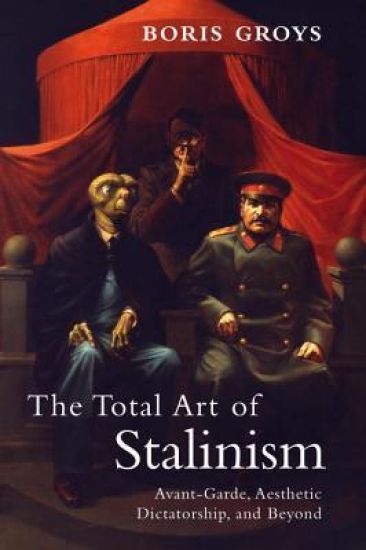
From the ruins of communism, Boris Groys emerges to provoke our interest in the aesthetic goals pursued with such catastrophic consequences by its founders. Interpreting totalitarian art and literature in the context of cultural history, this brilliant essay likens totalitarian aims to the modernists' goal of producing world-transformative art. In this new edition, Groys revisits the debate that the book has stimulated since its first publication.
Introduction to Antiphilosophy

Introduction to Antiphilosophy

Boris Groys

Verso Books
2012
sidottu
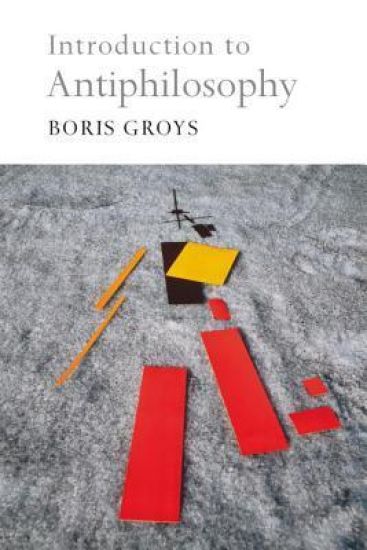
Philosophy is traditionally understood as the search for universal truths, and philosophers are supposed to transmit those truths beyond the limits of their own culture. But, today, we have become sceptical about the ability of an individual philosopher to engage in 'universal thinking', so philosophy seems to capitulate in the face of cultural relativism.In Introduction to Antiphilosophy, Boris Groys argues that modern 'antiphilosophy' does not pursue the universality of thought as its goal but proposes in its place the universality of life, material forces, social practices, passions, and experiences - angst, vitality, ecstasy, the gift, revolution, laughter or 'profane illumination' - and he analyses this shift from thought to life and action in the work of thinkers from Kierkegaard to Derrida, from Nietzsche to Benjamin.Ranging across the history of modern thought, Introduction to Antiphilosophy endeavours to liberate philosophy from the stereotypes that hinder its development.
Ilya Kabakov

Ilya Kabakov

Boris Groys

Afterall Publishing
2006
pokkari
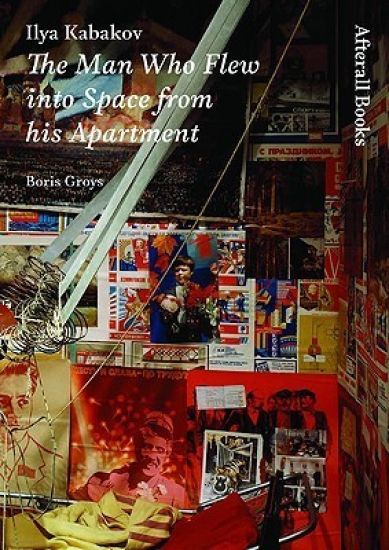
An illustrated study of one of Ilya Kabakov's most fantastic installations.The fictitious hero of this 1984 installation is a lonely dreamer who develops an impossible project: to fly alone in cosmic space. But this dream is also an individual appropriation of a collective Soviet project and the official Soviet propaganda connected to it. Having built a makeshift slingshot, the hero apparently flies through the ceiling of his shabby room and vanishes into space. The miserable room and the primitive slingshot suggest the reality behind the Soviet utopia, in which where cosmic vision and the political project of the Communist revolution are seen as indissoluble.The Man who Flew into Space from His Apartment also raises questions of authorship in modernity. All of Kabakov's work is made in the name of other, fictitious artists. This reveals a hidden rule of the modern art system: only an artist who doesn't want to be an artist or who doesn't even know that he is an artist is a real artist-just as only an artwork that does not look like an artwork is a real artwork. The installation is a narrative, the documentation of a fictitious event.Afterall Books are distributed by The MIT Press.
Über das Neue

Über das Neue

Boris Groys

Carl Hanser Verlag
2007
nidottu
Boris Groys untersucht den kulturellen Prozeß als ökonomische Operation, angetrieben von Gesetzen des Tausches, der Bewertung, der Dynamik, des intellektuellen Marktes, der Nutzung des kulturellen Archivs. Kulturökonomie: eine ärgerliche Paradoxie? Nein, die Neubestimmung von Kultur jenseits der Dichotomie von Neu und Alt und ohne die Idee weitertreibender, schöpferischer Innovation aufzugeben.