Kirjojen hintavertailu. Mukana 11 244 527 kirjaa ja 12 kauppaa.

Kirjahaku

Etsi kirjoja tekijän nimen, kirjan nimen tai ISBN:n perusteella.

60 kirjaa tekijältä Boris Pasternak

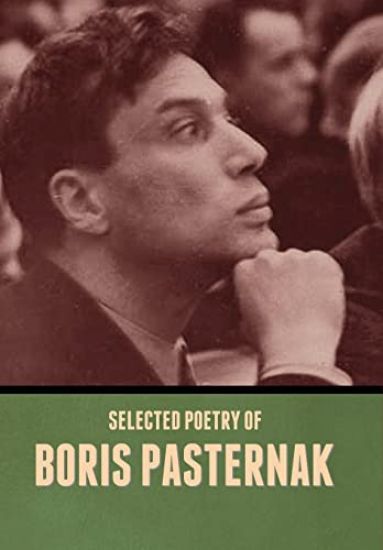
Selected Poetry of Boris Pasternak

Selected Poetry of Boris Pasternak

Boris Pasternak

Bibliotech Press
2022
pokkari
Boris Pasternak was a Nobel Prize and gret modern russian poet and writer. Pasternak's first book of poems, My Sister, Life (1917), is one of the most influential collections ever published in the Russian language. When it finally was published in 1921, the book revolutionised Russian poetry. It made Pasternak the model for younger poets, and decisively changed the poetry of Osip Mandelshtam, Marina Tsvetayeva and others. He continued to change his poetry, simplifying his style and language through the years, as expressed in his next book, Early Trains (1943). Pasternak's post-Zhivago poetry probes the universal questions of love, immortality, and reconciliation with God. Boris Pasternak wrote his last complete book, When the Weather Clears, in 1959. Pasternak was awarded the Nobel Prize for Literature in 1958, an event which both humiliated and enraged the Communist Party of the Soviet Union, which forced him to decline the prize, though his descendants were later to accept it in his name in 1988.
Selected Poetry of Boris Pasternak

Selected Poetry of Boris Pasternak

Boris Pasternak

Bibliotech Press
2022
sidottu
Boris Pasternak was a Nobel Prize and gret modern russian poet and writer. Pasternak's first book of poems, My Sister, Life (1917), is one of the most influential collections ever published in the Russian language. When it finally was published in 1921, the book revolutionised Russian poetry. It made Pasternak the model for younger poets, and decisively changed the poetry of Osip Mandelshtam, Marina Tsvetayeva and others. He continued to change his poetry, simplifying his style and language through the years, as expressed in his next book, Early Trains (1943). Pasternak's post-Zhivago poetry probes the universal questions of love, immortality, and reconciliation with God. Boris Pasternak wrote his last complete book, When the Weather Clears, in 1959. Pasternak was awarded the Nobel Prize for Literature in 1958, an event which both humiliated and enraged the Communist Party of the Soviet Union, which forced him to decline the prize, though his descendants were later to accept it in his name in 1988.
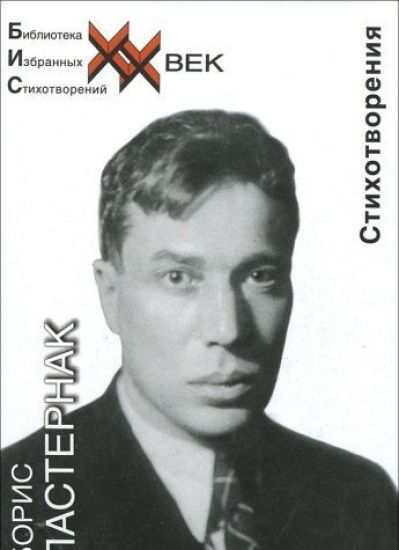
Boris Pasternak. Stikhotvorenija

Boris Pasternak. Stikhotvorenija

Boris Pasternak

Zvonnitsa-MG
2018
sidottu
Boris Leonidovich Pasternak - voshel v russkuju poeziju nezametno. Kazhetsja, chto on vsegda v nej byl. Predlagaemyj sbornik predstavljaet chitatelju izbrannoe poeta, chtoby pokazat dvizhenie ot eksperimentov s formoj k "eksperimentu" s myslju. Na ravnykh pravakh s izvestnymi stikhami i, bolee togo, kak zakljuchenie knigi stikhov, predlagajutsja chitatelju stikhotvorenija, ne vkljuchennye v osnovnoe sobranie, drugie redaktsii i varianty. Dolgoe vremja ignoriruemyj, a vposledstvii i gonimyj na rodine ne tolko ofitsialnoj vlastju, no i obolvanennymi neobrazovannymi massami, on byl udostoen vysshej literaturnoj nagrady - Nobelevskoj premii (1958).
Pasternak. Izbrannaja lirika s illjustratsijami
Boris Pasternak - odin iz kljuchevykh poetov i pisatelej XX veka. V ego stikhakh garmonichno sochetajutsja pylkoe serdtse i kholodnyj vzgljad: tsepko i tochno poet peredajot chitatelju samye tonkie i samye redkie idei i chuvstva. I nesmotrja na priznanie i uspekh, Pasternak nikogda ne stavil ikh vyshe samogo iskusstva. V ego lirike navsegda soedinilis zhizn i priroda. Chitatel pogruzhen v stremitelnost i naprjazhjonnost dejstvija, v istoriju vstrech i rasstavanij, vsepogloschajuschej ljubvi i sderzhannosti, filosofskikh razdumij. Kazhdyj poeticheskij shedevr dopolnen jarkoj illjustratsiej.
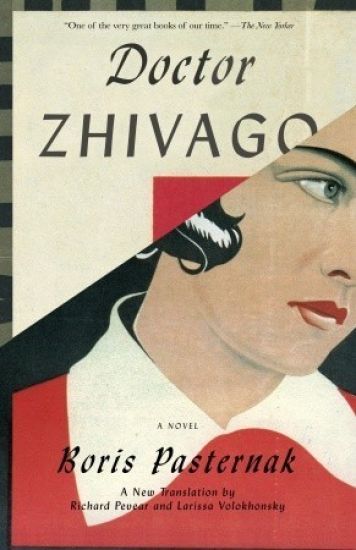
Doctor Zhivago

Doctor Zhivago

Boris Pasternak

Vintage
2002
pokkari
"Doctor Zhivago" is a classic love story set in Russia at the time of the revolution. Yuri Zhivago, physician and poet, wrestles with the new order and confronts the changes cruel experience has made in him, and the anguish of being torn between the love of two women.
Doctor Zhivago

Doctor Zhivago

Boris Pasternak

Vintage
2011
pokkari
Taking his family from Moscow to what he hopes will be shelter in the Ural Mountains, Yuri Zhivago finds himself instead embroiled in the battle between the Whites and the Reds, and in love with the tender and beautiful nurse Lara.
Doctor Zhivago

Doctor Zhivago

Boris Pasternak

VINTAGE
2011
nidottu
First published in Italy in 1957 amid international controversy, Doctor Zhivago is the story of the life and loves of a poet/physician during the turmoil of the Russian Revolution. Taking his family from Moscow to what he hopes will be shelter in the Ural Mountains, Zhivago finds himself instead embroiled in the battle between the Whites and the Reds. Set against this backdrop of cruelty and strife is Zhivago's love for the tender and beautiful Lara, the very embodiment of the pain and chaos of those cataclysmic times. Pevear and Volokhonsky masterfully restore the spirit of Pasternak's original--his style, rhythms, voicings, and tone--in this beautiful translation of a classic of world literature.
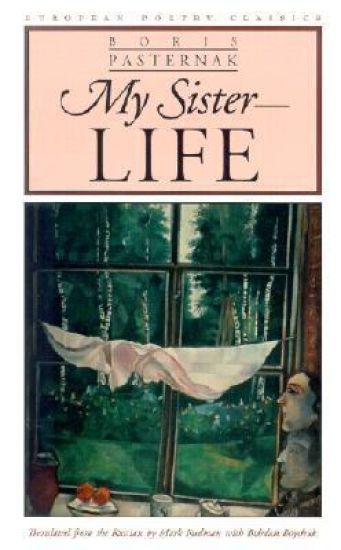
My Sister, Life

My Sister, Life

Boris Pasternak

Northwestern University Press
2001
nidottu
In Russian poetry, Boris Pasternak's ""My Sister-Life"" is the equivalent of ""The Waste Land"", ""Spring"", and ""Harmonium"". Written in 1917, the cycle of poems in ""My Sister-Life"" concentrates on personal journeys and loves, but is permeated by the tension and promise of the impending October revolution. Pasternak is an uncompromisingly complex poetic stylist, and his meticulous attention to structure, etymology, and phonetic qualities of words makes his poetry a formidable challenge for the translator.
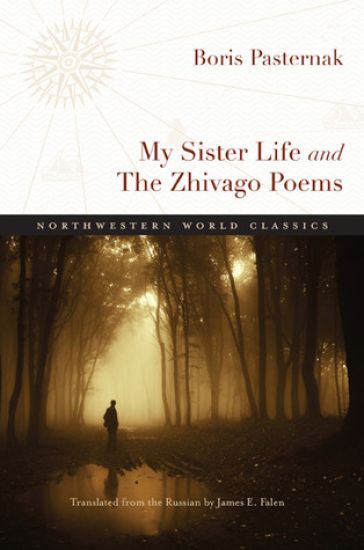
My Sister Life and The Zhivago Poems

My Sister Life and The Zhivago Poems

Boris Pasternak

Northwestern University Press
2012
nidottu
Boris Pasternak is best known in the West for his epic novel Doctor Zhivago, whereas in Russia he is most celebrated as a poet. The two poetry collections offered here in translation are chronological and thematic bookends, and they capture Pasternak’s abiding and powerful vision of life: his sense of its beauty and terror, its precariousness for the individual, and its persistence in time—that vitality of being with which he is on familiar and familial terms.In the early work My Sister Life, which commemorates the year 1917, Pasternak, then in his late twenties, found his poetic voice. The book would go on to become one of the most influential collections of Russian poetry of the twentieth century. “The Poems of Yury Zhivago” are a part of the poet’s famous novel, Dr. Zhivago, whose title might be rendered in English as “Doctor Life.” These later lyrics are a kind of summing up that reflect, from the perspective of age and approaching death, upon the accumulated experience of a contemplative life amid turbulent and terrifying times.Falen’s fresh new translations of these poems capture their expression of the beauty and the joy, the terror and the pain, of what it is to be alive . . . and to die.
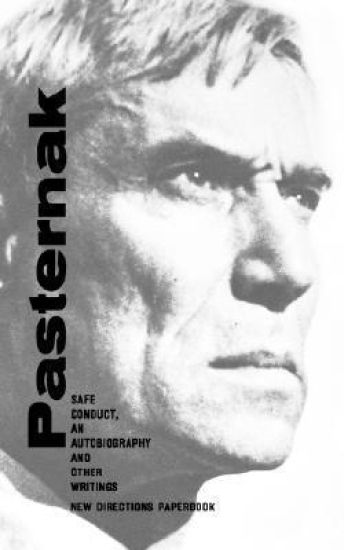
Safe Conduct: An Autobiography and Other Writings

Safe Conduct: An Autobiography and Other Writings

Boris Pasternak

NEW DIRECTIONS PUBLISHING CORPORATION
2009
nidottu
The awarding of the 1958 Nobel Prize for Literature to Boris Pasternak and the subsequent calumny of his fellow citizens in Soviet Russia focused unusual attention on Pasternak's great novel, Dr. Zhivago, and the small body of his other work. At the time, the latter was only available (in any language, as far as is known) in New Directions' Selected Writings of Pasternak, first published in 1949. The 1958 edition was issued with a new introduction by Babette Deutsch under the title of the book's main component, Pasternak's autobiography. Written when he was forty, Safe Conduct puzzled many readers in Russia and when it appeared in English, because its isolated sharp impressions and juxtapositions seem to deny chronology, but at least one critic recognized it as "the most original of autobiographies, employing a new technique of great important." Also included is a group of remarkable short stories, translated by Robert Payne, dealing with the mysteries of life and art, and a selection of the poems that have made Pasternak known, to the few at last, as the "outstanding Russian poet of the century." these are translated by the British Critic and poet C. M. Bowra, and by Miss Deutsch.
Level 5: Dr Zhivago

Level 5: Dr Zhivago

Boris Pasternak

Pearson Education Limited
2008
pokkari
Contemporary / British English The Russian Revolution -- four young people, Yury, Tonya, Lara and Pasha, find love and lose it in this extraordinary time. Their heart-breaking stories make Dr Zhivago one of the greatest romantic books, and films, of the century.
Level 5: Dr Zhivago Book and MP3 Pack

Level 5: Dr Zhivago Book and MP3 Pack

Boris Pasternak

PEARSON EDUCATION LIMITED
2011
muu
This reader is accompanied with a CD that contains the full audio of the text in MP3 format. The Russian Revolution - four young people, Yury, Tonya, Lara and Pasha, find love and lose it in this extraordinary time. Their heart-breaking stories make Dr Zhivago one of the greatest romantic books, and films, of the century.
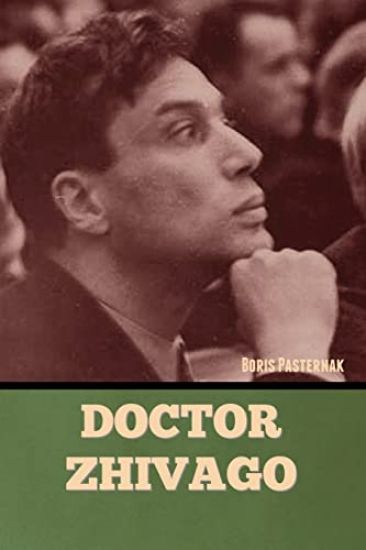
Doctor Zhivago

Doctor Zhivago

Boris Pasternak

Bibliotech Press
2022
pokkari
Doctor Zhivago is a novel by Boris Pasternak, first published in 1957 in Italy. The novel is named after its protagonist, Yuri Zhivago, a physician and poet, and takes place between the Russian Revolution of 1905 and World War II.Owing to the author's independent-minded stance on the October Revolution, Doctor Zhivago was refused publication in the USSR. At the instigation of Giangiacomo Feltrinelli, the manuscript was smuggled to Milan and published in 1957. Pasternak was awarded the Nobel Prize for Literature the following year, an event that embarrassed and enraged the Communist Party of the Soviet Union.The novel was made into a film by David Lean in 1965, and since then has twice been adapted for television, most recently as a miniseries for Russian TV in 2006. The novel Doctor Zhivago has been part of the Russian school curriculum since 2003, where it is read in 11th grade. Edmund Wilson wrote of the novel: "Doctor Zhivago will, I believe, come to stand as one of the great events in man's literary and moral history". V. S. Pritchett wrote in the New Statesman that the novel is " t]he first work of genius to come out of Russia since the revolution." When the novel came out in Italian, Anders sterling, the then permanent secretary of the Swedish Academy which awards the Nobel Prize in Literature, wrote in January 1958: "A strong patriotic accent comes through, but with no trace of empty propaganda... With its abundant documentation, its intense local color and its psychological frankness, this work bears convincing witness to the fact that the creative faculty in literature is in no sense extinct in Russia. It is hard to believe that the Soviet authorities might seriously envisage forbidding its publication in the land of its birth." Some literary critics "found that there was no real plot to the novel, that its chronology was confused, that the main characters were oddly effaced, that the author relied far too much on contrived coincidences." Vladimir Nabokov, who had celebrated Pasternak's books of poetry as works of "pure, unbridled genius", however, considered the novel to be "a sorry thing, clumsy, trite and melodramatic, with stock situations, voluptuous lawyers, unbelievable girls, romantic robbers and trite coincidences." On the other hand, some critics praised it for being things that, in the opinion of translator Richard Pevear, it was never meant to be: a moving love story, or a lyrical biography of a poet in which the individual is set against the grim realities of Soviet life. Pasternak defended the numerous coincidences in the plot, saying that they are "traits to characterize that somewhat willful, free, fanciful flow of reality." In response to criticism in the West of his novel's characters and coincidences, Pasternak wrote to Stephen Spender: Whatever the cause, reality has been for me like a sudden, unexpected arrival that is intensely welcome. I have always tried to reproduce this sense of being sent, of being launched... there is an effort in my novels to represent the whole sequence (facts, beings, happenings) as a great moving entity... a developing, passing, rolling, rushing inspiration. As if reality itself had freedom of choice... Hence the reproach that my characters were insufficiently realized. Rather than delineate, I was trying to efface them. Hence the frank arbitrariness of the "coincidences." Here I wanted to show the unrestrained freedom of life, its very verisimilitude contiguous with improbability. (wikipedia.org)
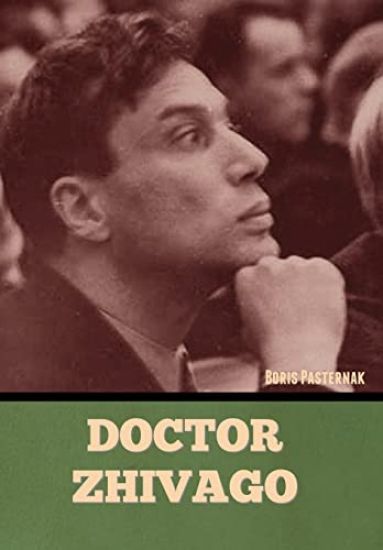
Doctor Zhivago

Doctor Zhivago

Boris Pasternak

Bibliotech Press
2022
sidottu
Doctor Zhivago is a novel by Boris Pasternak, first published in 1957 in Italy. The novel is named after its protagonist, Yuri Zhivago, a physician and poet, and takes place between the Russian Revolution of 1905 and World War II.Owing to the author's independent-minded stance on the October Revolution, Doctor Zhivago was refused publication in the USSR. At the instigation of Giangiacomo Feltrinelli, the manuscript was smuggled to Milan and published in 1957. Pasternak was awarded the Nobel Prize for Literature the following year, an event that embarrassed and enraged the Communist Party of the Soviet Union.The novel was made into a film by David Lean in 1965, and since then has twice been adapted for television, most recently as a miniseries for Russian TV in 2006. The novel Doctor Zhivago has been part of the Russian school curriculum since 2003, where it is read in 11th grade. Edmund Wilson wrote of the novel: "Doctor Zhivago will, I believe, come to stand as one of the great events in man's literary and moral history". V. S. Pritchett wrote in the New Statesman that the novel is " t]he first work of genius to come out of Russia since the revolution." When the novel came out in Italian, Anders sterling, the then permanent secretary of the Swedish Academy which awards the Nobel Prize in Literature, wrote in January 1958: "A strong patriotic accent comes through, but with no trace of empty propaganda... With its abundant documentation, its intense local color and its psychological frankness, this work bears convincing witness to the fact that the creative faculty in literature is in no sense extinct in Russia. It is hard to believe that the Soviet authorities might seriously envisage forbidding its publication in the land of its birth." Some literary critics "found that there was no real plot to the novel, that its chronology was confused, that the main characters were oddly effaced, that the author relied far too much on contrived coincidences." Vladimir Nabokov, who had celebrated Pasternak's books of poetry as works of "pure, unbridled genius", however, considered the novel to be "a sorry thing, clumsy, trite and melodramatic, with stock situations, voluptuous lawyers, unbelievable girls, romantic robbers and trite coincidences." On the other hand, some critics praised it for being things that, in the opinion of translator Richard Pevear, it was never meant to be: a moving love story, or a lyrical biography of a poet in which the individual is set against the grim realities of Soviet life. Pasternak defended the numerous coincidences in the plot, saying that they are "traits to characterize that somewhat willful, free, fanciful flow of reality." In response to criticism in the West of his novel's characters and coincidences, Pasternak wrote to Stephen Spender: Whatever the cause, reality has been for me like a sudden, unexpected arrival that is intensely welcome. I have always tried to reproduce this sense of being sent, of being launched... there is an effort in my novels to represent the whole sequence (facts, beings, happenings) as a great moving entity... a developing, passing, rolling, rushing inspiration. As if reality itself had freedom of choice... Hence the reproach that my characters were insufficiently realized. Rather than delineate, I was trying to efface them. Hence the frank arbitrariness of the "coincidences." Here I wanted to show the unrestrained freedom of life, its very verisimilitude contiguous with improbability. (wikipedia.org)
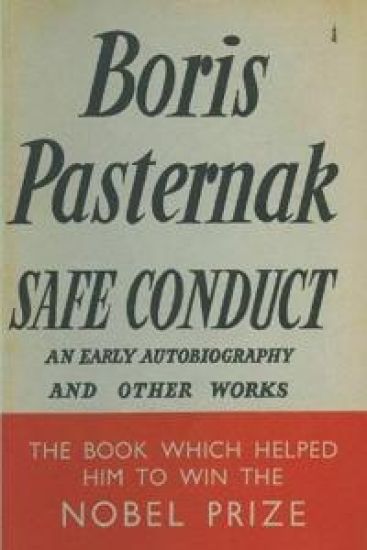
Safe Conduct: An Autobiography and Other Writings
Safe Conduct is Boris Pasternak's first and best autobiography, penned after the great success of Dr. Zhivago.Here translated by Alec Brown and Lydia Pasternak-Slater, and written when he was forty, Safe Conduct puzzled many readers in Russia and when it appeared in English, because its isolated sharp impressions and juxtapositions seem to deny chronology, but at least one critic recognized it as "the most original of autobiographies, employing a new technique of great important."