
Kirjojen hintavertailu. Mukana 11 244 527 kirjaa ja 12 kauppaa.

Kirjahaku

Etsi kirjoja tekijän nimen, kirjan nimen tai ISBN:n perusteella.

4 kirjaa tekijältä Boyd Douglas

The French Foreign Legion

The French Foreign Legion

Boyd Douglas

Sutton Publishing Ltd
2006
sidottu
Known for its austerity and discipline, deprivation and sacrifice, the French Foreign Legion is perhaps the most intriguing and famous fighting force in the world. For 170 years, jobless, homeless and loveless men have found in the Legion a sense of purpose worth all the rigors and risks of serving in the world's longest-standing mercenary army. One of the rewards for which men sign on with the Legion is French citizenship, and every legionnaire may claim it after serving three years with good conduct. The Legion has never had any problem attracting recruits: seven out of ten applicants are still rejected. But what is it that attracts men from so many countries and social backgrounds to accept the harsh discipline of this legendary mercenary army with a rigid code of honor straight out of the nineteenth century? Douglas Boyd tells the eventful story of the Legion from its inception in 1831 to defend France's colonial interests, to the Legion of today involved in peacekeeping and humanitarian duties worldwide. The author also examines the reasons behind the love-hate relationship between France and the foreigners she pays to spill their blood for her which are at the core of the Legion's history.
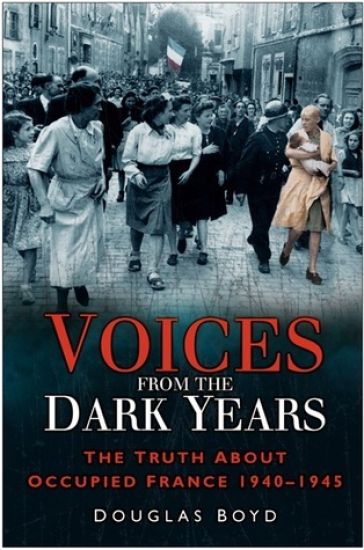
Voices from the Dark Years

Voices from the Dark Years

Boyd Douglas

Sutton Publishing Ltd
2007
sidottu
What was life really like in German-occupied France during the Second World War? Douglas Boyd paints the clearest picture yet, using hitherto unpublished first-person accounts of ordinary men and women who lived through this extraordinary and dangerous time, when a few made fortunes, but most went cold and hungry. Less than 1 per cent of the French was pro-German. Is it pure coincidence that the same percentage actively resisted the Germans despite knowing that, if caught, their husbands, wives and children were considered equally culpable under the brutal Teutonic principle of Sippenhaft - guilt by association? Using new, meticulously researched material, Douglas Boyd tells an enthralling and sometimes chilling narrative history of the Occupation, as lived by the French people. It is a record of great heroism and ultimate cruelty. Read it and ask yourself, 'How would I have reacted, living in Occupied France?' The answer may surprise you.
De Gaulle

De Gaulle

Boyd Douglas

Sutton Publishing Ltd
2008
sidottu
De Gaulle survived four turbulent years of the Second World War as the commander of the French forces. Despite this heroic role, US President Roosevelt preferred to deal with collaborators in occupied France, rather than the man who refused to surrender to Hitler. Roosevelt saw De Gaulle as a threat to America's plans for postwar Europe: France was to be occupied and run by a US-controlled military government, opening up her protected market to American big business. Defying the White House, De Gaulle became head of government in liberated France, but resigned when the politicians renewed their old games. In 1958, to save France from civil war, he was elected President of the Republic, and one of his first acts was to kick US forces out of France. Douglas Boyd's provocative account of how a great European fought to keep his nation free from American domination has an uncanny resonance with the continuing US interference in the affairs of other countries.
De Gaulle

De Gaulle

Boyd Douglas

The History Press Ltd
2013
sidottu
After watching a D-Day film, do youwonder why no French units took part in the invasion of their own German-occupied country? General Charles De Gaulle commanded 400,000 Free French soldiers, but US President Roosevelt insisted they not be told the date of the invasion because he intended to occupy France and open the country up to American Big Business, while keeping in office traitors who had run the country for Hitler. This would have sparked a civil war, but De Gaulle outwitted Washington to head the first government of liberated France. Disgusted with the professional politicians, he resigned in 1946. but twelve years later, to save France from civil war a second time, he was elected President of the Republic. After Roosevelt’s death, he defied presidents Truman, Eisenhower, Kennedy, Johnson and Nixon. Drawing on hitherto unpublished and revealing material from the archives in Paris and Washington, this thought-provoking account of a great European’s rejection of foreign domination has significant resonance for modern Britain, whose governments are subservient both to Washington and Brussels.