Kirjojen hintavertailu. Mukana 11 699 587 kirjaa ja 12 kauppaa.

Kirjahaku

Etsi kirjoja tekijän nimen, kirjan nimen tai ISBN:n perusteella.

9 kirjaa tekijältä Brad Bowins

Activity for Mental Health

Activity for Mental Health

Brad Bowins

Academic Press Inc
2020
nidottu
Activity For Mental Health explores all activities, including physical, social, natural, cognitive, art/hobby and music as a means to both preventing and treating mental illness. This book not only reviews evidence-based research behind activity, but also explores how these forms of activity can treat mental illnesses. First, the reader is introduced to the concepts of Formal Behavioral Activation Therapy (BAT) and informal activity as an effective treatment option. Case examples aid in connecting the benefits to real life scenarios. Following the introduction, each activity is introduced in separate chapters, including physical, social, natural, cognitive, art/hobby and music. This book will provide researchers and clinicians the information needed to help customize treatment options for their patients suffering from mental illness.
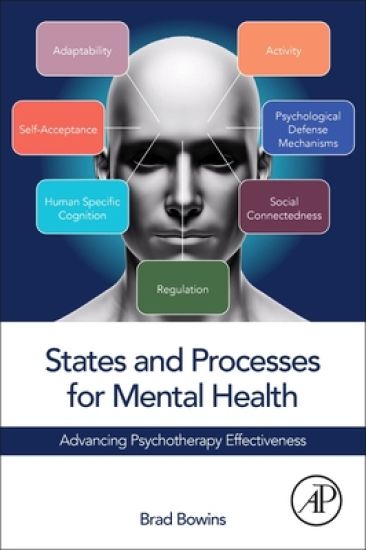
States and Processes for Mental Health

States and Processes for Mental Health

Brad Bowins

Academic Press Inc
2021
nidottu
States and Processes for Mental Health: Advancing Psychotherapy Effectiveness presents a novel mechanism of action for psychotherapy, revealing how psychotherapy actually works by advancing key states and processes characterizing mental health. This new understanding is presented in three sections. The first section identifies 7 states and processes for mental health. The second section examines 15 major forms of psychotherapy and non-specific factors with a comprehensive overview of each, followed by an empirical and theoretical proof of concept showing how they do indeed enhance the states and processes for mental health. In the third section, the author explores conceptual and practical problems in the current approach to psychotherapy, whereby discrete forms of psychotherapy are oriented to remedying psychopathology. Dr. Bowins then offers a new trans-therapy approach applying general strategies and those derived from existing forms of psychotherapy, to advance each of the states and processes characterizing mental health.
Overcoming Barriers to Progress in Psychotherapy
This accessible guide comprehensively addresses why psychotherapy of diverse forms often falters and provides effective strategies to succeed. Psychotherapy on occasion does not progress as both the client and therapist would like it to, and affecting deep-lasting change can be difficult and elusive. By addressing the spectrum of reasons for this occurrence inclusive of client, therapist, and interactive influences, barriers to psychotherapy progress can be managed, optimizing outcomes for the wellbeing of clients and success of psychotherapists. Given that the client, therapist, and interaction between both parties is integral to psychotherapy, coverage is provided in three sections: client influences, therapist influences, and interactive influences. Within each chapter, relevant literature is reviewed, key sources of the barrier to psychotherapy presented, and strategies for addressing the problem provided, with several case examples and vignettes. This book is essential for psychotherapists of all backgrounds, including students of psychotherapy.
Overcoming Barriers to Progress in Psychotherapy
This accessible guide comprehensively addresses why psychotherapy of diverse forms often falters and provides effective strategies to succeed. Psychotherapy on occasion does not progress as both the client and therapist would like it to, and affecting deep-lasting change can be difficult and elusive. By addressing the spectrum of reasons for this occurrence inclusive of client, therapist, and interactive influences, barriers to psychotherapy progress can be managed, optimizing outcomes for the wellbeing of clients and success of psychotherapists. Given that the client, therapist, and interaction between both parties is integral to psychotherapy, coverage is provided in three sections: client influences, therapist influences, and interactive influences. Within each chapter, relevant literature is reviewed, key sources of the barrier to psychotherapy presented, and strategies for addressing the problem provided, with several case examples and vignettes. This book is essential for psychotherapists of all backgrounds, including students of psychotherapy.
Mental Illness Defined

Mental Illness Defined

Brad Bowins

Routledge
2016
sidottu
Understanding the true nature of mental illness is essential for interpreting disparate research results, establishing accurate diagnostic profiles, setting robust research agendas, and optimizing therapeutic interventions. Psychopathology currently lacks a unifying framework. Mental Illness Defined: Continuums, Regulation, and Defense provides such a framework by filling the knowledge gap. Continuums, as opposed to numerous discrete entities, characterize mental illness. Impaired regulation fosters extreme expressions of mental illness continuums, an occurrence that can be compensated for by "cognitive regulatory control therapies." Defenses tend to moderate behavior, although excessive levels foster dysfunction, as with personality disorders. The model presented aligns with neuroscience and other relevant data, thereby placing psychopathology on a more scientific foundation to advance the aims of both researchers and treatment providers.
Mental Illness Defined

Mental Illness Defined

Brad Bowins

Routledge
2016
nidottu
Understanding the true nature of mental illness is essential for interpreting disparate research results, establishing accurate diagnostic profiles, setting robust research agendas, and optimizing therapeutic interventions. Psychopathology currently lacks a unifying framework. Mental Illness Defined: Continuums, Regulation, and Defense provides such a framework by filling the knowledge gap. Continuums, as opposed to numerous discrete entities, characterize mental illness. Impaired regulation fosters extreme expressions of mental illness continuums, an occurrence that can be compensated for by "cognitive regulatory control therapies." Defenses tend to moderate behavior, although excessive levels foster dysfunction, as with personality disorders. The model presented aligns with neuroscience and other relevant data, thereby placing psychopathology on a more scientific foundation to advance the aims of both researchers and treatment providers.
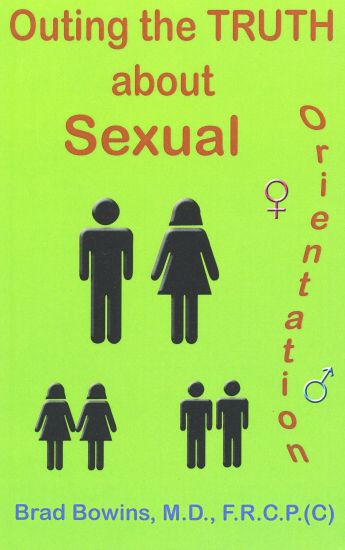
Outing the truth about Sexual Orientation

Outing the truth about Sexual Orientation

Brad Bowins

Science Humanities Press
2016
pokkari
Outing the Truth about Sexual OrientationBrad Bowins, M.D., F.R.C.P.(C)No aspect of who we are generates more inner confusion, turmoil, and misunderstanding than sexual orientation.As a psychiatrist I have treated many people suffering from issues related to sexual orientation. We all live it but no one really understands it. A key to this mystery is the so-called evolutionary paradox of how behavior that does not lead to reproduction could ever have evolved. Current theories turn out to be flawed upon close unbiased examination. There is hope for understanding this major aspect of who we are, but it requires a major paradigm shift. To varying degrees virtually every theory to date assumes that sexual orientation categories are true occurrences. In Outing The Truth About Sexual Orientation four components are presented that in combination explain sexual orientation-Sexual orientation dimensions, activation of these dimensions, erotic fantasy, and social construction of sexual orientation.Critical to this paradigm shift is the notion that we all have separate homoerotic and hetererotic capacities varying in strength. The dominant one tends to be active, but circumstances can activate the less dominant one, helping to explain many puzzling events, such as why same-sex settings often trigger more homoerotic behavior, and the impact of sexual abuse on sexual orientation behavior. Erotic fantasy, derived from the evolution of human intelligence, typically serves to activate sexual orientation dimensions.In some ptimitive cultures, there is no such thing as sexual orientation categories We have transformed homoerotic and heteroerotic behaviors into false identities. When homoerotic motivation is stronger than heteroerotic a homosexual identity is assumed, and a heterosexual identity when the opposite profile occurs. Behaviors inconsistent with the given identity tend to be deactivated.By understanding that we all have heteroerotic and homoerotic motivations, that can be activated and deactivated by circumstances, and focusing on behavior instead of identities, the widespread confusion, turmoil, and misunderstanding is easily resolved. Consequently, there will be far less neurosis surrounding sexual orientation. In addition, discrimination and persecution should fall off dramatically, because it is ludicrous to persecute someone for a capacity that you also have. Of course, some of the outwardly directed anger inherent in discrimination and persecution arises from the inner confusion, turmoil, and misunderstanding. Hence, by resolving the latter, the perspective presented will take the heat out of discrimination and persecution. The evolutionary paradox of how behavior seemingly blocking reproduction could ever have evolved, is easily explained by the model presented-Given that there are separate homoerotic and heteroerotic dimensions that can be activated by circumstances, including an opportunity to reproduce, the presence of one does not in any way exclude the other, except when behaviors are transformed into identities that deactivate inconsistent behaviors.The book presents this paradigm altering perspective on sexual orientation in chapters consisting of: -Discrimination.-Psychological theories.-Biological theories.-Animal "homosexuality."-Sexual orientation dimensions.-Purposes of homoerotic behavior.-Activation/deactivation of sexual orientation dimensions.-Erotic fantasy and sexual orientation.-Social construction of sexual orientation.-Transgender and homoerotic/heteroerotic behavior.It will be approximately 50,000 words in length, and will target a diverse audience, essentially anyone who is curious about sexual orientation issues. In addition, given that the book is well researched and presents a comprehensive model of sexual orientation, it will also appeal to sexual study students, and both professionals and policy makers working in areas linked to sexual orientation issues.
The Informative God

The Informative God

Brad Bowins

Game Changer Publications
2018
nidottu
Imagine a book that provides the answer to what happens after our time on this world is over, reveals a "treasure" worth more than all others combined, and merges religion and science. The Informative God is that book Following a life changing event, a young internal medicine specialist embarks on a round the world odyssey to uncover the meaning of life and death. This adventurous journey of discovery highlights the contribution of past and present religions. Making the most of this information and the input of science, he achieves the answer that also identifies a "treasure" of infinite value. Consistent with the uniqueness of these discoveries, the book represents a first for combining fiction, non-fiction, and travelogue. For a refreshing and optimistic answer to the ultimate question, take a journey of discovery to The Informative God.