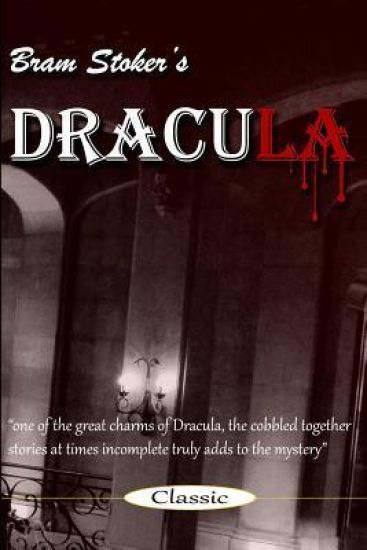
Good against Evil. There is no more classical horror story then Dracula. A story that takes place among the Carpathian Mountains in Transylvania, is extremely satisfying although some say it's chilling effect "leaves us with a sensation of emptiness". Bram Stoker's Character of Dracula is based on a real life Hungarian prince Vladimir Dracule, also known as "Vladimir the Impaler" (in the book Dracula), mainly because he was known for impaling his enemies among other terrible acts. There are legends of Vladimir (Dracula) inviting all the sick and homeless, and elderly, to a feast in his castle. Seemingly good intentions turned deadly when Vlad locked them in and burned down the hall to solve the problems of hunger and disease. Dracula by Bram Stoker is written as a series of diary entries, and the entries were compiled after the events had transgressed in order to figure out what had happened. Therein lies one of the great charms of Dracula, the cobbled together stories at times incomplete truly adds to the mystery of Bram Stoker's Dracula. Dracula is truly a Classic. Adults love the book just as do High school readers who have it on their summer reading lists. With all the buzz about vampires, find out how it all started with this Masterpiece. "Bram Stoker's Dracula"
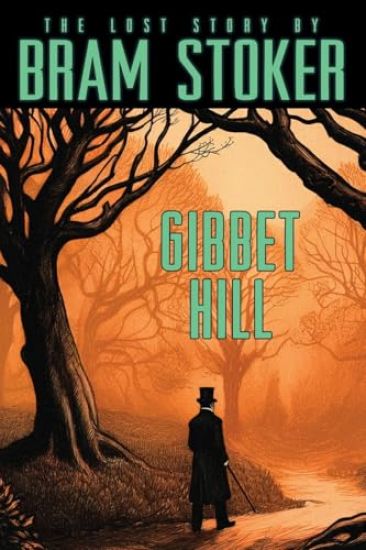
A solitary traveler explores the eerie beauty of Gibbet Hill, where history and folklore cast long shadows. Unsettling encounters with enigmatic children hint at malevolent forces lingering in the mist. What sinister truths lie buried on this haunted hill, and can anyone escape its grip?Originally published in 1890 and rediscovered in modern times, Gibbet Hill blends gothic horror and suspense in the haunting tale of a traveler confronting the macabre mysteries of a grimly historic site. With an atmosphere thick with dread, this novella weaves folklore and psychological terror into a chilling exploration of human fears. Stoker's vivid imagery and suspenseful storytelling showcase his mastery of supernatural fiction.
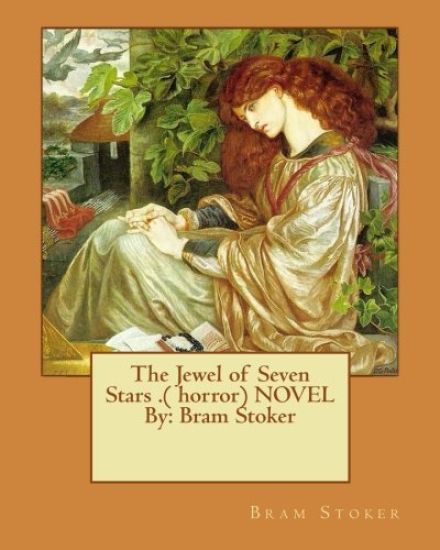
Born in Clontarf on November 8, 1847, Bram (Abraham) Stoker is recognized as one of the most prominent Gothic authors of the Victorian fin-de-si cle. An accomplished athlete, journalist, author, biographer, theatre critic and theatre manager, Stoker is best known for his Gothic masterpiece Dracula (1897). The Jewel of Seven Stars (1903) is another Gothic horror novel, but this time the ancient Egyptian Queen Tera is the creature at its core. Dracula is a veritable sexual lexicon of Victorian taboos, seduction, rape, gang rape, group sex, necrophilia, pedophilia, incest, adultery, oral sex, menstruation, venereal disease, and voyeurism. Bram Stoker's now legendary novel, Dracula, is not just any piece of cult-spawning fiction, but rather a time capsule containing the popular thoughts, ideas, and beliefs of the Victorian era that paints an elaborate picture of what society was like for Bram Stoker's generation. Like his immortal creation Count Dracula, Stoker's life is shrouded in mystery, from his rumored participation in occult circles, to his purported death from syphilis.
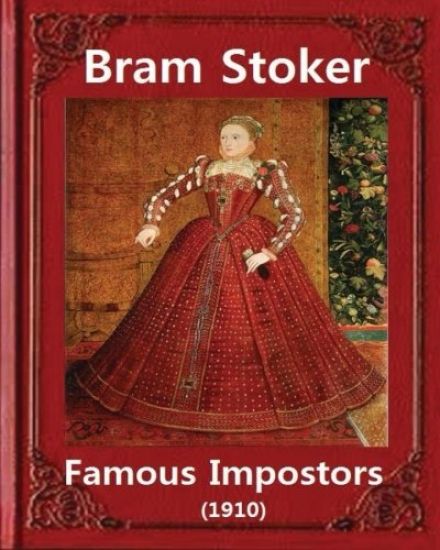
Famous Impostors is the fourth and final book of nonfiction by Bram Stoker (the author of Dracula), published in 1910.It is a book that deals with exposing various impostors and hoaxes. Abraham "Bram" Stoker (8 November 1847 - 20 April 1912) was an Irish author, best known today for his 1897 Gothic novel Dracula. During his lifetime, he was better known as the personal assistant of actor Henry Irving and business manager of the Lyceum Theatre in London, which Irving owned. He's best remembered as the legendary manager of London's Lyceum Theatre and author of the incalculably influential 1897 novel Dracula, but Bram Stoker was a prolific writer of numerous other works, including books of nonfiction. This curious 1910 work, one of his last, is an amusing survey of the charlatans, rogues, and other practitioners of make-believe who bedevil and delight us. With a cheerfully withering eye for their cons, Stoker introduces us to many famous fakers including: royal pretenders (such as Perkin Warbeck, who claimed King Henry VII's throne) magicians (Paracelsus, Cagliostro, etc.) witches and clairvoyants women masquerading as men hoaxers and others. Irish author ABRAHAM STOKER (1847-1912) worked for more than a quarter of a century as manager of the West End's Lyceum Theatre, which drew him.Stoker was born on 8 November 1847 at 15 Marino Crescent, Clontarf, on the northside of Dublin, Ireland. His parents were Abraham Stoker (1799-1876) from Dublin and Charlotte Mathilda Blake Thornley (1818-1901), who was raised in County Sligo. Stoker was the third of seven children, the eldest of whom was Sir Thornley Stoker, 1st Bt Abraham and Charlotte were members of the Church of Ireland Parish of Clontarf and attended the parish church with their children, who were baptised there. Stoker was bedridden with an unknown illness until he started school at the age of seven, when he made a complete recovery. Of this time, Stoker wrote, "I was naturally thoughtful, and the leisure of long illness gave opportunity for many thoughts which were fruitful according to their kind in later years." He was educated in a private school run by the Rev. William Woods. After his recovery, he grew up without further major health issues, even excelling as an athlete (he was named University Athlete) at Trinity College, Dublin, which he attended from 1864 to 1870. He graduated with honours as a B.A. in Mathematics. He was auditor of the College Historical Society ("the Hist") and president of the University Philosophical Society, where his first paper was on "Sensationalism in Fiction and Society".
Famous Impostors is the fourth and final book of nonfiction by Bram Stoker (the author of Dracula), published in 1910.It is a book that deals with exposing various impostors and hoaxes. Abraham "Bram" Stoker (8 November 1847 - 20 April 1912) was an Irish author, best known today for his 1897 Gothic novel Dracula. During his lifetime, he was better known as the personal assistant of actor Henry Irving and business manager of the Lyceum Theatre in London, which Irving owned. He's best remembered as the legendary manager of London's Lyceum Theatre and author of the incalculably influential 1897 novel Dracula, but Bram Stoker was a prolific writer of numerous other works, including books of nonfiction. This curious 1910 work, one of his last, is an amusing survey of the charlatans, rogues, and other practitioners of make-believe who bedevil and delight us. With a cheerfully withering eye for their cons, Stoker introduces us to many famous fakers including: royal pretenders (such as Perkin Warbeck, who claimed King Henry VII's throne) magicians (Paracelsus, Cagliostro, etc.) witches and clairvoyants women masquerading as men hoaxers and others. Irish author ABRAHAM STOKER (1847-1912) worked for more than a quarter of a century as manager of the West End's Lyceum Theatre, which drew him.Stoker was born on 8 November 1847 at 15 Marino Crescent, Clontarf, on the northside of Dublin, Ireland. His parents were Abraham Stoker (1799-1876) from Dublin and Charlotte Mathilda Blake Thornley (1818-1901), who was raised in County Sligo. Stoker was the third of seven children, the eldest of whom was Sir Thornley Stoker, 1st Bt Abraham and Charlotte were members of the Church of Ireland Parish of Clontarf and attended the parish church with their children, who were baptised there. Stoker was bedridden with an unknown illness until he started school at the age of seven, when he made a complete recovery. Of this time, Stoker wrote, "I was naturally thoughtful, and the leisure of long illness gave opportunity for many thoughts which were fruitful according to their kind in later years." He was educated in a private school run by the Rev. William Woods. After his recovery, he grew up without further major health issues, even excelling as an athlete (he was named University Athlete) at Trinity College, Dublin, which he attended from 1864 to 1870. He graduated with honours as a B.A. in Mathematics. He was auditor of the College Historical Society ("the Hist") and president of the University Philosophical Society, where his first paper was on "Sensationalism in Fiction and Society".
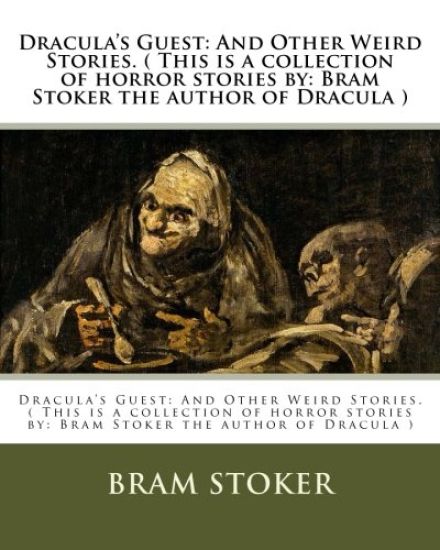
Dracula's Guest and Other Weird Stories is a collection of short stories by Bram Stoker, first published in 1914, two years after Stoker's death.It is widely believed that "Dracula's Guest" is actually the deleted first chapter from the original Dracula manuscript, which the publisher felt was superfluous to the story. In the preface to the original edition of Dracula's Guest and Other Weird Stories, Stoker's widow Florence wrote, "To his original list of stories in this book, I have added an hitherto unpublished episode from Dracula. It was originally excised owing to the length of the book, and may prove of interest to the many readers of what is considered my husband's most remarkable work."Dracula's Guest" follows an Englishman (whose name is never mentioned but is presumed to be Jonathan Harker) on a visit to Munich before leaving for Transylvania. It is Walpurgis Night, and in spite of the hotelier's warning to not be late back, the young man later leaves his carriage and wanders toward the direction of an abandoned "unholy" village. As the carriage departs with the frightened and superstitious driver, a tall and thin stranger scares the horses at the crest of a hill. After a few hours, as he reaches a desolate valley, it begins to snow; as a dark storm gathers intensity, the Englishman takes shelter in a grove of cypress and yew trees. The Englishman's location is soon illuminated by moonlight to be a cemetery, and he finds himself before a marble tomb with a large iron stake driven through the roof, the inscription reads: Countess Dolingen of Gratz / in Styria / sought and found death / 1801. Inscribed on the back of the tomb "graven in great Russian letters" is: 'The dead travel fast.' which was an ode to the fable Lenore. The Englishman is disturbed to be in such a place on such a night and as the storm breaks anew, he is forced by pelting hail to shelter in the doorway of the tomb. As he does so, the bronze door of the tomb opens under his weight and a flash of forked lightning shows the interior - and a "beautiful woman with rounded cheeks and red lips, seemingly sleeping on a bier". The force of the following thunder peal throws the Englishman from the doorway (experienced as "being grasped as by the hand of a giant") as another lightning bolt strikes the iron spike, destroying the tomb and the now screaming woman inside.