Kirjojen hintavertailu. Mukana 12 366 789 kirjaa ja 12 kauppaa.

Kirjahaku

Etsi kirjoja tekijän nimen, kirjan nimen tai ISBN:n perusteella.

6 kirjaa tekijältä Brenda Chalfin

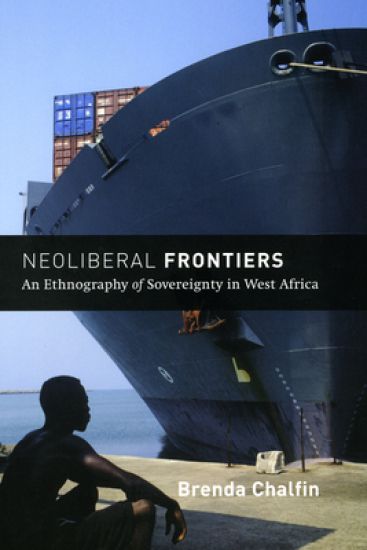
Neoliberal Frontiers

Neoliberal Frontiers

Brenda Chalfin

University of Chicago Press
2010
sidottu
In "Neoliberal Frontiers", Brenda Chalfin presents an ethnographic examination of the day-to-day practices of the officials of Ghana's Customs Service, exploring the impact of neoliberal restructuring and integration into the global economy on Ghanaian sovereignty. From the revealing vantage point of the customs office, Chalfin discovers a fascinating inversion of our assumptions about neoliberal transformation: bureaucrats and local functionaries, government offices, checkpoints, and registries are typically held to be the targets of reform, but Chalfin finds that these figures and sites of authority act as the engine for changes in state sovereignty. Ghana has served as a model of reform for the neoliberal establishment, making it an ideal site for Chalfin to explore why the restructuring of a state on the global periphery portends shifts that occur in all corners of the world. At once a foray into international political economy, politics, and political anthropology, "Neoliberal Frontiers" is an innovative interdisciplinary leap forward for ethnographic writing, as well as an eloquent addition to the literature on postcolonial Africa.
Neoliberal Frontiers

Neoliberal Frontiers

Brenda Chalfin

University of Chicago Press
2010
nidottu
In "Neoliberal Frontiers", Brenda Chalfin presents an ethnographic examination of the day-to-day practices of the officials of Ghana's Customs Service, exploring the impact of neoliberal restructuring and integration into the global economy on Ghanaian sovereignty. From the revealing vantage point of the customs office, Chalfin discovers a fascinating inversion of our assumptions about neoliberal transformation: bureaucrats and local functionaries, government offices, checkpoints, and registries are typically held to be the targets of reform, but Chalfin finds that these figures and sites of authority act as the engine for changes in state sovereignty. Ghana has served as a model of reform for the neoliberal establishment, making it an ideal site for Chalfin to explore why the restructuring of a state on the global periphery portends shifts that occur in all corners of the world. At once a foray into international political economy, politics, and political anthropology, "Neoliberal Frontiers" is an innovative interdisciplinary leap forward for ethnographic writing, as well as an eloquent addition to the literature on postcolonial Africa.

Shea Butter Republic

Shea Butter Republic

Brenda Chalfin

Routledge
2004
sidottu
Shea butter (butyrospermin parkii) has been produced and sold by rural West African women and circulated on the world market as a raw material for more than a century. Shea butter has been used for cooking, making soap and candles, leatherworking, dying, as a medical and beauty aid, and most significantly, as a substitute for cocoa butter in chocolate production. Now sold in exclusive shops as a high-priced cosmetic and medicinal product, it caters to the desire of cosmopolitan customers worldwide for luxury and exotic self-indulgence. This ethnographic study traces shea from a pre- to post-industrial commodity to provide a deeper understanding of emerging trends in tropical commoditization, consumption, global economic restructuring and rural livelihoods. Also inlcludes seven maps.
Shea Butter Republic

Shea Butter Republic

Brenda Chalfin

Routledge
2004
nidottu
Shea butter (butyrospermin parkii) has been produced and sold by rural West African women and circulated on the world market as a raw material for more than a century. Shea butter has been used for cooking, making soap and candles, leatherworking, dying, as a medical and beauty aid, and most significantly, as a substitute for cocoa butter in chocolate production. Now sold in exclusive shops as a high-priced cosmetic and medicinal product, it caters to the desire of cosmopolitan customers worldwide for luxury and exotic self-indulgence. This ethnographic study traces shea from a pre- to post-industrial commodity to provide a deeper understanding of emerging trends in tropical commoditization, consumption, global economic restructuring and rural livelihoods. Also inlcludes seven maps.
Waste Works

Waste Works

Brenda Chalfin

DUKE UNIVERSITY PRESS
2023
sidottu
In Waste Works, Brenda Chalfin examines Ghana’s planned city of Tema, theorizing about the formative role of waste infrastructure in urban politics and public life. Chalfin argues that at Tema’s midcentury founding, a prime objective of governing authorities was to cultivate self-contained citizens by means of tightly orchestrated domestic infrastructure and centralized control of bodily excrement to both develop and depoliticize the new nation. Comparing infrastructural innovations across the city, Chalfin excavates how Tema residents pursue novel approaches to urban waste and sanitation built on the ruins of the inherited order, profoundly altering the urban public sphere. Once decreed a private matter to be guaranteed by state authorities, excrement becomes a public issue, collectively managed by private persons. Pushing self-care into public space and extending domestic responsibility for public well-being and bodily outputs, popularly devised waste infrastructures are a decisive arena to make claims, build coalitions, and cultivate status. Confounding high-modernist ideals, excremental infrastructures unlock bodily waste’s diverse political potentials.
Waste Works

Waste Works

Brenda Chalfin

DUKE UNIVERSITY PRESS
2023
pokkari
In Waste Works, Brenda Chalfin examines Ghana’s planned city of Tema, theorizing about the formative role of waste infrastructure in urban politics and public life. Chalfin argues that at Tema’s midcentury founding, a prime objective of governing authorities was to cultivate self-contained citizens by means of tightly orchestrated domestic infrastructure and centralized control of bodily excrement to both develop and depoliticize the new nation. Comparing infrastructural innovations across the city, Chalfin excavates how Tema residents pursue novel approaches to urban waste and sanitation built on the ruins of the inherited order, profoundly altering the urban public sphere. Once decreed a private matter to be guaranteed by state authorities, excrement becomes a public issue, collectively managed by private persons. Pushing self-care into public space and extending domestic responsibility for public well-being and bodily outputs, popularly devised waste infrastructures are a decisive arena to make claims, build coalitions, and cultivate status. Confounding high-modernist ideals, excremental infrastructures unlock bodily waste’s diverse political potentials.