Kirjojen hintavertailu. Mukana 11 244 527 kirjaa ja 12 kauppaa.

Kirjahaku

Etsi kirjoja tekijän nimen, kirjan nimen tai ISBN:n perusteella.

3 kirjaa tekijältä Brenna Moore

Kindred Spirits

Kindred Spirits

Brenna Moore

University of Chicago Press
2021
sidottu
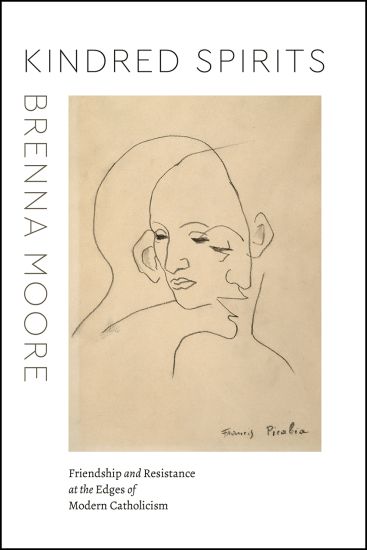
Kindred Spirits takes us inside a remarkable network of Catholic historians, theologians, poets, and activists who pushed against both the far-right surge in interwar Europe and the secularizing tendencies of the leftist movements active in the early to mid-twentieth century. With meticulous attention to the complexity of real lives, Brenna Moore explores how this group sought a middle way anchored in “spiritual friendship”—religiously meaningful friendship understood as uniquely capable of facing social and political challenges.For this group, spiritual friendship was inseparable from resistance to European xenophobia and nationalism, anti-racist activism in the United States, and solidarity with Muslims during the Algerian War. Friendship, they believed, was a key to both divine and human realms, a means of accessing the transcendent while also engaging with our social and political existence. Some of the figures are still well known—philosopher Jacques Maritain, Nobel Prize laureate Gabriela Mistral, influential Islamicist Louis Massignon, poet of the Harlem renaissance Claude McKay—while others have unjustly faded from memory. Much more than an idealized portrait of a remarkable group of Catholic intellectuals from the past, Kindred Spirits is a compelling exploration of both the beauty and flaws of a vibrant social network worth remembering.
Kindred Spirits

Kindred Spirits

Brenna Moore

University of Chicago Press
2021
nidottu
Kindred Spirits takes us inside a remarkable network of Catholic historians, theologians, poets, and activists who pushed against both the far-right surge in interwar Europe and the secularizing tendencies of the leftist movements active in the early to mid-twentieth century. With meticulous attention to the complexity of real lives, Brenna Moore explores how this group sought a middle way anchored in “spiritual friendship”—religiously meaningful friendship understood as uniquely capable of facing social and political challenges.For this group, spiritual friendship was inseparable from resistance to European xenophobia and nationalism, anti-racist activism in the United States, and solidarity with Muslims during the Algerian War. Friendship, they believed, was a key to both divine and human realms, a means of accessing the transcendent while also engaging with our social and political existence. Some of the figures are still well known—philosopher Jacques Maritain, Nobel Prize laureate Gabriela Mistral, influential Islamicist Louis Massignon, poet of the Harlem renaissance Claude McKay—while others have unjustly faded from memory. Much more than an idealized portrait of a remarkable group of Catholic intellectuals from the past, Kindred Spirits is a compelling exploration of both the beauty and flaws of a vibrant social network worth remembering.
Sacred Dread

Sacred Dread

Brenna Moore

University of Notre Dame Press
2013
nidottu
In early twentieth-century France, a vast network of artists, writers, and religious seekers were drawn to Roman Catholicism's elaborate panoply of symbols centered on suffering. A preoccupation with affliction dominated the movement now known as the French Catholic revival, or the renouveau catholique—considered a watershed in the history of the modern Catholic Church and the "golden age" of French Catholicism. In Sacred Dread, Brenna Moore examines the life and writings of Raïssa Maritain (1883-1960), one of the few women to contribute to this intellectual movement. Moore explores the reasons why Maritain, a nonpracticing Jew, was attracted to this suffering-centered theological imagination and how she and other advocates transformed it in the wake of the Holocaust. Sacred Dread offers readers a new understanding of a radical Catholic piety that was embraced by a wide range of pre-war intellectuals. By combining late-modern French intellectual and cultural history, Catholic theology, biography, and an analysis of Maritain's published and unpublished writings, Moore also identifies two major factors in this Catholic revival—gender and Judaism—that have not received adequate attention. Discourses of femininity and Judaism were central to the French Catholic articulation and idealization of suffering. Moore argues that Maritain, as a Jewish convert and one of the few women in this intellectual community, embodied symbolic associations of suffering, holiness, women, and Jews; indeed, for her husband, godfather, confessors, friends, and godchildren, Raïssa Maritain was herself the articulation of this abject ideal. Caught as she was in a web of meaning, Raïssa Maritain was an intellectual whose legacy deepens but also subverts the centrality of femininity and Judaism in French Catholic elaborations of suffering.